Hip Osteoarthritis: Groin Pain, Mobility Loss, and Joint Replacement Options

Hip osteoarthritis often causes deep groin pain, stiffness after rest, and difficulty walking, climbing stairs, or putting on shoes. Diagnosis is based on symptoms, physical examination, and imaging, most often X-rays.
Key Takeaways
- Hip osteoarthritis often causes deep groin pain, stiffness after rest, and difficulty walking, climbing stairs, or putting on shoes.
- Diagnosis is based on symptoms, physical examination, and imaging, most often X-rays.
- Weight management, low-impact exercise, physical therapy, and pain-relief strategies can help many patients maintain mobility.
- Injections and medications may reduce symptoms but do not rebuild worn cartilage.
- Total hip replacement may be considered when pain and mobility loss significantly affect daily life despite non-surgical care.
- A qualified orthopedic specialist can help match treatment to the stage of disease, overall health, and personal goals.
Hip osteoarthritis is a common joint condition in which cartilage in the hip gradually wears down, leading to groin pain, stiffness, and reduced mobility. With early assessment, tailored self-care, medical treatments, and, when needed, joint replacement surgery, many people can regain comfort and function.
Overview
Hip osteoarthritis is a degenerative joint condition that affects the smooth cartilage covering the ball-and-socket surfaces of the hip. As cartilage becomes thinner and less resilient, the joint may lose its ability to glide comfortably. This can lead to pain, stiffness, inflammation, and reduced range of motion.
The hip is a weight-bearing joint, so even small changes in joint surface quality can affect everyday movement. Patients often notice difficulty walking longer distances, climbing stairs, standing from a low chair, or putting on socks and shoes. The condition usually develops gradually, although symptoms may become more noticeable after increased activity or an injury.
Hip osteoarthritis is not simply a normal part of aging, and its impact varies widely. Some people have X-ray changes with few symptoms, while others experience significant pain and mobility loss. Treatment is personalized and may include lifestyle measures, physical therapy, medications, injections, assistive devices, and, for advanced disease, hip replacement surgery.
Symptoms: Groin Pain, Stiffness, and Mobility Loss

The most typical symptom of hip osteoarthritis is deep pain in the groin. This pain may spread to the front of the thigh, buttock, outer hip, or knee. Because hip joint pain can be felt in nearby areas, some patients first seek help for thigh or knee discomfort before realizing the hip is the source.
Stiffness is also common, especially after waking in the morning or sitting for a long time. The stiffness may improve after gentle movement but return after longer periods of activity. As the joint becomes less flexible, patients may notice a shorter stride, limping, or the need to lean on a handrail when using stairs.
Common symptoms may include:
- Groin pain during walking, standing, or twisting movements
- Reduced ability to rotate the hip or spread the leg outward
- Difficulty getting in and out of a car
- Pain when putting on socks, tying shoes, or cutting toenails
- Clicking, grinding, or catching sensations in the hip
- Fatigue or reduced confidence with walking due to pain
Symptoms often fluctuate. A patient may have better and worse days depending on activity level, body weight, muscle strength, weather sensitivity, sleep quality, and other health conditions. Persistent or worsening symptoms should be assessed by a clinician to confirm the diagnosis and rule out other causes.
Causes and Risk Factors
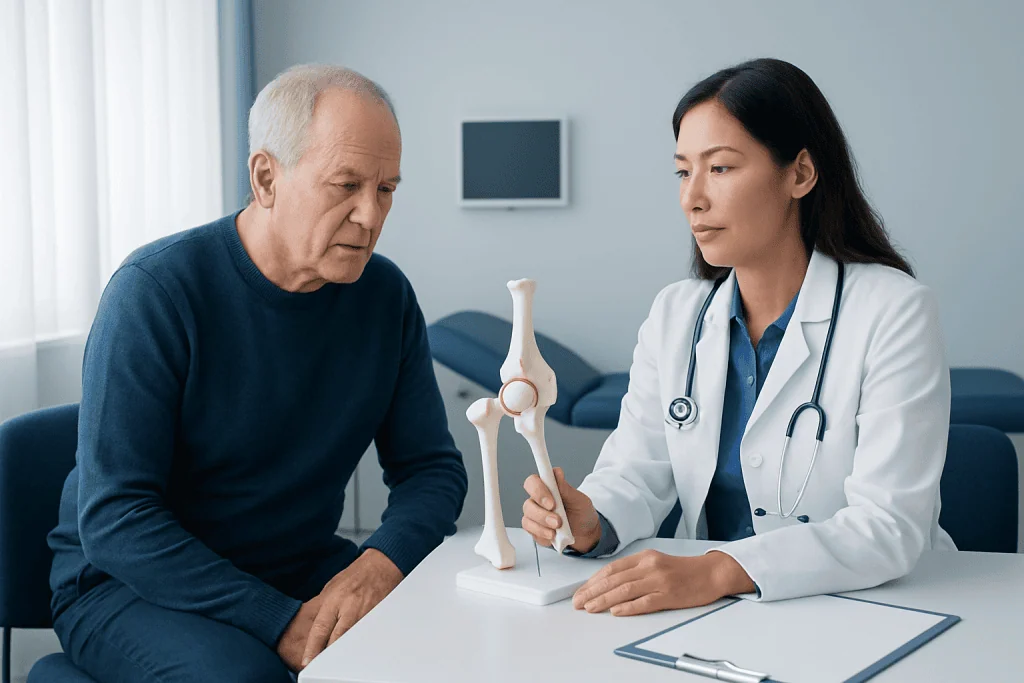
Hip osteoarthritis develops when the balance between cartilage repair and cartilage wear is disrupted over time. The cartilage surface becomes thinner, the underlying bone may thicken, and small bony outgrowths called osteophytes can form. The joint lining may become irritated, contributing to pain and stiffness.
Several factors can increase the likelihood of hip osteoarthritis. Age is one factor, but joint shape, previous injury, genetics, and mechanical stress also play important roles. Some people develop arthritis earlier because of hip dysplasia, femoroacetabular impingement, childhood hip disorders, or previous fractures around the hip.
Risk factors may include:
- Older age and family history of osteoarthritis
- Previous hip injury, fracture, or surgery
- Developmental hip problems such as dysplasia
- Femoroacetabular impingement, where hip bones may contact abnormally
- Excess body weight, which increases load across weight-bearing joints
- Occupations or sports involving repetitive heavy loading
- Inflammatory joint disease or certain metabolic conditions
Having one or more risk factors does not mean a person will definitely develop hip osteoarthritis. Conversely, some patients develop symptoms without an obvious cause. Understanding risk factors helps guide prevention, activity modification, and treatment planning.
Diagnosis and Assessment
Diagnosis begins with a careful discussion of symptoms, daily limitations, medical history, previous injuries, and treatment attempts. The doctor may ask where the pain is felt, what triggers it, how far the patient can walk, and whether stiffness or night pain is present. These details help distinguish hip osteoarthritis from back problems, bursitis, tendon disorders, hernias, or vascular and nerve-related conditions.
During the physical examination, the clinician checks gait, posture, leg length, muscle strength, and range of motion. Limited internal rotation of the hip and pain during certain movements are common findings. The examination may also include assessment of the lower back, knee, and surrounding soft tissues because symptoms can overlap.
X-rays are usually the first imaging test for suspected hip osteoarthritis. They can show joint space narrowing, bone spurs, changes in bone shape, and other structural findings. MRI or CT scans may be used in selected cases, such as when symptoms are significant but X-rays are unclear, or when another condition is suspected.
Blood tests are not usually needed for straightforward osteoarthritis, but they may be ordered if inflammatory arthritis, infection, or another medical cause is being considered. The final diagnosis is based on the combination of symptoms, examination findings, and imaging rather than imaging alone.
Non-Surgical Treatment Options
Non-surgical treatment aims to reduce pain, improve movement, and maintain independence for as long as possible. The best plan is individualized, often combining education, exercise, weight management when appropriate, pain-relief strategies, and support devices. These treatments do not reverse advanced cartilage loss, but they can meaningfully improve function.
Physical therapy is often central to care. A therapist may recommend exercises to strengthen the hip and core muscles, improve balance, maintain flexibility, and reduce strain on the joint. Low-impact activities such as walking at a comfortable pace, swimming, water exercise, and cycling may be easier to tolerate than high-impact exercise.
Other conservative measures may include:
- Using a cane in the opposite hand to reduce hip load
- Choosing supportive footwear and avoiding prolonged standing on hard surfaces
- Applying heat for stiffness or cold packs after activity-related soreness
- Modifying activities, such as breaking tasks into shorter intervals
- Using raised chairs, long-handled shoehorns, or other aids to reduce painful bending
Medications may be recommended by a doctor depending on the patient’s overall health. Options can include topical or oral pain relievers and anti-inflammatory medicines, when safe. Some patients may be offered image-guided corticosteroid injections for short-term symptom relief. Supplements and regenerative injections should be discussed carefully with a clinician, as evidence and suitability vary.
Hip Replacement and Other Surgical Options
Surgery may be considered when hip osteoarthritis causes persistent pain, sleep disturbance, reduced mobility, or major limits in daily life despite appropriate non-surgical care. The most common operation for advanced hip osteoarthritis is total hip replacement, also called total hip arthroplasty. In this procedure, the damaged joint surfaces are replaced with artificial components designed to restore smoother movement.
Total hip replacement may involve different surgical approaches and implant materials. The choice depends on anatomy, bone quality, surgeon experience, age, activity level, and medical factors. The goal is to relieve pain, improve mobility, and support return to everyday activities. As with all surgery, benefits must be weighed against risks such as infection, blood clots, dislocation, implant wear, fracture, or the need for revision surgery later in life.
Some patients may ask about hip resurfacing or joint-preserving procedures. These are suitable only for selected individuals and are not appropriate for many patients with advanced osteoarthritis. An orthopedic specialist can explain whether any alternative surgical approach is relevant based on imaging, age, bone strength, and activity goals.
Preparation for hip replacement often includes medical evaluation, medication review, dental and infection risk assessment when indicated, and planning for rehabilitation. Recovery usually involves early walking with support, physical therapy, wound care, and gradual return to function. Patients should follow their surgical team’s instructions closely, as timelines differ depending on health status and the procedure performed.
Prevention, Self-Care, and Living Well
Not all cases of hip osteoarthritis can be prevented, especially when joint shape or genetics play a role. However, many self-care habits can reduce stress on the hip and support better long-term function. Maintaining a healthy body weight, staying physically active, and building muscle strength are important foundations.
Exercise should be regular but joint-friendly. The aim is to keep the hip moving without repeatedly provoking strong pain. A practical approach is to alternate activity with rest, avoid sudden increases in intensity, and choose movements that feel controlled. If exercise causes pain that remains worse the next day, the activity may need adjustment.
Patients can also protect the hip by improving home and work ergonomics. Sitting in chairs that are not too low, using handrails, avoiding slippery floors, and keeping commonly used items within easy reach may reduce strain. Sleep positioning with a pillow between the knees may help some people feel more comfortable, especially if side sleeping aggravates symptoms.
Emotional well-being is also part of living with osteoarthritis. Ongoing pain can affect mood, sleep, and social activity. Patients are encouraged to discuss these effects with their healthcare team, as better pain control, rehabilitation, and supportive strategies can improve quality of life.
When to See a Doctor
A medical evaluation is recommended if groin or hip pain lasts more than a few weeks, worsens over time, limits walking, or interferes with sleep and daily activities. Early assessment can confirm the cause and help patients start appropriate treatment before movement patterns and muscle weakness become more established.
Patients should seek prompt medical advice after a fall or injury, or if hip pain is associated with fever, redness, sudden inability to bear weight, new numbness, unexplained weight loss, or severe night pain. These symptoms do not necessarily mean a serious problem is present, but they require timely assessment.
People already diagnosed with hip osteoarthritis should return to their doctor if medications are no longer helping, walking distance is decreasing, or daily tasks such as dressing, bathing, and stair climbing are becoming difficult. At that stage, discussing the full range of treatment options, including whether hip replacement is appropriate, can be helpful.
For international patients seeking evaluation or treatment, Acibadem International provides access to multidisciplinary orthopedic specialists and JCI-accredited hospitals experienced in diagnosing and treating hip osteoarthritis. Any treatment decision should be made after a personalized medical assessment and a clear discussion of expected benefits, risks, and recovery needs.
Frequently asked questions
Why does hip osteoarthritis often cause groin pain?
The hip joint is located deep in the groin area, so pain from the joint is commonly felt there. Pain can also travel to the thigh, buttock, outer hip, or knee because nerves around the hip share pathways with nearby regions.
Can hip osteoarthritis be cured without surgery?
Current non-surgical treatments cannot fully restore cartilage that has been lost from osteoarthritis. However, many people manage symptoms well with exercise, physical therapy, weight management, activity modification, and appropriate pain relief. Surgery is considered when symptoms remain disabling despite these measures.
Is walking good or bad for hip osteoarthritis?
Walking can be helpful when done at a comfortable pace and distance because it supports joint movement, muscle strength, and general health. If walking causes significant pain or a limp, the distance, surface, footwear, or use of a cane may need adjustment. A physical therapist can help design a safe plan.
When is hip replacement usually considered?
Hip replacement is usually considered when pain, stiffness, and mobility loss significantly affect daily life and do not improve enough with non-surgical care. The decision depends on symptoms, X-ray findings, overall health, expectations, and readiness for surgery and rehabilitation.
How long does recovery after hip replacement take?
Recovery varies from person to person. Many patients begin walking with support soon after surgery and gradually increase activity through rehabilitation. Full recovery depends on age, fitness, medical conditions, surgical approach, and how closely the rehabilitation plan is followed.
Are hip injections a substitute for hip replacement?
Hip injections may reduce pain for some patients, often temporarily, but they do not repair advanced cartilage loss. They can be useful as part of a broader treatment plan or for patients who are not ready or suitable for surgery. A doctor can explain the benefits and limitations for an individual case.
References
- American Academy of Orthopaedic Surgeons
- National Institute for Health and Care Excellence
- Mayo Clinic
- Arthritis Foundation
- American College of Rheumatology
This article is for general information only and is not a substitute for professional medical advice. Please consult a qualified doctor about your individual situation.
Joint Replacement in Turkey — costs, top hospitals & a free quote
JCI-accredited · board-certified surgeons · reply within 24h
Add us as a Preferred Source to see more of our trusted health content across Google Search, AI Overviews and Discover.

Orthopedics & Spine
Care for bones, joints and the musculoskeletal system, including joint replacement, sports injuries and trauma.
125 specialists in this unitMore from the Health Library



Related Specialists

Psk. Duygu Gökyıldırım Uslu
Psychology
Prof. Dr. Erkan Kaba
Thoracic Surgery
Prof. Dr. Burcu Yavuz
Psychiatry
Dyt. Şeyda Sıla Bilgili Tokgöz
Nutrition & Diet