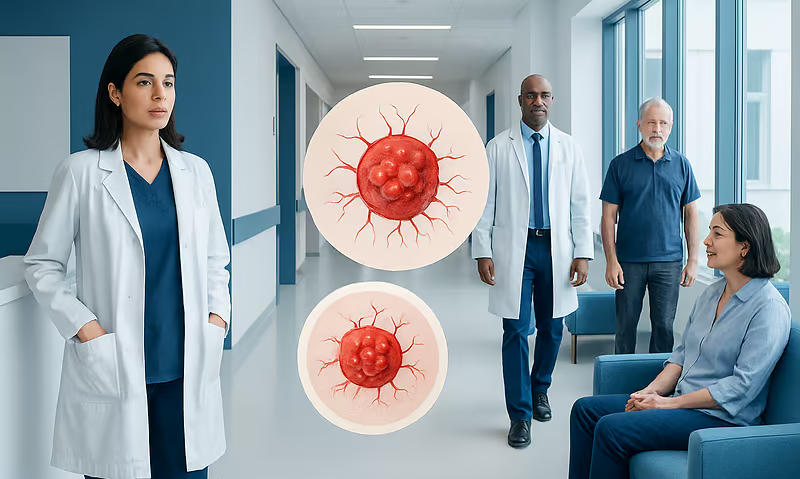
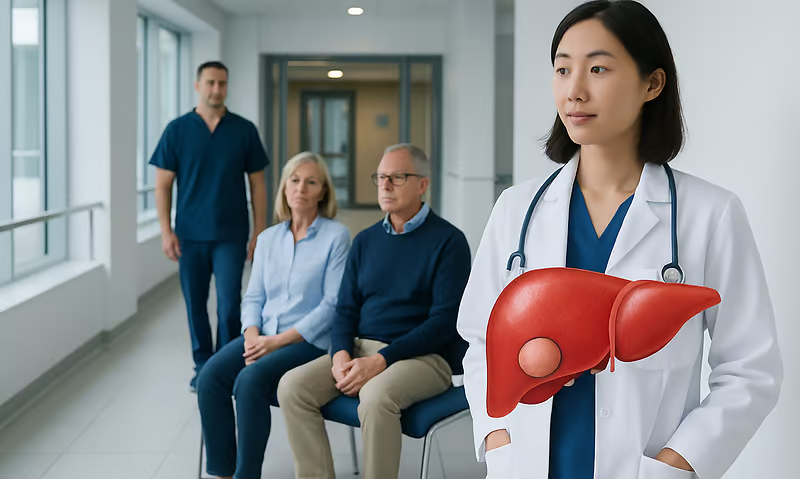
Esophageal Cancer: Swallowing Difficulty, Diagnosis, and Care Options

Persistent difficulty swallowing, food sticking, unexplained weight loss, or pain with swallowing should be assessed by a doctor. Diagnosis usually involves upper endoscopy with biopsy, followed by imaging tests to understand the stage of the disease.
Key Takeaways
- Persistent difficulty swallowing, food sticking, unexplained weight loss, or pain with swallowing should be assessed by a doctor.
- Diagnosis usually involves upper endoscopy with biopsy, followed by imaging tests to understand the stage of the disease.
- Treatment depends on the cancer type, location, stage, and the patient’s overall health, and may include endoscopic therapy, surgery, chemotherapy, radiotherapy, immunotherapy, targeted therapy, or palliative care.
- Nutrition, symptom control, and emotional support are important parts of esophageal cancer care at every stage.
- Reducing tobacco and alcohol exposure, managing reflux, and maintaining a healthy lifestyle may help lower risk for some people.
Esophageal cancer is a disease in which malignant cells develop in the esophagus, the tube that carries food from the mouth to the stomach. Difficulty swallowing is a common symptom, and early medical assessment can help guide accurate diagnosis, staging, treatment, and supportive care.
Overview
Esophageal cancer begins in the esophagus, a muscular tube that moves swallowed food and liquid from the throat to the stomach. Cancer can develop when cells in the lining of the esophagus grow in an uncontrolled way and form a tumor. As the tumor grows, it may narrow the esophagus and make swallowing more difficult.
The two main types are squamous cell carcinoma and adenocarcinoma. Squamous cell carcinoma usually starts in the flat cells lining the esophagus and can occur in the upper, middle, or lower part. Adenocarcinoma usually develops in gland-forming cells, most often in the lower esophagus, and is commonly linked with long-term acid reflux and Barrett’s esophagus.
Esophageal cancer care is highly individualized. Doctors consider the tumor type, its location, how deeply it has grown, whether it has spread, and the person’s general health. A multidisciplinary approach often includes gastroenterologists, medical oncologists, radiation oncologists, surgeons, radiologists, pathologists, dietitians, and specialist nurses.
Symptoms and Swallowing Difficulty
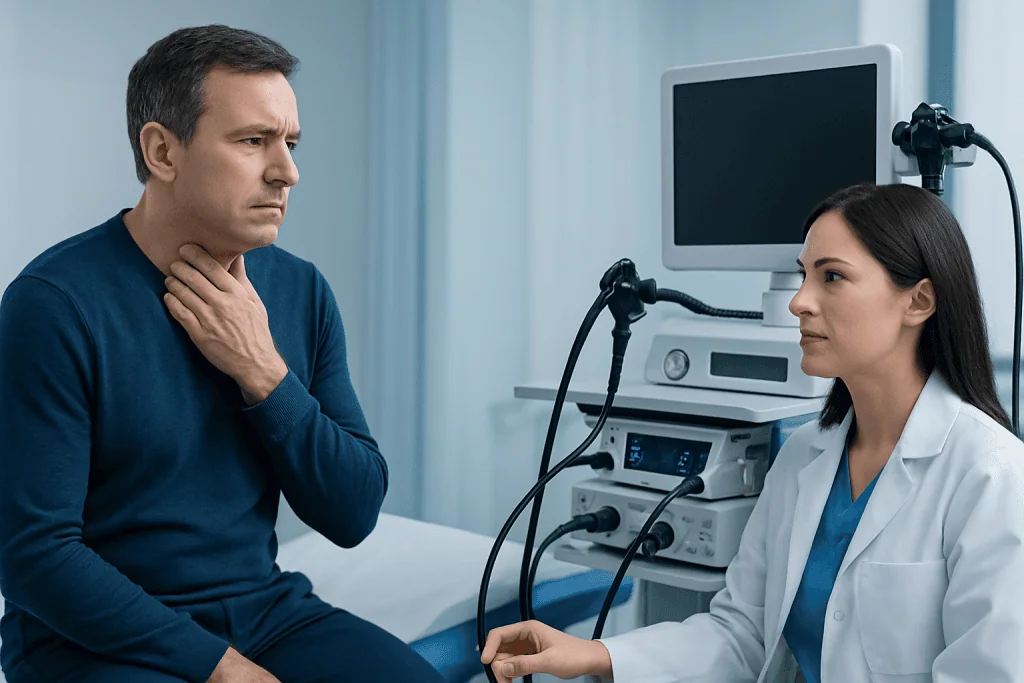
Swallowing difficulty, also called dysphagia, is one of the most common symptoms of esophageal cancer. At first, a person may notice that solid foods such as bread, meat, or rice feel as if they are sticking in the chest or throat. Over time, swallowing softer foods or liquids may also become harder if the narrowing increases.
Other possible symptoms include pain or discomfort when swallowing, unexplained weight loss, persistent indigestion or heartburn, chest discomfort, regurgitation of food, vomiting, hoarseness, chronic cough, or black stools if there is bleeding. Some people feel full quickly or avoid eating because swallowing has become tiring or uncomfortable.
These symptoms can also be caused by non-cancerous conditions, such as reflux disease, esophageal inflammation, strictures, infections, or motility disorders. However, symptoms that persist, worsen, or affect eating should not be ignored. A medical evaluation can identify the cause and help prevent delays in appropriate care.
Causes and Risk Factors
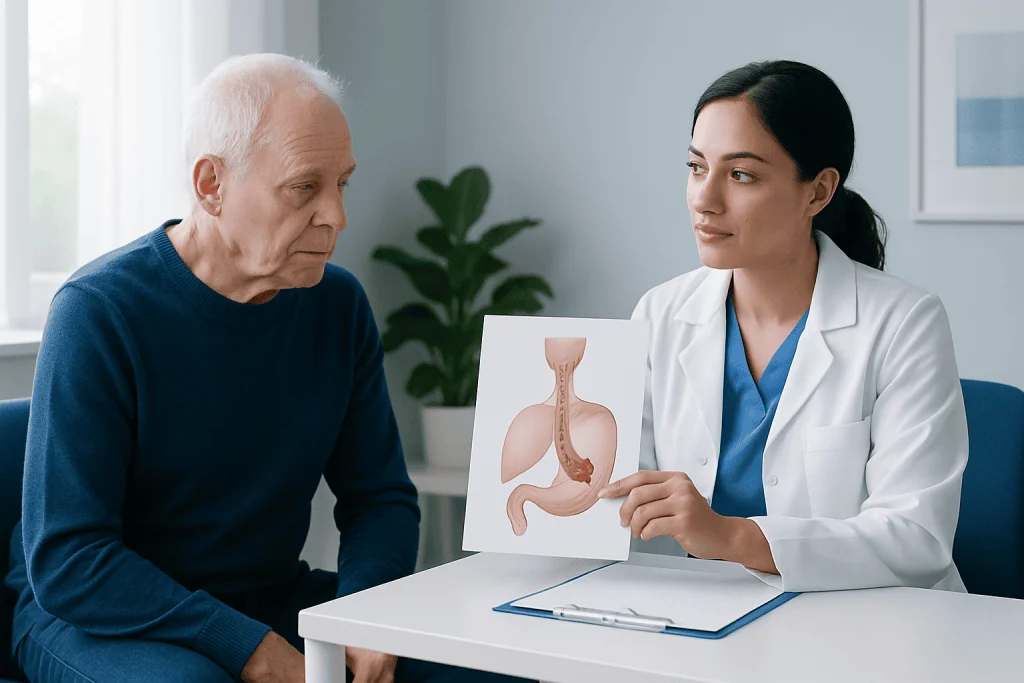
Esophageal cancer develops through changes in the DNA of esophageal cells. In many cases, there is no single cause. Instead, risk is influenced by a combination of long-term irritation, lifestyle factors, underlying medical conditions, and genetic susceptibility.
Risk factors differ by cancer type. Squamous cell carcinoma is associated with tobacco use, heavy alcohol use, very hot beverages, poor nutrition, certain environmental exposures, and conditions that cause long-term irritation of the esophagus. Adenocarcinoma is more strongly associated with chronic gastroesophageal reflux disease, Barrett’s esophagus, obesity, and hiatal hernia.
Factors that may increase risk include:
- Long-term smoking or use of other tobacco products
- Heavy or regular alcohol consumption, especially combined with tobacco
- Chronic acid reflux or Barrett’s esophagus
- Obesity, particularly with central weight gain
- Previous radiation therapy to the chest or upper abdomen
- Achalasia or other conditions that affect esophageal emptying
- A diet low in fruits, vegetables, and overall nutritional variety
Having a risk factor does not mean a person will develop esophageal cancer, and some patients have few or no known risks. Still, understanding risk factors can help guide screening decisions in selected groups, especially people with Barrett’s esophagus or persistent reflux symptoms.
Diagnosis and Staging
The main test for suspected esophageal cancer is upper gastrointestinal endoscopy. During this procedure, a thin flexible tube with a camera is passed through the mouth to examine the esophagus, stomach, and upper small intestine. If an abnormal area is seen, small tissue samples are taken for biopsy, which is the only way to confirm cancer.
After diagnosis, staging tests help doctors understand how far the cancer has grown and whether it has spread to lymph nodes or other organs. These may include endoscopic ultrasound to assess the depth of the tumor and nearby lymph nodes, computed tomography scans, positron emission tomography scans, magnetic resonance imaging in selected cases, and sometimes bronchoscopy if the tumor is close to the airway.
Pathology testing identifies the cancer type and may also look for biomarkers that can guide treatment. For some advanced cancers, doctors may test for markers such as HER2, PD-L1, or mismatch repair status, depending on the tumor features and available therapies. Staging is essential because treatment for an early tumor confined to the lining of the esophagus is very different from treatment for cancer that has spread.
Treatment Options
Treatment depends on the stage, tumor location, cancer type, the patient’s nutritional status, and personal preferences. For very early cancers limited to the inner lining, endoscopic treatments may be possible. These can include endoscopic mucosal resection or endoscopic submucosal dissection, sometimes followed by ablation if Barrett’s esophagus is present.
For cancers that are potentially removable, treatment may involve surgery to remove part or most of the esophagus, called esophagectomy. Surgery may be performed after chemotherapy, radiotherapy, or combined chemoradiotherapy to shrink or control the tumor before removal. Some patients with squamous cell carcinoma may be treated with definitive chemoradiotherapy without surgery, depending on the stage and location.
Systemic treatments travel through the bloodstream and are used to treat cancer cells throughout the body. These may include chemotherapy, immunotherapy, targeted therapy, or combinations of treatments. The choice depends on tumor biology, prior treatments, overall health, and treatment goals.
When cure is not possible, care still has important goals: easing swallowing, improving comfort, supporting nutrition, and helping patients maintain quality of life. Options may include esophageal stenting, radiotherapy to reduce obstruction or pain, feeding tube support, symptom medicines, palliative care, and psychological support. Palliative care can be provided alongside cancer-directed treatment and is not limited to end-of-life care.
Nutrition, Recovery, and Self-care
Nutrition is a central part of esophageal cancer care because swallowing difficulty can lead to weight loss, dehydration, and fatigue. A dietitian may recommend softer foods, smaller frequent meals, high-protein options, or nutritional supplements. Some patients need temporary or longer-term feeding tube support before, during, or after treatment to maintain strength and treatment tolerance.
After esophageal surgery or radiotherapy, eating patterns may change. Patients may need to eat smaller portions, chew carefully, sit upright during meals, and avoid lying down soon after eating. Some people experience reflux, early fullness, dumping symptoms, or changes in taste, which can often be managed with medical guidance and dietary adjustments.
Helpful self-care steps may include:
- Reporting new or worsening swallowing problems promptly
- Following the nutrition plan provided by the care team
- Avoiding tobacco and limiting or avoiding alcohol
- Taking reflux medicines exactly as prescribed, if recommended
- Staying physically active within safe limits to reduce deconditioning
- Seeking emotional support from counselors, support groups, or trusted family members
Self-care should complement, not replace, medical treatment. Herbal products, supplements, and alternative therapies can interact with cancer treatments, so patients should discuss them with their doctor before use.
Prevention and Risk Reduction
Not all cases of esophageal cancer can be prevented, but some risk factors can be reduced. Stopping tobacco use is one of the most important steps for lowering risk of many cancers, including esophageal cancer. Reducing alcohol intake, especially avoiding the combination of tobacco and heavy alcohol use, may also help reduce risk.
People with long-term reflux should speak with a doctor about symptom control and whether further evaluation is needed. Barrett’s esophagus, a condition in which the lower esophageal lining changes after repeated acid exposure, may require periodic endoscopic surveillance. The timing of surveillance depends on the presence and degree of cell changes known as dysplasia.
Maintaining a healthy weight, eating a balanced diet rich in fruits, vegetables, whole grains, and lean proteins, and treating chronic esophageal conditions can support overall digestive health. These measures cannot guarantee prevention, but they can reduce certain risks and improve general wellbeing.
When to See a Doctor
A person should seek medical advice if swallowing difficulty persists, gradually worsens, or is associated with weight loss, vomiting, pain, bleeding, ongoing heartburn, or unexplained chest discomfort. Sudden inability to swallow liquids, signs of dehydration, or vomiting blood require urgent medical attention.
People with known Barrett’s esophagus, long-standing reflux, previous esophageal strictures, or a history of heavy tobacco and alcohol exposure should discuss individualized monitoring with a qualified doctor. Early assessment does not mean cancer is present, but it helps identify treatable causes and guides the next steps.
For international patients, Acibadem International’s multidisciplinary specialists and JCI-accredited hospitals provide diagnostic evaluation and treatment planning for esophageal cancer within a coordinated care setting. Patients should consult a qualified healthcare professional to understand which tests and treatments are appropriate for their individual condition.
Frequently asked questions
Is difficulty swallowing always a sign of esophageal cancer?
No. Difficulty swallowing can be caused by reflux, inflammation, benign narrowing, infections, or muscle movement disorders of the esophagus. However, swallowing difficulty that persists or worsens should be assessed by a doctor, especially if it is accompanied by weight loss or pain.
How is esophageal cancer confirmed?
Esophageal cancer is confirmed with a biopsy taken during upper endoscopy. Imaging tests such as CT, PET, and endoscopic ultrasound are then used to help determine the stage and guide treatment planning.
Can esophageal cancer be treated without surgery?
Yes, some patients are treated without surgery depending on the stage, tumor type, location, and overall health. Options may include endoscopic therapy for very early disease or chemoradiotherapy, chemotherapy, immunotherapy, targeted therapy, and supportive treatments for other stages.
What can help with eating during esophageal cancer treatment?
A dietitian can recommend soft, moist, high-calorie, or high-protein foods and suggest ways to make swallowing easier. In some cases, a feeding tube may be recommended to maintain nutrition during treatment or recovery.
What is Barrett’s esophagus and why does it matter?
Barrett’s esophagus is a change in the lining of the lower esophagus that can occur after long-term acid reflux. It increases the risk of esophageal adenocarcinoma, so some patients need regular endoscopic monitoring and treatment of reflux.
Does esophageal cancer spread quickly?
The behavior of esophageal cancer varies from person to person and depends on the type, grade, and stage at diagnosis. Staging tests help doctors understand the extent of disease and choose the most appropriate treatment plan.
References
- World Health Organization
- National Cancer Institute
- American Cancer Society
- European Society for Medical Oncology
- National Comprehensive Cancer Network
This article is for general information only and is not a substitute for professional medical advice. Please consult a qualified doctor about your individual situation.
Esophageal Cancer in Turkey — costs, top hospitals & a free quote
JCI-accredited · board-certified surgeons · reply within 24h
Add us as a Preferred Source to see more of our trusted health content across Google Search, AI Overviews and Discover.

Medical Oncology Department
Medical treatment of cancer with chemotherapy, immunotherapy and targeted therapies under a multidisciplinary tumor board.
60 specialists in this unit