Precocious Puberty: Early Puberty Signs, Testing, and Treatment

Precocious puberty is usually defined as puberty signs before age 8 in girls and before age 9 in boys. Common signs include breast development, testicular enlargement, rapid growth, body odor, acne, and pubic or underarm hair.
Key Takeaways
- Precocious puberty is usually defined as puberty signs before age 8 in girls and before age 9 in boys.
- Common signs include breast development, testicular enlargement, rapid growth, body odor, acne, and pubic or underarm hair.
- Testing may include growth review, physical examination, bone age X-ray, hormone blood tests, and sometimes ultrasound or MRI.
- Treatment depends on the cause and may include observation, GnRH agonist therapy, or treatment of an underlying medical condition.
- Families should seek medical advice if puberty signs appear early, progress quickly, or are accompanied by headaches, vision changes, or behavior changes.
Precocious puberty means that a child's body begins changing into an adult body earlier than expected. Early evaluation can help identify the cause, protect growth potential, and support the child emotionally.
Overview
Precocious puberty is puberty that starts earlier than the usual age range. In many medical guidelines, it is defined as puberty beginning before age 8 in girls and before age 9 in boys. Puberty is a normal process controlled by hormones, but when it begins too early, a child may grow quickly at first and then stop growing sooner than expected.
There are two main types. Central precocious puberty is the most common form and happens when the brain activates the normal puberty hormone pathway too early. Peripheral precocious puberty is less common and occurs when sex hormones are produced from the ovaries, testes, adrenal glands, or another source without the usual brain signal.
Early puberty can feel confusing for children and families. Many cases are treatable, and some children only need careful monitoring. A pediatrician or pediatric endocrinologist can help determine whether the changes are true puberty, a harmless variation, or a sign of an underlying condition that needs treatment.
Early Puberty Signs and Symptoms
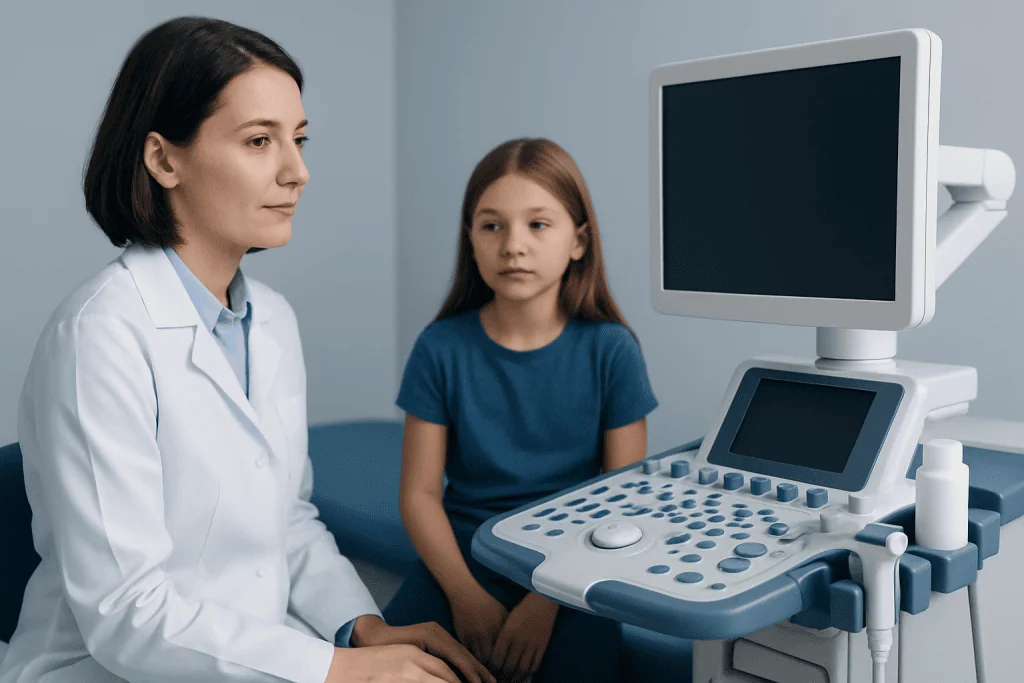
The first signs of puberty differ between girls and boys. In girls, early breast development is often the first noticeable sign. In boys, enlargement of the testes is usually the earliest sign of true puberty, though it may not be noticed right away at home. Both girls and boys may also develop pubic or underarm hair, acne, body odor, oily skin, or a rapid increase in height.
Possible signs of precocious puberty include:
- Breast development before age 8 in girls
- Menstrual bleeding at an unusually young age
- Testicular or penile enlargement before age 9 in boys
- Rapid growth or a sudden change in clothing or shoe size
- Pubic or underarm hair, acne, or adult-type body odor
- Mood changes or emotional sensitivity related to physical changes
Not every early change means a child has precocious puberty. Some children have premature thelarche, which is isolated breast development in young girls, or premature adrenarche, which causes early body odor or pubic hair without full puberty. These variations are often benign, but a medical evaluation is important when changes are progressive, appear very early, or occur with rapid growth.
Causes and Risk Factors

In central precocious puberty, the hypothalamus and pituitary gland in the brain begin sending puberty signals earlier than expected. In many girls, no specific cause is found. In boys, and in very young girls, doctors are more likely to look carefully for a brain or hormonal condition because an underlying cause is more common in these groups.
Peripheral precocious puberty is caused by sex hormones made outside the normal puberty control pathway. Possible causes include ovarian cysts, testicular or adrenal conditions, rare hormone-producing tumors, severe untreated hypothyroidism, or genetic conditions such as McCune-Albright syndrome. Exposure to external hormones, such as estrogen or testosterone creams, supplements, or medications used by others in the household, may also trigger early changes.
Risk factors can include a family history of early puberty, certain genetic syndromes, previous brain injury, radiation treatment to the brain, and some central nervous system conditions. Higher body weight is associated with earlier puberty timing in some children, especially girls, although body weight alone does not explain all cases. The goal of evaluation is not to assign blame, but to understand what is driving the changes and whether treatment is needed.
How Precocious Puberty Is Diagnosed
Diagnosis begins with a detailed medical history and physical examination. The doctor will ask when changes started, how quickly they progressed, whether there has been a growth spurt, and whether the child has headaches, vision changes, seizures, or other symptoms. Growth charts are very helpful because early puberty often causes faster-than-expected height gain.
The physical examination may include Tanner staging, a standard way to describe puberty development. A bone age X-ray of the left hand and wrist is commonly used to estimate skeletal maturity. If the bones are maturing much faster than the child’s actual age, this may indicate that puberty hormones are advancing growth plates too quickly.
Blood tests may measure luteinizing hormone, follicle-stimulating hormone, estradiol in girls, testosterone in boys, thyroid hormones, adrenal hormones, and other markers depending on the situation. Sometimes a GnRH stimulation test is used to distinguish central precocious puberty from other causes. Imaging may include pelvic ultrasound in girls, testicular or adrenal imaging when needed, or brain MRI, especially in boys, girls younger than 6, or children with neurological symptoms.
Treatment Options
Treatment depends on the child’s age, the speed of puberty progression, predicted adult height, test results, and the underlying cause. Some children with slowly progressing or mild changes may only need observation with regular follow-up. Monitoring usually includes growth measurements, physical examination, and sometimes repeat bone age or hormone testing.
For central precocious puberty that is progressing, doctors may recommend GnRH agonist therapy. These medicines temporarily pause the early puberty signal from the brain. They are commonly given as scheduled injections or, in some settings, as an implant. The aim is to slow further sexual development, reduce rapid bone maturation, and help preserve adult height potential when treatment is appropriate.
If peripheral precocious puberty is found, treatment focuses on the cause. This may involve managing an ovarian cyst, adrenal or testicular disorder, thyroid disease, or exposure to outside hormones. When a mass or structural condition is identified, care may involve pediatric endocrinology, radiology, neurosurgery, oncology, or other specialists depending on the diagnosis.
Emotional support is also part of treatment. Children who develop early may feel different from classmates, and families may need guidance about body changes, hygiene, menstruation, privacy, and age-appropriate conversations. A calm and supportive approach helps children understand that their bodies are being cared for and that they are not at fault.
Prevention, Self-Care, and Family Support
Most cases of precocious puberty cannot be reliably prevented, especially when they are related to natural hormone timing or central activation of puberty. However, families can reduce avoidable hormone exposure by keeping prescription hormone gels, creams, patches, and supplements safely away from children. Products containing estrogen, testosterone, or unknown hormone-like ingredients should not be used for a child unless prescribed by a qualified doctor.
Healthy daily habits support overall growth and development. These include balanced nutrition, regular physical activity, adequate sleep, and limiting unnecessary exposure to endocrine-disrupting chemicals where practical. Families do not need to become fearful of normal household products, but they can choose age-appropriate personal care items and avoid adult hormone products being shared or transferred through skin contact.
Parents and caregivers can help by speaking about puberty in simple, reassuring language. Children may need practical support with deodorant, acne care, bras, or menstrual supplies earlier than peers. Schools may also need to be informed discreetly if a child needs bathroom access, emotional support, or help managing teasing.
When to See a Doctor
A child should be assessed by a healthcare professional if puberty signs appear before age 8 in girls or before age 9 in boys. Medical advice is also recommended if changes are progressing quickly, growth is suddenly accelerating, menstrual bleeding occurs very early, or a boy shows testicular enlargement or other puberty signs before the expected age range.
Families should seek prompt medical review if early puberty signs occur with headaches, vision problems, vomiting, seizures, weakness, changes in coordination, or major behavior changes. These symptoms do not mean a serious condition is definitely present, but they do make timely evaluation important.
A pediatric endocrinologist is often the specialist who evaluates and treats precocious puberty. Acibadem International’s multidisciplinary specialists and JCI-accredited hospitals diagnose and treat endocrine conditions in children, including precocious puberty, for international patients. Families should consult a qualified doctor to decide which tests and treatment options are appropriate for their child.
Frequently asked questions
What age is considered precocious puberty?
Precocious puberty is commonly defined as puberty signs before age 8 in girls and before age 9 in boys. These age cutoffs are general guidelines, and doctors also consider how quickly changes are progressing and whether growth is accelerating.
Is early breast development always true puberty?
No. Some young girls have premature thelarche, which is isolated breast development without other signs of puberty. A doctor can check growth patterns, physical findings, and sometimes hormones or bone age to decide whether it is a harmless variation or true precocious puberty.
Can precocious puberty affect adult height?
Yes, in some children. Early puberty can make a child grow quickly at first, but it can also cause the growth plates in the bones to mature and close earlier. Treatment may help preserve height potential when puberty is clearly progressing and bone age is advanced.
What tests are commonly used for early puberty?
Common tests include a growth chart review, physical examination, bone age X-ray, and blood tests for puberty-related hormones. Depending on the child's age, symptoms, and test results, the doctor may also recommend ultrasound or brain MRI.
How is central precocious puberty treated?
Progressive central precocious puberty is often treated with GnRH agonist therapy, which temporarily pauses the early puberty signal. The treatment plan, schedule, and duration are individualized by a pediatric endocrinologist based on the child's development and growth.
Will puberty start again after treatment stops?
In most children, puberty resumes after GnRH agonist treatment is stopped. The timing varies, so the doctor will monitor growth, development, and emotional readiness during and after treatment.
Should parents talk to their child about early puberty?
Yes. Children usually cope better when adults explain body changes in calm, age-appropriate language. Reassurance, privacy, and practical support with hygiene or menstruation can reduce worry and help the child feel safe.
References
- Pediatric Endocrine Society
- Endocrine Society
- American Academy of Pediatrics
- Mayo Clinic
- Merck Manual Professional Edition
This article is for general information only and is not a substitute for professional medical advice. Please consult a qualified doctor about your individual situation.
Explore treatments in Turkey — costs, top hospitals & a free quote
JCI-accredited · board-certified surgeons · reply within 24h
Add us as a Preferred Source to see more of our trusted health content across Google Search, AI Overviews and Discover.

Pediatrics
Complete healthcare for infants, children and adolescents across all sub-specialties.
232 specialists in this unitMore from the Health Library



Related Specialists

Prof. Dr. Gülcihan Özkan
Pulmonology
Assoc. Prof. Dr. Songül Meltem Can
Neurosurgery
Prof. Dr. Tevfik Fikret Çermik
Nuclear Medicine
Dr. Nalyan Shener Gulagiz
Emergency Service