

Self-Injection Medicines After Discharge in Turkey

Self-injection medicines after discharge are treatments patients continue at home by giving themselves a prescribed injection safely and correctly. At Acibadem in Turkey, this process is supported with discharge planning, practical training on preparation and injection technique, guidance on storage and disposal, and follow-up instructions to help patients use their medicines as directed.
If you are discharged in Turkey with a medicine you must inject yourself, the safest plan starts before you leave the hospital. This guide explains how to prepare, travel, store your medicine, dispose of sharps, and know when to ask for help.
At a glance
- Best time to learn: Before discharge, with a nurse or pharmacist watching you practice
- What to confirm: Dose, timing, injection site, storage, missed-dose advice and warning signs
- Travel priority: Keep medicines, supplies and documents in your hand luggage
- Safety essential: Use a puncture-resistant sharps container and never reuse needles
- Support in Turkey: Ask your care team or international patient coordinator for written instructions and interpreter help
Understanding your self-injection plan before you leave
Going home with an injectable medicine can feel like a big responsibility, especially when you are recovering in another country. Before discharge, ask your nurse, doctor or pharmacist to explain exactly why the medicine is needed, how long you are expected to use it, and what your daily routine should look like. You do not need to memorize everything on the spot; the goal is to leave with clear written instructions and a practical plan you can follow.
Your discharge team should show you the injection device or syringe you will use, the correct dose, the time of day, and the body area where the injection should be given. If you are staying in a hotel or serviced apartment in Istanbul or elsewhere in Turkey, tell the team what your environment will be like. This helps them advise you on privacy, refrigeration, waste storage and what to do if your schedule changes because of travel or appointments.
At Acibadem International, international patient services can help coordinate conversations between your clinical team, pharmacist, interpreter and companion when needed. If English is not your first language, ask for instructions in a language you fully understand. A calm, repeated explanation is not a luxury; it is an important part of medication safety.
What to check in your discharge medication pack
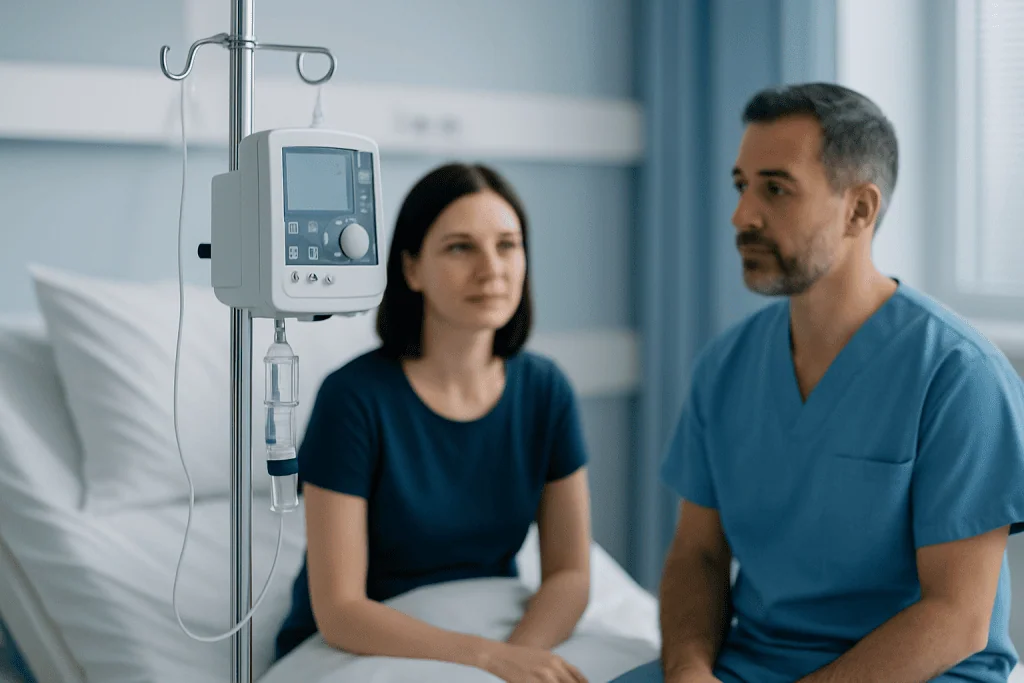
Before you physically leave the hospital, open your medication pack with a nurse or pharmacist and check it item by item. Injectable medicines may come as prefilled syringes, pens, vials, cartridges or powder that needs preparation by a healthcare professional. Make sure the packaging matches what you were shown and that you understand whether anything must be mixed, attached or removed before use.
Confirm the medicine name, strength, dose, frequency, start date, stop date and expiry date. If the brand name in Turkey looks different from the name used in your home country, ask the team to write down the generic name as well. This is especially helpful if you need follow-up care after returning home or if airport security asks about your supplies.
- Ask which items are included: medicine, needles, syringes, alcohol swabs, gauze, plasters and sharps container.
- Ask which items you may need to buy separately from a pharmacy.
- Ask whether the medicine needs refrigeration or protection from light.
- Ask what to do if one dose is delayed, dropped, leaked or looks damaged.
Learning the injection routine safely
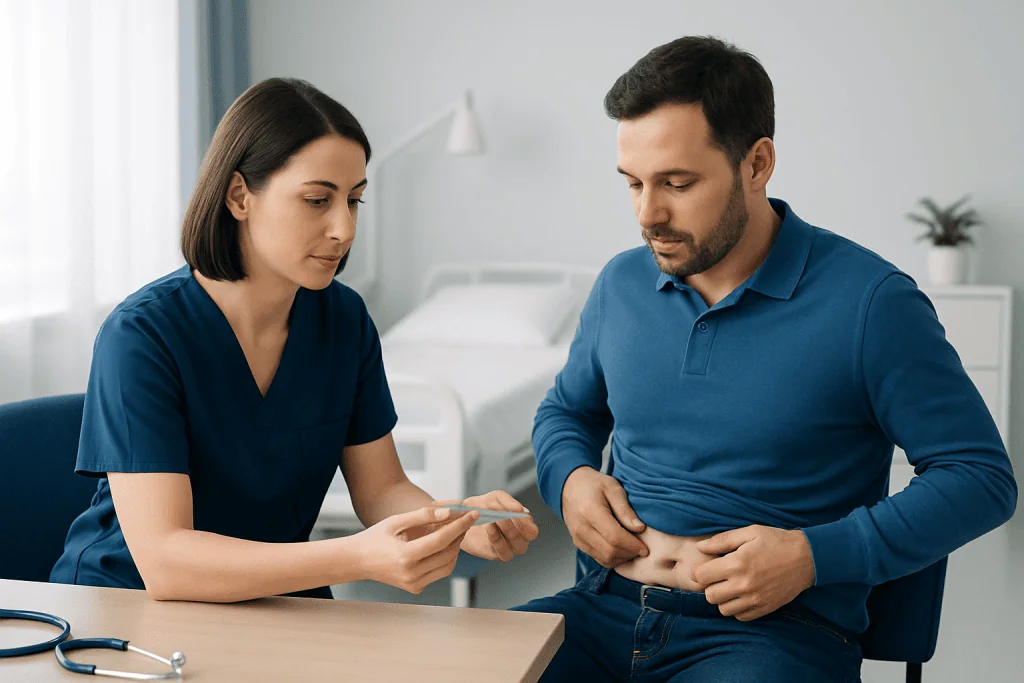
Do not leave the hospital planning to work it out later from memory. Ask for a supervised demonstration, then ask to practice the steps back to the nurse using the same type of device you will use after discharge. This teach-back approach helps identify small misunderstandings before they become stressful at your hotel, airport or home.
Your team may guide you on hand hygiene, checking the medicine, preparing a clean surface, choosing the injection area, rotating sites, and disposing of the needle immediately after use. Follow the instructions specific to your prescription and device. Do not change the dose, timing or injection site pattern unless your doctor or pharmacist tells you to.
If your companion will help you, they should attend the training too. They need to know not only how to assist, but also when not to inject, such as if the medicine looks unusual, the device is damaged, or you feel unwell in a way that worries you. If you feel anxious, tell the nurse; many patients feel more confident after seeing the process slowly a second or third time.
Storage, temperature and hotel-room planning
Some injectable medicines must be kept within a certain temperature range, while others can be stored at room temperature for a limited time. The safe range depends on the medicine, so always follow the label and the instructions from your pharmacist. Do not guess based on another patient’s medicine, even if the packaging looks similar.
If refrigeration is needed, ask whether your hotel room minibar is suitable. Some minibars are not consistent enough for medication storage, and freezer compartments may accidentally freeze medicine. Ask your international patient coordinator or hotel reception about a reliable refrigerator, and place the medicine in a clean container or sealed bag away from food and spills. Never place injectable medicine directly against ice packs unless your pharmacist says this is safe.
When traveling within Turkey or flying home, carry temperature-sensitive medicine in an insulated bag with appropriate cooling materials if advised. Keep it with you, not in checked luggage, because aircraft holds may be too hot, too cold or inaccessible. Bring the original packaging and prescription documents so the medicine can be identified easily.
Sharps disposal and avoiding needle injuries
Used needles, lancets, syringes and injection pens can injure others if they are placed in ordinary rubbish. Ask before discharge for a sharps container or advice on where to obtain one. If you are not given a formal container immediately, ask the care team what temporary puncture-resistant option is acceptable until you can obtain the correct disposal container.
After each injection, place the used sharp directly into the container without recapping, bending or breaking the needle unless your specific device instructions say otherwise. Keep the container upright, closed, and out of reach of children, visitors and housekeeping staff. If you are staying in a hotel, do not leave used sharps loose in bins, bathroom counters, towels or bedding.
Before you return home, ask how to handle the container during travel and where it should ultimately be disposed of. Rules vary by country and airline, so it is wise to check in advance. If there is any accidental needle injury, wash the area, seek medical advice promptly, and inform your care team.
When to contact your care team
Most questions about self-injection are easier to solve early, before you miss a dose or become worried. Contact your discharge team, international patient coordinator or local healthcare provider if you are unsure about the dose, timing, storage, device function or injection technique. It is safer to ask than to improvise.
Seek urgent medical advice if you develop symptoms your doctor has warned you about, signs of a serious allergic reaction, severe dizziness, difficulty breathing, spreading rash, swelling of the face or throat, heavy bleeding, worsening pain, fever, or any symptom that feels sudden and severe. For injection-site concerns, ask your team what level of redness, bruising, swelling or discomfort is expected and what should be reported.
Acibadem International’s JCI-accredited hospitals use discharge planning to help international patients understand follow-up steps before they leave Turkey. Keep the contact details you are given in your phone and printed with your travel documents. If you will continue the medicine after returning home, arrange a handover to your home doctor as early as possible.
Step by step
- Ask for a full medication briefing. Before discharge, ask your nurse, doctor or pharmacist to review the medicine name, purpose, dose, timing and stop date. Request written instructions and make sure you know whom to contact if something is unclear.
- Practice the injection before leaving. Watch a demonstration and then repeat the steps under supervision if your clinical team says self-administration is appropriate. If a companion will help you, they should practice or observe too.
- Check every item in your supplies. Confirm that you have the medicine, needles or device parts, alcohol swabs, dressings if needed, and a sharps container or disposal plan. Check expiry dates and ask what to do if a device is damaged or a dose is missed.
- Plan storage at your accommodation. Ask whether the medicine needs refrigeration, room-temperature storage or protection from light. If you need refrigeration, arrange a reliable option before you arrive at your hotel or apartment.
- Prepare for travel days. Keep medicine and supplies in your hand luggage with prescriptions, discharge notes and a doctor letter if provided. Allow extra time at airport security and never place essential medicine in checked baggage.
- Use sharps safely every time. Place used needles or injection devices directly into a sharps container after use. Keep the container closed, away from children and cleaners, and follow disposal instructions from your care team.
- Arrange follow-up before you return home. If treatment continues after your trip, share your Turkish discharge notes with your home doctor or pharmacist. Ask for the generic medicine name and any monitoring requirements so your care can continue smoothly.
Your checklist
- Written medication instructions with medicine name, dose, timing and duration
- Demonstration and supervised practice completed before discharge
- Prescription, discharge summary and generic medicine name packed with travel documents
- Enough medicine and supplies for your stay, travel days and any expected delays
- Clear storage plan for hotel, apartment, transfer vehicle and flight
- Sharps container or approved temporary disposal plan
- Contact number for your care team or international patient coordinator
- Interpreter support arranged if you or your companion need it
- Follow-up appointment or handover plan with your doctor at home
Key takeaways
- The safest self-injection routine starts with hands-on training before discharge.
- Keep injectable medicines in their original packaging with prescriptions and discharge notes when traveling.
- Storage requirements vary, so follow the specific instructions for your medicine rather than general advice.
- Used needles must go into a sharps container, not ordinary hotel or household rubbish.
- Ask early for interpreter, pharmacy, travel and follow-up support if you are continuing treatment after leaving Turkey.
Frequently asked questions
Can I travel with injectable medicines after discharge in Turkey?
In many cases, yes, but you should plan ahead. Keep the medicine in your hand luggage with the original packaging, prescription and discharge documents. If the medicine needs cooling, ask your pharmacist how to keep it within the safe temperature range during transfers and flights.
What if I am nervous about injecting myself?
Feeling nervous is common, especially after a hospital stay abroad. Ask the nurse to demonstrate slowly, then supervise you while you practice the steps. If a family member or companion will assist you, include them in the teaching session before you leave.
Can hotel staff store my medicine in a refrigerator?
They may be able to help, but you should first confirm the medicine’s storage needs with your pharmacist or care team. If hotel storage is used, label the medicine clearly and keep it in original packaging. Make sure you can access it at the required dosing times, including early mornings or late evenings.
What should I do if I miss a dose?
Do not double the next dose unless your doctor or pharmacist has specifically told you to do so. Follow the missed-dose instructions on your discharge plan or contact your care team for advice. The safest answer depends on the medicine, your condition and how much time has passed.
How do I dispose of needles while staying in Turkey?
Ask your discharge team for a sharps container or instructions on obtaining one. Put used needles or devices directly into the container and keep it closed and out of reach. Do not place loose needles in hotel bins, public rubbish bins or luggage pockets.
Will airport security allow syringes or injection pens?
Security rules vary, but carrying medical supplies is usually easier when they are in original packaging with a prescription or doctor letter. Keep them together in your hand luggage and declare them if asked. Allow extra time and do not pack essential medicine in checked baggage.
Who can I contact if I have a question after leaving the hospital?
Use the contact details provided in your discharge papers or speak with your international patient coordinator. Acibadem International can help direct international patients to the right clinical or pharmacy contact when follow-up questions arise. If symptoms are urgent or severe, seek emergency medical help immediately.
Add us as a Preferred Source to see more of our trusted health content across Google Search, AI Overviews and Discover.
More Patient Guides

At Acibadem, How We Manage Your Medicines Before and After Treatment
Manage your medicines before and after treatment in Turkey with a clear plan for prescriptions, supplements, timing, and safe follow-up.
9 min read
How to Bring Medical Devices for Treatment Travel to Turkey
Bring medical devices for treatment travel to Turkey by packing documents, power adapters, supplies, and backup plans before you fly.
9 min read
Preparing for General Anesthesia in Turkey: What International Patients Should Know
General anesthesia in Turkey usually involves fasting, medication review, and pre-op checks. This guide helps international patients prepare safely in Istanbul or…
9 min read