

Storing Medicines Safely in Your Hotel Room in Turkey

Medicines can usually be stored safely in a hotel room in Turkey if you keep them in their original packaging, follow the temperature instructions on the label, and protect them from heat, humidity, and direct sunlight. At Acibadem, international patient teams can help you check storage requirements for your medicines and advise when a room refrigerator or other arrangements may…
Your hotel room can be a safe place for medicines when you plan for temperature, privacy, child safety and easy access during your stay in Turkey. This guide helps you organize prescriptions, over-the-counter items and treatment-related medicines without stress.
At a glance
- Best storage spot: Cool, dry, shaded and out of reach
- Avoid: Bathrooms, sunny windowsills and hot bags
- Keep with you: Daily essentials, emergency medicines and copies of prescriptions
- For refrigerated medicines: Confirm fridge access before arrival and monitor temperature where possible
- Need help: Ask your care coordinator, pharmacist or hotel reception for safe options
Why hotel medicine storage matters during your stay
When you travel for care, your medicines may be part of your daily routine, your preparation plan or your recovery instructions. In a hotel room, small details such as heat, humidity, light and access by children can affect how safely you store them. A calm setup on your first day helps you avoid missed doses, damaged packaging or confusion between similar-looking boxes.
Turkey, including Istanbul, can be warm in many seasons, and hotel rooms may heat up when curtains are open or air conditioning is switched off while you are out. Bathrooms can also become humid after showers. Most medicines are best kept in a cool, dry place unless the label or your medical team tells you otherwise.
If you are receiving care through Acibadem International, your international patient coordinator can help you understand practical questions, such as where to keep post-treatment medicines, how to contact the hospital pharmacy and when to ask for clarification. They cannot replace your doctor’s instructions, but they can help you navigate the logistics in a new country.
Choose the safest place in your room

Pick one dedicated storage area as soon as you check in. A high shelf inside a wardrobe, a closed drawer away from direct sunlight or a travel medicine pouch inside your suitcase can work well. The key is to choose a place that is dry, shaded, easy for you to remember and not easily reached by children or visitors.
Avoid keeping medicines on the bathroom counter, near a kettle, beside a window, on a balcony or inside a car. These locations can become hot or humid quickly. If housekeeping will enter the room, place medicines in a discreet pouch or locked suitcase so items are not moved during cleaning.
- Keep tablets and capsules in their original packaging whenever possible.
- Store liquids upright and check that caps are fully closed.
- Separate morning, evening and emergency medicines to reduce mix-ups.
- Keep sharp items, such as injection needles, safely contained and out of sight.
Managing temperature-sensitive or refrigerated medicines
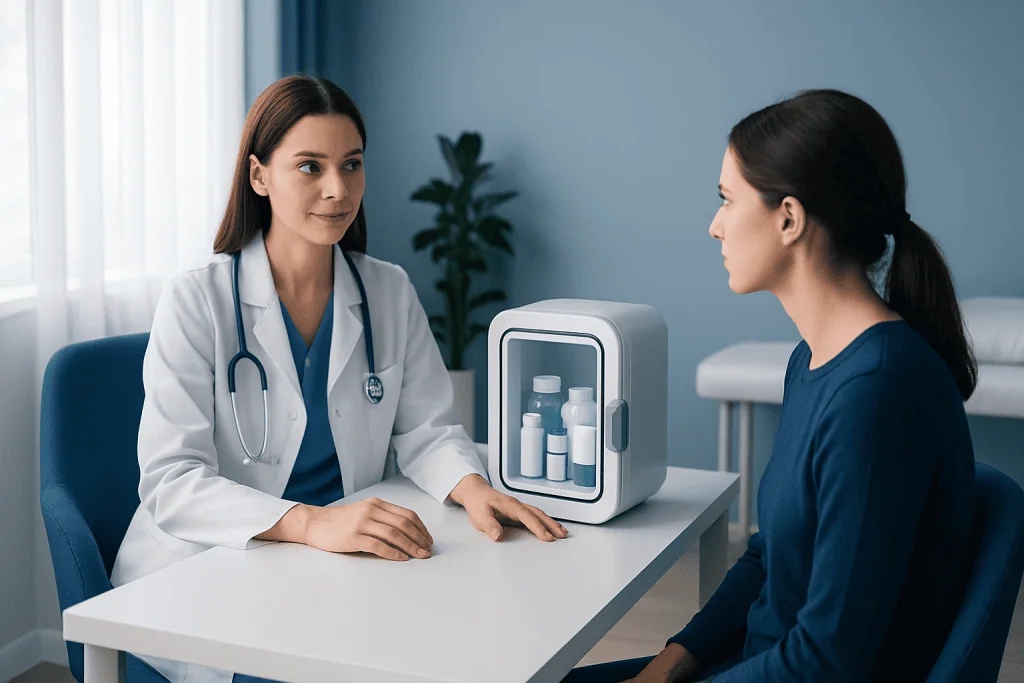
Some medicines, such as certain injections, eye drops or biologic medicines, may need refrigeration. Before you travel, ask your prescribing doctor or pharmacist for the exact storage range and how long the medicine can safely remain outside the fridge. Do not guess, because different products have different requirements.
If you need refrigeration in your hotel, contact the hotel before arrival and confirm whether your room has a reliable mini-fridge or whether reception can store medicine in a suitable medical or secure refrigerator. A mini-fridge is convenient, but temperatures can vary, especially if it is overfilled or opened often. If you use it, place the medicine away from the freezer compartment and avoid the door if possible.
For transfers between the airport, hotel and hospital, use an insulated pouch or cooler pack if your pharmacist recommends it. Keep the medicine in your hand luggage, not checked baggage, and avoid placing it directly against frozen gel packs unless the packaging says this is safe. If you are unsure whether a medicine has been exposed to heat or freezing, ask a pharmacist or your care team before using it.
Keep labels, prescriptions and schedules clear
In a new environment, it is easier than usual to lose track of timing, especially if you have appointments, jet lag or fasting instructions. Keep medicines in their original boxes with labels attached, and carry a written list that includes the medicine name, strength, dose, timing and reason for use. A photo of each package can also be helpful if you need to ask a doctor or pharmacist a question.
If your medicines are in another language, do not rely only on color, shape or memory. Ask your home doctor, pharmacist or Acibadem International care coordinator to help you prepare a clear English list before or during your trip. This is especially useful if you take blood thinners, insulin, heart medicines, seizure medicines, steroids, pain medicines or immune-related treatments.
Use phone alarms based on Turkey local time once you arrive. If you crossed time zones, ask your doctor or pharmacist how to adjust dose timing safely. For treatment days, bring your list to the hospital so your medical team can check for interactions and confirm which medicines to continue, pause or restart.
Privacy, child safety and housekeeping
Hotel rooms often include companions, visiting family members or children, and your medicine setup should protect everyone. Store medicines out of reach and out of sight, ideally in a zipped pouch or locked suitcase. This is especially important for pain medicines, sedatives, diabetes medicines, patches, liquids and any medicine that could harm someone who takes it accidentally.
If you are travelling with children, do not call medicine candy or leave daily pill boxes on bedside tables. Child-resistant packaging is helpful, but it is not childproof. If a child or another person accidentally takes a medicine, contact local emergency services, the hotel front desk or your hospital team immediately and keep the packaging available.
Housekeeping staff may move items while cleaning, even with good intentions. Before leaving for appointments, place your medicines in your chosen storage spot and check that liquids, injections and sharps are secure. If you prefer privacy, use the hotel safe for documents and non-temperature-sensitive items, but do not store medicines there if heat or access would become a problem.
What to do if something goes wrong
If you miss a dose, spill a liquid, break a tablet strip or think a medicine was stored incorrectly, pause and check reliable instructions. Do not double a dose unless your doctor or pharmacist has specifically told you to do so. Many medicines have different rules for missed doses, and the safest answer depends on the medication and your condition.
If your medicine is lost or damaged, contact your treating hospital, your prescribing doctor or a licensed pharmacy. Keep your prescription copies and medicine list ready. Some medicines may require a doctor’s prescription in Turkey, and controlled medicines may have additional rules, so it is better to ask early rather than wait until you run out.
Acibadem International patients can contact their international patient services team for direction on who to call, where to go and whether an interpreter is needed. For urgent symptoms, allergic reactions, severe pain, breathing difficulty, confusion or suspected overdose, seek emergency help immediately rather than trying to solve the storage issue first.
Step by step
- Prepare before you fly. Pack enough medicine for your full stay plus a small extra supply in case travel plans change. Keep medicines in original packaging with prescriptions or doctor letters, especially for injections, controlled medicines or items that require special storage.
- Keep essentials in your hand luggage. Carry daily medicines, emergency medicines and temperature-sensitive items with you during flights and transfers. Checked luggage can be delayed or exposed to temperature changes, so it is not the safest place for essential medication.
- Inspect your hotel room on arrival. Look for a cool, dry, shaded place away from the bathroom and window. If you need a refrigerator, check that it is working and ask reception for help if it seems too warm, too cold or unavailable.
- Set up a simple medicine station. Place medicines, your dose schedule, water and any approved measuring device together in one organized area. Keep this station discreet and out of reach, especially if children or visitors may enter the room.
- Update your schedule to Turkey time. Use phone alarms or a written chart to match your care plan in local time. If time-zone changes affect medicines such as insulin, anticoagulants or seizure medication, ask a clinician or pharmacist for specific guidance.
- Bring medicines to hospital visits. Take your current medicine list and, when useful, the original packages to appointments. This helps your team confirm names, strengths and potential interactions with tests, anesthesia or treatment instructions.
- Dispose of waste safely. Do not throw loose needles, syringes or sharp items into regular hotel rubbish. Ask the hospital, clinic or pharmacy about safe disposal options, and keep sharps in a rigid container until you receive proper instructions.
Your checklist
- Original medicine packaging with readable labels
- Prescription copies or doctor letter in English if possible
- Written medicine list with dose, timing and purpose
- Insulated pouch for temperature-sensitive medicines if recommended
- Phone alarms set to Turkey local time
- Small lockable pouch or suitcase space for privacy and child safety
- Measuring spoon, syringe or device supplied for liquid medicines
- Spare supply for unexpected travel delays
- Contact details for your hospital team, pharmacy and travel insurer
- Rigid container or plan for safe sharps disposal if needed
Key takeaways
- Store most medicines in a cool, dry, shaded place, not in the bathroom or direct sun.
- Keep original labels and prescriptions with you so clinicians and pharmacists can identify medicines correctly.
- Plan refrigeration in advance if any medicine is temperature-sensitive.
- Use local-time reminders and a clear medicine list to prevent missed or duplicated doses.
- Keep medicines private, secure and out of reach of children, visitors and housekeeping movement.
- Seek medical or pharmacy advice if medicine is lost, damaged or stored incorrectly.
Frequently asked questions
Can I keep my medicines in the hotel bathroom?
It is usually better not to. Bathrooms can become humid and warm after showers, which may affect some medicines. A dry drawer, wardrobe shelf or medicine pouch in the main room is usually a safer choice unless the label says otherwise.
What should I do if my hotel room does not have a fridge?
Contact hotel reception and explain that you have temperature-sensitive medicine. They may offer a suitable storage option or help you change rooms, but you should confirm that the storage is secure and appropriate. If you are an Acibadem International patient, your coordinator can help you decide who to contact for guidance.
Is a hotel mini-fridge safe for injections or insulin?
It may be suitable for some medicines, but mini-fridges can vary in temperature. Keep medicine away from the freezer area and avoid direct contact with ice packs unless your pharmacist says it is safe. If freezing or overheating may have occurred, ask a pharmacist or clinician before use.
Should I use a weekly pill organizer while travelling?
A pill organizer can help with daily routines, but keep original packaging as well so medicine names and strengths remain clear. This is important for hospital visits, pharmacy questions and border checks. If your medicines look similar, label the organizer carefully and refill it in a quiet, well-lit place.
What if I miss a dose during an appointment day?
Check your written instructions or contact your doctor or pharmacist. Do not automatically take a double dose, because missed-dose advice depends on the medicine. If you are going to the hospital, bring the medicine list and tell your care team what happened.
Can I buy replacement medicines in Turkey if I run out?
Some medicines may be available through licensed pharmacies, but names, strengths and prescription rules can differ. Bring your prescription and original packaging to help identify the medicine accurately. For specialist or controlled medicines, contact your treating team early because replacement may take time.
How should I store pain medicine after a procedure?
Keep pain medicine in its original packaging, away from alcohol, children and anyone for whom it was not prescribed. Follow the dose and timing instructions exactly, and ask before combining it with sleep aids, sedatives or other pain relievers. If pain is not controlled or you feel unusually drowsy or unwell, contact your care team.
Add us as a Preferred Source to see more of our trusted health content across Google Search, AI Overviews and Discover.
More Patient Guides

At Acibadem, How We Manage Your Medicines Before and After Treatment
Manage your medicines before and after treatment in Turkey with a clear plan for prescriptions, supplements, timing, and safe follow-up.
9 min read
How to Bring Medical Devices for Treatment Travel to Turkey
Bring medical devices for treatment travel to Turkey by packing documents, power adapters, supplies, and backup plans before you fly.
9 min read
Preparing for General Anesthesia in Turkey: What International Patients Should Know
General anesthesia in Turkey usually involves fasting, medication review, and pre-op checks. This guide helps international patients prepare safely in Istanbul or…
9 min read