Degenerative Disc Disease: Back or Neck Pain and When Imaging Matters

Degenerative Disc Disease is common with aging and does not always cause pain. Symptoms may include back or neck pain, stiffness, and sometimes pain, tingling, or weakness that travels into an arm or leg.
Key Takeaways
- Degenerative Disc Disease is common with aging and does not always cause pain.
- Symptoms may include back or neck pain, stiffness, and sometimes pain, tingling, or weakness that travels into an arm or leg.
- MRI and other imaging tests are most useful when red flags, nerve symptoms, trauma, or persistent pain are present.
- Most people improve with non-surgical care such as activity modification, physical therapy, appropriate pain relief, and healthy lifestyle habits.
- Urgent medical care is needed for new bladder or bowel problems, saddle numbness, progressive weakness, fever, unexplained weight loss, or severe pain after trauma.
Degenerative Disc Disease describes age-related changes in the spinal discs that can contribute to back or neck pain, stiffness, or nerve irritation. Imaging can be helpful in selected situations, but treatment decisions depend on symptoms, examination findings, and how the pain affects daily life.
Overview
Degenerative Disc Disease is a medical term for wear-and-tear changes in the discs between the bones of the spine. Despite the word disease, it is not an infection or a spreading illness. It usually refers to natural changes that occur over time as discs lose water content, become less flexible, or develop small tears in the outer layer.
Spinal discs act as cushions and allow the neck and back to bend and absorb load. When a disc changes shape or loses height, it can contribute to stiffness, local inflammation, or extra stress on nearby joints, ligaments, and muscles. In some people, disc changes may also narrow the space around spinal nerves and cause symptoms in the arms or legs.
It is important to know that disc degeneration is very common, especially with age, and many people with disc changes on MRI or X-ray have no pain at all. For this reason, doctors interpret imaging together with the person’s symptoms, physical examination, medical history, and response to treatment.
Symptoms: Back or Neck Pain Patterns
Symptoms vary widely. Some people have mild stiffness that comes and goes, while others experience episodes of back or neck pain that interfere with work, sleep, or exercise. Pain may be felt in the lower back, neck, buttocks, shoulders, or between the shoulder blades, depending on the level of the spine involved.
Disc-related pain often worsens with certain positions or activities. Sitting for long periods, bending, lifting, twisting, or looking down at a phone or computer may aggravate symptoms. Walking, changing position, gentle movement, or lying down may bring relief for some people, although patterns differ from person to person.
If a degenerative disc or related bone and joint changes irritate a nerve root, symptoms can travel away from the spine. In the neck, this may cause pain, tingling, numbness, or weakness into the shoulder, arm, or hand. In the lower back, it may cause sciatica-like symptoms into the buttock, thigh, calf, or foot.
Symptoms that are more concerning include progressive weakness, loss of balance, difficulty using the hands, or changes in bladder or bowel control. These do not occur in most cases of Degenerative Disc Disease, but they require prompt medical assessment because they may indicate significant nerve or spinal cord compression.
Causes and Risk Factors

Disc degeneration usually develops gradually. As discs age, they may lose hydration and elasticity, making them less able to absorb pressure. Small cracks can form in the annulus, the outer ring of the disc, and the disc may bulge or flatten. Nearby facet joints can also develop arthritis-like changes, and ligaments may thicken as the spine adapts.
Age is the strongest risk factor, but it is not the only one. Genetics can influence disc health, meaning some people develop changes earlier than others. Repetitive heavy lifting, frequent bending or twisting, previous spine injury, smoking, reduced physical conditioning, and excess body weight may increase stress on spinal structures.
Daily habits can also affect symptoms. Long periods of sitting, poor workstation setup, low activity levels, inadequate sleep, and high stress can make pain more noticeable or harder to manage. These factors do not always cause disc degeneration directly, but they can influence muscle tension, inflammation, posture, and pain sensitivity.
Degenerative Disc Disease can occur in the cervical spine, thoracic spine, or lumbar spine, although the neck and lower back are most commonly symptomatic. The lumbar spine carries much of the body’s weight, while the cervical spine supports head movement and is exposed to repeated posture-related strain.
Diagnosis: Clinical Assessment Comes First
The diagnosis begins with a careful conversation and physical examination. A doctor will ask where the pain is located, what triggers or relieves it, whether symptoms travel into an arm or leg, and whether there are signs of nerve involvement. The examination may assess posture, range of motion, reflexes, sensation, muscle strength, walking pattern, and specific movements that reproduce symptoms.
Many back and neck pain episodes improve over days to weeks without advanced testing. If symptoms are mild, stable, and not associated with warning signs, a clinician may recommend conservative treatment first. This approach avoids unnecessary tests and helps prevent over-interpreting common age-related findings.
Diagnosis is not based on imaging alone. A scan may show a disc bulge, dehydration, or reduced disc height, but those findings may or may not be the cause of pain. Doctors look for a match between the imaging result, the person’s symptoms, and the neurologic examination before deciding on a treatment plan.
In some cases, blood tests or additional evaluations may be needed if infection, inflammatory disease, cancer, or another non-mechanical cause is suspected. This is more likely when pain is accompanied by fever, unexplained weight loss, a history of cancer, immune suppression, or pain that is severe at rest and not improving.
When Imaging Matters
Imaging is most useful when it is likely to change management. For uncomplicated back or neck pain without red flags, immediate imaging is often not necessary. Many people improve with guided conservative care, and early scans can reveal common disc changes that may not be causing the pain.
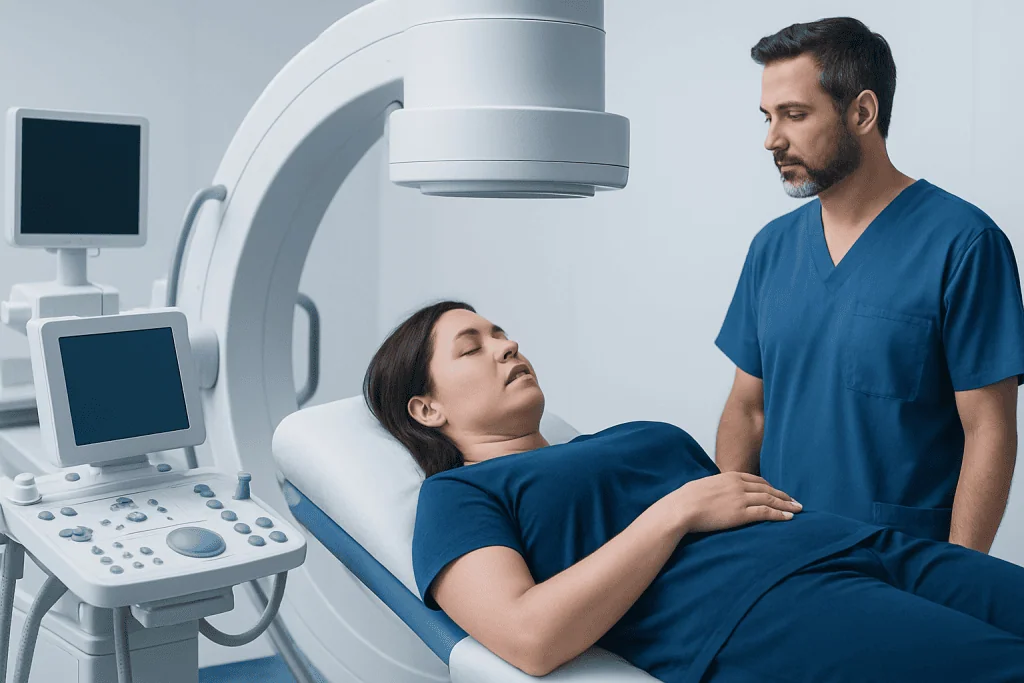
MRI is usually the preferred test when doctors need to evaluate discs, nerves, the spinal cord, or soft tissues. It may be recommended for persistent pain that does not improve after an appropriate period of non-surgical care, pain that follows a clear nerve pattern, weakness or numbness, suspected spinal stenosis, or when surgery or injection treatment is being considered.
X-rays can show spinal alignment, disc space narrowing, arthritis changes, instability on flexion-extension views, or fracture in selected situations. CT scans provide detailed bone images and may be helpful after trauma or when MRI is not possible. Each test has a different purpose, so the best choice depends on the clinical question.
Imaging should be urgent when certain warning signs are present. These include new loss of bladder or bowel control, numbness around the groin or saddle area, rapidly worsening weakness, severe pain after a fall or accident, fever with back pain, unexplained weight loss, or a known history of cancer with new spine pain. In these situations, prompt evaluation helps identify serious but less common causes.
Treatment Options
Most people with Degenerative Disc Disease are treated without surgery. The first goal is to reduce pain enough to restore movement, sleep, and daily function. Treatment is individualized because the same imaging finding can cause different symptoms in different people.
Non-surgical care may include education, temporary activity modification, physical therapy, and a gradual return to normal activity. Physical therapy often focuses on mobility, core and hip strength, neck and shoulder mechanics, posture, and safe lifting strategies. Remaining gently active is usually more helpful than prolonged bed rest, unless a doctor advises otherwise.
Medications may be used for short-term symptom control when appropriate. These can include over-the-counter pain relievers or anti-inflammatory medicines, depending on the person’s health history and contraindications. Some people with nerve-related pain may need prescription options, and all medicines should be used under guidance from a qualified clinician, especially in people with stomach, kidney, liver, heart, blood pressure, or bleeding concerns.
If pain remains limiting despite conservative care, a spine specialist may discuss targeted injections or other interventional treatments. Surgery is usually reserved for selected cases such as persistent nerve compression with disabling pain, progressive neurologic deficit, spinal instability, or spinal cord compression. The type of surgery depends on the location and cause of compression and may include decompression, disc replacement, or fusion in carefully chosen patients.
Prevention and Self-care
Disc aging cannot be completely prevented, but healthy habits can reduce strain on the spine and support recovery. Regular low-impact activity, such as walking, swimming, cycling, or guided exercise, helps maintain circulation, muscle support, and joint mobility. Strengthening the core, hips, upper back, and neck-supporting muscles can improve how loads are shared across the spine.
Ergonomics can make a meaningful difference for people who sit or use screens for long periods. A supportive chair, feet flat on the floor, screen at eye level, and regular movement breaks can reduce prolonged pressure on the neck and lower back. Lifting with the load close to the body and avoiding sudden twisting while carrying weight can also help.
- Stop smoking or seek support to quit, as smoking is associated with poorer disc health and slower tissue healing.
- Maintain a healthy body weight to reduce mechanical load on the lumbar spine.
- Prioritize sleep, stress management, and gradual conditioning, as pain is influenced by the nervous system as well as by tissues.
- Use heat or cold for short-term comfort if it helps, and avoid any home treatment that worsens symptoms.
Self-care should be gentle and progressive. A person with significant pain, nerve symptoms, osteoporosis, previous spine surgery, or other complex medical conditions should seek professional guidance before starting a new exercise plan.
When to See a Doctor
A person should see a doctor if back or neck pain is severe, keeps returning, limits daily activities, or does not improve with reasonable self-care. Medical review is also important if pain travels into an arm or leg, or if there is numbness, tingling, weakness, balance difficulty, or reduced hand coordination.
Urgent assessment is needed for red flag symptoms such as new bladder or bowel problems, numbness in the saddle area, fever with spine pain, unexplained weight loss, severe night pain, significant trauma, or rapidly worsening weakness. These symptoms are uncommon but should not be ignored.
People who have a history of cancer, long-term steroid use, osteoporosis, immune suppression, intravenous drug use, or recent infection should seek medical advice earlier because their risk profile is different. Older adults with new severe spine pain after even a minor fall also need evaluation for possible fracture.
International patients who need coordinated assessment can be evaluated by multidisciplinary spine, neurology, rehabilitation, pain management, and imaging teams. Acibadem International provides diagnosis and treatment for spinal conditions in JCI-accredited hospitals, with care plans tailored to each patient’s clinical findings and goals.
Frequently asked questions
Is Degenerative Disc Disease the same as arthritis?
Degenerative Disc Disease refers mainly to age-related changes in the spinal discs. Arthritis usually refers to changes in the joints, such as the facet joints of the spine. The two often occur together and can both contribute to back or neck pain.
Does everyone with disc degeneration have pain?
No. Many people have disc degeneration on MRI or X-ray and do not have symptoms. This is why doctors do not treat the scan alone; they match imaging findings with the person’s pain pattern, examination, and daily limitations.
When is an MRI needed for back or neck pain?
MRI may be needed when there are red flags, persistent symptoms despite conservative care, or signs of nerve or spinal cord involvement. It is also useful when a specialist is considering injections or surgery. For simple recent pain without concerning features, immediate MRI is often not necessary.
Can Degenerative Disc Disease be reversed?
Age-related disc changes generally cannot be reversed to a younger state. However, symptoms can often improve significantly with exercise, physical therapy, posture changes, weight management, smoking cessation, and appropriate medical care. The goal is better function and fewer painful flare-ups.
Is surgery always required for Degenerative Disc Disease?
No. Most people improve with non-surgical treatment. Surgery is considered only for selected patients, especially when there is persistent disabling pain with a clear structural cause, progressive weakness, spinal instability, or significant nerve or spinal cord compression.
What activities should be avoided during a flare-up?
During a painful flare-up, it is wise to avoid heavy lifting, sudden twisting, prolonged sitting without breaks, or movements that clearly worsen symptoms. Gentle walking and comfortable movement are often encouraged. A doctor or physical therapist can advise when and how to return to usual activities safely.
References
- American Academy of Orthopaedic Surgeons
- North American Spine Society
- National Institute for Health and Care Excellence
- American College of Radiology
- World Health Organization
This article is for general information only and is not a substitute for professional medical advice. Please consult a qualified doctor about your individual situation.
Joint and spine care in Turkey — expert assessment & treatment
JCI-accredited · board-certified surgeons · reply within 24h
Add us as a Preferred Source to see more of our trusted health content across Google Search, AI Overviews and Discover.