Lyme Disease: Tick Bite Rash, Blood Tests, and Early Treatment

Lyme disease is spread mainly through the bite of infected blacklegged ticks in areas where the infection is present. A spreading red rash called erythema migrans is a strong early sign and may not always look like a classic bull's-eye.
Key Takeaways
- Lyme disease is spread mainly through the bite of infected blacklegged ticks in areas where the infection is present.
- A spreading red rash called erythema migrans is a strong early sign and may not always look like a classic bull's-eye.
- Blood tests can support diagnosis, but they may be negative in the first few weeks after infection.
- Early antibiotic treatment is usually effective and helps reduce the risk of later joint, heart, or nervous system complications.
- Prompt tick removal, protective clothing, and careful skin checks after outdoor exposure help lower risk.
Lyme disease is a tick-borne bacterial infection that is usually easiest to treat when recognized early. A spreading tick bite rash, flu-like symptoms, and timely medical assessment are the key reasons to seek care.
Overview
Lyme disease is an infection caused by bacteria in the Borrelia group, most commonly Borrelia burgdorferi in many regions. It is transmitted to people through the bite of infected ticks, especially blacklegged ticks, also called deer ticks in some countries. The infection is more likely in wooded, grassy, or brushy areas where ticks live and where animals such as deer, rodents, and birds help maintain the tick life cycle.
The condition often begins with a skin rash and general symptoms such as tiredness, fever, headache, and muscle aches. When diagnosed early, Lyme disease is usually treated successfully with antibiotics. If it is not recognized, it can sometimes spread to the joints, heart, or nervous system, causing symptoms that need more detailed evaluation and treatment.
Not every tick bite leads to Lyme disease, and not every area has the same risk. Risk depends on the type of tick, how long it was attached, whether ticks in that region carry Lyme bacteria, and individual exposure. Because early symptoms can be mild or mistaken for other illnesses, people who develop a spreading rash or feel unwell after a tick bite should contact a qualified healthcare professional.
Tick Bite Rash and Other Symptoms
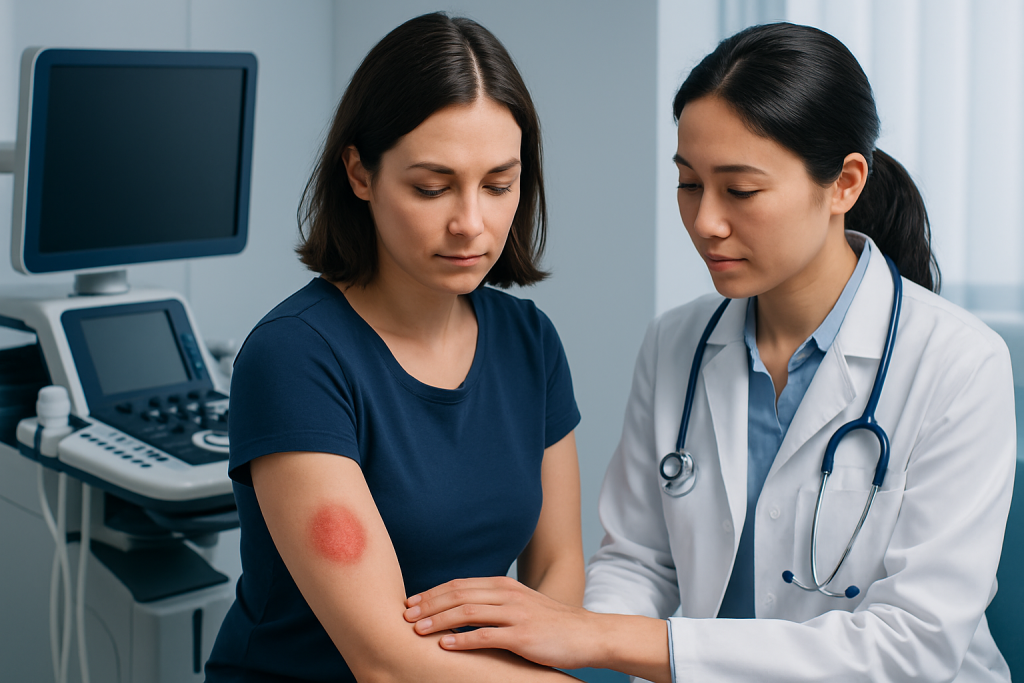
The best-known early sign of Lyme disease is erythema migrans, a rash that usually appears days to weeks after an infected tick bite. It typically expands gradually and may feel warm, but it is often not very painful or itchy. Although many people think of a bull’s-eye pattern, the rash can also be evenly red, oval, bluish-red, or have a darker center; the important clue is that it enlarges over time.
Early Lyme disease may also cause symptoms that resemble a viral infection. These can include fatigue, fever or chills, headache, neck stiffness, muscle aches, joint aches, and swollen lymph nodes. Some people do not remember a tick bite because young ticks can be very small and their bite is often painless.
If Lyme disease spreads beyond the skin, symptoms can be more varied. Possible later features include facial weakness on one side or both sides, nerve pain, meningitis-like symptoms, episodes of heart palpitations or dizziness, and swelling in one or more large joints, especially the knee. These symptoms can have many causes, so medical evaluation is important rather than assuming Lyme disease or dismissing the symptoms.
Causes and Risk Factors

Lyme disease occurs when an infected tick feeds on a person and transmits Borrelia bacteria. Transmission generally requires the tick to remain attached for a period of time, so early detection and careful removal reduce risk. Crushing the tick, applying chemicals, or using heat is not recommended because these methods can irritate the skin and do not safely remove the tick.
People have a higher chance of exposure when they spend time in tick habitats, particularly during warmer months. Hiking, camping, gardening, hunting, farming, walking pets, and playing in grassy or wooded areas can all increase contact with ticks. Pets may also bring ticks into the home, even though Lyme disease is not spread directly from pets to people.
- Living in or traveling to an area where Lyme disease is common
- Outdoor activities in tall grass, leaf litter, shrubs, or forests
- Not using tick prevention measures such as repellents or protective clothing
- Delayed tick checks after outdoor exposure
- Having a tick attached for a prolonged time
Climate, land use, animal populations, and local ecology influence where ticks are found. For this reason, recommendations may vary by country or region. A doctor may consider both symptoms and travel or outdoor history when assessing the likelihood of Lyme disease.
Diagnosis and Blood Tests
Diagnosis begins with a careful medical history and physical examination. The doctor will ask about tick exposure, travel, outdoor activities, timing of symptoms, and whether a rash has expanded. A typical erythema migrans rash in someone with possible tick exposure is often enough to diagnose early Lyme disease, and treatment should not be delayed while waiting for blood tests.
Blood tests look for antibodies the immune system makes in response to Lyme bacteria. Many guidelines recommend a two-step testing approach, such as an initial enzyme immunoassay followed by a confirmatory test when needed. These tests are most useful several weeks after infection; in the first days or weeks, antibody levels may still be too low, so a negative early test does not always exclude Lyme disease.
Testing is most helpful when symptoms and exposure history make Lyme disease reasonably possible. Testing people with nonspecific symptoms and no exposure risk can lead to confusing false-positive results. Tests on ticks removed from the skin are generally not used to decide treatment because a positive tick result does not prove transmission, and a negative result may not fully rule out risk from other bites.
In people with possible complications, doctors may order additional tests such as an electrocardiogram for heart rhythm concerns, joint fluid analysis for significant swelling, or cerebrospinal fluid testing if meningitis is suspected. The choice of tests depends on symptoms and examination findings.
Treatment Options
Lyme disease is treated with antibiotics. In early disease, commonly used oral antibiotics include doxycycline, amoxicillin, or cefuroxime, selected according to age, pregnancy status, allergies, other medical conditions, and local guidance. The length of treatment depends on the stage of disease and the organs involved, so patients should follow their clinician’s prescription rather than using leftover antibiotics or stopping early without advice.
Most people treated in the early stage recover well. Symptoms such as fatigue or body aches can take time to settle even after bacteria are cleared, so gradual recovery is not unusual. Persistent or returning symptoms should be discussed with a doctor to check for alternative diagnoses, complications, or the need for further evaluation.
More serious manifestations, such as certain nervous system infections, significant heart involvement, or severe joint disease, may require specialist assessment and, in some cases, intravenous antibiotics. Treatment decisions are individualized, and unnecessary prolonged antibiotic courses are generally avoided because they can cause side effects and may not improve long-term symptoms.
Pain relievers, rest, hydration, and gentle activity as tolerated may support recovery, but they do not replace antibiotic treatment when Lyme disease is diagnosed. People with medication allergies, pregnancy, chronic illnesses, or symptoms involving the heart or nervous system should make sure their doctor is aware of these factors before treatment is chosen.
Prevention and Self-care After a Tick Bite
Prevention focuses on reducing tick contact and removing attached ticks promptly. When spending time in tick habitats, people can wear long sleeves, tuck trousers into socks, choose light-colored clothing to make ticks easier to see, and use approved tick repellents according to the product instructions. After outdoor activity, showering and checking the whole body can help find ticks early, especially in the scalp, behind the ears, armpits, waistline, groin, backs of knees, and around ankles.
To remove a tick, use fine-tipped tweezers to grasp it close to the skin and pull upward with steady, even pressure. After removal, clean the bite area and hands with soap and water or an antiseptic. If mouthparts remain in the skin, they often work out naturally, but persistent irritation or signs of infection should be assessed by a clinician.
- Do not twist, burn, squeeze, or cover the tick with petroleum jelly or chemicals.
- Note the date of the bite and where on the body it occurred.
- Watch the area for an expanding rash over the next several weeks.
- Seek advice if fever, headache, unusual fatigue, joint pain, facial weakness, or palpitations develop.
In some circumstances, a doctor may consider preventive antibiotics after a high-risk tick bite, but this decision depends on the tick species, attachment time, local Lyme disease risk, timing of presentation, and patient factors. People should not start antibiotics on their own after every tick bite, because many bites do not transmit Lyme disease and unnecessary antibiotics can cause harm.
When to See a Doctor
A person should seek medical advice if a rash expands after a tick bite or after time spent in a tick-prone area, even if the bite was not noticed. Medical care is also recommended for fever, severe headache, neck stiffness, facial drooping, spreading numbness or tingling, shortness of breath, chest discomfort, fainting, palpitations, or a swollen painful joint. These symptoms deserve prompt assessment because they may indicate Lyme disease or another condition requiring treatment.
People should also contact a doctor if they are pregnant, immunocompromised, treating a young child, or unsure how long a tick was attached. Bringing a clear photo of the rash or tick, if available, and a timeline of symptoms can help the clinician. The tick itself can be saved in a sealed container for identification, but treatment decisions are based mainly on clinical risk and symptoms.
International patients who need evaluation for a tick-borne illness can be assessed by infectious disease, dermatology, neurology, cardiology, or rheumatology specialists depending on their symptoms. Acibadem International’s multidisciplinary specialists and JCI-accredited hospitals diagnose and treat Lyme disease and related complications for international patients, with care plans guided by clinical findings and current medical standards.
Frequently asked questions
What does a Lyme disease rash look like?
A Lyme disease rash, called erythema migrans, usually expands over several days and may be round or oval. It can look like a bull's-eye, but many rashes are simply red or have uneven color. It is often warm but not very painful or itchy.
Can someone have Lyme disease without noticing a tick bite?
Yes. Young ticks can be very small, and their bites are often painless, so many people do not remember being bitten. Doctors consider symptoms, rash appearance, outdoor exposure, and local tick risk when deciding whether Lyme disease is likely.
When is a Lyme disease blood test accurate?
Blood tests are more reliable after the immune system has had time to produce antibodies, usually several weeks after infection. In very early Lyme disease, especially when a typical rash is present, tests may be negative. For that reason, doctors may diagnose and treat early Lyme disease based on the rash and exposure history.
Does every tick bite require antibiotics?
No. Many tick bites do not transmit Lyme disease, and the need for preventive antibiotics depends on specific risk factors. A clinician considers the type of tick, how long it was attached, local Lyme disease activity, timing, and the patient's health before recommending treatment.
What happens if Lyme disease is treated early?
Early Lyme disease usually responds well to appropriate antibiotics. Symptoms may improve quickly, although tiredness or aches can take longer to resolve. Follow-up is important if symptoms persist, worsen, or new symptoms appear.
Can Lyme disease come back after treatment?
Most people recover after standard treatment, but lingering symptoms can occur for a period of time. A new tick bite can also cause a new infection in the future. If symptoms return, a doctor should reassess the diagnosis, possible reinfection, and other medical causes.
References
- World Health Organization
- Centers for Disease Control and Prevention
- European Centre for Disease Prevention and Control
- Infectious Diseases Society of America
- National Institute for Health and Care Excellence
This article is for general information only and is not a substitute for professional medical advice. Please consult a qualified doctor about your individual situation.
Lyme Disease in Turkey — costs, top hospitals & a free quote
JCI-accredited · board-certified surgeons · reply within 24h
Add us as a Preferred Source to see more of our trusted health content across Google Search, AI Overviews and Discover.

Infectious Diseases Department
22 specialists in this unitMore from the Health Library



Related Specialists

Dr. Nuri Soysal
Aesthetic Plastic & Reconstructive Surgery
Prof. Dr. Cem Alhan
Cardiovascular Surgery
Assoc. Prof. Dr. Elif Meşeci
Gynecology & Obstetrics
Prof. Dr. Oya Yönal
Gastroenterology