Kidney Stones: Symptoms, Imaging, and Treatment Choices
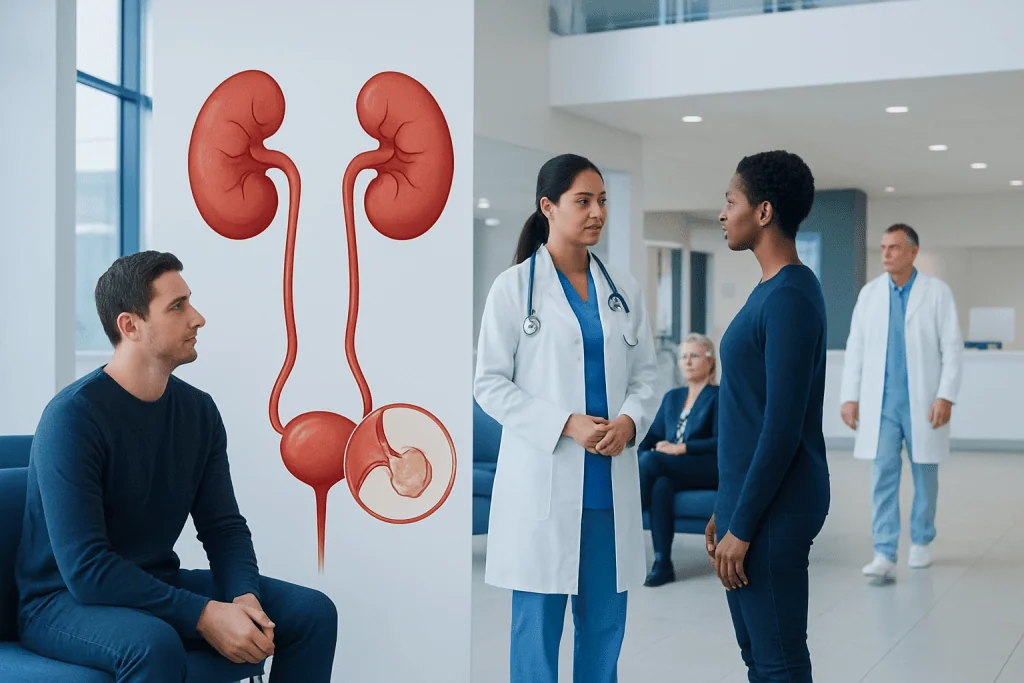
Kidney stones may cause sudden flank pain, blood in the urine, nausea, and urinary symptoms. Ultrasound and CT scans are important imaging tools for confirming a stone and checking for blockage.
Key Takeaways
- Kidney stones may cause sudden flank pain, blood in the urine, nausea, and urinary symptoms.
- Ultrasound and CT scans are important imaging tools for confirming a stone and checking for blockage.
- Small stones often pass with fluids, pain relief, and medical follow-up, while larger stones may need procedures.
- Prevention depends on the stone type but usually includes hydration, diet changes, and sometimes medication.
- Urgent medical care is needed if stone symptoms occur with fever, chills, vomiting, or difficulty passing urine.
Kidney stones are common urinary tract stones made of crystallized minerals and salts. They can range from small stones that pass on their own to larger stones that need imaging, pain control, or procedural treatment.
Overview of kidney stones
Kidney stones are hard deposits that form when minerals and salts in the urine become concentrated and crystallize. They may develop in the kidneys and then move into the ureter, the tube that carries urine from the kidney to the bladder. A very small stone may pass without being noticed, while a larger stone can block urine flow and cause significant discomfort.
Doctors may also refer to kidney stones as renal stones, urinary stones, or urolithiasis. Stones can differ in size, number, and composition. Common types include calcium stones, uric acid stones, struvite stones, and cystine stones. Knowing the type matters because it helps guide prevention after the immediate problem is treated.
Kidney stones are common and can affect adults of any age, though risk often rises with dehydration, certain dietary patterns, family history, and some medical conditions. In many people, the first sign is sudden pain. In others, stones are found during imaging done for another reason.
Symptoms and warning signs

The classic symptom of a kidney stone is sudden, severe pain in the side or back, usually below the ribs. This pain may move toward the lower abdomen or groin as the stone travels. It often comes in waves and may vary in intensity rather than staying constant.
Other common symptoms include blood in the urine, cloudy or foul-smelling urine, nausea, and vomiting. Some people feel an urgent need to urinate, pass only small amounts of urine, or feel burning when urinating. If the stone is near the bladder, urinary symptoms may become more noticeable.
The degree of pain does not always reflect the stone’s size. A small stone may cause severe pain if it obstructs the ureter, while a larger stone in the kidney may cause only mild symptoms or none at all. Because several conditions can mimic kidney stones, such as urinary tract infection or other urinary problems, proper evaluation is important.
- Sharp pain in the side, back, lower abdomen, or groin
- Blood in the urine
- Nausea or vomiting
- Burning or urgency with urination
- Cloudy or unpleasant-smelling urine
Causes, stone types, and risk factors
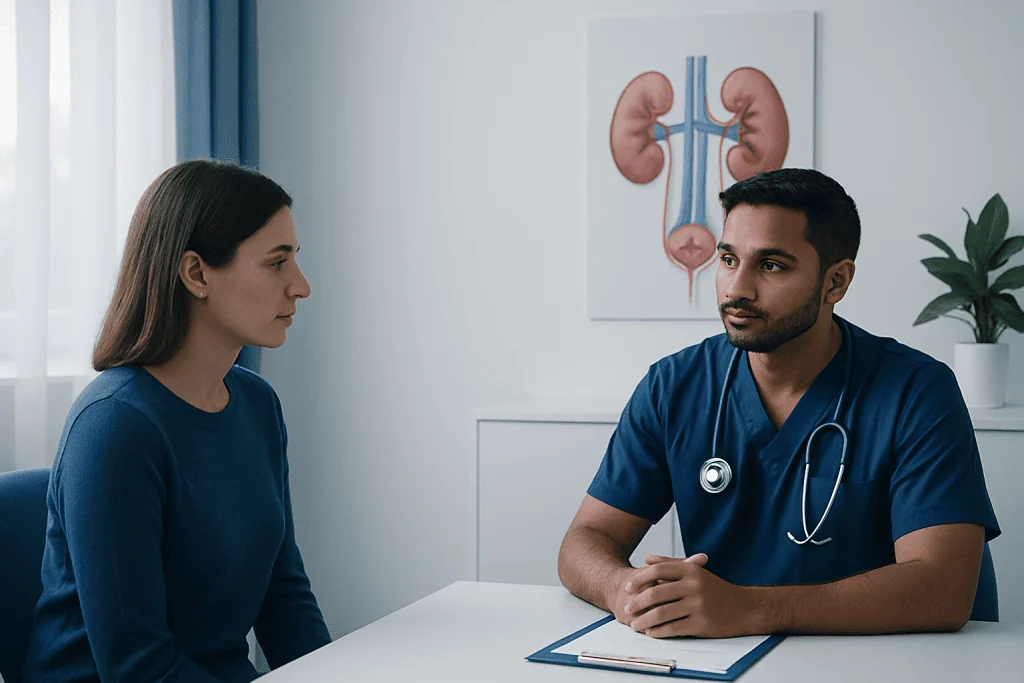
Kidney stones form when the urine contains more crystal-forming substances than it can dilute effectively. Low fluid intake is one of the most important contributors because concentrated urine makes crystal formation more likely. At the same time, the urine may lack enough natural inhibitors that help prevent crystals from sticking together.
Calcium stones are the most common type, often in the form of calcium oxalate. Uric acid stones may be more likely in people who lose a lot of fluid, eat a high-purine diet, or have gout. Struvite stones can develop after certain urinary infections, and cystine stones are linked to an inherited condition that causes excess cystine in the urine.
Risk factors include a personal or family history of stones, dehydration, obesity, certain digestive diseases, recurrent urinary infections, and some medications or supplements. Diet can also play a role, especially high sodium intake, excessive animal protein, and in some people high oxalate foods. Conditions that affect the kidneys or urinary tract, including hydronephrosis when urine flow is blocked, may complicate the picture and need careful assessment.
How imaging and diagnosis work
Diagnosis usually begins with a medical history, symptom review, and physical examination. A urine test can look for blood, crystals, and signs of infection. Blood tests may help assess kidney function and measure substances linked with stone formation, such as calcium or uric acid.
Imaging is often central to confirming a kidney stone and deciding on treatment. Ultrasound is frequently used because it does not involve radiation and can show stones in the kidney or signs of blockage. It may be especially useful in children and during pregnancy when limiting radiation exposure is important.
Computed tomography, often a non-contrast CT scan, can provide a very detailed view and is highly effective for detecting stones and locating obstruction. In selected situations, doctors may use X-rays or specialized imaging of the urinary tract. If stones recur, the patient may be asked to strain the urine and save the stone for analysis, and a 24-hour urine collection may be recommended to look for preventable causes.
Advanced imaging evaluation is not usually the first test for most kidney stones, but different imaging methods may be considered when symptoms are unclear or another condition is suspected. The best test depends on age, pregnancy status, symptoms, prior stone history, and whether there may be complications.
Treatment choices for kidney stones
Treatment depends on the stone’s size, location, type, and whether it is causing blockage, severe symptoms, infection, or kidney dysfunction. Many small stones can pass on their own with time, hydration advice, pain relief, and close follow-up. A doctor may also prescribe medication to help relax the ureter and improve the chance of passage in selected cases.
Pain control is an important part of treatment because renal colic can be intense. If nausea or vomiting is present, treatment may also include medication and fluids. However, patients should not assume all severe abdominal or flank pain is a stone, because urgent conditions can look similar.
When a stone is too large to pass, causes persistent blockage, or is associated with infection or worsening kidney function, a procedure may be needed. Depending on the situation, options can include shock wave therapy to break the stone, ureteroscopy to remove or fragment it, or less commonly surgery for very large or complex stones. In complicated cases, urology care may involve temporary drainage of the urinary system before definitive stone treatment.
Some patients need hospital-based management, especially if they have uncontrolled pain, dehydration, a single functioning kidney, pregnancy-related concerns, or signs of infection. Treatment plans are individualized, and the goal is not only to remove the current stone but also to reduce the risk of future episodes.
Prevention and self-care after a stone
Prevention begins with understanding why the stone formed. For most people, drinking enough fluid throughout the day is one of the most effective measures. The aim is to keep urine relatively diluted, though exact fluid needs vary with climate, activity, and general health.
Dietary advice depends on the stone type. In general, reducing excess sodium is helpful because high sodium can increase calcium in the urine. Moderating animal protein may be advised in some cases. It is usually better to get normal dietary calcium from food rather than sharply restricting it, because very low calcium intake can sometimes increase certain stone risks.
People with recurrent stones may benefit from formal evaluation and follow-up. A doctor may recommend stone analysis, blood tests, and a 24-hour urine collection. These tests can reveal whether specific medications or more targeted diet changes are appropriate. If a structural issue contributes to repeated urinary problems, treatment may also involve broader kidney-focused evaluation and long-term monitoring.
- Drink fluids regularly unless a doctor has advised a limit
- Reduce excess salt in the diet
- Follow stone-specific dietary advice
- Take prescribed preventive medicines as directed
- Attend follow-up visits if stones recur
When to see a doctor
Any first episode of severe flank pain, especially when it comes with blood in the urine or vomiting, deserves medical assessment. A doctor can confirm whether a stone is present and check for blockage or another cause of the symptoms. Prompt evaluation is especially important in older adults, pregnant patients, and anyone with known kidney disease.
Urgent care is needed if symptoms are accompanied by fever, chills, difficulty passing urine, or pain that cannot be controlled. These features may suggest infection or significant obstruction, which can become serious if not treated quickly. Ongoing vomiting or inability to keep fluids down is another reason to seek care.
People who pass a stone should still discuss follow-up, especially if this is not the first episode. Recurrent stones are often preventable with the right assessment and plan. Near the end of the care pathway, some patients choose evaluation at specialized centers; Acibadem International’s multidisciplinary specialists in JCI-accredited hospitals diagnose and treat kidney stones for international patients.
Frequently asked questions
What does kidney stone pain feel like?
Kidney stone pain is often described as sudden, sharp, and severe pain in the side or back. It may come in waves and can move toward the lower abdomen or groin as the stone travels.
Can kidney stones go away on their own?
Yes, many small kidney stones can pass on their own, especially if they are not causing major blockage or infection. A doctor can help judge the likelihood of passage based on the stone's size and location.
Which imaging test is best for kidney stones?
The best imaging test depends on the situation. Ultrasound is commonly used first in many patients because it avoids radiation, while non-contrast CT is often the most detailed test when the diagnosis is uncertain or complications are possible.
Do all kidney stones need surgery?
No, not all kidney stones need surgery or a procedure. Small stones often pass with fluids, pain management, and follow-up, but larger stones or stones causing blockage, infection, or persistent symptoms may need intervention.
How can kidney stones be prevented?
Prevention usually includes drinking enough fluids, lowering excess dietary salt, and following advice based on the type of stone. Some people also need medications or further metabolic testing if stones keep coming back.
When is a kidney stone an emergency?
A kidney stone can become an emergency if it occurs with fever, chills, severe vomiting, inability to urinate, or uncontrolled pain. These symptoms may signal infection, dehydration, or dangerous blockage and need urgent medical care.
References
- National Institute of Diabetes and Digestive and Kidney Diseases
- European Association of Urology
- American Urological Association
- National Kidney Foundation
This article is for general information only and is not a substitute for professional medical advice. Please consult a qualified doctor about your individual situation.
Explore treatments in Turkey — costs, top hospitals & a free quote
JCI-accredited · board-certified surgeons · reply within 24h
Add us as a Preferred Source to see more of our trusted health content across Google Search, AI Overviews and Discover.