

Where Are Your Kidneys Located? Anatomy and Kidney Function Explained

The kidneys sit below the rib cage, behind the abdominal organs, on either side of the spine. The right kidney is usually slightly lower than the left because of the liver.
Key Takeaways
- The kidneys sit below the rib cage, behind the abdominal organs, on either side of the spine.
- The right kidney is usually slightly lower than the left because of the liver.
- Kidneys filter waste, control fluid balance, regulate minerals, and help manage blood pressure.
- They also produce hormones involved in red blood cell production and bone health.
- Kidney problems may not cause symptoms early, so regular checkups can be important for people at risk.
The kidneys are two bean-shaped organs located toward the back of the upper abdomen, one on each side of the spine. They play a vital role in filtering blood, removing waste, balancing fluids and minerals, and supporting several important body functions.
Overview: where the kidneys are and why they matter
The kidneys are two fist-sized, bean-shaped organs located deep in the body toward the back of the upper abdomen. They lie on the right and left sides of the spine, just below the rib cage. Because they are positioned behind the lining of the abdominal cavity, they are described as retroperitoneal organs. This protected location helps shield them, although they can still be affected by injury or disease.
Many people are surprised to learn that the kidneys are not low in the pelvis. Instead, they sit higher than expected, roughly in the area between the middle and lower ribs and the waist. The right kidney is usually slightly lower than the left because the liver takes up space above it.
The kidneys are essential for everyday health. Their best-known job is to clean the blood by removing waste products and extra water, which leave the body as urine. However, their work goes far beyond urine production. Healthy kidneys help maintain the body’s internal balance so that other organs, including the heart, brain, and bones, can function properly.
Kidney anatomy: position, size, and nearby structures
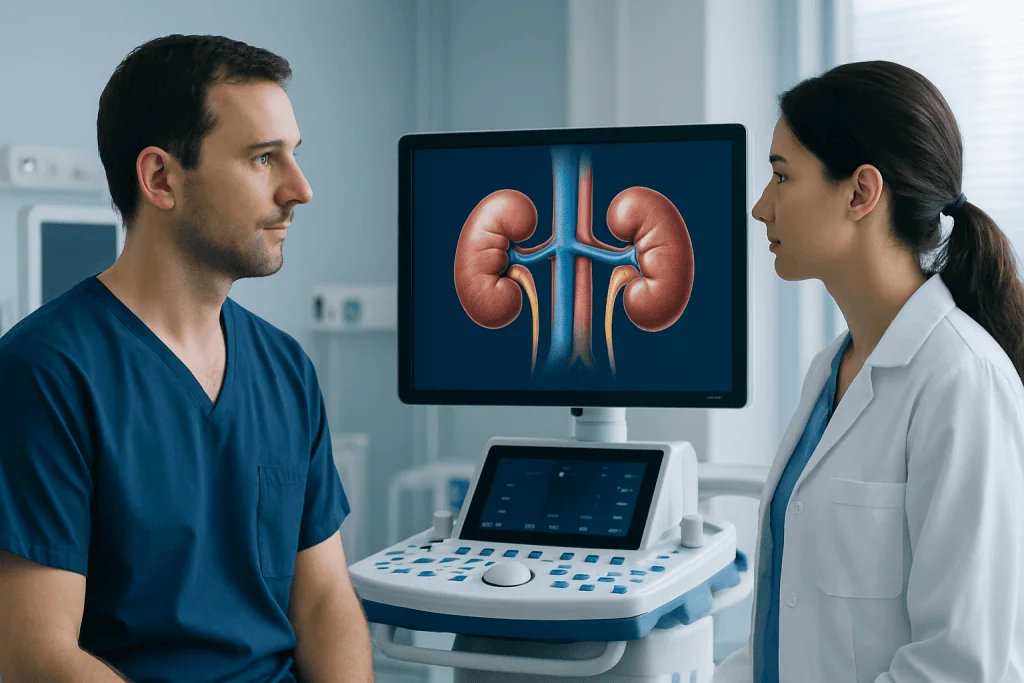
Each kidney is about the size of a clenched fist in an adult, though size can vary by body build, age, and sex. They have a curved outer edge and an inward-facing side called the hilum, where blood vessels, nerves, and the ureter enter or leave the kidney. The ureter is the thin tube that carries urine from each kidney to the bladder.
The kidneys are surrounded by a layer of fat and supportive tissue that helps cushion them. Above each kidney sits an adrenal gland, a separate hormone-producing gland. In front of the kidneys are abdominal organs such as the intestines, while behind them are muscles of the back. Because of this position, pain related to the kidneys may sometimes be felt in the side, back, or flank rather than the front of the abdomen.
Inside each kidney are two main regions: the outer cortex and the inner medulla. These areas contain millions of tiny filtering units called nephrons. Nephrons perform the detailed work of filtering blood, reabsorbing what the body needs, and allowing wastes and excess fluid to become urine.
A simple way to picture the urinary system is as a connected pathway:
- The kidneys filter the blood and make urine.
- The ureters carry urine to the bladder.
- The bladder stores urine.
- The urethra allows urine to leave the body.
What do the kidneys do?

The kidneys act as the body’s natural filtration and balancing system. Every day, they process large amounts of blood, removing waste products created by normal metabolism. These wastes include substances such as urea and creatinine, which can build up if kidney function is reduced.
They also carefully regulate fluid levels. If the body has too much water, the kidneys help remove more of it in urine. If the body needs to conserve water, the kidneys adjust by producing more concentrated urine. This balancing role is essential for stable blood volume and healthy circulation.
Kidneys help keep minerals and salts within a healthy range. They regulate levels of sodium, potassium, calcium, and phosphorus, along with the body’s acid-base balance. This allows nerves, muscles, and the heart to work as they should. Even small changes in these levels can affect health.
In addition, the kidneys produce or activate hormones. They release renin, which is involved in blood pressure regulation; produce erythropoietin, which signals the bone marrow to make red blood cells; and activate vitamin D, which supports calcium absorption and bone health. In this way, the kidneys influence far more than the urinary system alone.
Why kidney location and function are clinically important
Knowing where the kidneys are can help people better understand certain symptoms. Kidney-related discomfort is often felt in the flank, the area between the ribs and the hip on either side of the back. This can be different from stomach pain, bladder discomfort, or muscle strain, though symptoms can overlap. That is why a medical assessment is often needed if pain is persistent, severe, or associated with fever, nausea, or urinary changes.
Because the kidneys help control blood pressure, red blood cell production, and fluid balance, kidney disease can affect many parts of the body. A problem in the kidneys may show up as swelling in the legs, high blood pressure, tiredness, reduced appetite, or changes in urination. In some cases, early kidney disease causes no obvious symptoms at all.
Common kidney-related conditions include kidney stones, urinary blockage, infections, and chronic kidney disease. Sometimes imaging is needed to understand whether symptoms come from the kidneys themselves or from nearby organs. If there is concern about reduced kidney function, blood and urine tests are often the first step.
Kidney problems may also be linked with other health conditions. Diabetes, high blood pressure, obesity, and some autoimmune diseases can gradually damage the kidneys over time. Recognizing the kidneys’ role in whole-body health can encourage earlier evaluation and more effective prevention.
How doctors assess kidney health
Kidney health is usually assessed through a combination of medical history, physical examination, laboratory tests, and imaging when needed. A doctor may ask about symptoms such as swelling, fatigue, painful urination, blood in the urine, frequent urination, nighttime urination, or side and back pain. They may also ask about blood pressure, diabetes, medications, and family history.
Blood tests can provide important information about how well the kidneys are filtering. A urine test can show protein, blood, signs of infection, or other abnormalities. These simple tests are often enough to identify whether further evaluation is needed. If a person is at increased risk, regular monitoring may help detect changes before symptoms appear.
Imaging studies may be used to look at the kidneys’ size, shape, and position. Ultrasound is often used first because it is noninvasive and does not involve radiation. In certain situations, CT scanning or MRI can provide more detail, especially when doctors need to assess stones, blockage, masses, or structural differences.
When kidney disease is suspected, assessment focuses on both structure and function. This helps doctors distinguish between short-term and long-term problems and decide on the most appropriate treatment or follow-up plan.
What can affect the kidneys?
Many factors can influence kidney health. Dehydration, urinary tract obstruction, infections, certain medications, and long-standing medical conditions can all interfere with normal kidney function. Some problems are temporary and improve with treatment, while others may become chronic if not recognized early.
High blood pressure and diabetes are among the most common causes of ongoing kidney damage. Over time, these conditions can affect the tiny blood vessels inside the kidneys, reducing their ability to filter efficiently. Kidney function may also decline with age, although that does not mean serious disease is inevitable.
Kidney stones can form when minerals in the urine crystallize and collect together. They may cause intense flank pain, nausea, or blood in the urine. Repeated infections or blockage can also harm the kidneys if they are not treated promptly. In more advanced situations, a person may need specialized care for kidney failure.
Other possible influences include smoking, obesity, very high salt intake, and frequent use of medicines that may affect the kidneys in susceptible people. Anyone with known kidney concerns should ask a healthcare professional before using over-the-counter pain relievers, supplements, or herbal products regularly.
Protecting kidney health: prevention and self-care
Many kidney problems can be reduced or managed with healthy daily habits and regular medical care. Staying well hydrated, eating a balanced diet, and keeping blood pressure and blood sugar within target ranges can help protect the kidneys over time. For people with existing kidney disease, care plans may need to be more individualized.
A kidney-friendly lifestyle often includes maintaining a healthy weight, limiting excess salt, avoiding smoking, and staying physically active. It is also wise to use medications carefully, especially pain relievers and supplements, and to follow medical advice about routine monitoring if there are risk factors such as diabetes, high blood pressure, or a family history of kidney disease.
People should not try to diagnose kidney problems based on pain location alone. Back pain is common and often comes from muscles, joints, or the spine rather than the kidneys. At the same time, kidney disease can be silent. Routine blood pressure checks and periodic blood and urine tests may be helpful, particularly for those at higher risk.
If advanced treatment is needed, a specialist may discuss options ranging from stone management to long-term support for kidney function. Near the end of the care journey, some patients may need evaluation for kidney transplant. Acibadem International’s multidisciplinary specialists in JCI-accredited hospitals diagnose and treat kidney conditions for international patients as part of coordinated care.
When to see a doctor
It is sensible to see a doctor if there is persistent pain in the flank or lower back, swelling in the legs or around the eyes, blood in the urine, burning with urination, fever with urinary symptoms, or a noticeable change in how often a person urinates. These symptoms do not always mean kidney disease, but they deserve proper evaluation.
Medical advice is also important for people with diabetes, high blood pressure, recurrent urinary infections, kidney stones, or a family history of kidney disease, even if they feel well. Early testing can identify reduced kidney function before complications develop.
Urgent medical attention may be needed if a person has severe side pain, cannot pass urine, has heavy bleeding in the urine, or has symptoms of illness such as vomiting, confusion, severe weakness, or shortness of breath. Prompt care can help protect kidney function and overall health.
Frequently asked questions
Where exactly are the kidneys located in the body?
The kidneys are located toward the back of the upper abdomen, one on each side of the spine. They sit just below the rib cage, and the right kidney is usually a little lower than the left.
Can kidney pain be felt in the front of the abdomen?
Kidney pain is more often felt in the side or back, especially in the flank area between the ribs and the hip. However, pain patterns can vary, so discomfort in the front of the abdomen should still be assessed if it persists or is severe.
What is the main function of the kidneys?
The kidneys filter waste and extra fluid from the blood to make urine. They also help balance salts and minerals, regulate blood pressure, support red blood cell production, and activate vitamin D.
Do people need both kidneys to live normally?
Many people can live healthy lives with one functioning kidney. Even so, kidney health should still be monitored, and a doctor may recommend regular checkups to protect long-term function.
How do doctors check whether the kidneys are healthy?
Doctors usually begin with blood tests, urine tests, and a review of symptoms and medical history. If needed, imaging such as ultrasound, CT, or MRI can show the kidneys’ size, position, and structure.
What are early warning signs of kidney problems?
Early kidney disease may cause no symptoms at all. When symptoms do occur, they can include swelling, tiredness, changes in urination, high blood pressure, blood in the urine, or pain in the side or back.
References
- National Institute of Diabetes and Digestive and Kidney Diseases
- National Kidney Foundation
- Mayo Clinic
- National Health Service
- Kidney Disease: Improving Global Outcomes
This article is for general information only and is not a substitute for professional medical advice. Please consult a qualified doctor about your individual situation.
Joint and spine care in Turkey — expert assessment & treatment
JCI-accredited · board-certified surgeons · reply within 24h
Add us as a Preferred Source to see more of our trusted health content across Google Search, AI Overviews and Discover.
Check your numbers in seconds
BMI, calories, due date, blood pressure and 30+ more clinical calculators — free, instant, doctor-reviewed ranges.

More from the Health Library



Related Specialists

Dr. Ulambadrakh Khenchbish
Orthopedic Surgery & Traumatology
Prof. Dr. Mert Erkan
General Surgery
Dr. Betül Toygar
Physical Medicine & Rehabilitation
Dt. Alen Palancıoğlu
Oral Dental & Maxillofacial Surgery