3 Tesla MRI vs Standard MRI: What Patients Should Know
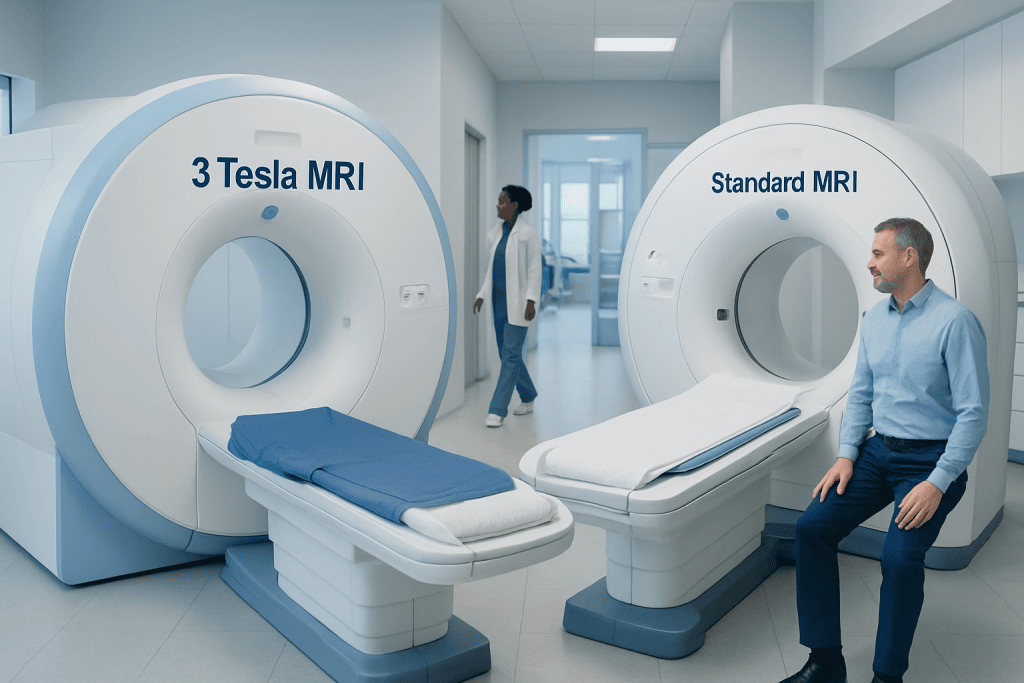
A 3 Tesla MRI has a stronger magnetic field than a standard 1.5 Tesla MRI. 3T MRI may provide clearer images, especially for the brain, spine, joints, and some blood vessels.
Key Takeaways
- A 3 Tesla MRI has a stronger magnetic field than a standard 1.5 Tesla MRI.
- 3T MRI may provide clearer images, especially for the brain, spine, joints, and some blood vessels.
- Standard MRI remains highly effective and may be preferred for certain patients, implants, or exam types.
- The best MRI choice depends on the clinical question, not only on magnet strength.
- Both types of MRI are noninvasive and do not use ionizing radiation.
- Patients should always tell the imaging team about implants, claustrophobia, pregnancy, or kidney problems before the scan.
A 3 Tesla MRI uses a stronger magnetic field than a standard MRI, which can improve image detail and sometimes shorten scan time. For patients, the most suitable option depends on the reason for the scan, the body part being examined, and individual comfort and safety needs.
Overview: What Is the Difference Between 3 Tesla MRI and Standard MRI?
MRI, or magnetic resonance imaging, is a scan that creates detailed pictures of the inside of the body using a strong magnet, radio waves, and computer processing. Unlike X-rays and CT scans, MRI does not use ionizing radiation. It is commonly used to examine the brain, spine, joints, muscles, pelvis, abdomen, and many other structures.
The term “Tesla” refers to the strength of the MRI magnet. A standard MRI machine is often 1.5 Tesla, while a 3 Tesla MRI has a magnetic field that is about twice as strong. In practical terms, that stronger field can produce a higher signal, which may help create sharper images, show finer anatomical detail, or allow some scans to be completed more efficiently.
For patients, this does not automatically mean that 3 Tesla MRI is always better. In many situations, a standard MRI gives excellent diagnostic information and may be the preferred choice. Radiologists and referring doctors select the scanner based on the clinical question, the body area being examined, and patient-specific factors such as metal implants, comfort, and the need for contrast material.
How 3 Tesla MRI May Improve Imaging
The main advantage of 3T MRI is improved signal-to-noise ratio. This means the scanner may detect subtle details more clearly than a lower-field system. Better detail can be especially helpful when doctors need to evaluate small structures, early tissue changes, or complex anatomy.
In some cases, the stronger magnet can also support faster imaging. A scan may be shortened by using the extra signal to maintain image quality while reducing acquisition time. Shorter scans can be helpful for people who find it difficult to lie still because of pain, anxiety, or movement.
3T MRI is often useful in areas where high resolution matters, such as the brain, spinal cord, nerves, cartilage, ligaments, and some vascular studies. For example, it may be chosen when a doctor needs a more detailed look at possible brain tumor findings, subtle spinal conditions, or sports injuries involving small joint structures. However, image quality also depends on the scan protocol, the radiology team’s expertise, and the patient’s ability to remain still.
- Sharper detail in some exams
- Potentially faster scan sequences
- Improved evaluation of small or complex structures
- Helpful for advanced imaging applications in selected cases
When Standard MRI May Be the Better Choice
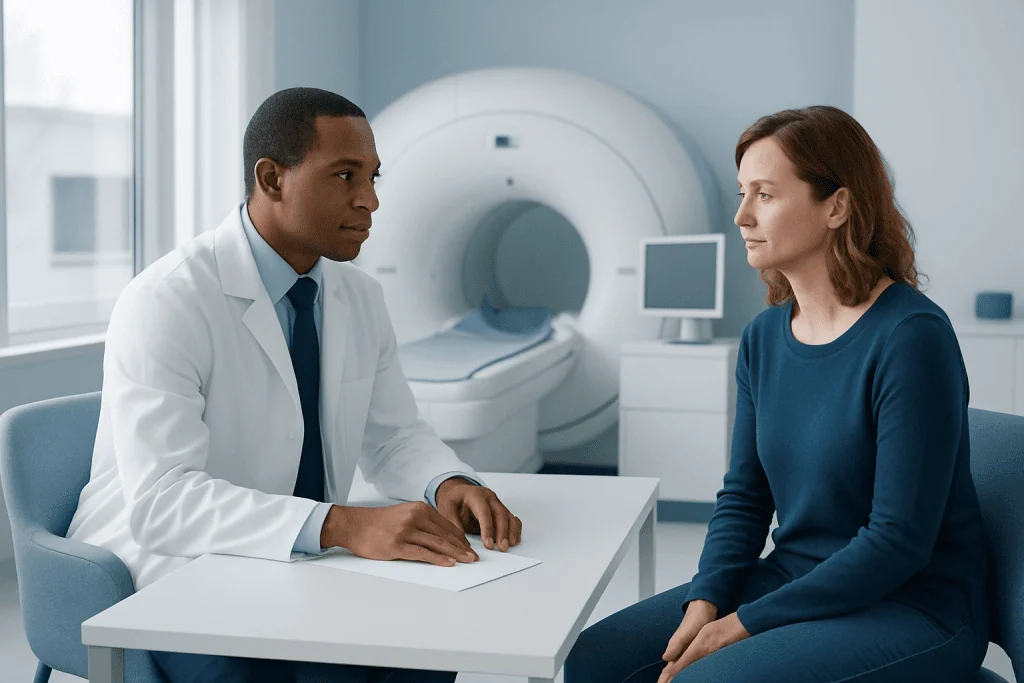
Standard 1.5T MRI remains a trusted and widely used imaging tool. It provides excellent images for many common medical questions and is often fully sufficient for diagnosing disease, monitoring treatment, or guiding next steps in care. In many hospitals, it is the routine scanner for everyday MRI needs.
There are also situations where standard MRI may be preferable. Some metal implants and devices are approved only under certain MRI conditions, and imaging teams must follow the manufacturer’s safety guidance carefully. In some cases, 1.5T systems may produce fewer artifacts, which are distortions caused by metal or other technical factors.
Certain body areas may also be easier to assess on a standard scanner depending on the exam goal. For example, if the question can be answered reliably without very high resolution, a 1.5T MRI may be entirely appropriate. The choice is less about which machine is “best” overall and more about which machine is best for that specific patient and scan.
What Patients May Notice During the Scan
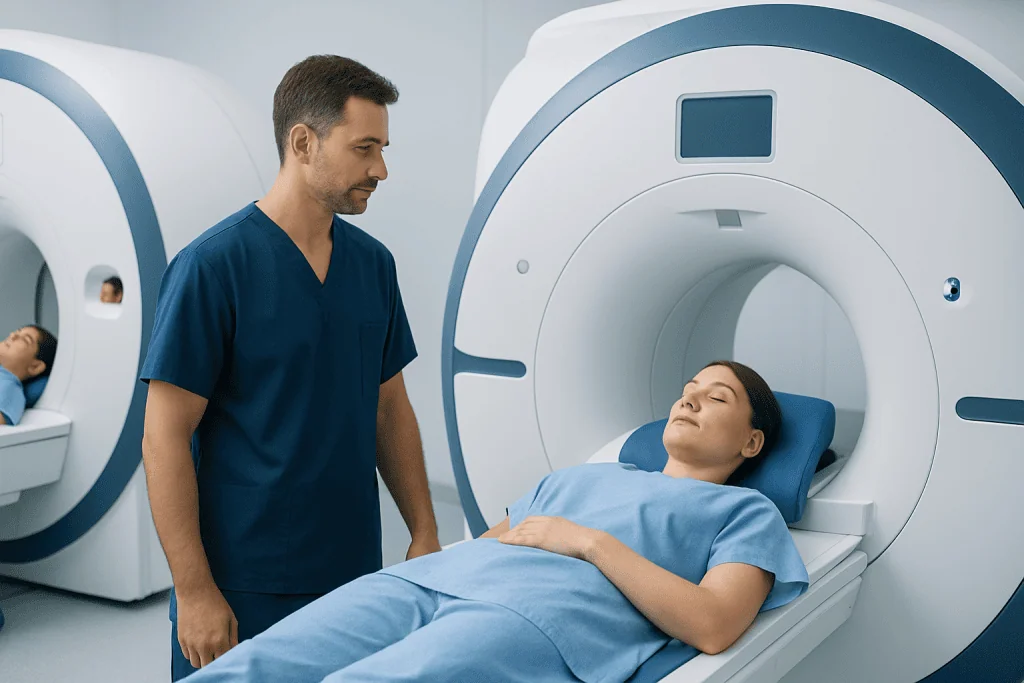
From a patient’s point of view, a 3 Tesla MRI and a standard MRI feel very similar. In both cases, the patient usually lies on a table that moves into the scanner. The machine makes loud tapping or knocking sounds during imaging, so ear protection is provided. The test is painless, but staying still is important to keep the images clear.
Some people notice that the sounds seem louder or the exam feels more intense in a 3T scanner, although experiences vary. The scan room setup, table design, body part being imaged, and whether the machine has a wider bore may influence comfort more than magnet strength alone. Patients who are nervous about enclosed spaces should mention this in advance, as the team may offer practical support or discuss options.
For some exams, contrast material may be used to improve visibility of certain tissues or blood vessels. This is not determined by whether the scanner is 1.5T or 3T, but by the medical reason for the test. If contrast is planned, the team may ask about kidney function, allergies, and previous reactions. For patients having a detailed MRI scan, clear communication beforehand can make the experience smoother and less stressful.
Safety, Implants, and Other Important Considerations
Both 3 Tesla and standard MRI are considered safe when proper screening is performed. Because MRI uses a powerful magnet, patients must tell the imaging team about any pacemaker, aneurysm clip, cochlear implant, metal fragment, vascular stent, artificial joint, dental device, medication patch, or other implanted or metallic object. Safety depends on the exact device and its MRI conditions, not simply on whether the exam is at 1.5T or 3T.
Pregnancy, kidney disease, claustrophobia, and difficulty lying flat are also important to discuss. MRI may still be possible in these situations, but the radiology team may need to adjust the plan. If contrast is being considered, kidney function may need review, especially in patients with known kidney problems.
Image quality can be affected by movement, metal artifacts, and the body area being scanned. A stronger magnet is not always an advantage if it increases certain artifacts or if the scan question is straightforward. In specialized situations, radiologists may combine MRI findings with other tests, such as CT scan or PET-CT scan, to get a more complete picture.
How Doctors Decide Which MRI Is Right
The decision between 3 Tesla MRI and standard MRI begins with the clinical question. If the doctor needs very fine detail, such as small nerve structures, subtle brain abnormalities, cartilage injuries, or high-quality vessel imaging, 3T MRI may offer an advantage. If the exam goal is broader or the question can be answered well with routine imaging, a standard MRI may be chosen.
Radiologists also consider the patient’s age, medical history, body habitus, ability to remain still, and presence of implants. In some cases, motion-resistant techniques or more familiar workflows on a 1.5T scanner can help produce more reliable results. The best scanner is the one most likely to answer the medical question safely and clearly.
Modern imaging centers may have more than one MRI system so the scan can be matched to the person rather than the other way around. This individualized approach is especially important for complex neurological, orthopedic, or oncological imaging. Near the end of the care journey, it may be helpful to know that Acibadem International’s multidisciplinary specialists and JCI-accredited hospitals diagnose and treat patients using advanced imaging technologies for international care needs.
Preparing for an MRI and Getting the Best Experience
Before the appointment, patients should complete the MRI safety questionnaire carefully and bring information about any implant or previous surgery if available. Wearing clothing without metal fasteners can help, although many centers provide a gown. Jewelry, watches, hearing aids, and removable dental items usually need to be taken off before the scan.
Most MRI scans do not require special preparation, but instructions can vary if contrast is planned or if a specific organ is being examined. Patients should ask whether they may eat, drink, or take regular medications before the exam. If they have claustrophobia, pain, or trouble staying still, mentioning it early allows the imaging team to plan supportive measures.
After the scan, most people can return to normal activities right away. Results are usually reviewed by a radiologist and sent to the referring doctor, who explains what the images mean in the context of symptoms and other tests. MRI findings often guide the next step, which may include follow-up imaging, specialist review, or treatment such as radiation oncology in selected cancer-related cases.
Frequently asked questions
Is a 3 Tesla MRI always better than a standard MRI?
No. A 3 Tesla MRI can provide more detail in some situations, but a standard 1.5 Tesla MRI is still excellent for many common exams. The best option depends on what the doctor needs to see, as well as safety and comfort considerations.
Does 3T MRI take less time?
Sometimes it can. The stronger signal of a 3T scanner may allow certain sequences to be performed faster while keeping image quality high. However, actual scan time varies by body part, protocol, and whether contrast is used.
Is 3 Tesla MRI safe?
Yes, when standard MRI safety screening is followed carefully. Patients should always tell the imaging team about implants, pacemakers, metal fragments, pregnancy, kidney problems, or any past issues with MRI or contrast.
Will a 3 Tesla MRI feel different from a standard MRI?
For most people, the experience is very similar. Both scans involve lying still inside a noisy machine, and both are painless. Some patients may notice louder sounds or a stronger sense of the scanning environment in a 3T unit, but comfort varies by person and machine design.
Why would a doctor choose a standard MRI instead of 3T?
A standard MRI may be preferred if it answers the medical question well and is more suitable for a patient’s implant, body area, or artifact concerns. In some cases, 1.5T imaging can provide cleaner pictures around metal or follow device-specific MRI safety rules more easily.
Do both types of MRI use radiation?
No. Neither 3 Tesla MRI nor standard MRI uses ionizing radiation. MRI works with magnetic fields and radio waves to create images.
References
- Radiological Society of North America
- American College of Radiology
- National Institute of Biomedical Imaging and Bioengineering
- NHS
- U.S. Food and Drug Administration
This article is for general information only and is not a substitute for professional medical advice. Please consult a qualified doctor about your individual situation.
Joint and spine care in Turkey — expert assessment & treatment
JCI-accredited · board-certified surgeons · reply within 24h
Add us as a Preferred Source to see more of our trusted health content across Google Search, AI Overviews and Discover.