What Is a Dry Needling Treatment? Uses, Benefits, and Risks

Dry needling treatment targets trigger points and tight muscle bands with thin needles. It is commonly used for musculoskeletal pain, stiffness, and limited range of motion.
Key Takeaways
- Dry needling treatment targets trigger points and tight muscle bands with thin needles.
- It is commonly used for musculoskeletal pain, stiffness, and limited range of motion.
- Benefits may include short-term pain relief and improved muscle function as part of a broader care plan.
- Common side effects are mild, such as temporary soreness or bruising.
- It is different from acupuncture, although both use similar needles.
- A trained, licensed clinician should decide whether dry needling is appropriate and safe.
Dry needling treatment is a technique that uses very thin needles to target painful or tight muscle areas called trigger points. It may help reduce pain, improve movement, and support rehabilitation when performed by a qualified healthcare professional.
Overview
Dry needling treatment is a procedure used by trained healthcare professionals to address muscle pain, tightness, and movement problems. It involves inserting very thin, solid needles into specific points in muscle tissue, often where a muscle feels tender, knotted, or overly tight. These areas are commonly called trigger points.
The goal of dry needling is to reduce muscle tension, ease pain, and improve function. It is most often used in people with musculoskeletal problems such as neck pain, back pain, shoulder pain, sports injuries, and muscle strain. Dry needling is usually part of a broader treatment plan rather than a stand-alone solution.
Although it uses needles similar to those used in acupuncture, dry needling is based on a different medical approach. It focuses on anatomy, muscle dysfunction, and pain patterns rather than traditional Chinese medicine principles. For many patients, it may be recommended alongside exercise, stretching, manual therapy, or a structured physical therapy and rehabilitation program.
How Dry Needling Works

Muscles can develop sensitive spots that feel tight, painful, or irritable. These trigger points may contribute to local pain or pain felt in another area. By placing a needle into the trigger point or taut band of muscle, the clinician aims to create a local response in the tissue. This may help release tension, improve blood flow, and reduce pain signaling.
Some people feel a brief twitch, cramp-like sensation, or pressure when the needle reaches the target area. This response can be uncomfortable for a moment, but it is usually short-lived. After treatment, the muscle may feel looser or less painful, though mild soreness for a day or two is common.
Researchers are still studying exactly how dry needling works. Current understanding suggests that it may have both local effects in the muscle and broader effects on the nervous system, helping lower sensitivity and improve movement patterns. Results can vary depending on the condition being treated, the skill of the practitioner, and the patient’s overall rehabilitation plan.
Uses and Potential Benefits
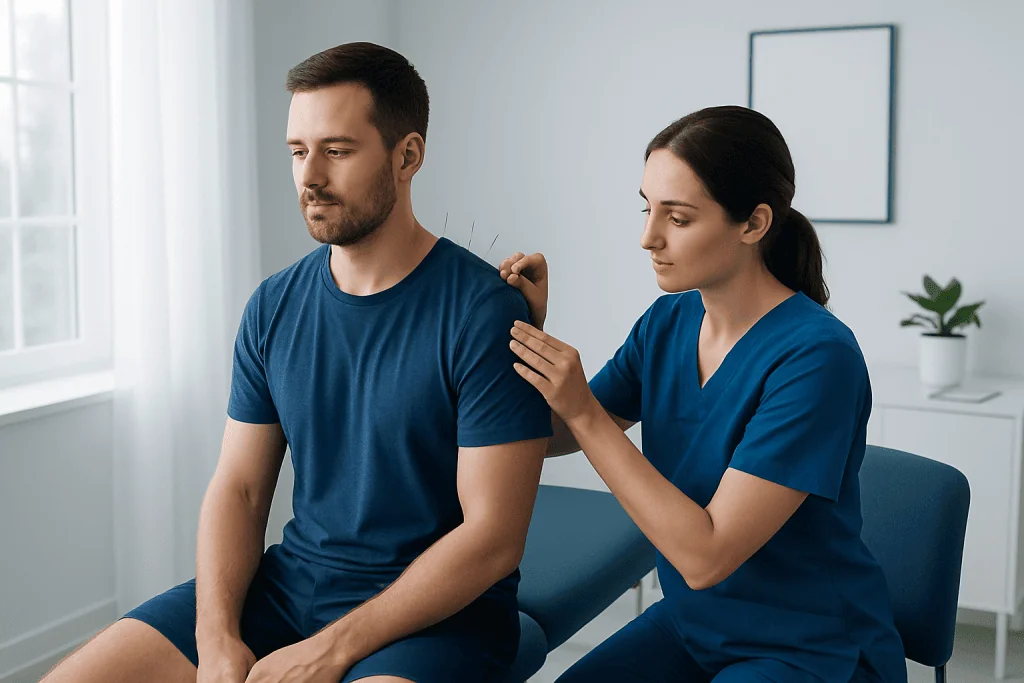
Dry needling treatment is commonly used for musculoskeletal conditions involving muscle tightness, overuse, or pain. It may be considered for people with neck and shoulder pain, tension-related headaches, lower back pain, hip pain, knee pain, tendon-related pain, and sports injuries. It can also be used in people recovering from strain patterns linked to poor posture or repetitive movement.
In some cases, dry needling may help symptoms related to conditions such as sciatica or persistent myofascial pain. It may also support care for people with limited range of motion after injury or during rehabilitation. However, it is not a cure for every source of pain, and it does not replace a full medical assessment when symptoms could have another cause.
Potential benefits may include:
- Reduced muscle tightness and trigger point pain
- Improved flexibility and range of motion
- Better tolerance for exercise and rehabilitation
- Short-term pain relief that supports daily function
- Possible improvement in movement patterns when combined with therapy
For many patients, the best results come when dry needling is combined with stretching, strengthening, posture correction, and activity modification. A clinician may recommend it as one part of a broader plan to improve long-term function rather than relying on needles alone.
What to Expect During the Procedure
Before treatment, the clinician reviews symptoms, medical history, and the area of pain. They usually examine how the muscles move and look for tender points or tight bands. The skin is cleaned, and a thin sterile needle is inserted into the targeted muscle. Depending on the technique, the needle may be left in place briefly or moved gently to stimulate the area.
A session often lasts only a short time, although the full appointment may include assessment and other rehabilitation treatments. Some people notice an immediate change in muscle tension or movement. Others feel improvement after several sessions, especially if the pain has been present for a long time.
Afterward, mild soreness, fatigue, or a bruised feeling can happen for 24 to 48 hours. Light movement, gentle stretching, and hydration may help. The clinician may also advise home exercises or combine care with manual techniques and pain management strategies to support recovery.
Because dry needling is a procedure, it should only be performed by a properly trained professional who follows safety and hygiene standards. Patients should feel comfortable asking about training, expected benefits, and possible side effects before starting treatment.
Risks, Side Effects, and When It May Not Be Suitable
Dry needling is generally considered safe when performed by a qualified clinician, but like any procedure it has risks. The most common side effects are mild and short-term. These include soreness, small bruises, temporary bleeding at the needle site, lightheadedness, or fatigue after treatment.
Less common but more serious complications are possible, especially if the needle is placed in a sensitive area or by someone without proper training. These can include infection, nerve irritation, or injury to deeper structures. In rare situations, needling in the chest or upper back area may carry a risk of pneumothorax, which is a collapsed lung and needs urgent medical attention.
Dry needling may not be suitable for everyone. Extra caution or avoidance may be needed in people who have certain bleeding disorders, use blood-thinning medicines, have active skin infection near the treatment area, are unable to communicate clearly about discomfort, or have strong needle-related anxiety. Pregnancy may also affect whether some areas can be treated safely.
Anyone considering dry needling should share their full medical history, medications, and previous reactions to needles or procedures. A careful assessment helps decide whether the treatment is appropriate or whether another option, such as orthopedic rehabilitation, would be a better fit.
Dry Needling vs. Acupuncture
Dry needling and acupuncture both use very thin needles, but they are based on different treatment models. Dry needling is typically used within modern musculoskeletal care and focuses on trigger points, muscle bands, and movement dysfunction. Acupuncture is rooted in traditional Chinese medicine, though some practitioners also use it in medical pain care.
In practical terms, the patient experience can look similar because both involve needle insertion. However, the target locations, treatment goals, and clinical reasoning may differ. One approach is not automatically better than the other; the right choice depends on the person’s condition, preferences, and the practitioner’s expertise.
It is helpful for patients to ask what method is being used, why it is recommended, and what evidence supports it for their specific problem. Clear communication can help set realistic expectations and avoid confusion about what the treatment is intended to do.
Who May Benefit and When to See a Doctor
People with muscle-related pain, stiffness, overuse injuries, or reduced range of motion may benefit from dry needling treatment, especially when symptoms are linked to trigger points. It can be useful for some athletes, office workers, and people in rehabilitation after injury. Still, not every ache or pain comes from muscle dysfunction, so diagnosis matters.
A doctor should assess pain that is severe, persistent, spreading, or associated with weakness, numbness, fever, unexplained weight loss, chest symptoms, or loss of bladder or bowel control. These symptoms can suggest a problem that needs prompt medical evaluation rather than a muscle-based procedure. A proper diagnosis also helps distinguish muscle pain from joint, nerve, or inflammatory conditions such as herniated disc problems.
Dry needling is often most helpful as part of a comprehensive plan that addresses the cause of symptoms, not only the painful spot. Near the end of care planning, some patients may seek evaluation at centers with multidisciplinary rehabilitation services. Acibadem International’s specialists in JCI-accredited hospitals diagnose and treat musculoskeletal conditions for international patients using individualized care plans.
When considering dry needling, the most important step is working with a qualified healthcare professional who can explain expected benefits, limitations, and alternatives. A balanced, personalized approach offers the best chance of improving comfort, movement, and daily function.
Frequently asked questions
Is dry needling painful?
Many people feel a brief prick when the needle enters the skin and a short cramping or twitch sensation when a trigger point is reached. The feeling is usually temporary, and any soreness afterward often settles within one or two days.
How is dry needling different from acupuncture?
Both treatments use thin needles, but they are based on different medical frameworks. Dry needling targets muscle trigger points and movement-related pain, while acupuncture traditionally follows principles of Chinese medicine.
What conditions can dry needling help with?
It is commonly used for muscle-related neck pain, back pain, shoulder tightness, sports injuries, tension-related headaches, and other musculoskeletal complaints. Whether it is appropriate depends on the cause of symptoms and a clinician’s assessment.
Are there any side effects after dry needling treatment?
Mild soreness, bruising, fatigue, or a small amount of bleeding at the needle site are the most common side effects. Serious complications are uncommon but can happen, which is why trained professionals and proper technique are important.
How many dry needling sessions are usually needed?
The number of sessions varies by condition, symptom duration, and the overall treatment plan. Some people notice improvement quickly, while others need repeated sessions combined with exercise and rehabilitation.
Who should avoid dry needling?
It may not be suitable for everyone, including some people with bleeding problems, certain infections, severe needle fear, or other medical concerns. A clinician should review medical history, medicines, and individual risks before treatment starts.
References
- World Health Organization
- National Institute for Health and Care Excellence
- American Physical Therapy Association
- Cleveland Clinic
- Mayo Clinic
This article is for general information only and is not a substitute for professional medical advice. Please consult a qualified doctor about your individual situation.
Joint and spine care in Turkey — expert assessment & treatment
JCI-accredited · board-certified surgeons · reply within 24h
Add us as a Preferred Source to see more of our trusted health content across Google Search, AI Overviews and Discover.

More from the Health Library



Related Specialists

Dr. Nazan Kanal
Cardiology
Prof. Dr. Hale Göksever Çelik
Gynecology & Obstetrics
Assoc. Prof. Dr. Emine Şatır
Gastroenterology
Prof. Dr. Ahmet Keskinoğlu
Pediatric Nephrology