Breast Pain in Women: Causes, Home Care, and When to Get Checked

Breast pain is common and is usually related to hormones, benign breast changes, muscle strain, or skin irritation. Pain may be cyclical, linked to the menstrual cycle, or noncyclical, which can have many different causes.
Key Takeaways
- Breast pain is common and is usually related to hormones, benign breast changes, muscle strain, or skin irritation.
- Pain may be cyclical, linked to the menstrual cycle, or noncyclical, which can have many different causes.
- Keeping track of when pain occurs, where it is felt, and what makes it better or worse can help with diagnosis.
- Medical review is important for persistent, one-sided, focal, or unusual breast pain, especially if there is a lump, nipple discharge, or skin change.
- Home care such as supportive bras, warm or cool compresses, and reviewing lifestyle triggers may ease mild symptoms.
Breast pain in women is common and is often not caused by cancer. Understanding the pattern, possible triggers, and warning signs can help women know when simple home care may help and when medical evaluation is important.
Overview of breast pain in women
Breast pain, also called mastalgia, refers to discomfort, tenderness, burning, heaviness, or sharp pain in one or both breasts. It can affect women at many ages and may be felt in the breast tissue itself, the nipple area, or the outer chest wall near the breast. For some women the discomfort comes and goes, while for others it is more persistent.
Doctors often group breast pain into two main patterns. Cyclical breast pain is linked to the menstrual cycle and tends to become more noticeable in the days before a period, then improve afterward. Noncyclical breast pain is not clearly connected to the cycle and may be constant or intermittent. Sometimes pain that seems to come from the breast is actually coming from nearby muscles, ribs, joints, or nerves in the chest wall.
Although breast pain can be worrying, it is important to know that pain alone is usually not a sign of breast cancer. Many cases are caused by benign conditions or normal hormonal changes. Still, any new, persistent, or unusual symptom deserves proper attention so the cause can be identified and treated if needed.
Symptoms and patterns to notice
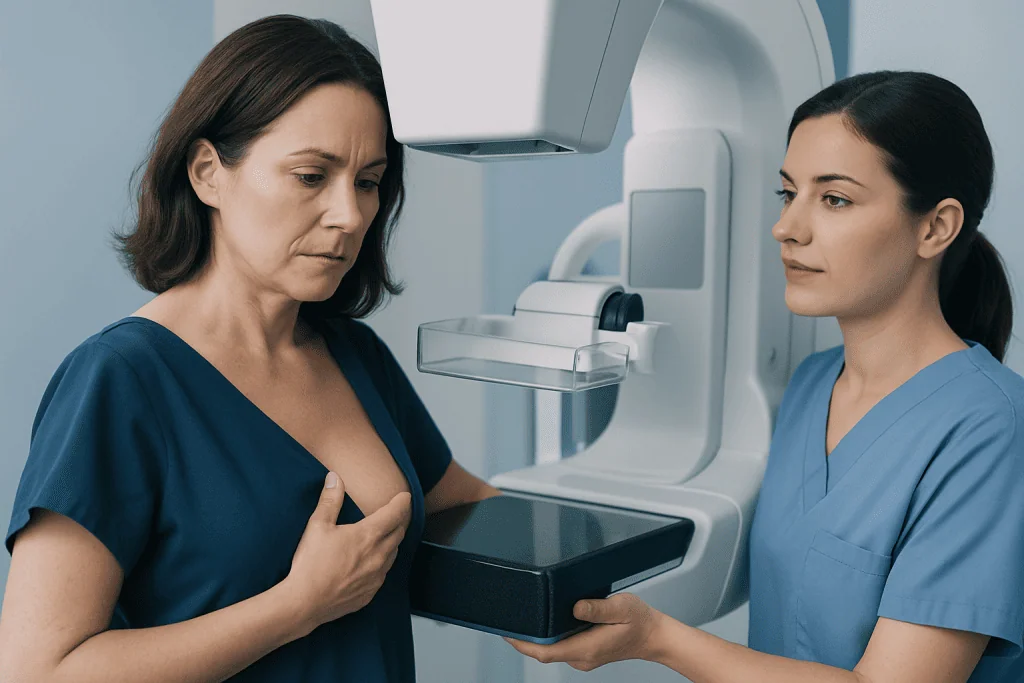
Breast pain can feel different from person to person. Some women describe fullness, swelling, aching, or tenderness, while others notice stabbing, burning, or localized soreness. The pain may affect both breasts, one breast, or one small area. It can also extend toward the armpit or the upper chest.
Noticing the pattern can provide useful clues. Cyclical pain often affects both breasts, especially the upper outer areas, and may feel dull or heavy. Noncyclical pain may be more likely to affect one spot and may feel sharper. Pain related to the chest wall can worsen with movement, lifting, coughing, or pressing on the area.
It can help to keep a brief symptom record for several weeks. Useful details include:
- When the pain starts and whether it changes with the menstrual cycle
- Whether it is in one breast, both breasts, or one specific point
- What the pain feels like, such as aching, burning, or stabbing
- Whether there are associated symptoms like a lump, swelling, nipple discharge, redness, or fever
- Whether exercise, certain bras, injury, or medications seem to trigger it
This information can make a medical visit more productive and may help a doctor decide whether imaging or other tests are needed.
Causes and risk factors

Hormonal fluctuations are one of the most common reasons for breast pain in women. Estrogen and progesterone changes during the menstrual cycle can make breast tissue feel swollen and tender. Pain may also occur during puberty, around perimenopause, or with hormone-based medications. Pregnancy and breastfeeding can also change breast sensitivity, sometimes leading to tenderness, blocked ducts, or infection.
Noncancerous breast conditions can also cause discomfort. These may include cysts, fibrocystic breast changes, inflammation, or infection. Some women have pain after breast surgery or after a procedure such as a biopsy. In others, the pain is not primarily from the breast but from surrounding structures, such as strained chest muscles, costochondritis, poor bra support, or irritation of the skin.
Certain medicines may contribute to breast discomfort in some people, including some hormonal treatments and a few cardiovascular or psychiatric medications. Lifestyle factors can also play a role. Heavy exercise, trauma, stress, and a poorly fitting bra may worsen symptoms. Women with dense breast tissue or a history of benign breast problems may be more aware of breast discomfort, though this does not necessarily mean there is a serious disease.
Less commonly, breast pain may be associated with other conditions that need assessment, including infection or, rarely, cancer. If pain occurs together with a breast lump or other concerning changes, a doctor may evaluate for breast cancer or other breast conditions to rule out important causes.
How doctors diagnose breast pain
Diagnosis begins with a detailed medical history and physical examination. A doctor will ask about the type of pain, its timing, relation to periods, pregnancy or breastfeeding, medicines, recent exercise, and any past breast problems. The breast and nearby chest wall are then examined to look for tenderness, lumps, skin changes, nipple discharge, or signs of infection.
Many women with generalized cyclical tenderness and a normal examination may not need extensive testing. However, imaging may be recommended if the pain is focal, persistent, one-sided, or associated with another symptom. Depending on age and clinical findings, a doctor may arrange mammography or a breast ultrasound to look more closely at the breast tissue.
If a lump or suspicious area is found, further assessment may be needed. This can include targeted imaging and, in selected cases, biopsy to identify the exact cause. Blood tests are not routinely used for simple breast pain, but they may be considered if another medical issue is suspected.
The goal of diagnosis is not only to rule out serious conditions but also to identify treatable benign causes. In many cases, reassurance after an appropriate evaluation is an important part of care.
Treatment options and medical management
Treatment depends on the cause, the severity of symptoms, and how much the pain affects daily life. For mild cyclical pain, reassurance and symptom relief are often enough. Supportive bras, warm or cool compresses, and avoiding activities that clearly aggravate the area can help many women feel more comfortable.
If the pain is related to a specific benign breast condition, treatment is directed at that problem. For example, an infection may need antibiotics, and a painful cyst may require monitoring or drainage in some situations. Chest wall pain may improve with rest, posture correction, and simple pain-relief measures recommended by a doctor. When there is an identifiable breast disorder such as a breast cyst, management will depend on the size, symptoms, and examination findings.
Doctors may also review medicines that could be contributing to symptoms. In selected cases, they may suggest short-term pain relief or other treatments when symptoms are persistent and troublesome. Hormone-related therapies are used only in specific situations because they can have side effects and are not appropriate for everyone.
If specialist care is needed, a breast clinic can provide coordinated assessment. Near the end of the care pathway, women may also benefit from multidisciplinary review; Acibadem International’s specialists and JCI-accredited hospitals diagnose and treat breast conditions for international patients when further evaluation is required.
Home care, prevention, and self-care tips
Simple self-care measures can ease many cases of breast pain, especially when symptoms are mild and no serious cause has been found. A well-fitting, supportive bra is one of the most practical steps, including during exercise. Some women find relief by applying a warm compress for aching or a cool compress for swelling and tenderness.
Keeping a symptom diary can help reveal patterns and triggers. If the pain seems cycle-related, recording symptoms over two or three menstrual cycles may confirm this. If symptoms worsen after high-impact activity, lifting, or certain movements, the source may be the chest wall rather than the breast itself. Gentle stretching, posture awareness, and avoiding repeated strain may help in these cases.
General health habits may also be useful. These include staying active, aiming for a healthy body weight, managing stress, and avoiding smoking. Women should also continue age-appropriate breast screening and remain familiar with how their breasts normally look and feel, without needing to check them obsessively.
Home care should not replace medical advice if symptoms are unusual, severe, or persistent. A doctor can help decide whether the pain is likely benign or whether further testing is sensible.
When to get checked by a doctor
Breast pain should be assessed if it is persistent, limited to one area, clearly different from previous cycle-related tenderness, or severe enough to affect sleep, exercise, or daily activities. Medical review is also important when pain comes with other symptoms such as a lump, nipple discharge, skin dimpling, redness, warmth, or swelling.
Women who are pregnant or breastfeeding should seek prompt advice if breast pain is associated with fever, redness, or flu-like symptoms, as this may suggest infection. Anyone who has had recent breast surgery, trauma, or a known breast condition should also seek guidance if pain increases rather than improves.
Urgent medical attention is appropriate for rapidly worsening redness, high fever, significant swelling, or signs of a spreading infection. In most situations, breast pain is not an emergency, but timely evaluation offers reassurance and helps make sure important causes are not missed.
Frequently asked questions
Is breast pain usually a sign of cancer?
Breast pain by itself is usually not caused by cancer. Most cases are linked to hormones, benign breast changes, muscle strain, or other noncancerous causes. Still, persistent or unusual pain should be assessed, especially if there is a lump or another breast change.
What is the difference between cyclical and noncyclical breast pain?
Cyclical breast pain follows the menstrual cycle and often becomes worse before a period, then improves afterward. Noncyclical pain does not have a clear menstrual pattern and may come from the breast, the chest wall, or another nearby structure. The pattern helps doctors decide what evaluation may be needed.
Can stress cause breast pain?
Stress does not directly cause all breast pain, but it can make discomfort feel more noticeable and may contribute to muscle tension in the chest wall. It can also affect sleep and increase awareness of body symptoms. Managing stress may help some women feel better, especially when pain is mild.
When should a woman see a doctor for breast pain?
A doctor should be consulted if the pain lasts for several weeks, keeps returning in one area, affects daily life, or comes with a lump, skin change, nipple discharge, redness, or fever. Women who are pregnant or breastfeeding should seek advice sooner if they suspect infection. Medical review is also sensible when symptoms feel clearly different from usual cycle-related tenderness.
What home remedies may help breast pain?
Helpful measures may include wearing a supportive bra, using warm or cool compresses, and avoiding activities that worsen the discomfort. Keeping a symptom diary can also help identify cycle-related pain or physical triggers. Home care is best for mild symptoms after serious causes have been considered.
Can breast pain come from something other than the breast?
Yes. Pain may come from chest muscles, ribs, joints, nerves, or skin irritation near the breast, and it can feel very similar to breast pain. This is one reason a physical examination is useful, because pressing on the chest wall or moving the arm may reproduce the pain and suggest a non-breast source.
References
- World Health Organization
- American College of Obstetricians and Gynecologists
- American Cancer Society
- National Health Service
- Mayo Clinic
This article is for general information only and is not a substitute for professional medical advice. Please consult a qualified doctor about your individual situation.
Oncology care in Turkey — second opinion and treatment plan
JCI-accredited · board-certified surgeons · reply within 24h
Add us as a Preferred Source to see more of our trusted health content across Google Search, AI Overviews and Discover.