Kidney Stones in Turkey: What to Expect, Costs, and Choosing Care

Small kidney stones may pass with fluids, pain relief, and medical follow-up, while larger stones may need a procedure. Common treatments include shock wave lithotripsy, ureteroscopy, and percutaneous kidney stone surgery for selected cases.
Key Takeaways
- Small kidney stones may pass with fluids, pain relief, and medical follow-up, while larger stones may need a procedure.
- Common treatments include shock wave lithotripsy, ureteroscopy, and percutaneous kidney stone surgery for selected cases.
- The total cost of kidney stone treatment in Turkey depends on the type of treatment, hospital stay, imaging, anesthesia, and aftercare.
- Urgent medical attention is needed for fever, severe uncontrolled pain, vomiting, or reduced urine output.
- Preventing future stones often involves hydration, dietary adjustments, and stone analysis when possible.
Kidney stones in Turkey are commonly evaluated with urine tests and imaging, then treated based on stone size, location, symptoms, and any blockage or infection. For international patients, understanding how diagnosis, treatment choices, travel planning, and costs fit together can make care more predictable and less stressful.
Overview
Kidney stones are hard mineral deposits that form in the kidneys and may travel into the urinary tract. They can range from tiny crystals to larger stones that block urine flow and cause severe discomfort. Many people seek care because of sudden flank pain, blood in the urine, nausea, or difficulty passing urine.
When discussing kidney stones in Turkey, the most helpful starting point is that treatment is not one-size-fits-all. Doctors usually base care on the stone’s size, location, composition if known, the patient’s symptoms, and whether there are complications such as infection or blockage. A small stone may pass with conservative care, while a larger or obstructing stone may need a procedure.
For international patients, treatment in Turkey often involves a structured pathway: consultation, imaging, a treatment recommendation, the procedure if needed, and short-term follow-up before travel home. This helps patients understand what to expect, how long they may need to stay, and what records to take back to their local doctor.
Symptoms and why kidney stones happen
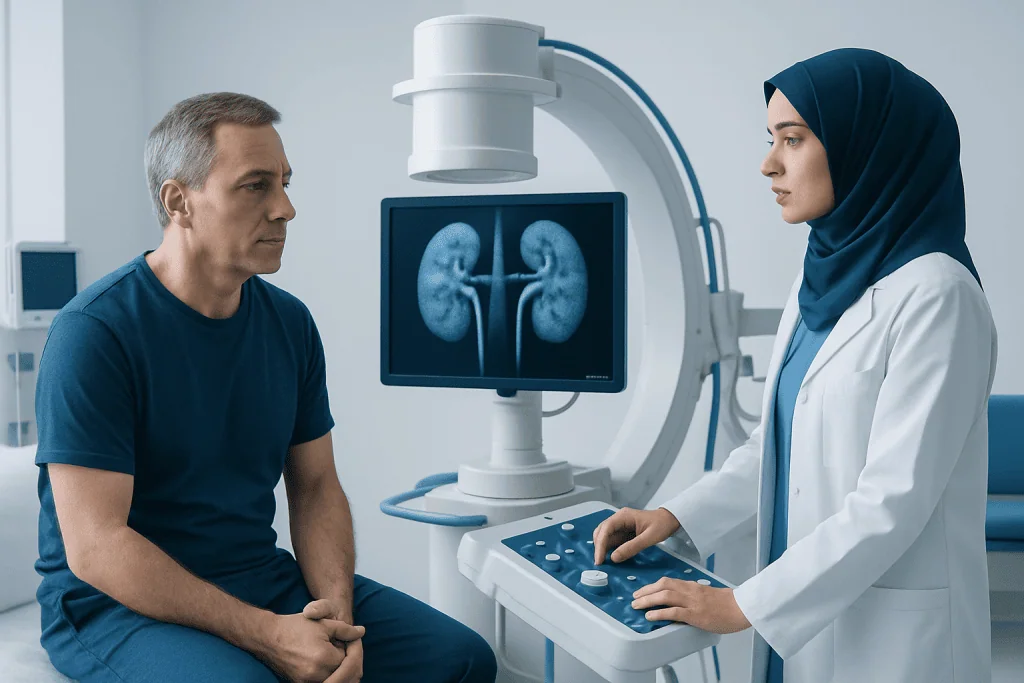
The classic symptom of a kidney stone is sudden pain in the side or back, often called flank pain. The pain may move toward the lower abdomen or groin as the stone changes position. Some people also notice pink, red, or brown urine, burning with urination, frequent urination, or nausea and vomiting.
Not every stone causes immediate symptoms. A stone may remain in the kidney without pain and be found by chance on an ultrasound or CT scan. Symptoms usually appear when a stone starts moving, irritates the urinary tract, or blocks the flow of urine.
Kidney stones form when certain minerals and salts in the urine become concentrated and crystallize. Several factors can contribute, including low fluid intake, hot climates, certain eating patterns, obesity, some medications, a family history of stones, recurrent urinary infections, and medical conditions that affect calcium, uric acid, or oxalate levels. People who have had one stone are at increased risk of another, which is why prevention is an important part of care.
Diagnosis and travel planning in Turkey
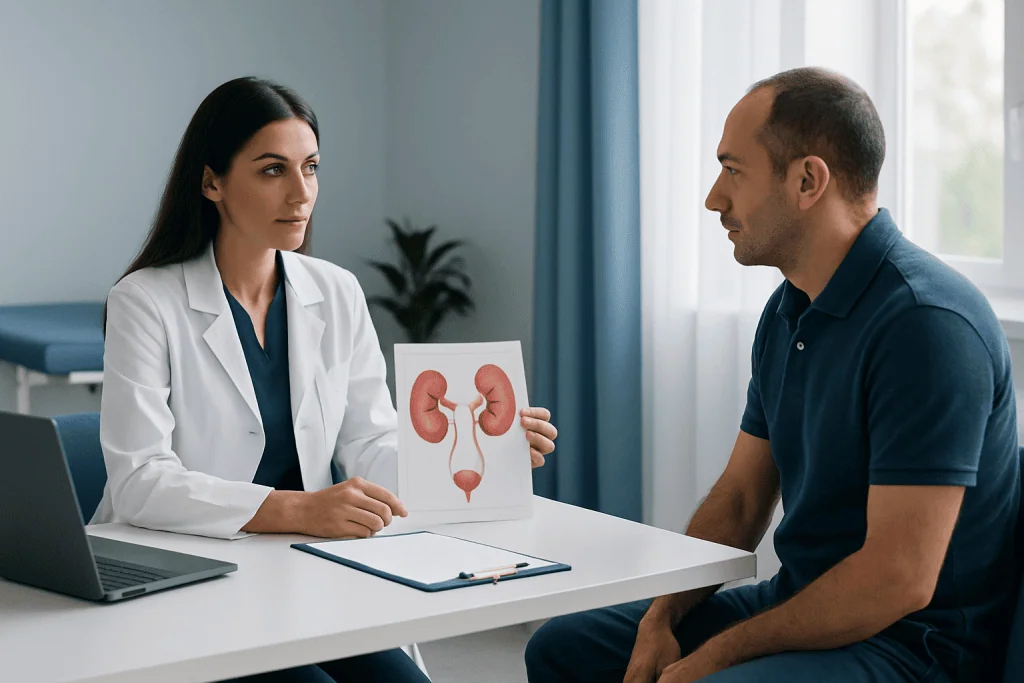
Diagnosis usually begins with a medical history, physical examination, urine testing, and blood tests. Imaging is often needed to confirm the stone’s size and location and to look for blockage. Ultrasound may be used in some cases, while a CT scan is often the clearest way to identify stones and guide treatment decisions.
Doctors may also ask whether the patient has had previous stones, urinary infections, gout, bowel disease, or kidney problems. If a stone is passed or removed, it may be analyzed to learn its composition. This can help guide steps to reduce the chance of future stones.
For patients traveling for care, it helps to bring previous scan reports, a medication list, allergy information, and any history of kidney disease or prior urology procedures. Travel plans should allow time for evaluation, treatment if required, and brief follow-up. If a stent is placed after treatment, the patient should understand when and how it will be removed, especially if follow-up may continue after returning home.
Treatment options for kidney stones
Treatment depends on whether the stone is likely to pass on its own and whether it is causing complications. Small stones may be managed with fluids, pain control, nausea treatment, and sometimes medication to help stone passage. Follow-up imaging may be needed to make sure the stone has passed and the kidney is draining well.
If the stone is too large to pass, causes ongoing pain, blocks the urinary tract, or is linked to infection or reduced kidney function, a procedure may be recommended. Common options include shock wave lithotripsy, which uses external sound waves to break some stones into smaller pieces, and ureteroscopy or retrograde intrarenal surgery, in which a thin scope is passed through the urinary tract to locate and break or remove the stone. For larger or more complex stones, doctors may consider percutaneous nephrolithotomy, a procedure that reaches the kidney through a small opening in the back.
In urgent situations, the first step may be to relieve blockage rather than remove the stone immediately. This can involve placing a ureteral stent or a nephrostomy tube to drain the kidney, especially if infection is present. Definitive stone treatment may then be planned after the patient is stable.
Recovery varies by treatment type. Some procedures are done as day care or with a short hospital stay, while more complex stone surgery may need longer observation. Temporary burning with urination, urinary frequency, mild blood in the urine, or discomfort from a ureteral stent can occur for a short period after treatment.
What affects costs in Turkey
People often search for a single price for kidney stones in Turkey, but costs vary for understandable reasons. The final amount usually depends on the consultation, blood and urine tests, imaging, the type of procedure, anesthesia, operating room time, hospital stay, medications, pathology or stone analysis, and follow-up visits. A straightforward small stone treated conservatively will usually involve different costs than a large stone requiring surgery and admission.
The treatment method is one of the biggest cost factors. Noninvasive or minimally invasive approaches may differ in cost from each other based on equipment, complexity, and whether a stent is needed. A patient with infection, severe blockage, or multiple stones may need more than one intervention, which can also change the overall budget.
International patients should ask for a clear written estimate that lists what is included and what may be additional. Useful questions include whether imaging and laboratory tests are included, whether the quote covers specialist review and anesthesia, how many nights in hospital are expected, and whether stent removal is part of the package. This helps patients compare options fairly and avoid surprises.
Choosing care and preparing for treatment
Choosing where to receive treatment involves more than price. Patients may want to consider the experience of the urology team, access to advanced imaging and endoscopic technology, the hospital’s approach to emergency stone care, infection control standards, and how clearly the team explains treatment choices and recovery. It is also helpful to know whether the hospital can coordinate care in the patient’s preferred language.
Before treatment, doctors typically review current medications, blood thinners, allergies, pregnancy status when relevant, and any heart, lung, or kidney conditions. Patients may be asked to stop eating or drinking for a period before anesthesia, depending on the planned procedure. The care team should also explain whether a stent is likely and what short-term symptoms might occur afterward.
Near the end of the care journey, patients usually receive discharge instructions about fluids, activity, pain relief, warning signs, and follow-up. If ongoing support is needed, Acibadem International’s multidisciplinary specialists at JCI-accredited hospitals diagnose and treat kidney stones for international patients and can help coordinate evaluation and aftercare planning.
Prevention, self-care, and when to seek urgent help
Preventing future stones often starts with drinking enough fluid to keep urine diluted, unless a doctor has advised fluid restriction for another medical reason. Some people may also need dietary changes, depending on the type of stone. These changes can include moderating salt intake, maintaining a balanced calcium intake from food, and limiting specific foods only when advised by a clinician or dietitian.
Self-care after a stone episode may include taking prescribed medicines as directed, straining urine if asked so the stone can be analyzed, and attending follow-up visits. People with recurrent stones may need a more detailed metabolic evaluation, especially if stones form often, occur at a young age, affect both kidneys, or run in the family.
Urgent medical care is important if there is fever, shaking chills, severe pain that is not controlled, repeated vomiting, very little urine, inability to pass urine, or symptoms in someone with a single kidney, pregnancy, or known kidney disease. These may suggest blockage, dehydration, or infection requiring prompt treatment. Kidney stones can also be linked with other urinary obstruction problems such as hydronephrosis, which is another reason timely assessment matters.
Frequently asked questions
Can kidney stones pass on their own?
Yes, some small kidney stones can pass without a procedure. Whether this is likely depends on the stone’s size, location, and the person’s symptoms. A doctor should still monitor the situation because blockage or infection can make even a small stone unsafe.
How long does kidney stone treatment in Turkey usually take?
The timeline depends on the urgency and the type of treatment. Some patients are assessed and treated within a short stay, while others need a few days for imaging, a procedure, and follow-up. More complex stones or complications may require a longer stay.
Is treatment always surgical?
No. Many stones are managed first with fluids, pain relief, and observation if they are likely to pass and there are no complications. Procedures are usually recommended when a stone is large, causes persistent symptoms, blocks urine flow, or is associated with infection.
What makes the cost of kidney stone care different from one patient to another?
Costs vary based on the tests needed, the procedure type, hospital stay, anesthesia, and follow-up care. A patient who needs only outpatient assessment will usually have different costs from someone who needs surgery, stenting, or treatment for infection.
Will a ureteral stent be needed after treatment?
Sometimes. A stent may be placed to help urine drain and to reduce swelling after stone treatment, especially after endoscopic procedures. It is usually temporary, but patients should always ask when it will be removed and what symptoms to expect while it is in place.
How can future kidney stones be prevented?
Prevention often includes good hydration and, when appropriate, dietary changes based on the stone type. Doctors may also recommend blood and urine tests or stone analysis for people with repeated stones. Following up after the first stone episode is important because prevention is more effective when tailored to the individual.
References
- National Institute of Diabetes and Digestive and Kidney Diseases
- European Association of Urology
- American Urological Association
- National Health Service
- Mayo Clinic
This article is for general information only and is not a substitute for professional medical advice. Please consult a qualified doctor about your individual situation.
Persistent digestive symptoms? Get evaluated in Turkey
JCI-accredited · board-certified surgeons · reply within 24h
Add us as a Preferred Source to see more of our trusted health content across Google Search, AI Overviews and Discover.