What Causes a Brain Aneurysm? Risk Factors and Prevention

Brain aneurysm causes usually involve a weakened area in an artery wall rather than a single event. Smoking and high blood pressure are among the most important modifiable risk factors.
Key Takeaways
- Brain aneurysm causes usually involve a weakened area in an artery wall rather than a single event.
- Smoking and high blood pressure are among the most important modifiable risk factors.
- Many brain aneurysms do not cause symptoms unless they grow, press on nearby structures, or rupture.
- Prompt medical evaluation is essential for sudden severe headache or new neurological symptoms.
- Healthy lifestyle habits and careful management of blood pressure may help lower risk.
A brain aneurysm is a bulging or ballooning area in a blood vessel in the brain caused by weakness in the vessel wall. Many aneurysms never cause symptoms, but understanding risk factors and prevention can help reduce the chance of rupture and support early diagnosis.
Overview
A brain aneurysm is a weak, bulging area in the wall of an artery in the brain. It can look like a small balloon or pouch attached to the blood vessel. Some aneurysms stay small and never cause problems, while others may enlarge over time or, in serious cases, rupture and bleed into the space around the brain.
When people ask about brain aneurysm causes, the answer is usually not one single trigger. In most cases, an aneurysm develops because part of the artery wall becomes weaker than normal. This weakness can be related to inherited factors, age-related changes, blood flow stress, and lifestyle-related risks such as smoking or uncontrolled high blood pressure.
Many brain aneurysms are discovered by chance during imaging done for another reason. Others are found after they cause symptoms such as headache, eye pain, or vision changes. A ruptured aneurysm is a medical emergency, but an unruptured aneurysm can often be monitored or treated depending on its size, location, and overall risk profile.
What Causes a Brain Aneurysm?
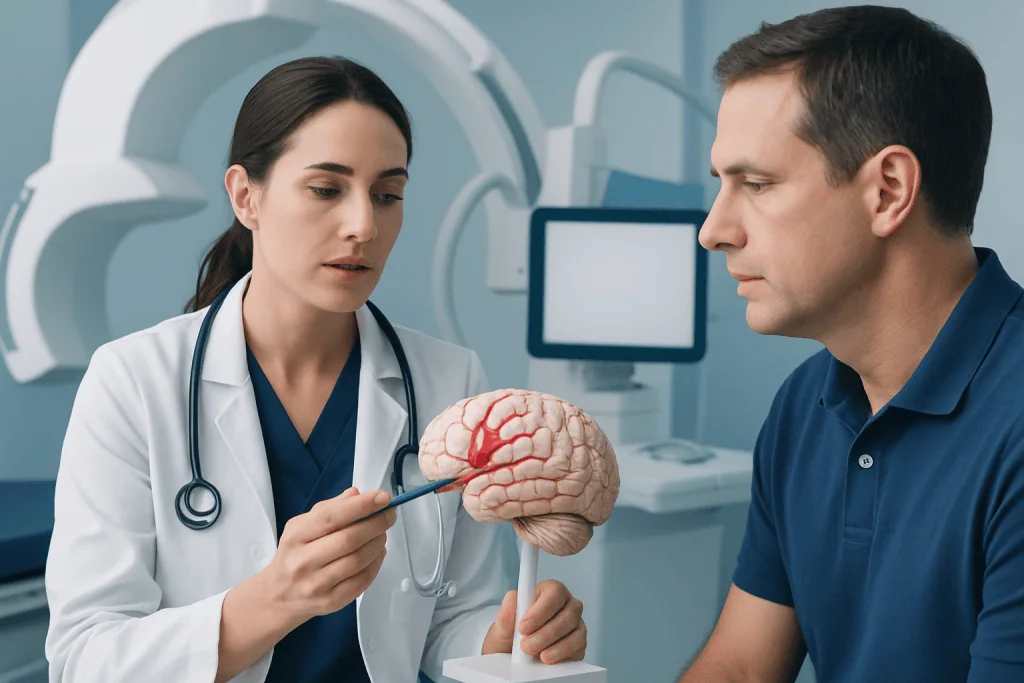
The most direct cause of a brain aneurysm is a weak spot in the wall of an artery. Arteries are designed to handle the pressure of blood flowing through them, but if one section becomes thinner or less elastic, it may begin to bulge outward. Over time, the pressure of circulating blood can push against this vulnerable area and form an aneurysm.
Several processes may contribute to this weakening. Some people are born with a tendency toward weaker blood vessel walls or connective tissue differences that increase susceptibility. In others, years of wear and tear on the arteries, especially when combined with high blood pressure, can damage the vessel lining and structure. Smoking is also strongly linked to changes in blood vessel walls and to an increased risk of both forming and rupturing an aneurysm.
Blood flow patterns also matter. Aneurysms often occur where arteries branch, because these points experience extra mechanical stress. Infections, trauma, and certain rare blood vessel disorders can also play a role in some cases, but they are less common than the usual combination of vessel wall weakness and circulatory stress.
It is important to remember that having a risk factor does not mean a person will definitely develop an aneurysm. Likewise, some people with no obvious risk factors may still have one. That is why individualized medical assessment is important, especially for those with a personal or family history of aneurysm or stroke.
Risk Factors

Brain aneurysm risk factors are often grouped into those a person can change and those they cannot. Age is one example of a non-modifiable factor, as aneurysms are more often identified in adults than in children. Family history also matters. If close relatives have had a brain aneurysm, the chance of having one may be higher.
Several medical conditions can raise risk as well. These include long-standing high blood pressure, certain inherited connective tissue disorders, and some conditions affecting the blood vessels or kidneys. Women are diagnosed more often than men in some age groups, although the reasons are not always fully clear and likely involve several biological and vascular factors.
Modifiable risk factors are especially important because they offer a chance for prevention. Smoking is one of the strongest known risks. It can damage artery walls and increase the likelihood of rupture. Heavy alcohol use, stimulant drug use, and poor blood pressure control can also place added stress on the blood vessels in the brain.
- Family history of brain aneurysm
- High blood pressure
- Smoking
- Older age
- Certain inherited connective tissue or vascular disorders
- Excessive alcohol use or stimulant drug use
- Previous aneurysm or certain vascular abnormalities
Symptoms and Warning Signs
Many unruptured brain aneurysms cause no symptoms at all. Small aneurysms are often silent and may only be found during a scan for headaches, dizziness, or another unrelated concern. When symptoms do occur, they usually happen because the aneurysm is large enough to press on nearby nerves or brain structures.
Possible symptoms of an unruptured aneurysm can include pain behind or above the eye, double vision, changes in vision, facial numbness, or a drooping eyelid. Some people may also have localized headaches, although headache alone is common and usually has many more likely explanations than an aneurysm.
The most important warning sign of rupture is a sudden, severe headache that may be described as the worst headache of a person’s life. This can happen along with nausea, vomiting, neck stiffness, sensitivity to light, confusion, fainting, or seizures. A ruptured aneurysm is a medical emergency and needs immediate care.
Because symptoms can overlap with other neurological conditions, doctors may also consider problems such as stroke or other causes of bleeding in the brain. Any sudden new neurological symptom should be taken seriously, even if it improves quickly.
How Brain Aneurysms Are Diagnosed
Diagnosis starts with a medical history and neurological examination. The doctor asks about symptoms, timing, family history, smoking, blood pressure, and any previous vascular problems. If a brain aneurysm is suspected, imaging tests are used to look at the blood vessels and surrounding brain tissue.
Common imaging options include CT scans, MRI scans, and specialized vessel imaging such as CT angiography or MR angiography. In emergency situations, especially when rupture is suspected, doctors may quickly arrange CT scanning to look for bleeding. Further imaging may then be used to identify the exact location and shape of the aneurysm.
In some cases, a catheter angiogram is recommended. This test provides detailed images of the brain’s blood vessels and can help with treatment planning. It is often used when the diagnosis is unclear or when an intervention is being considered.
If a person has a strong family history or a condition associated with aneurysms, screening may sometimes be discussed even without symptoms. The decision to screen is individualized and based on risk, age, overall health, and the likely benefits and limits of testing.
Treatment Options
Treatment depends on whether the aneurysm has ruptured, as well as its size, shape, location, and estimated risk of bleeding. Small unruptured aneurysms may be monitored with repeat imaging and careful management of risk factors. In these situations, the care team balances the risk of rupture against the risk of treatment.
When treatment is advised, the main goal is to prevent rupture or rebleeding. Two common approaches are surgical clipping and endovascular procedures. Clipping involves placing a small clip at the base of the aneurysm during brain surgery to stop blood from entering it. Endovascular treatment is performed from inside the blood vessel, often using coils or other devices to block the aneurysm and reduce bleeding risk. This may be discussed as part of interventional radiology or neurosurgical care.
A ruptured aneurysm requires urgent hospital treatment. This may include stabilizing breathing and circulation, controlling blood pressure, treating complications, and protecting the brain from further injury. Some patients need care in an intensive care setting and close neurological monitoring.
Rehabilitation may be important after rupture, especially if there has been neurological injury. Follow-up care can include physical, cognitive, or speech support depending on the person’s recovery needs. At experienced centers, specialists in neurology, neurosurgery, neuroradiology, and critical care work together to guide treatment decisions.
Prevention and Self-care
There is no guaranteed way to prevent every brain aneurysm, but risk can often be lowered by protecting blood vessel health. The most important steps include not smoking, keeping blood pressure in a healthy range, and following treatment plans for conditions such as hypertension. These measures help reduce ongoing stress and damage to artery walls.
Healthy lifestyle habits also support overall vascular health. Regular physical activity, a balanced diet, enough sleep, stress management, and limiting alcohol can all be beneficial. Avoiding stimulant drugs is especially important because they can sharply raise blood pressure and increase strain on blood vessels.
People who know they have an unruptured aneurysm should follow their doctor’s advice about monitoring, medication, and activity. They should also ask which symptoms require urgent attention. In some cases, management of associated conditions such as high blood pressure becomes a central part of prevention.
For international patients seeking evaluation, Acibadem International’s multidisciplinary specialists at JCI-accredited hospitals diagnose and treat brain aneurysms using modern imaging and coordinated neurological care.
When to See a Doctor
A person should seek urgent medical help for a sudden, severe headache, especially if it is unlike any headache they have had before. Emergency care is also needed for fainting, seizures, sudden confusion, weakness, trouble speaking, or vision loss. These symptoms may signal a ruptured aneurysm or another serious brain event.
Non-emergency medical review is also important for persistent new headaches, pain around the eye, double vision, facial numbness, or a drooping eyelid. While these symptoms often have other causes, they should be assessed if they are unexplained or worsening.
People with a family history of aneurysm, prior aneurysm, or certain inherited conditions may benefit from discussing personal risk with a neurologist or neurosurgeon. If a doctor recommends imaging, tests such as MRI may help clarify whether a blood vessel abnormality is present and whether follow-up is needed.
Frequently asked questions
What is the main cause of a brain aneurysm?
The main cause is a weak area in the wall of a brain artery. Blood pressure pushing against that weakened spot over time can cause the vessel to bulge and form an aneurysm.
Can stress cause a brain aneurysm?
Stress alone is not considered a direct cause of a brain aneurysm. However, stress can contribute to higher blood pressure in some people, and uncontrolled blood pressure is an important risk factor.
Are brain aneurysms hereditary?
Some brain aneurysms are linked to family history and inherited conditions that affect blood vessels or connective tissue. Having a close relative with an aneurysm does not mean a person will definitely develop one, but it can increase risk.
Can a brain aneurysm be prevented?
Not all aneurysms can be prevented, especially when inherited factors are involved. Still, avoiding smoking, managing blood pressure, limiting alcohol, and following medical advice can help reduce risk.
Do all brain aneurysms cause symptoms?
No. Many unruptured aneurysms cause no symptoms and are found incidentally on imaging. Symptoms are more likely if the aneurysm grows, presses on nearby nerves, or ruptures.
What does a ruptured brain aneurysm feel like?
A ruptured aneurysm often causes a sudden, extremely severe headache. It may also lead to nausea, vomiting, neck stiffness, light sensitivity, confusion, or loss of consciousness, and it requires emergency care.
References
- World Health Organization
- National Institute of Neurological Disorders and Stroke
- American Heart Association
- National Health Service
- Brain Aneurysm Foundation
This article is for general information only and is not a substitute for professional medical advice. Please consult a qualified doctor about your individual situation.
Explore treatments in Turkey — costs, top hospitals & a free quote
JCI-accredited · board-certified surgeons · reply within 24h
Add us as a Preferred Source to see more of our trusted health content across Google Search, AI Overviews and Discover.
Check your numbers in seconds
BMI, calories, due date, blood pressure and 30+ more clinical calculators — free, instant, doctor-reviewed ranges.