Breast Cancer in Men: Symptoms, Diagnosis, and Treatment

Breast cancer in men most often appears as a painless lump or nipple change. Risk increases with age, family history, inherited gene changes, and certain hormone-related conditions.
Key Takeaways
- Breast cancer in men most often appears as a painless lump or nipple change.
- Risk increases with age, family history, inherited gene changes, and certain hormone-related conditions.
- Diagnosis usually involves a clinical exam, imaging, and a biopsy to confirm the type of cancer.
- Treatment may include surgery, radiation therapy, hormone therapy, chemotherapy, or targeted treatment.
- Men should not ignore breast or nipple symptoms, even though this cancer is uncommon.
- Follow-up care is important to monitor recovery, treatment effects, and recurrence risk.
Breast cancer in men is rare, but it can happen because men also have small amounts of breast tissue. Early evaluation of a breast lump, nipple change, or unexplained breast discomfort can help diagnosis and treatment begin sooner.
Overview
Breast cancer in men develops when abnormal cells grow in the small amount of breast tissue present in the male chest. Although it is much less common than breast cancer in women, it is a real condition that can affect adult men at any age, most often later in life. Because many people do not expect men to develop breast cancer, symptoms may be overlooked or mistaken for a harmless change.
In many cases, male breast cancer begins in the ducts, the small tubes that carry secretions within breast tissue. Less commonly, it starts in other parts of the breast. Like other cancers, it can remain limited to the breast at first or spread to nearby lymph nodes and, in more advanced cases, to other parts of the body.
Awareness matters because early-stage disease is often more treatable. A new breast lump, nipple discharge, nipple inversion, skin dimpling, or persistent breast change should be checked by a doctor. Prompt assessment does not mean the problem is definitely cancer, but it helps rule out serious causes and supports earlier care if needed.
Symptoms of Breast Cancer in Men
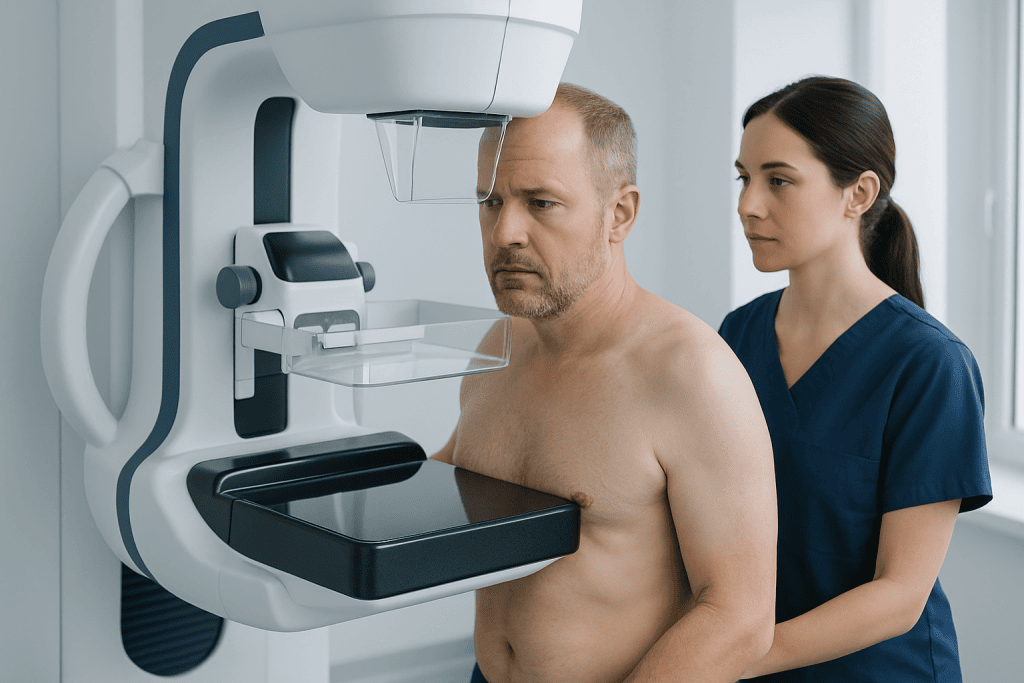
The most common symptom of breast cancer in men is a firm lump or thickened area in the breast, often just beneath or near the nipple. The lump may be painless, which is one reason it can be ignored for some time. Some men notice only a subtle change in the shape or feel of the chest.
Nipple changes can also be important warning signs. These may include the nipple turning inward, scaling or crusting of the nipple skin, redness, or discharge. Bloody discharge is especially important to have evaluated, but any new fluid from the nipple deserves medical attention.
Changes in the skin over the breast may occur as well. The skin can look dimpled, puckered, swollen, or irritated. In some cases, enlarged lymph nodes under the arm are noticed before the breast change is clearly recognized.
These symptoms do not always mean cancer. Benign conditions such as gynecomastia, cysts, infections, or skin problems can also cause chest or nipple changes. Still, persistent or unexplained symptoms should be assessed by a healthcare professional rather than watched indefinitely.
Causes and Risk Factors

The exact cause of breast cancer in men is not always clear. Cancer begins when cells in the breast develop genetic changes that allow them to grow and divide in an uncontrolled way. Over time, these abnormal cells can form a tumor and may invade nearby tissues.
Several factors can increase risk. Growing older is one of the most important, since most cases are diagnosed in later adulthood. A strong family history of breast cancer, especially in close relatives, can raise the chance of disease. Inherited gene changes, including BRCA mutations, are also linked to male breast cancer and may influence screening and treatment decisions.
Hormone-related factors may contribute as well. Conditions that increase estrogen levels or lower androgen levels can increase risk. These may include obesity, liver disease, certain testicular conditions, Klinefelter syndrome, and some hormone treatments. Prior radiation exposure to the chest can also increase the likelihood of developing breast cancer later.
Not everyone with risk factors will develop cancer, and some men diagnosed with breast cancer have no obvious risk factors. Even so, men with a notable family history or known inherited mutations may benefit from discussing genetic counseling and personalized surveillance with a specialist.
How Diagnosis Is Made
Diagnosis usually begins with a medical history and physical examination. The doctor asks about the timing of symptoms, family history, previous cancers, and any hormonal or testicular conditions. During the exam, the breast, nipple, and underarm area are carefully checked for lumps, skin changes, and enlarged lymph nodes.
If cancer is suspected, imaging tests are typically used to look more closely at the area. These may include mammography and breast ultrasound, which can help show whether a lump appears suspicious or more likely benign. In selected situations, additional scans may be needed to understand the extent of disease.
A biopsy is needed to confirm the diagnosis. During a biopsy, a sample of tissue is removed and examined in the laboratory. This identifies whether cancer is present and, if so, what type it is. The pathology report often also checks for hormone receptors and other tumor features that help guide treatment choices.
After cancer is confirmed, staging may be performed. Staging describes the size of the tumor, whether lymph nodes are involved, and whether the cancer has spread elsewhere. This information is essential for creating an individualized treatment plan and discussing likely next steps.
Treatment Options
Treatment for breast cancer in men depends on the stage of the disease, the tumor’s biology, the person’s overall health, and individual preferences. In many cases, surgery is the main treatment. Because the amount of breast tissue in men is usually small, removal of the breast tissue and nearby structures may be recommended more often than breast-conserving approaches.
Surgical care may also include evaluation of lymph nodes under the arm to see whether cancer has spread. This helps determine stage and can influence decisions about additional treatment. Some patients may benefit from breast cancer surgery as part of their core treatment plan.
Other treatments are often used before or after surgery. Radiation therapy may reduce the risk of cancer returning in the chest area or nearby lymph nodes. Hormone therapy is commonly used because many male breast cancers are hormone receptor-positive. Chemotherapy may be recommended for higher-risk disease, larger tumors, lymph node involvement, or aggressive tumor features. In some cases, targeted therapies may also be considered depending on the tumor’s molecular profile.
Treatment plans are usually developed by a multidisciplinary team that may include surgical oncologists, medical oncologists, radiation oncologists, radiologists, pathologists, and genetics specialists. For men with advanced disease, treatment may focus on controlling cancer, relieving symptoms, and maintaining quality of life for as long as possible.
Recovery, Follow-Up, and Self-Care
Recovery after treatment varies depending on the type of surgery and whether additional therapies are used. Temporary pain, tightness, fatigue, numbness, or reduced shoulder movement can occur, especially after surgery or radiation therapy. Gentle rehabilitation, wound care, and a gradual return to activity can support healing.
Follow-up appointments are an important part of care. These visits help monitor for recurrence, manage side effects, and address emotional or practical concerns. Doctors may review symptoms, examine the chest and underarm area, and recommend imaging or blood tests only when appropriate for the individual’s situation.
Self-care can also make a meaningful difference during and after treatment. Helpful steps often include maintaining a healthy body weight, staying physically active as tolerated, limiting alcohol, not smoking, and following the treatment team’s guidance on medicines and follow-up. Emotional support matters too, since many men feel isolated with a diagnosis more commonly associated with women.
Support groups, counseling, and open conversations with family can be valuable. Men living with breast cancer may also wish to learn about related conditions such as breast cancer in general, especially when discussing pathology, treatment options, and long-term survivorship with their care team.
When to See a Doctor
A doctor should be consulted if a man notices a breast lump, nipple discharge, nipple inversion, skin dimpling, persistent redness, or unexplained breast pain that does not go away. Symptoms are often due to noncancerous causes, but only a proper medical assessment can determine that safely.
Men with a strong family history of breast or ovarian cancer, or a known inherited mutation such as BRCA, should discuss their risk with a healthcare professional even if they have no symptoms. In some cases, genetic counseling or earlier evaluation may be recommended.
Urgent medical review is especially important if symptoms are progressing quickly, if there is bloody nipple discharge, or if enlarged underarm lymph nodes are present. Early attention can shorten the time to diagnosis and treatment if cancer is found.
For international patients who need coordinated evaluation and care, Acibadem International’s multidisciplinary specialists and JCI-accredited hospitals diagnose and treat breast cancer in men using individualized treatment plans and modern imaging, pathology, and oncology services.
Frequently asked questions
Can men really get breast cancer?
Yes. Men have a small amount of breast tissue, so breast cancer can develop there. It is uncommon, but it should be considered when a man has a persistent breast lump or nipple change.
What does male breast cancer usually feel like?
It often feels like a firm lump under or near the nipple. The lump may be painless, and some men notice nipple inversion, discharge, or skin dimpling instead of pain.
Is every breast lump in a man cancer?
No. Many breast lumps or chest changes in men are caused by noncancerous conditions such as gynecomastia, cysts, or infection. Even so, any new or unexplained lump should be evaluated by a doctor.
How is breast cancer in men confirmed?
A doctor usually starts with an examination and imaging tests such as mammography or ultrasound. A biopsy is then needed to confirm whether cancer is present and to identify the tumor type.
What treatments are used for breast cancer in men?
Treatment may include surgery, radiation therapy, hormone therapy, chemotherapy, and sometimes targeted therapy. The best approach depends on the stage, tumor biology, overall health, and personal treatment goals.
Should men with breast cancer have genetic testing?
Genetic testing may be recommended, especially when there is a personal or family history of breast, ovarian, prostate, or pancreatic cancer. Results can help guide treatment decisions and may be important for relatives as well.
References
- World Health Organization
- National Cancer Institute
- American Cancer Society
- National Comprehensive Cancer Network
- Centers for Disease Control and Prevention
This article is for general information only and is not a substitute for professional medical advice. Please consult a qualified doctor about your individual situation.
Breast Cancer in Turkey — costs, top hospitals & a free quote
JCI-accredited · board-certified surgeons · reply within 24h
Add us as a Preferred Source to see more of our trusted health content across Google Search, AI Overviews and Discover.

Medical Oncology Department
Medical treatment of cancer with chemotherapy, immunotherapy and targeted therapies under a multidisciplinary tumor board.
60 specialists in this unit