

Medical Consent Forms in Turkey: What International Patients Should Know

Medical consent forms in Turkey are documents confirming that you understand and agree to a proposed treatment. They describe the procedure, its purpose, the main risks, and the alternatives. In Turkish, the standard document is called an aydınlatılmış onam formu — an informed consent form. You can ask questions, request interpreter support, and take time before you sign.
You have booked your treatment, your flights are arranged, and then a folder of forms lands in front of you — possibly in a language you do not read fluently. What exactly are you agreeing to? That question deserves a clear answer before you pick up the pen, and this guide gives you one.
At a glance
- What consent means: Your agreement to a proposed treatment, given after you have received clear information about it
- What the form is called: An informed consent form — in Turkish, an aydınlatılmış onam formu
- When you sign: Before tests, procedures, anaesthesia, surgery, transfusion and certain admission steps
- What forms cover: The procedure, its purpose, main risks, alternatives, and separate administrative permissions
- Language support: You can ask for interpreter help and plain-language explanations before signing
- Your right: You can ask questions, take time, and decline to sign anything you do not understand
What medical consent forms in Turkey actually are
Medical consent forms in Turkey are not just paperwork to get through. They are the written half of a two-part process. The first part is a conversation: a member of your care team explains what is being proposed, why it is recommended, what the expected benefits may be, what the possible risks are, and what alternatives exist — including doing nothing, where that is medically reasonable. The second part is the document, which records that this conversation happened and that you agreed to proceed.
Turkish patient rights regulations require informed consent before medical interventions, which is why hospitals treat these forms seriously rather than as a formality. The form supports the discussion, but it should never replace it. If you are handed a form without an explanation, the process is incomplete, and you are entitled to say so.
For international patients, this step carries extra weight. You are making decisions away from home, inside an unfamiliar healthcare system, and often through a second language. That is precisely why the consent process exists: to slow things down at the moment it matters most. At hospitals with established international patient departments, including Acibadem hospitals, consent is handled alongside broader safety routines — identity checks, pre-procedure verification, and interpreter support where needed.
What is a medical consent form called?
The document has several names, and it helps to recognise all of them. In international healthcare English, it is usually called an informed consent form. In Turkish, the standard term is aydınlatılmış onam formu, which translates literally as “enlightened consent form” — the wording deliberately emphasises that you must be informed first. You may also hear staff refer to it simply as an onam formu (consent form) or, for specific steps, an anaesthesia consent, surgical consent or transfusion consent.
If a document is titled in Turkish and you are unsure whether it is a consent form or an administrative form — a privacy permission, a companion authorisation, an insurance declaration — ask. The distinction matters, because clinical consent forms concern your treatment, while administrative forms concern how your information and logistics are handled. You are entitled to know which type is in front of you before you sign either.
What information is usually included
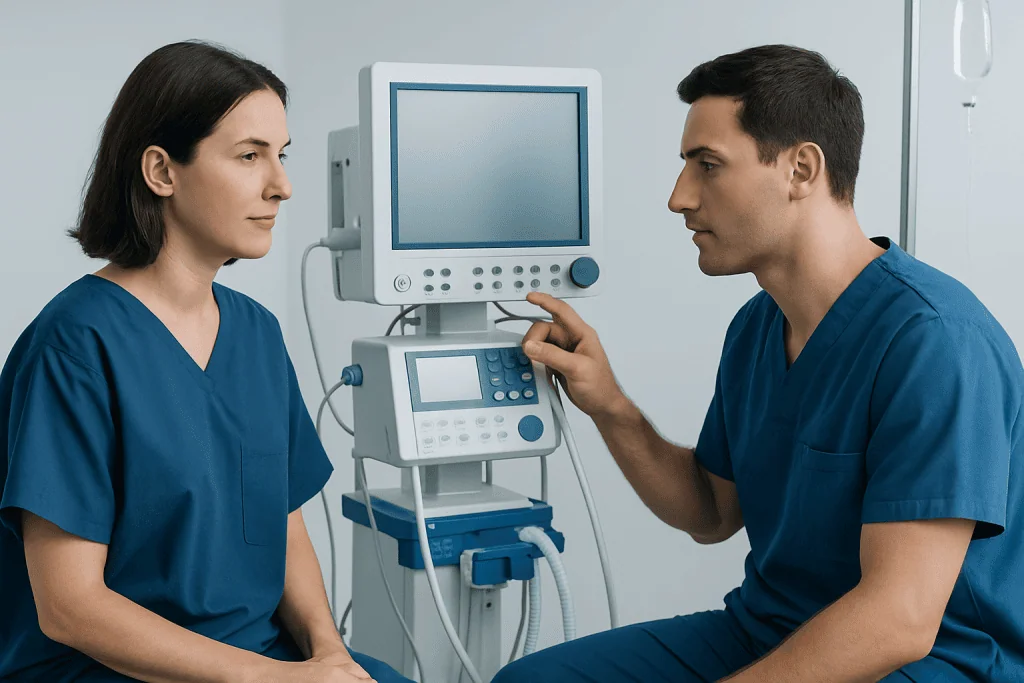
Formats vary between hospitals and between procedures, but most consent forms cover the same core points. You will typically see the name of the planned treatment, test or operation, a short explanation of its purpose, a section describing common or important risks and possible complications, and a note on expected recovery or follow-up requirements. Many forms also describe alternatives, including the option of delaying or declining treatment where that is medically appropriate.
Expect more than one form for a single episode of care. This does not mean your case is unusually complex; it reflects the fact that different steps require their own documented consent. Common separate forms include:
- Procedure or treatment consent — the main document for the operation or intervention itself
- Anaesthesia or sedation consent — usually discussed with the anaesthesia team; see preparing for general anaesthesia in Turkey for what that conversation covers
- Diagnostic test or imaging consent — particularly for contrast imaging or invasive diagnostics
- Blood transfusion consent — if blood products may be needed; our guide on blood transfusion in Turkey explains how this is handled
- Privacy and information-sharing permissions — who may receive updates about you, and how your records are used; see medical records privacy in Turkey
One honest caution: medical consent forms in Turkey, as anywhere, cannot list every conceivable risk. They concentrate on the risks that are common, and the risks that are serious even if rare. If you want more detail on a specific risk that worries you, the consent conversation — not the form — is where to raise it.
How to make sure you truly understand before signing

The most important rule is simple: do not sign anything you do not understand. Not partially understand, not mostly understand — understand. If a form is unclear, ask for it to be explained in plain language, and keep asking until the plan makes sense to you.
A practical approach is to have your doctor confirm five points before you sign: what will be done, why it is recommended, what the main risks are, what other options you have, and what happens if you wait or decide not to proceed. Then repeat the plan back in your own words. This is called teach-back, and it is the single most reliable way to confirm that you and the care team actually understand each other. It takes two minutes and it catches misunderstandings that a signature never would.
If you feel rushed, anxious or unwell, it is reasonable to ask for time to read carefully or to discuss the form with your companion. For planned, non-urgent treatment, a short pause costs nothing and often produces a calmer, more confident decision. Signing under pressure serves nobody — least of all the hospital, which needs your consent to be genuinely informed for it to mean anything.
Language, translation and interpreters
Hospitals that regularly treat overseas visitors usually offer English-language support, and some provide forms or written summaries in English and other languages. Even where the signed document itself is in Turkish, you should receive a clear verbal explanation in a language you understand before you are asked to sign. If English is not your strongest language either, ask whether an interpreter can join the consent discussion. International patient departments typically coordinate this, and interpreter support is most valuable at exactly three moments: the consent conversation, the anaesthesia discussion, and discharge planning.
Two things to be careful about. First, avoid relying solely on a family member to translate complex medical risk information; well-meaning relatives may soften or skip details. Second, if you use a translation app on a written form, treat the result as a rough guide only, and confirm anything important with staff. Machine translation of medical Turkish is better than nothing but not good enough to sign on.
Special considerations for international patients
Travelling for treatment adds layers to consent that a local patient never faces. Your doctors may need to verify details from records you brought from home: test results, medication lists, allergies, previous surgeries, chronic conditions. If anything in those records is incomplete, outdated or poorly translated, your treatment plan — and therefore your consent — may need to be reviewed again before anything is signed. That is a feature of a careful system, not a delay to be resented.
You should also fold travel into your decision-making, because the form will not do it for you. Before signing, ask how long you may need to stay in Turkey after the procedure, when flying may be reasonable, what follow-up is expected and where it can happen, and whether you will need a companion during early recovery. These answers affect your accommodation, your return ticket and who travels with you. It is also sensible to understand, before you commit, how changes of plan are handled — our guide on refunds and cancellations for medical treatment in Turkey covers what to check.
Can foreigners use hospitals in Turkey?
Yes. Foreign visitors can be treated in both public and private Turkish hospitals. Private hospitals routinely register international patients using a passport, and many maintain dedicated departments for exactly this purpose. Emergency departments assess and stabilise patients regardless of nationality; the cost of care is then billed to the patient or their insurer afterwards.
Healthcare is not free for tourists, however. Turkey’s public health insurance covers people enrolled in the Turkish social security system, which short-term visitors are not. Visitors pay for treatment themselves or through travel insurance or private health insurance, which is why checking your policy’s terms before travelling matters. What a given treatment costs depends on the hospital, the procedure, the length of stay and what the quoted plan includes — quotes are prepared case by case rather than from a universal price list. If you fall ill outside normal clinic hours while in the country, it helps to know in advance how the system works; see after-hours medical help in Turkey.
Your rights, your questions, and when to pause
You have the right to ask questions and receive understandable answers before giving consent. Reasonable questions include: who will perform the treatment, whether the plan has changed since your consultation, what side effects are expected, and what recovery will involve. None of these questions is awkward. A well-run hospital treats them as a normal part of care, not as an obstacle.
You also have the right to know when a form includes optional permissions that are separate from the treatment itself — consent to share updates with a family member, to use anonymised information for education or research, or to allow photography for the medical record. If something is optional, you can ask what happens if you decline that specific part, and decline it without affecting your treatment. Blanket or blank consent — a form with key details left empty, to be filled in later — is not acceptable practice; the procedure named on the form should be the procedure you discussed.
If you feel pressured to sign immediately without explanation, pause. Ask to speak again with the doctor or nurse responsible for your care. Consent exists to protect your safety and dignity, and pressure is a signal that the process has gone wrong, not that you have.
What happens after you sign
Signing means the hospital can proceed with the agreed plan — but it does not end communication, and it does not lock you in. You can withdraw consent before a procedure begins if you change your mind, although for practical and safety reasons this should be discussed with your doctor rather than announced at the door of the operating theatre. Before treatment starts, the team will typically repeat key safety checks: confirming your identity, your allergies, your medications and the exact procedure. This repetition is deliberate, not disorganised.
Ask for copies of the signed documents. You may need them for your insurer, your referring doctor, or follow-up care at home, and they are far easier to obtain before you leave than after. Keep them together with your discharge instructions and medication list in one file, printed or digital. If your condition changes or the plan needs adjusting after treatment, a further consent discussion may be needed — another reason to keep your paperwork organised and your companion informed.
Step by step
- Read the form before the day of treatment if possible. If the hospital can share information in advance, review it before your procedure day becomes busy. Note unfamiliar terms and practical concerns such as recovery time, flying, and follow-up arrangements.
- Ask for explanations in plain language. Do not rely on medical words you only partly understand. Ask your doctor or nurse to explain what will happen, why it is recommended, and what the main risks and alternatives are.
- Use interpreter support if you need it. Request an interpreter for the consent conversation itself, not just for logistics — especially for surgery, anaesthesia discussions and discharge planning.
- Use teach-back. Repeat the plan to your doctor in your own words and let them correct anything you have misunderstood. This is quick and remarkably effective.
- Confirm the travel implications. Before you sign, ask how long you should remain in Turkey, when flying may be reasonable, and whether you will need help after discharge. These answers shape your accommodation and return tickets.
- Check each form separately. Surgery, anaesthesia, imaging, transfusion and information-sharing may each have their own form. Review each on its own, and identify which permissions are clinical and which are optional or administrative.
- Keep copies and key contacts. Ask for copies of everything you sign, and store them with your discharge paperwork and the hospital’s contact details so you can reach them during recovery or after you return home.
Your checklist
- Bring your passport and hospital registration details
- Carry a current list of medications, allergies and past surgeries
- Bring translated medical records if available
- Write down your questions before the consent discussion
- Ask whether an interpreter can join if needed
- Confirm recovery time and follow-up expectations before signing
- Check who may receive updates about your care, and confirm it in the privacy permissions
- Request copies of signed forms and discharge instructions before you leave
Key takeaways
- Medical consent forms in Turkey document a conversation — the explanation you receive matters as much as the signature you give.
- The standard document is an informed consent form, called an aydınlatılmış onam formu in Turkish.
- You should understand the procedure, purpose, main risks, alternatives and recovery implications before signing anything.
- Expect separate forms for surgery, anaesthesia, imaging, transfusion and information-sharing — and check which permissions are optional.
- Interpreter support is a normal request, not a special favour, and teach-back is the best test of genuine understanding.
- Keep copies of every signed document for your insurer, your doctor at home and your own records.
Frequently asked questions
What is a medical consent form called?
In international healthcare English it is called an informed consent form. In Turkey the standard term is aydınlatılmış onam formu — literally an “enlightened consent form” — and you may hear it shortened to onam formu. Specific versions exist for surgery, anaesthesia, imaging and blood transfusion.
Are medical consent forms in Turkey available in English?
Many hospitals that treat international patients provide English-language support, and some offer translated forms or interpreter-assisted explanations. Even where the signed document is in Turkish, you should receive a clear verbal explanation in a language you understand before signing.
Can I refuse to sign a consent form?
Yes. You should not sign a form you do not understand or do not agree with. Ask for more information, discuss the alternatives, and make sure you understand what delaying or declining treatment would mean before deciding. For planned treatment, taking time is entirely reasonable.
Will I need to sign more than one consent form?
Often, yes. Separate forms are common for the main procedure, anaesthesia or sedation, imaging, blood transfusion, and privacy or information-sharing permissions. Each should be explained on its own, and multiple forms do not mean your case is unusually complex.
Can foreigners go to hospital in Turkey?
Yes. Foreign visitors can be treated in Turkish public and private hospitals, and private hospitals routinely register international patients using a passport. Emergency departments assess and stabilise patients regardless of nationality, with costs billed afterwards to the patient or their insurer.
Do tourists get free healthcare in Turkey?
No. Turkey’s public health insurance covers people enrolled in the Turkish social security system, which short-term visitors are not. Tourists pay for care themselves or through travel or private health insurance, so it is worth checking your policy’s medical cover before you travel.
What if my treatment plan changes after I sign?
If the plan changes in a meaningful way, the care team should explain the change and may need fresh consent for the revised plan. The procedure named on your form should always match the procedure you discussed, so keep asking until any change makes sense to you.
Can my family member or companion help during the consent process?
Yes — a companion is useful for support, note-taking and remembering questions. Be cautious about using a relative as your only translator for risk information, and note that allowing the hospital to share your medical details with a companion is usually a separate written permission.
Add us as a Preferred Source to see more of our trusted health content across Google Search, AI Overviews and Discover.

Update history
- PublishedJune 25, 2026
- Medical review approvedSeptember 13, 2026
- Last content updateSeptember 13, 2026
References2
- Informed consent — adults (MedlinePlus) — medlineplus.gov
- Consent to treatment (NHS) — nhs.uk
More Patient Guides

When to Delay Travel for Treatment in Turkey Because of Cold, Flu, or Fever
Delay travel for treatment in Turkey if you have fever, worsening flu symptoms, or breathing difficulty; contact your care team before flying.

Traveling to Turkey for Treatment While Pregnant: Safety Questions to Ask First
Traveling to Turkey while pregnant can be safe with medical clearance, airline checks and a tailored care plan. Ask these key safety…

When to Seek Urgent Help After Leaving the Hospital in Turkey
When to seek urgent help after leaving the hospital in Turkey: act fast for breathing trouble, chest pain, heavy bleeding, high fever,…

At Acibadem, How We Handle Consent, Privacy, and Patient Decision-Making
Consent, privacy, and patient decision-making at Acibadem in Turkey are handled with clear information, confidentiality, interpreters, and respect for your choices.