Neuropsychological Testing for Children: What Parents Can Expect

Neuropsychological testing looks at attention, memory, language, problem-solving, academic skills, and emotional-behavioral functioning. The process is designed to answer practical questions about learning, development, behavior, or recovery after illness or injury.
Key Takeaways
- Neuropsychological testing looks at attention, memory, language, problem-solving, academic skills, and emotional-behavioral functioning.
- The process is designed to answer practical questions about learning, development, behavior, or recovery after illness or injury.
- Testing is individualized, child-friendly, and usually includes interviews, questionnaires, and age-appropriate tasks rather than invasive procedures.
- Results can guide school accommodations, therapies, medical follow-up, and everyday parenting strategies.
- Parents can help by sharing records, preparing their child calmly, and understanding that the goal is insight, not judgment.
Neuropsychological testing for children is a detailed evaluation of how a child thinks, learns, remembers, communicates, and manages emotions or behavior. It helps families and care teams understand a child’s strengths and challenges so that support at home, school, and in healthcare can be better tailored.
Overview
Neuropsychological testing for children is a specialized assessment that explores how the brain supports everyday skills such as attention, language, memory, learning, planning, and social understanding. Rather than focusing on a single symptom, it looks at a child’s overall pattern of strengths and difficulties. This can help explain why a child may be struggling in school, having behavior challenges, or finding certain daily tasks unusually hard.
The evaluation is usually led by a pediatric neuropsychologist or another trained specialist. It may be recommended when parents, teachers, or doctors notice concerns about development, attention, academic progress, emotional regulation, or recovery after a medical condition affecting the brain or nervous system. In some cases, it helps clarify whether symptoms fit with concerns such as autism, attention difficulties, language disorders, or learning differences.
For many families, the word “testing” can sound stressful. In practice, these evaluations are structured to be child-friendly and informative. Children are asked to complete activities such as answering questions, solving puzzles, remembering information, drawing, reading, or playing structured tasks. The aim is not to label a child, but to better understand how they learn and what support may help them thrive.
Why a Child May Need Testing
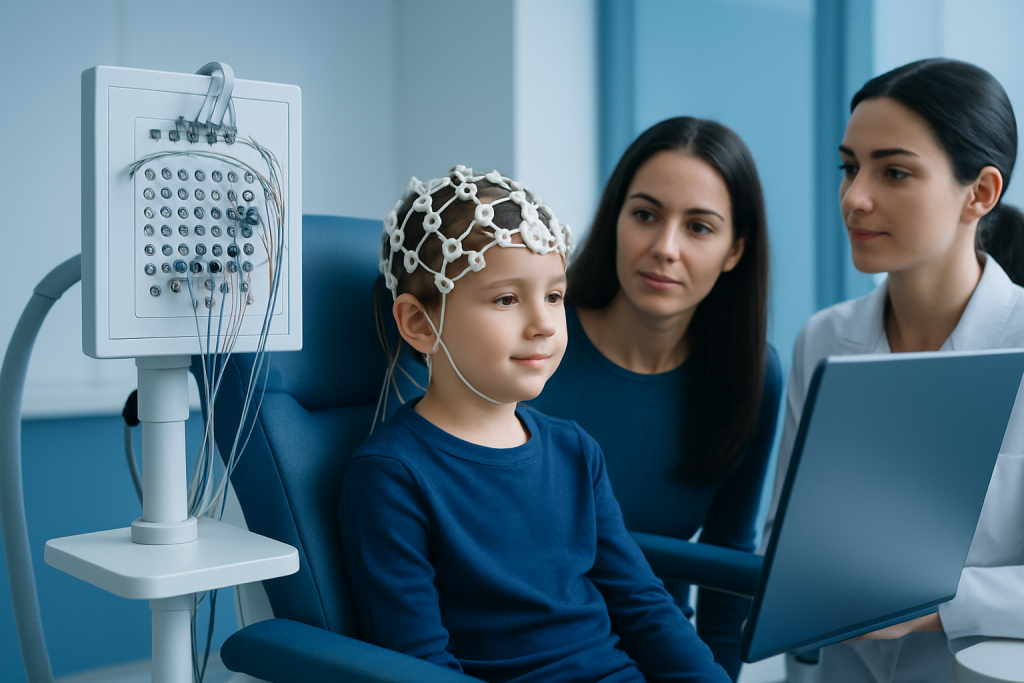
Doctors may suggest neuropsychological testing when there are ongoing questions that simpler screening tools cannot fully answer. A child might be bright and curious but still struggle with reading, organization, following instructions, or managing frustration. Testing can show whether these difficulties relate to attention, working memory, processing speed, language, visual-spatial skills, or another area.
Common reasons for referral include suspected learning disorders, attention-deficit/hyperactivity disorder, developmental delays, social communication concerns, or unexplained academic decline. It can also be useful after epilepsy, concussion, brain infection, stroke, prematurity, genetic conditions, or other medical issues that may affect development. Families may be referred after a neurological review such as neurology evaluation when more detailed cognitive information is needed.
Testing is also helpful when a child’s profile is complex. For example, a child may have anxiety along with school difficulties, or strong verbal skills but weak organization and memory. By looking across many domains, the assessment can help separate overlapping concerns and create a more complete plan for support.
What the Evaluation Includes

A child neuropsychological evaluation usually begins with a detailed parent interview. The specialist asks about pregnancy and birth history, developmental milestones, medical history, schooling, behavior, emotional wellbeing, and family background. Parents may also be asked to provide school reports, previous evaluations, therapy notes, and teacher feedback to build a fuller picture.
The testing session itself includes a range of age-appropriate tasks selected for the child’s needs. These may assess intelligence, attention, executive function, language, visual-motor skills, memory, academic skills, social perception, and emotional or behavioral functioning. Some children complete paper-and-pencil activities, while others respond verbally, manipulate blocks or cards, or use a computer-based format.
Questionnaires from parents, teachers, and sometimes the child are often part of the process. These forms can provide important information about behavior in real-world settings, because performance in a quiet testing room does not always reflect how a child manages a busy classroom or home routine.
Depending on the concern, the evaluation may work alongside other assessments, such as pediatric neurology, speech and language review, occupational therapy, or educational testing. Each part adds context, helping the team understand not just whether a child is struggling, but why.
What Parents and Children Can Expect on Test Day
Most evaluations take place in a calm, quiet environment and may last several hours, sometimes spread over more than one session. The length depends on the child’s age, stamina, and the questions being asked. Breaks are usually built in, and the specialist watches for signs of fatigue, frustration, or distraction.
Children are not expected to know all the answers. In fact, the evaluation is designed to find out which tasks feel easy, which feel hard, and how a child approaches challenges. Some children enjoy the puzzle-like activities, while others need more reassurance. It is normal for performance to vary from one area to another.
Parents can help by preparing their child in a simple and calm way. It often helps to say that they will be doing thinking and learning activities so the doctor can understand how they learn best. A good night’s sleep, regular meals, glasses or hearing aids if needed, and any usual medications taken as prescribed can support a more accurate picture of the child’s abilities.
Parents are sometimes present for part of the visit, especially for younger children, but much of the direct testing is done one-to-one. This allows the specialist to observe attention, persistence, communication, and problem-solving in a standardized way.
How Results Are Used
After the assessment, the specialist reviews the results and compares them with developmental expectations for the child’s age. The final report usually explains the child’s cognitive, academic, behavioral, and emotional profile in practical language. It does not simply list scores; it connects the findings to everyday concerns such as school performance, friendships, independence, and coping skills.
One of the most valuable parts of neuropsychological testing for children is that it identifies both strengths and needs. A child may have strong reasoning abilities but weak processing speed, or solid memory for stories but difficulty retaining visual details. Knowing this can help teachers and parents choose strategies that build on what the child does well while supporting areas of difficulty.
Recommendations often include school accommodations, tutoring approaches, behavioral supports, therapy referrals, follow-up medical evaluation, or counseling. In some situations, the findings may prompt additional investigations such as MRI if the medical team needs more information about the brain, though imaging is not part of routine neuropsychological testing itself.
Possible Findings and Next Steps
Neuropsychological testing does not always produce a single simple answer. Sometimes it confirms a clear pattern, such as a specific learning disorder, attention difficulties, or broader developmental differences. In other cases, it shows that a child’s challenges are influenced by several factors at once, such as anxiety, sleep problems, language weakness, or the effects of a medical condition.
If a diagnosis is made, families usually receive guidance on what it means and what support may help. If no formal diagnosis is made, the evaluation can still be highly useful by identifying practical needs and ruling out certain concerns. The focus is on improving daily functioning and helping the child participate more confidently at school and home.
Follow-up may include educational planning, repeat testing after a period of development or treatment, or consultation with other specialists. For children with known neurological or developmental conditions, reassessment over time can track progress and help adjust support as school demands increase.
At the appropriate stage, some families benefit from coordinated care involving psychology, education, rehabilitation, and medical specialists. Acibadem International’s multidisciplinary specialists and JCI-accredited hospitals provide assessment and treatment planning for international patients when a comprehensive pediatric evaluation is needed.
How Parents Can Support Their Child
Parents play an important role before and after the evaluation. Before testing, it helps to gather school reports, teacher comments, therapy notes, and previous medical records. Clear examples of what the child finds difficult can be especially useful, such as trouble finishing homework, frequent emotional outbursts, or a drop in reading progress.
After the results meeting, families often feel relieved to have a clearer explanation for concerns that have been building over time. The next step is usually to turn recommendations into action. This may include meeting with the school, arranging therapy, setting up structured routines, and using home strategies that match the child’s learning style.
Helpful day-to-day approaches often include:
- breaking tasks into smaller steps
- using visual schedules or written reminders
- providing extra time for reading, writing, or transitions
- creating predictable routines for homework and sleep
- praising effort, persistence, and progress rather than only outcomes
Children benefit most when the adults around them share information and work toward the same goals. If parents are unsure how to use the report, they can ask the specialist to explain which recommendations are highest priority and how to start implementing them.
When to Seek Professional Advice
Parents may wish to seek professional advice if a child has persistent difficulty with learning, attention, behavior, language, memory, or social skills, especially when these issues affect school, family life, or self-esteem. It is also worth discussing assessment if a child is not progressing as expected despite support, or if there has been a noticeable change after an injury or illness.
Teachers are often the first to notice classroom concerns, but families do not need to wait for major problems before asking questions. Early assessment can help children access support at a time when interventions may be especially helpful. A pediatrician, child neurologist, developmental specialist, or psychologist can advise whether neuropsychological testing is appropriate.
Urgent medical attention is important if a child has sudden confusion, severe headache, seizures, weakness, major changes in consciousness, or abrupt loss of previously acquired skills. These symptoms require prompt medical evaluation rather than routine outpatient testing.
Frequently asked questions
What is neuropsychological testing for children?
It is a detailed evaluation of how a child’s brain-based skills support learning, behavior, communication, and daily functioning. It can assess attention, memory, language, problem-solving, academic skills, and emotional-behavioral patterns.
Does neuropsychological testing diagnose ADHD or learning disorders?
It can contribute important evidence when doctors or psychologists are considering ADHD, learning disorders, developmental differences, or other conditions. Diagnosis usually relies on the full clinical picture, including history, observation, questionnaires, and test results.
How long does a child neuropsychological evaluation take?
The length varies by age and the reason for referral, but it often takes several hours and may be completed over one or more visits. Breaks are usually included so the child can stay as comfortable and engaged as possible.
Is the testing stressful or painful?
No, neuropsychological testing is not physically painful and does not involve surgery or invasive procedures. Most tasks feel like structured school activities, games, puzzles, or questions, though some children may get tired and need reassurance or breaks.
How should parents prepare their child?
A simple explanation is usually best: the child will do activities that help the specialist understand how they learn. Parents should try to ensure good sleep, regular meals, usual medications if prescribed, and bring any glasses, hearing aids, or relevant records.
What happens after the evaluation?
The specialist reviews the findings and provides a report explaining the child’s strengths, challenges, and practical recommendations. These recommendations may help guide school accommodations, therapy, parenting strategies, and medical follow-up.
References
- American Academy of Pediatrics
- National Institute of Neurological Disorders and Stroke
- Centers for Disease Control and Prevention
- American Psychological Association
- National Institute of Mental Health
This article is for general information only and is not a substitute for professional medical advice. Please consult a qualified doctor about your individual situation.
Explore treatments in Turkey — costs, top hospitals & a free quote
JCI-accredited · board-certified surgeons · reply within 24h
Add us as a Preferred Source to see more of our trusted health content across Google Search, AI Overviews and Discover.