Orthopedist vs Rheumatologist: Which Doctor Should You See for Joint Pain?

An orthopedist usually treats joint pain related to injury, cartilage damage, arthritis from wear-and-tear, bone problems, or structural issues. A rheumatologist usually treats joint pain linked to inflammation, autoimmune disease, gout, or symptoms affecting several joints and other body systems.
Key Takeaways
- An orthopedist usually treats joint pain related to injury, cartilage damage, arthritis from wear-and-tear, bone problems, or structural issues.
- A rheumatologist usually treats joint pain linked to inflammation, autoimmune disease, gout, or symptoms affecting several joints and other body systems.
- Swelling, morning stiffness, fatigue, rash, fever, or pain in multiple joints may point more toward rheumatologic evaluation.
- Sudden pain after a fall, locking, instability, deformity, or limited motion may point more toward orthopedic evaluation.
- Primary care doctors often help decide which specialist is most appropriate, and some patients benefit from seeing both.
Joint pain can come from injuries, wear-and-tear, inflammation, or autoimmune disease, so the right specialist depends on the likely cause. In general, an orthopedist treats bones, joints, ligaments, and mechanical problems, while a rheumatologist evaluates inflammatory, autoimmune, and systemic causes of joint symptoms.
Overview: What Is the Difference?
When someone has joint pain, it is not always obvious which specialist should evaluate it. An orthopedist and a rheumatologist both treat joint-related problems, but they focus on different causes. Understanding the difference can help patients seek the right care sooner and feel more confident about the next step.
An orthopedist is a doctor who diagnoses and treats conditions involving bones, joints, ligaments, tendons, muscles, and the spine. Orthopedic care often focuses on structural or mechanical problems, such as sports injuries, fractures, torn cartilage, tendon problems, osteoarthritis, and joint damage that may need rehabilitation, injections, or surgery.
A rheumatologist is a doctor who diagnoses and treats inflammatory and autoimmune diseases that affect joints, muscles, and connective tissues. These conditions can include rheumatoid arthritis, lupus, psoriatic arthritis, ankylosing spondylitis, gout, and other disorders in which the immune system or crystal deposits trigger pain, swelling, stiffness, and sometimes symptoms in other organs.
In many cases, the answer is not strictly one or the other. Joint pain can have overlapping causes, and some people benefit from evaluation by both specialists. A primary care doctor can also help guide referral based on symptoms, exam findings, and early test results.
When an Orthopedist May Be the Right Choice
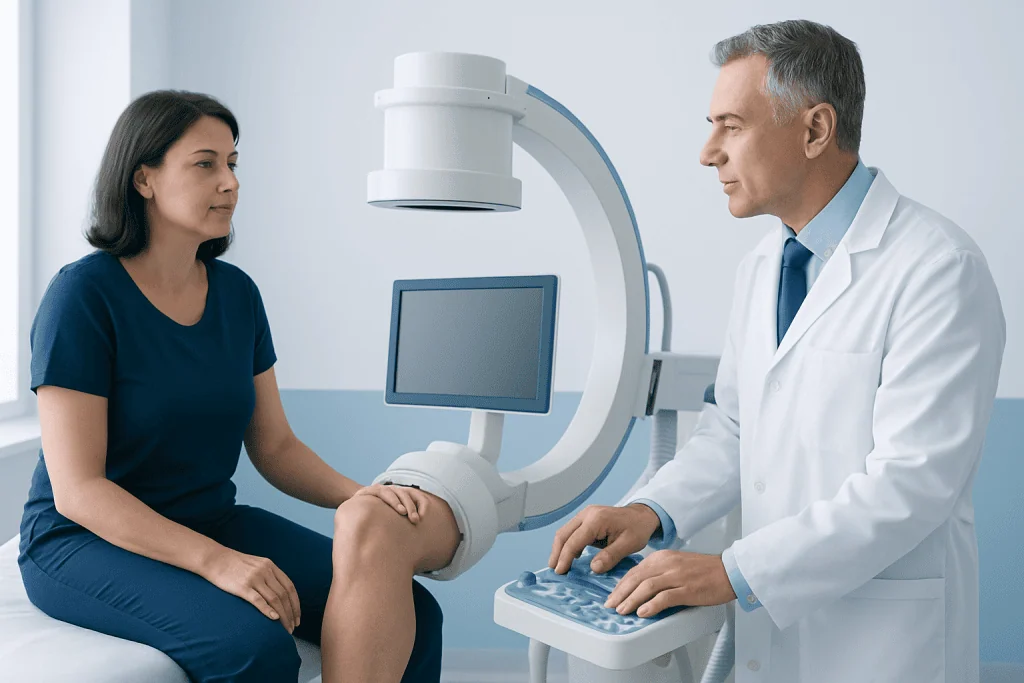
An orthopedist may be the most appropriate specialist when joint pain seems related to an injury, overuse, or a structural problem. This includes pain that began after a fall, twist, collision, sports activity, heavy lifting, or repetitive motion. It also includes symptoms such as a knee that locks, a shoulder that feels unstable, or a joint that cannot move normally.
Orthopedic evaluation is also often helpful for degenerative conditions, especially osteoarthritis. In this common form of arthritis, cartilage gradually wears down over time. Patients may notice pain with activity, reduced range of motion, joint grinding, or stiffness that is usually brief after rest. An orthopedist can assess joint alignment, damage, and treatment options ranging from physical therapy to knee replacement or hip replacement when needed.
Signs that may suggest orthopedic care include:
- Pain after an injury or accident
- Joint instability, catching, or locking
- Visible deformity or suspected fracture
- Pain focused in one joint or one body area
- Worsening pain with movement or weight-bearing
- Loss of function, weakness, or limited motion
Orthopedists may use physical examination, X-rays, ultrasound, CT, or MRI to identify problems such as meniscus tears, ligament injuries, rotator cuff disease, bone spurs, or advanced joint wear. Their treatments often combine medication guidance, rehabilitation, activity modification, injections, and procedures when conservative measures are not enough.
When a Rheumatologist May Be the Right Choice

A rheumatologist may be the better choice when joint pain seems inflammatory rather than mechanical. Inflammatory joint disease often causes swelling, warmth, prolonged morning stiffness, or pain that affects several joints at once. Symptoms may come and go in flares, and they may involve the hands, wrists, feet, knees, or spine.
Rheumatologists are especially important when joint symptoms may be part of an autoimmune or systemic illness. A person may also have fatigue, low-grade fever, eye inflammation, skin rash, mouth ulcers, dry eyes, dry mouth, or unexplained weight changes. In these situations, joint pain is not just a local problem in one joint but may reflect an underlying immune condition that needs medical treatment to prevent long-term damage.
Conditions commonly managed by rheumatologists include rheumatoid arthritis, gout, psoriatic arthritis, lupus, vasculitis, polymyalgia rheumatica, and other inflammatory disorders. Rheumatologists may order blood tests for inflammation or autoantibodies, assess joint patterns, and use imaging or joint fluid analysis to clarify the diagnosis.
A rheumatology evaluation may be especially appropriate if pain affects both sides of the body, several joints become swollen, morning stiffness lasts a long time, or symptoms do not fit a straightforward injury. Early evaluation can be important because some inflammatory diseases can quietly damage joints even before major changes are visible on standard imaging.
Symptoms That Help Distinguish the Cause of Joint Pain
The pattern of symptoms often gives useful clues about which specialist may be best. Mechanical pain, more often handled by orthopedists, usually becomes worse with activity and better with rest. It may begin in one joint, especially after an injury, and may be linked to clicking, locking, instability, or weakness in the surrounding muscles.
Inflammatory pain, more often handled by rheumatologists, often feels different. Joints may be swollen, warm, and stiff for a long time after waking. Pain may improve somewhat once the person starts moving, then worsen again during a flare. More than one joint may be involved, and symptoms can shift over time.
Helpful symptom clues include:
- More suggestive of orthopedic causes: recent trauma, pain with motion, reduced range of motion, one-sided symptoms, deformity, instability, or pain linked to a known structural problem such as osteoarthritis.
- More suggestive of rheumatologic causes: swollen small joints, prolonged morning stiffness, recurring flares, fatigue, rash, eye symptoms, family history of autoimmune disease, or pain in many joints.
Even with these clues, symptoms can overlap. For example, gout may affect one joint very suddenly, and osteoarthritis can cause swelling. That is why persistent, unexplained, or worsening joint pain should be evaluated by a qualified doctor rather than self-diagnosed.
How Diagnosis Is Made
Whether the patient sees an orthopedist, a rheumatologist, or a primary care doctor first, diagnosis starts with a careful medical history and physical examination. The doctor will ask when the pain began, whether there was an injury, which joints are involved, what makes symptoms better or worse, and whether there are other symptoms such as fever, skin changes, fatigue, or numbness.
Imaging is often more central in orthopedic evaluation. X-rays can show fractures, alignment problems, and signs of wear-and-tear arthritis. MRI can reveal soft tissue injuries such as ligament tears, cartilage damage, or inflammation around tendons. Rheumatologists may also use imaging, but laboratory testing often plays a larger role in identifying inflammation, uric acid crystal disease, or autoimmune conditions.
Blood tests may include markers of inflammation and other targeted tests based on symptoms. In selected cases, a doctor may recommend analyzing joint fluid to look for infection, crystals, or inflammation. This can be especially useful when a joint is swollen suddenly and the cause is uncertain.
Sometimes referral pathways evolve over time. A patient may first see an orthopedist for knee pain and later be referred to rheumatology if several joints become involved. Another patient may see a rheumatologist for inflammatory disease but also need orthopedic treatment if long-term damage causes severe structural joint problems.
Treatment Approaches: Why the Specialist Matters
The reason it matters which specialist is seen is that treatment depends on the underlying cause. Orthopedic treatment often focuses on restoring joint mechanics, reducing pain, and improving function. This may include rest, braces, physical therapy, exercise programs, anti-inflammatory medicines, injections, or surgery when there is significant damage or instability.
Rheumatology treatment focuses on controlling inflammation, managing the immune response, preventing joint damage, and protecting overall health. Depending on the diagnosis, treatment may include anti-inflammatory medication, disease-modifying medicines, lifestyle adjustments, and close monitoring of symptoms and blood tests. For crystal arthritis such as gout, treatment also aims to reduce future attacks and long-term joint effects.
Some patients need combined care. For example, a person with gout may need rheumatologic management to prevent flares, while a person with severe knee degeneration may later need robotic knee replacement or another orthopedic procedure. Working together, these specialists can address both the disease process and the joint damage it may leave behind.
Near the end of the care journey, rehabilitation may also become important. Physical medicine, physical therapy, and home exercise programs can support strength, flexibility, balance, and return to daily activities regardless of whether the original problem was inflammatory or structural.
Self-Care and What Patients Can Do Before the Appointment
While waiting for a medical appointment, patients can take practical steps that help both symptom relief and diagnosis. Resting an acutely painful joint, using ice after injury, and avoiding activities that worsen pain may be sensible in the short term. For stiffness or chronic pain, gentle movement and light range-of-motion exercises may feel better than complete inactivity.
It is often helpful to keep a brief symptom diary. Notes about which joints hurt, when stiffness occurs, whether there is swelling, how long symptoms last, and what activities trigger pain can help the doctor recognize patterns. Photos of visible swelling or rash may also be useful if symptoms come and go.
General self-care measures include:
- Maintaining a healthy body weight to reduce stress on weight-bearing joints
- Using supportive footwear and good ergonomics
- Following an appropriate exercise plan focused on strength and flexibility
- Avoiding smoking, which can worsen overall inflammatory health
- Taking medicines only as directed and discussing regular painkiller use with a doctor
Patients should avoid forcing a painful joint, delaying care for significant swelling, or assuming all joint pain is simply age-related. If symptoms persist, professional evaluation is the safest way to identify the cause and choose suitable treatment.
When to See a Doctor Urgently and When to Ask for Specialist Care
Urgent medical attention is important if joint pain follows major trauma, if a joint looks deformed, or if the person cannot bear weight or use the limb. A hot, very swollen joint with fever also needs prompt evaluation because infection is a medical emergency. Sudden severe pain in one joint, especially if accompanied by redness or marked swelling, should not be ignored.
Non-urgent specialist care should still be considered if joint pain lasts more than a few weeks, keeps returning, interferes with sleep or daily activities, or is associated with stiffness, swelling, or reduced function. People who have a family history of autoimmune disease or symptoms in several joints may particularly benefit from early rheumatology assessment.
If the diagnosis is unclear, starting with a primary care doctor is often a practical option. They can examine the patient, order initial tests, and direct referral to orthopedics, rheumatology, or both. This can save time and make specialist visits more focused and productive.
For patients seeking coordinated evaluation, Acibadem International’s multidisciplinary specialists and JCI-accredited hospitals diagnose and treat joint conditions for international patients, including both medical and surgical causes of joint pain.
Frequently asked questions
Should someone see an orthopedist or rheumatologist first for joint pain?
It depends on the pattern of symptoms. Pain after an injury, pain in one joint, or symptoms such as locking or instability often fit orthopedic care, while swelling, morning stiffness, and pain in several joints often fit rheumatology. If the cause is unclear, a primary care doctor can help decide.
Can osteoarthritis be treated by both specialists?
Osteoarthritis is most commonly managed by primary care doctors and orthopedists, especially when symptoms are related to cartilage wear, alignment, or reduced function. A rheumatologist is less often needed unless the diagnosis is uncertain or another inflammatory condition is also suspected.
What symptoms suggest an autoimmune cause of joint pain?
Clues include prolonged morning stiffness, swelling in multiple joints, fatigue, recurring flares, rash, eye inflammation, or symptoms affecting other parts of the body. These features make rheumatologic evaluation more important because autoimmune diseases can involve more than the joints.
Can a rheumatologist treat back pain too?
Yes, if the back pain appears inflammatory rather than mechanical. For example, chronic stiffness in the lower back that is worse in the morning and improves with movement may need rheumatologic assessment, while back pain after strain or disc problems is more often evaluated by orthopedic or spine specialists.
Will an orthopedist always recommend surgery?
No. Orthopedists commonly begin with non-surgical treatments such as activity changes, physical therapy, bracing, and medications. Surgery is usually considered only when symptoms are severe, function is limited, or other treatments have not provided enough relief.
What if joint pain comes and goes?
Intermittent symptoms can still be medically important. Conditions such as gout, early inflammatory arthritis, overuse injuries, and meniscus problems may flare and then improve, so documenting timing, swelling, and triggers can help the doctor identify the cause.
References
- American Academy of Orthopaedic Surgeons
- American College of Rheumatology
- National Institute of Arthritis and Musculoskeletal and Skin Diseases
- NHS
- Mayo Clinic
This article is for general information only and is not a substitute for professional medical advice. Please consult a qualified doctor about your individual situation.
Joint and spine care in Turkey — expert assessment & treatment
JCI-accredited · board-certified surgeons · reply within 24h
Add us as a Preferred Source to see more of our trusted health content across Google Search, AI Overviews and Discover.