

How Much Are Pre-Treatment Tests in Turkey?

Pre-treatment tests in Turkey vary by test type, hospital and your treatment plan. Expect quotes after your doctor reviews your needs in Turkey or Istanbul.
If you are planning treatment abroad, pre-treatment tests in Turkey are usually priced according to the tests you actually need, not as one single flat fee. The most useful way to budget is to understand which tests are commonly requested, what can change the total cost, and how to get a clear quote before you travel.
At a glance
- Best for: Patients budgeting for treatment and related diagnostic tests in Turkey
- Main cost factors: Type of test, number of tests, specialist review, imaging needs, and whether repeat testing is required
- When quotes are clearest: After your medical records are reviewed by the care team
- What may be included: Bloodwork, imaging, cardiology checks, pathology review, and doctor assessment depending on your case
- Good to ask about: Package inclusion, same-day testing, interpreter support, and payment timing
What “pre-treatment tests” usually means
Pre-treatment tests in Turkey are the checks your team may need before confirming or starting your treatment plan. These can be very simple, such as standard blood tests, or more detailed, such as MRI, CT, ultrasound, ECG, echocardiography, pathology review, or specialist consultations. The exact list depends on your diagnosis, your age, your current health, and the procedure or treatment you are planning.
In practice, many international patients expect one standard price for “tests,” but that is not usually how hospitals work. Your costs are based on what is medically necessary for you. Someone coming for a minor planned procedure may need only a small set of routine checks, while another patient may need broader screening to make sure treatment is safe and well timed.
If you are traveling to Istanbul or another city in Turkey for care, it helps to think of pre-treatment testing as part of the planning process rather than an unexpected extra. A careful testing plan can avoid delays, help your specialists confirm suitability for treatment, and reduce the chance that you arrive without the right results.
What affects the cost of pre-treatment tests in Turkey
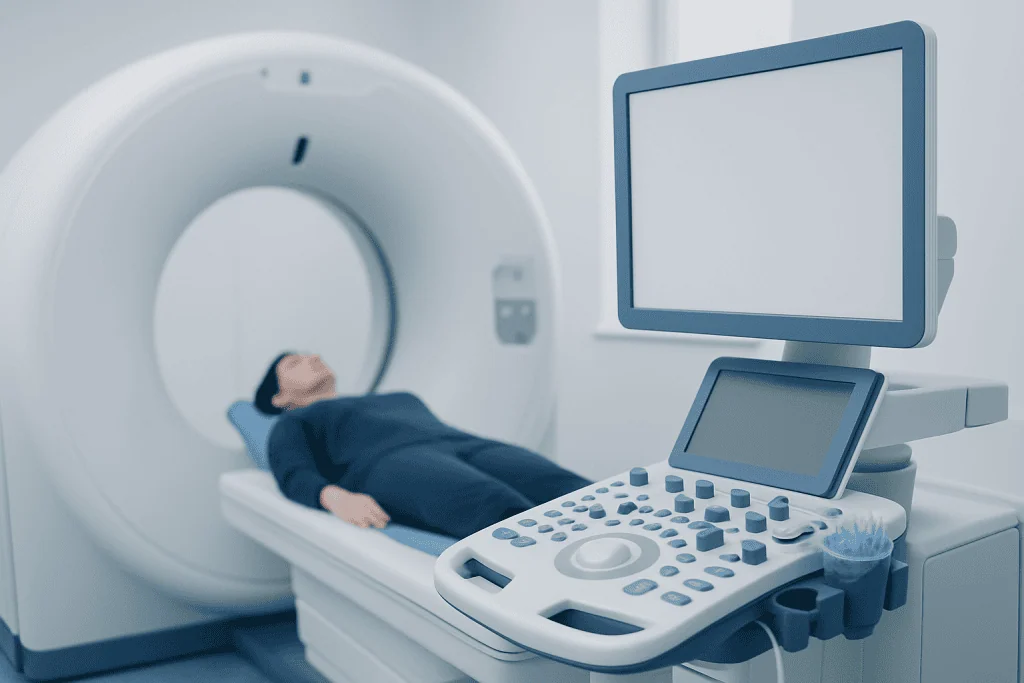
The biggest factor is the type and number of tests you need. Basic lab work is usually very different in cost from advanced imaging or highly specialized pathology analysis. If your treatment requires anesthesia clearance, cardiology review, hormonal studies, genetic testing, or repeated scans, your overall quote will naturally be higher than for a straightforward pre-operative panel.
Another important factor is whether your existing results from home can be accepted. Sometimes recent reports, scans, or blood results are sufficient if they meet the hospital’s standards and are still medically valid. In other cases, your specialist may recommend repeating tests in Turkey because timing matters, image quality differs, or the results need to be reviewed in the same system before treatment can proceed.
There are also logistical factors. A same-day testing schedule, urgent reporting, or multiple specialist opinions can affect the total. At large international hospitals such as Acibadem International’s JCI-accredited network, patients often benefit from coordinated scheduling and multidisciplinary review, but the final cost still depends on the exact services used rather than one universal fee.
Which tests are commonly requested before treatment

Common pre-treatment tests in Turkey often include routine bloodwork, urine testing, ECG, chest imaging, and a consultation to review your medical history and medications. These are frequently used to check general fitness for treatment, identify infection risks, and make sure anesthesia or surgery can be planned safely.
Depending on your condition, you may also be asked for more focused investigations. These could include ultrasound, mammography, endoscopy, CT, MRI, PET-CT, pulmonary function tests, hormone panels, biopsy review, or cardiology imaging. Cancer care, fertility treatment, major surgery, bariatric surgery, orthopedics, neurology, and cardiac care each tend to have their own typical pre-treatment workups.
A useful question to ask your coordinator is whether a test is routine, optional, or only required if something in your history suggests it. This helps you understand what is essential for safety and what may be added only if your doctor needs more information.
- Routine screening tests may be scheduled for many patients in the same pathway.
- Condition-specific tests are ordered according to diagnosis and symptoms.
- Repeat tests may be needed if prior results are outdated or incomplete.
- Specialist review of outside scans or pathology may sometimes be billed separately.
How to get a realistic quote before you travel
The best way to estimate the cost of pre-treatment tests in Turkey is to send your current medical documents before booking flights. This usually includes recent reports, test results, a medication list, your diagnosis if known, and any imaging on disc or through a secure upload link. Once a specialist reviews these, the hospital can often give you a more practical idea of what testing may be needed on arrival.
When you ask for a quote, try to separate the conversation into three parts: what is definitely included, what may be added if medically necessary, and what would only happen if new findings appear. This avoids confusion later. It also helps you compare hospitals fairly, because one quote may include initial consultations or basic testing while another may not.
Acibadem International’s international patient services can help coordinate this process for overseas patients, including document collection, interpreter arrangements, and planning a sensible testing-and-treatment timeline. Even with that support, you should still ask for a written outline so you know what has been estimated and what remains subject to doctor review after arrival.
Questions to ask about payments, packages, and timing
Some treatments are offered with packages, but package terms vary. In some cases, routine pre-operative tests are included. In others, the treatment fee and diagnostic tests are billed separately, especially if you need more detailed imaging or reviews from multiple departments. Never assume tests are included unless that is clearly written.
It is also important to ask when payment is due. Hospitals may request payment before testing, at registration, or before the procedure itself. If there is a chance your test plan will expand after the first doctor assessment, ask how additional charges are approved and whether you will be informed in advance.
Timing matters too. If several tests are needed over one or two days, you may need to arrive in Turkey earlier than expected. A coordinated hospital system can often help compress appointments into a shorter stay, which is useful for international patients, but this depends on department schedules, the urgency of your case, and how quickly results can be reported.
Practical ways to avoid surprise costs and delays
The simplest way to keep costs under control is to arrive with complete, recent documentation. Bring passport details, prior reports, operation notes if you have them, pathology reports, imaging files, and a clear list of your medications and allergies. Missing records often lead to repeated consultations or duplicated tests, which can increase both expense and time.
You should also budget for the possibility that not everything can be confirmed remotely. Sometimes a doctor reviewing your file from abroad can only give a provisional testing plan. After you are seen in person, your specialist may refine the list based on physical examination, new symptoms, or findings from the first tests. That does not necessarily mean something is wrong; it is often part of responsible medical planning.
If you are using a hospital experienced with international patients, ask about interpreters, airport-to-hospital timing, and whether your companion can help manage paperwork or payments. At Acibadem International, these practical services are often as important as the medical schedule itself, because smooth logistics can help you complete testing efficiently and move on to treatment with less stress.
Step by step
- Share your medical records early. Send recent reports, imaging, lab results, diagnosis details, and your medication list before you book your trip. This gives the specialist a better basis for estimating which pre-treatment tests in Turkey you may actually need.
- Ask for an itemized estimate. Request a breakdown showing consultations, lab tests, imaging, and any likely specialist reviews. An itemized estimate is easier to understand than a single total and helps you see what is included versus what could change.
- Check whether your existing tests can be used. Ask if results from your home country are acceptable and how recent they must be. If some tests can be reused, you may reduce repeat testing, but the final decision depends on medical relevance and hospital standards.
- Clarify package versus non-package items. If your treatment is quoted as a package, confirm whether routine pre-treatment tests are part of it. Also ask which tests would be billed separately if extra findings or specialist reviews are needed.
- Plan your arrival around the testing schedule. You may need to arrive one or more days before treatment, especially if several departments are involved. Coordinated scheduling can save time, but only if you know in advance how long testing and reporting are expected to take.
- Confirm payment timing and method. Before you travel, ask when you will be asked to pay and what payment methods are accepted. This is especially useful if additional tests may be recommended after your first in-person review.
- Keep room for medical changes. Even a well-planned quote can change if new findings appear or if your doctor needs extra checks for safety. Build some flexibility into your budget and travel plans so that medically necessary updates do not become a major disruption.
Your checklist
- Recent medical reports translated into English if possible
- Imaging files and reports, not just written summaries
- List of all current medications, supplements, and allergies
- Questions about which tests are mandatory and which are conditional
- Written confirmation of what is included in your estimate
- Confirmation of payment timing and accepted payment methods
- A flexible travel plan in case testing takes longer than expected
- Passport and registration documents for hospital admission
Key takeaways
- Pre-treatment tests in Turkey are priced according to your medical needs, not usually as one standard fee.
- The type and number of tests, imaging needs, and specialist reviews are the biggest cost drivers.
- A record review before travel is the best way to receive a realistic estimate.
- Always confirm whether tests are included in a treatment package or billed separately.
- Good planning, complete records, and clear payment questions can reduce delays and surprise charges.
Frequently asked questions
Are pre-treatment tests in Turkey included in the treatment price?
Sometimes, but not always. Some treatment packages include routine pre-operative or pre-treatment checks, while more advanced diagnostics or extra specialist reviews may be billed separately. Always ask for written confirmation of what is included.
Can I use test results from my home country?
In many cases, yes, especially if the results are recent, clearly reported, and medically relevant to your planned treatment. However, your doctor in Turkey may still recommend repeating some tests if timing, image quality, or safety requirements make that necessary.
Why can’t I get one fixed price for all pre-treatment tests in Turkey?
Because the right tests depend on your diagnosis, your age, your medical history, and the treatment being planned. Two patients coming for the same procedure may still need different workups based on their health status. That is why hospitals usually give the most useful estimate after reviewing your records.
Do I need to arrive in Turkey before my treatment date for testing?
Often yes, especially if several tests or specialist consultations are needed first. Some patients can complete everything quickly, while others need extra time for imaging, pathology review, or anesthesia clearance. It is wise to confirm your testing schedule before finalizing travel.
What tests are most commonly requested before treatment?
Common examples include blood tests, urine tests, ECG, imaging, and a doctor consultation. Depending on your condition, you may also need MRI, CT, ultrasound, biopsy review, hormone studies, cardiology tests, or other targeted diagnostics.
How can I avoid unexpected testing costs in Istanbul or elsewhere in Turkey?
Send full medical records in advance and ask for an itemized estimate rather than a simple total. It also helps to ask which tests are definite, which are conditional, and how you will be informed if extra testing becomes necessary after arrival.
Will an international patient coordinator help with test planning?
At hospitals experienced with overseas care, yes, this is often part of the process. For example, Acibadem International can help coordinate records review, appointment timing, interpreters, and practical logistics so your testing schedule is easier to manage.
Add us as a Preferred Source to see more of our trusted health content across Google Search, AI Overviews and Discover.
More Patient Guides

Paying Medical Bills in Turkey: Cards, Bank Transfers, and Receipts
Paying medical bills in Turkey is usually done by card or bank transfer, with official receipts available through hospital billing teams in…
9 min read
Using International Insurance for Treatment in Turkey
International insurance for treatment in Turkey usually requires plan checks, pre-approval, and documents. In Istanbul, ask your hospital to verify benefits early.
9 min read
How to Budget for Extra Nights in Turkey After Treatment
Budget for extra nights in Turkey after treatment by planning hotel, meals, transport and follow-up needs in Istanbul with a simple buffer.
9 min read