

Paying for Treatment in Turkey: Card, Bank Transfer, Cash, and Currency Tips

Paying for treatment in Turkey is usually possible by card, bank transfer, or cash; plan currency, timing, and receipts before you travel to Istanbul.
If you are arranging care abroad, understanding how to pay can make your trip much smoother. This guide walks you through card payments, bank transfers, cash use, currency planning, and the practical steps that help you avoid delays on treatment day.
At a glance
- Common payment methods: Card, bank transfer, and limited cash use
- Best time to confirm payment: Before travel and again before admission
- Key documents to keep: Quote, passport copy, receipts, and transfer proof
- Currency planning: Ask which currency your estimate is issued in
- Useful support: International patient coordinators and interpreters
What to expect when paying for treatment in Turkey
Paying for treatment in Turkey is usually straightforward, but it helps to know the process before you travel. Most international patients are asked to review a treatment estimate, confirm accepted payment methods, and settle payment according to the hospital’s timing requirements for consultations, tests, admission, or procedures. The exact process can differ depending on whether you are self-paying, using international insurance, or combining both.
In practice, you will usually see three main options: card payment, bank transfer, and in some situations cash. Many patients prefer card for speed and convenience, while bank transfer can be useful for larger amounts or when payment is arranged before arrival. Cash may still be used for smaller practical expenses, but it is generally best not to rely on it as your only method for hospital bills.
If you are coming to a large provider such as Acibadem International, the international patient services team can usually help you understand the payment timeline, documents needed, and whether your quote is fixed for a certain period. This kind of coordination is especially helpful if you are traveling for surgery or a multi-step treatment plan and want to avoid last-minute financial confusion.
Card payments: convenient, but check your bank first
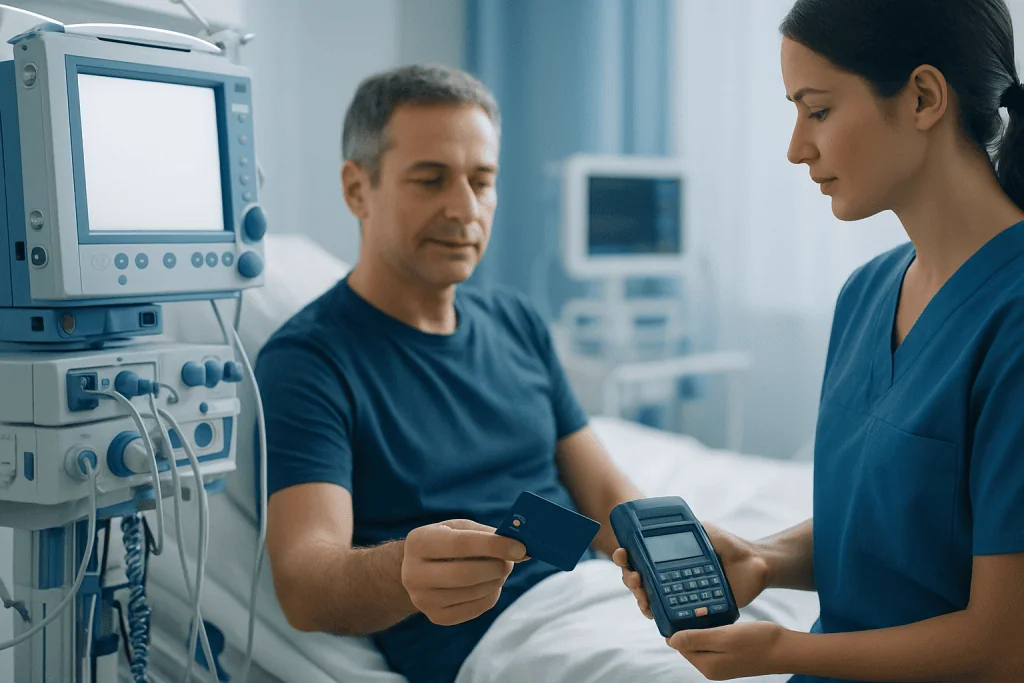
Card payment is often the easiest option for international patients because it can be completed quickly at the hospital and gives you an immediate transaction record. Before you travel, contact your bank or card provider to tell them you will be making a medical payment in Turkey. This reduces the risk of a legitimate transaction being blocked for fraud prevention, which can be stressful if it happens on admission day.
Ask your bank about international transaction limits, daily purchase caps, foreign transaction fees, and exchange rate handling. Even if you have enough available credit or funds, a daily limit may still prevent a larger medical payment from going through. It is wise to carry a backup card from a different issuer if possible, especially if your treatment schedule is tight.
You should also confirm which card networks are accepted and whether chip-and-PIN or contactless limits apply. If you are unsure, ask your hospital coordinator in advance. At Acibadem International, patients commonly coordinate these details before arrival so they know whether a deposit, preauthorization, or full settlement is expected at a certain stage of care.
- Tell your bank the dates of your travel to Turkey.
- Check your card’s international spending limit.
- Ask about foreign exchange and processing fees.
- Bring at least one backup payment method.
Bank transfer: useful for larger payments and pre-travel planning

Bank transfer is a common choice when patients want to pay part or all of their hospital bill before arriving in Turkey. This can be reassuring if you prefer not to depend on card limits, or if your treatment plan involves a larger sum. To use this method safely, always request the official bank details directly from the hospital or international patient office and verify them through a trusted communication channel.
International transfers can take time, especially across different banking systems, weekends, or public holidays. For that reason, it is best not to leave a transfer until the last moment. Send the payment early enough for funds to clear, and keep the transfer receipt or SWIFT confirmation so you can share proof if needed.
It is also important to check whether bank charges are paid by you, shared, or deducted from the amount sent. A transfer that arrives slightly short because of intermediary fees can create unnecessary follow-up. If you are working with Acibadem International, your coordinator can usually tell you how to reference the transfer correctly, what patient identifiers to include, and who to notify once the payment has been sent.
Cash and currency: what is practical and what to avoid
Cash can be useful for everyday needs such as local transport, snacks, small pharmacy items, or minor incidental spending during your stay. However, for hospital treatment costs, carrying large sums in cash is usually not the most practical or secure approach. It can also be harder to track for your own records, insurance reimbursement, or family budgeting.
Before your trip, ask which currency your estimate is issued in and how payment is handled if your own funds are held in another currency. Some patients budget in euros, US dollars, or pounds but pay in Turkish lira or in the quoted hospital currency. Exchange rates can move between the day you receive your estimate and the day you make payment, so a small financial buffer is sensible.
If you do exchange money, use reputable channels and keep receipts. Avoid changing more cash than you need early in the trip unless you are sure of your expenses. In Istanbul and other major cities, cards are widely used, so many patients find it best to carry moderate local currency for convenience while using card or transfer for the main treatment bill.
- Carry only the cash you reasonably need day to day.
- Keep money in separate places for safety.
- Save exchange receipts and hospital receipts.
- Build in a buffer for exchange-rate changes.
Quotes, receipts, and payment timing
One of the most helpful things you can do before traveling is ask exactly what your quote includes and what might fall outside it. A treatment estimate may cover the core procedure and planned hospital services, but extra tests, extended stay, additional medications, or treatment changes can affect the final total. Asking these questions early helps you budget more realistically and reduces surprises.
It is also important to understand when payment is due. Some services may require advance payment or a deposit, while others are settled at admission, discharge, or after specific tests. If you are arranging several appointments over a few days, ask whether billing is combined or handled separately.
Keep every document in one place: estimate, email confirmation, passport copy, insurance letters if relevant, receipts, and any transfer proof. Organized paperwork is useful for your own peace of mind and can make reimbursement easier if your insurer, employer, or embassy requires formal documentation. Hospitals serving international patients, including Acibadem International, are used to supporting this kind of practical preparation through dedicated coordination teams.
If you have insurance, employer cover, or embassy support
If you are not fully self-paying, clarify financial responsibility as early as possible. International insurance plans may cover some parts of care, require preauthorization, or reimburse you later rather than paying the hospital directly. Do not assume your policy will automatically cover overseas treatment without written confirmation.
Ask your insurer exactly what documents they need, whether the hospital is considered in-network or recognized for reimbursement, and whether there are exclusions for elective care, follow-up treatment, or complications. If a family office, employer, embassy, or sponsor is paying, you should also ask whether they need a formal quote, stamped invoice, or direct billing arrangement in advance.
Large international providers often have teams that help patients with these non-clinical logistics. At Acibadem International, coordinators and interpreters can support communication around documents and billing steps, which can be especially useful if you are traveling with a companion or managing paperwork from another country and time zone.
Simple ways to avoid payment-day stress
The easiest way to reduce stress is to decide on your primary payment method before you fly and keep a second option ready. For example, you might plan to pay by card but have a bank transfer route or backup card available if your bank blocks the transaction. This matters most if your admission is scheduled soon after landing in Turkey.
Try to confirm all payment details a few days before travel: accepted methods, billing currency, due dates, whether a passport is needed at payment, and how receipts are issued. If someone else will make the payment on your behalf, ask whether they need to be present or whether documents can be provided remotely. These small details can save hours once you arrive.
Finally, remember that payment is only one part of a larger travel plan. Keep your coordinator’s number, bring both digital and printed copies of financial documents, and allow a little extra time on admission day. If you are staying with a group like Acibadem International, the international patient services team can often help you navigate the process in English and coordinate practical matters such as accommodation and transport alongside billing questions.
Step by step
- Request and review your written estimate. Ask for a written quote before you travel and read what is included, what is excluded, and how long the estimate remains valid. If anything is unclear, ask your coordinator to explain the likely billing stages in plain language.
- Choose your main payment method. Decide early whether you will pay by card, bank transfer, or another approved method. Your choice should depend on transaction limits, timing, currency, and how comfortable you are carrying cash.
- Contact your bank or card provider. Tell your bank that you will be making a medical payment in Turkey and confirm international fees and limits. If needed, ask whether a temporary limit increase is possible before your admission date.
- Confirm the billing currency and timing. Check whether the hospital bill is issued in Turkish lira or another currency and when payment is expected. This helps you budget for exchange-rate movement and avoid delays on the day of treatment.
- Prepare a backup option. Even if you expect card payment to work, keep a second method ready such as another card or a pre-arranged transfer route. A backup can be very helpful if there is a banking delay, technical issue, or security block.
- Keep proof of every payment. Save receipts, transfer confirmations, invoices, and any email correspondence about amounts paid. These documents are important for your records and may be needed for reimbursement or future follow-up.
- Reconfirm details shortly before arrival. A few days before you travel, ask your coordinator to confirm that payment instructions have not changed. This is also a good time to check whether your passport, patient number, or admission reference should appear on the payment record.
Your checklist
- Written treatment estimate saved on your phone and printed
- Bank or card provider notified about travel to Turkey
- Daily card limit checked and increased if needed
- Official hospital bank details verified through a trusted contact
- Backup payment method arranged
- Small amount of local currency prepared for incidental expenses
- Passport and patient reference number ready
- All receipts and transfer confirmations stored in one folder
Key takeaways
- Most international patients in Turkey pay by card or bank transfer, with cash mainly used for smaller day-to-day expenses.
- Always check card limits, foreign transaction rules, and possible bank transfer fees before you travel.
- Ask which currency your estimate is issued in and allow for exchange-rate movement.
- Keep organized records of quotes, receipts, and transfer confirmations.
- International patient services can help you coordinate billing logistics, documents, and communication.
Frequently asked questions
Can I pay for treatment in Turkey with a credit or debit card?
In many cases, yes, card payment is a common option for international patients. Before you travel, check with both your hospital and your bank to confirm card acceptance, spending limits, and international transaction rules.
Is bank transfer better than paying by card?
It depends on the amount, timing, and your banking setup. Bank transfer can be useful for larger planned payments made before arrival, while card payment is often faster and more convenient on site.
Should I bring cash for my hospital bill?
It is usually better not to rely on large amounts of cash for major medical payments. Cash is more practical for small daily expenses, while card or transfer is often safer and easier to document for hospital billing.
What currency will I pay in?
This depends on how your estimate is issued and how the hospital handles international billing. Ask in advance whether your quote is in Turkish lira or another currency, and remember that exchange rates may change before payment is made.
What if my card is declined in Turkey?
This can happen because of fraud protection, daily limits, or international settings. Contact your bank immediately, and if possible use your backup card or a pre-arranged transfer option so your admission is not delayed.
Do I need receipts and payment proof?
Yes, always keep formal receipts, invoices, and any transfer confirmation. These documents are useful for your own records and may also be required by your insurer, employer, or another funding body.
Can Acibadem International help with payment logistics?
Yes, international patient coordinators can usually help you understand accepted payment methods, timing, and required documents. They may also assist with practical communication, interpreters, and travel-related support so you can prepare more confidently.
Add us as a Preferred Source to see more of our trusted health content across Google Search, AI Overviews and Discover.
More Patient Guides

Paying Medical Bills in Turkey: Cards, Bank Transfers, and Receipts
Paying medical bills in Turkey is usually done by card or bank transfer, with official receipts available through hospital billing teams in…
9 min read
Using International Insurance for Treatment in Turkey
International insurance for treatment in Turkey usually requires plan checks, pre-approval, and documents. In Istanbul, ask your hospital to verify benefits early.
9 min read
How to Budget for Extra Nights in Turkey After Treatment
Budget for extra nights in Turkey after treatment by planning hotel, meals, transport and follow-up needs in Istanbul with a simple buffer.
9 min read