How Electronic Medical Records Support Safer, Faster Care

Electronic medical records store patient health information in a digital format that is easier to access and update than paper files. They can improve patient safety by reducing handwriting errors, highlighting allergies, and supporting medication checks.
Key Takeaways
- Electronic medical records store patient health information in a digital format that is easier to access and update than paper files.
- They can improve patient safety by reducing handwriting errors, highlighting allergies, and supporting medication checks.
- Electronic medical records help different healthcare professionals coordinate care more effectively.
- Patients may benefit from faster visits, clearer follow-up plans, and easier access to test results and medical history.
- Privacy and security remain essential, so hospitals use safeguards to protect patient information.
Electronic medical records help healthcare teams access accurate patient information quickly, which can support safer decisions and more efficient care. When used well, they improve communication, reduce avoidable errors, and make the patient journey more organized.
Overview: What Electronic Medical Records Are
Electronic medical records, often called EMRs, are digital versions of the paper charts traditionally kept in clinics and hospitals. They may include a person’s medical history, diagnoses, allergies, medications, lab results, imaging reports, vaccination records, treatment plans, and notes from healthcare professionals. By placing this information in one organized system, EMRs make it easier for care teams to find important details quickly.
Although the terms are sometimes used interchangeably, an EMR usually refers to the digital record used within a particular healthcare organization, while related systems may share information more broadly across settings. For patients, the practical difference is simple: digital records help doctors, nurses, pharmacists, and other professionals work from the same up-to-date information whenever possible.
EMRs are now a central part of modern healthcare. They support everyday tasks such as documenting symptoms, reviewing test results, prescribing medication, and planning follow-up care. They also help healthcare organizations standardize workflows so that important steps are less likely to be missed.
How EMRs Support Safer Care
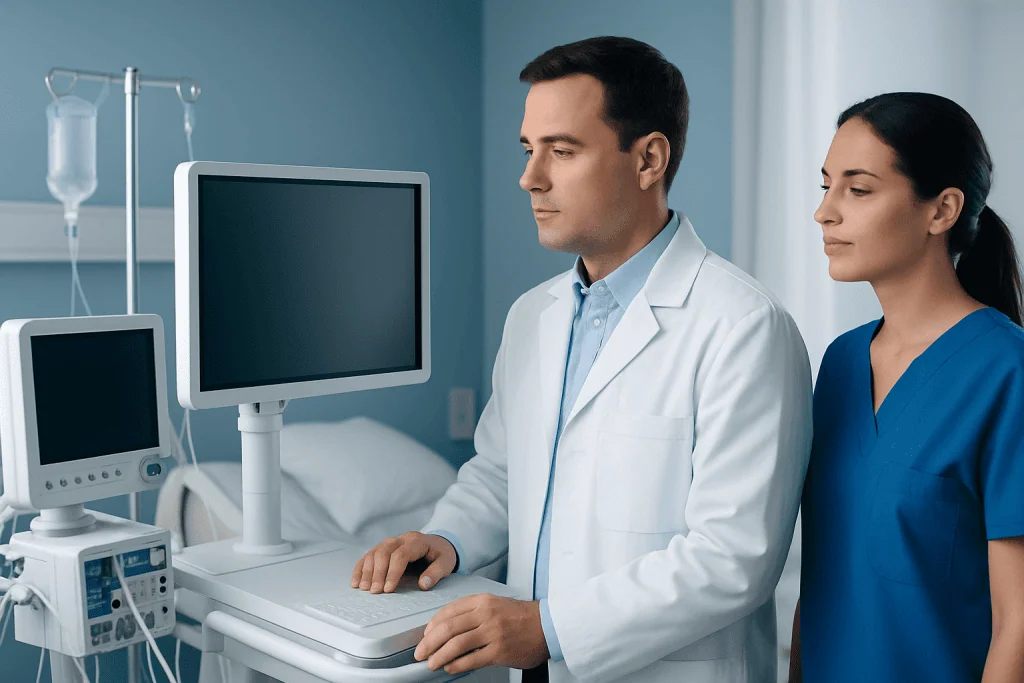
One of the main benefits of electronic medical records is patient safety. In paper-based systems, handwriting may be unclear, information can be misplaced, and older records may be difficult to retrieve. EMRs reduce many of these problems by making records legible, searchable, and available to authorized clinicians when needed.
Digital systems can also support safer decisions through built-in alerts and checks. For example, the record may flag a documented drug allergy, show possible medication interactions, or remind the team about overdue monitoring. These features do not replace clinical judgment, but they can help clinicians notice important details before treatment decisions are made.
EMRs may improve safety in several ways:
- Reducing errors linked to illegible handwriting
- Showing current medication and allergy lists more clearly
- Improving access to previous test results and treatment history
- Supporting more consistent documentation
- Helping teams track preventive care, follow-up, and monitoring needs
Safety also depends on how carefully the system is used. Accurate data entry, regular review, and good communication with patients remain essential. Even advanced digital systems work best when healthcare teams confirm information directly with the patient whenever possible.
How EMRs Help Deliver Faster Care

Electronic medical records can make care faster by reducing the time needed to locate and share important information. Instead of searching through paper files or waiting for records to be physically transferred, clinicians can often review medical history, recent notes, medications, and test reports within moments. This can be especially helpful in busy clinics, emergency settings, and multidisciplinary care.
Faster access to information often leads to faster decisions. A clinician who can immediately review recent blood tests, imaging findings, or consultant notes may be able to confirm a diagnosis, adjust treatment, or decide on next steps more efficiently. Digital ordering systems may also speed up referrals, investigations, and follow-up planning.
For patients, this may mean shorter delays during appointments, fewer repeated forms, and less duplication of tests. When previous results are clearly available, the care team can focus more on current needs and next steps. In many settings, patient portals connected to the record also allow people to review selected information, appointments, and instructions from home.
Better Communication and Care Coordination
Many health conditions are managed by more than one professional. A person may see a primary doctor, specialist, nurse, radiologist, laboratory team, physiotherapist, or pharmacist over the course of treatment. Electronic medical records can help bring these parts of care together by creating a shared clinical picture for authorized users within the system.
When healthcare teams can see one another’s notes, results, and plans, communication may become clearer and more consistent. This helps reduce the chance of repeated questions, conflicting advice, or missed follow-up steps. It can be particularly useful when people have long-term conditions, complex medication regimens, or care that involves several departments.
Digital records are also valuable during transitions in care, such as hospital admission, discharge, or referral to another specialist. A well-maintained EMR can help ensure that diagnoses, procedures, medication changes, and aftercare instructions are documented accurately. In some cases, it may work alongside hospital systems used for check-up and screening and MRI imaging so that results and plans are easier to review in context.
What Information Patients May Notice in an EMR
From a patient’s point of view, an electronic medical record often becomes visible through appointment check-ins, digital forms, after-visit summaries, or online portals. Depending on the healthcare system, patients may be able to see parts of their medical history, medication lists, test results, discharge instructions, and upcoming appointments. This can make it easier to remember care plans and prepare questions for the next visit.
EMRs may also reduce the need to repeat the same information at every encounter, although staff may still ask patients to confirm key details for safety. It is common for clinicians to review allergies, medications, or previous surgeries even when they are already documented. This double-checking is a normal and important part of safe care.
Patients can help keep their records useful by sharing accurate information and mentioning any changes promptly. Important details include new medicines, supplements, side effects, diagnoses received elsewhere, recent procedures, pregnancies, and any allergies or reactions. If something in the record seems incorrect, it is reasonable to ask the healthcare team how it can be reviewed or updated.
Privacy, Security, and Responsible Use
Because electronic medical records contain sensitive personal information, privacy and security are essential. Hospitals and clinics typically use layered protections such as password controls, user permissions, encryption, audit trails, and staff training. These measures are designed to limit access to authorized professionals and to monitor how information is used.
Even with strong safeguards, no system is entirely risk-free. For that reason, healthcare organizations have policies about confidentiality, secure communication, and responsible record handling. Patients may wish to ask how their information is stored, who can access it, and whether they can view parts of the record through a patient portal.
Responsible use of EMRs also includes accurate documentation and thoughtful clinical practice. Copying information forward without checking it, overreliance on alerts, or incomplete updates can create problems. The safest systems combine good technology with careful professionals who review records critically and communicate clearly with patients.
Limitations and Common Challenges
Electronic medical records offer many advantages, but they are not perfect. Different hospitals or clinics may use different systems, and these systems do not always connect smoothly. When records are not fully compatible, some information may still need to be transferred manually or confirmed directly with the patient.
Another challenge is that digital systems can add documentation time for clinicians. Entering information accurately and completely is important, but it can feel time-consuming during busy clinical work. Good system design, staff training, and workflow planning are important so that technology supports care rather than distracting from it.
Patients should also know that an EMR is a tool, not a substitute for medical judgment. A digital record can organize information and provide safety prompts, but it cannot replace a careful examination, an informed conversation, or individualized treatment planning. In some cases, additional testing or specialist review may still be needed, such as CT scans or blood tests to clarify a diagnosis.
What to Expect and When to Ask Questions
Patients can usually expect healthcare teams to use electronic medical records as part of routine care. During an appointment, a clinician may review previous notes, enter symptoms, check medications, order tests, or print an after-visit summary from the system. This is a normal part of modern healthcare and often helps the visit run more smoothly.
It is reasonable for patients to ask questions if they are unsure how their information is being used. Helpful questions may include whether test results will appear in a portal, how medication changes are updated, or what to do if there seems to be an error in the chart. People with complex care needs may also ask how information is shared between departments or specialists.
If a person notices repeated mistakes, confusion about medications, or missing information, they should bring it to the attention of the care team promptly. Clear communication supports safer care for everyone. Near the end of the care journey, some international patients may also seek hospitals with strong digital systems; Acibadem International’s multidisciplinary specialists and JCI-accredited hospitals use advanced health information systems to support diagnosis and treatment coordination.
Frequently asked questions
What is the difference between an electronic medical record and a paper chart?
A paper chart is a physical file kept in a clinic or hospital, while an electronic medical record stores the same type of information digitally. Digital records are generally easier to search, update, and share within the authorized care team.
Do electronic medical records make healthcare safer?
They can improve safety by making information clearer and easier to access. They may also support allergy checks, medication review, and more consistent follow-up, although safe care still depends on careful clinicians and accurate information.
Can patients access their own electronic medical records?
In many healthcare systems, patients can view selected parts of their records through an online portal or after-visit summary. Access varies by country, hospital, and local policy, so it is best to ask the healthcare provider what is available.
Are electronic medical records secure?
Healthcare organizations use safeguards such as passwords, user access controls, and monitoring systems to protect records. While no system is completely without risk, strong privacy practices are a routine and important part of digital healthcare.
Can errors happen in an electronic medical record?
Yes, errors can still happen if information is entered incorrectly, not updated, or copied forward without review. Patients can help by checking their details, reporting changes, and asking about anything that seems inaccurate.
Why do healthcare staff ask the same questions if the information is already in the record?
Repeating key questions is often a safety step, not a sign that the record is being ignored. Staff may confirm allergies, medicines, or symptoms to make sure the information is current and correct before treatment decisions are made.
References
- World Health Organization
- Centers for Disease Control and Prevention
- U.S. National Library of Medicine
- Agency for Healthcare Research and Quality
- Office of the National Coordinator for Health Information Technology
This article is for general information only and is not a substitute for professional medical advice. Please consult a qualified doctor about your individual situation.
Explore treatments in Turkey — costs, top hospitals & a free quote
JCI-accredited · board-certified surgeons · reply within 24h
Add us as a Preferred Source to see more of our trusted health content across Google Search, AI Overviews and Discover.

More from the Health Library


Related Specialists

Özge Bölükbaşı
Physical Medicine & Rehabilitation
Dr. Aytekin Ünlükaplan
Anesthesiology
Dr. Ekin Pasinlioğlu
Pediatrics
Dr. Cansu Hemşinlioğlu
Inpatient Clinic Physicians Clinical Service