

Interventional Neuroradiology vs Endovascular Neurosurgery

Both specialties use catheters and imaging guidance to treat blood vessel problems in the brain and spine. The biggest difference is typically the physician’s training pathway rather than the tools used.
Key Takeaways
- Both specialties use catheters and imaging guidance to treat blood vessel problems in the brain and spine.
- The biggest difference is typically the physician’s training pathway rather than the tools used.
- Common conditions include aneurysms, stroke, arteriovenous malformations, and narrowed blood vessels.
- Treatment decisions are often made by a multidisciplinary team, not by one specialty alone.
- For patients, the most important factors are experience, hospital capability, and access to emergency care.
Interventional neuroradiology and endovascular neurosurgery are closely related fields that diagnose and treat disorders of the brain, spine, head, and neck blood vessels using minimally invasive techniques. The main difference is usually the specialist’s training background, while the procedures, technologies, and team-based care can overlap significantly.
Overview: how the two fields compare
Interventional neuroradiology and endovascular neurosurgery are two medical specialties focused on treating diseases of the blood vessels in and around the brain, spinal cord, head, and neck. Both use thin tubes called catheters, usually inserted through an artery in the wrist or groin, and guide them through blood vessels with real-time imaging. This makes it possible to reach delicate areas without traditional open surgery in many cases.
The phrase interventional neuroradiology vs endovascular neurosurgery can sound like a comparison between completely different treatments, but in practice there is substantial overlap. Both specialists may perform procedures such as coiling of aneurysms, clot removal for stroke, embolization of abnormal vessels, and stent placement. The same hospital may also use the broader terms neurointervention or neuroendovascular therapy to describe this area of care.
The main distinction is often the doctor’s original specialty training. Interventional neuroradiologists usually begin in radiology and then complete advanced training in image-guided neurovascular procedures. Endovascular neurosurgeons usually train first in neurosurgery and then complete additional fellowship training in catheter-based vascular procedures. Because of this, their perspectives may differ slightly, but they often work side by side and share many procedural skills.
For patients and families, the practical question is usually not which label is “better,” but which team is best equipped to diagnose the problem, explain the options, and provide safe treatment. Conditions such as brain aneurysms and severe stroke often benefit from a coordinated team that includes neurologists, neurosurgeons, radiologists, anesthesiologists, and intensive care specialists.
What conditions these specialists treat
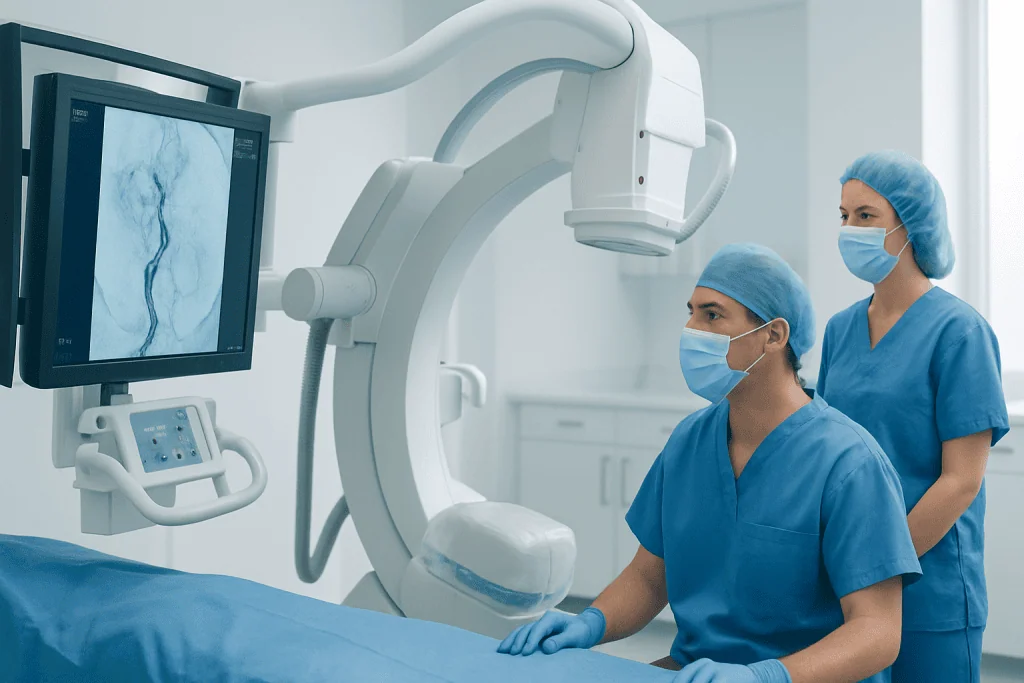
Both interventional neuroradiologists and endovascular neurosurgeons commonly treat disorders that involve abnormal blood flow or blocked blood vessels in the nervous system. These conditions can develop suddenly, as in stroke or bleeding, or they can be found incidentally during imaging done for another reason. Some problems need urgent treatment, while others can be monitored and managed over time.
Common conditions include:
- Brain aneurysms, including ruptured and unruptured aneurysms
- Acute ischemic stroke caused by a large blood clot
- Arteriovenous malformations and fistulas
- Narrowing of the carotid or intracranial arteries
- Certain causes of brain hemorrhage
- Vascular problems involving the spinal cord
- Tumors or lesions that may benefit from embolization before surgery
In stroke care, a specialist may perform mechanical thrombectomy to remove a clot and restore blood flow. In aneurysm care, the goal may be to close off the weak area from inside the blood vessel using coils, flow-diverting devices, or other techniques. Some patients may instead need microsurgery, medication, or observation, depending on the anatomy and risk profile.
Because these diseases can affect critical parts of the brain, treatment planning is highly individualized. Even when two patients share the same diagnosis, the best approach may differ based on age, symptoms, imaging findings, general health, and whether treatment is elective or urgent.
Training and expertise: where the difference usually lies

Interventional neuroradiology typically grows out of radiology training. After medical school, a physician usually completes residency in radiology, followed by neuroradiology and neurointerventional fellowship training. This pathway emphasizes advanced interpretation of imaging as well as image-guided procedures involving the vessels of the brain and spine.
Endovascular neurosurgery usually begins with full neurosurgical training. After residency, the physician completes additional fellowship training in endovascular techniques. This background can be especially relevant when patients may need a combination of catheter-based treatment and open neurosurgery, or when complex surgical judgment is required.
In many modern centers, however, the boundaries are less important than the team structure and the specialist’s case experience. A well-trained physician from either pathway may be highly qualified to perform the same procedure. Hospitals often rely on credentialing standards, multidisciplinary review, and emergency stroke systems to make sure the right clinician is available at the right time.
Patients can reasonably ask who will perform the procedure, what their training is, how often the team manages that condition, and whether surgical, neurological, and intensive care support are immediately available if needed. These questions are often more useful than focusing only on job titles.
Procedures used in both specialties
Most neuroendovascular procedures start with a small puncture in an artery, usually in the wrist or groin. A catheter is guided to the target area using X-ray imaging and contrast dye. Through this catheter, the specialist can deliver tiny devices, medications, or materials to open blocked vessels, strengthen weak vessel walls, or reduce abnormal blood flow.
Shared procedures may include endovascular aneurysm treatment, embolization of arteriovenous malformations or fistulas, angioplasty and stenting for vessel narrowing, and thrombectomy for stroke. Diagnostic cerebral angiography is also commonly performed to map blood vessels in detail when MRI or CT does not provide enough information.
Some procedures are elective and carefully planned, while others are performed in emergencies. For example, a patient with a sudden severe headache and bleeding from a ruptured aneurysm may need urgent treatment within hours. By contrast, an unruptured aneurysm discovered by chance might lead to discussion of observation, imaging follow-up, endovascular repair, or surgery depending on size, shape, and location.
Although these procedures are minimally invasive, they are still specialized medical interventions. Possible risks can include bleeding, blood vessel injury, stroke, reaction to contrast dye, or recurrence of the problem over time. The care team balances these risks against the danger of leaving the condition untreated.
How doctors decide which approach is best
Choosing the right treatment is rarely based on specialty name alone. The decision depends on the condition itself, the urgency, the patient’s overall health, and the anatomy seen on imaging. A narrow vessel, a fragile aneurysm neck, or a clot located in a major artery may each call for a different technique.
For example, some aneurysms are best treated from inside the vessel with coils or flow-diverting devices, while others are safer with microsurgical clipping. Some vascular malformations can be embolized completely, while others need a staged plan that may include surgery or radiosurgery. In stroke, rapid brain imaging helps show whether clot removal is likely to help and whether the area of brain tissue is still salvageable.
Multidisciplinary discussion is especially valuable in complex cases. A patient may be evaluated by stroke neurologists, diagnostic neuroradiologists, neurosurgeons, and intensive care physicians before a recommendation is made. This can reduce unnecessary procedures and help align treatment with the patient’s symptoms, goals, and long-term needs.
When appropriate, doctors may also discuss alternatives such as observation with follow-up scans, blood-thinning or antiplatelet medication, blood pressure management, or conventional neurosurgery. The best treatment is the one that offers the safest and most effective balance for that individual patient.
What patients can expect before, during, and after treatment
Before treatment, patients usually have imaging studies such as CT, MRI, or angiography, along with blood tests and a review of medications. The doctor explains the reason for the procedure, expected benefits, possible risks, and whether anesthesia or sedation will be used. Patients may be asked to stop certain medicines temporarily or start others in advance, depending on the planned intervention.
During the procedure, the specialist works in an angiography suite using continuous imaging guidance. Many procedures take a few hours, though the exact time varies. The patient is monitored closely throughout, and a team including nurses, technologists, anesthesia staff, and other physicians supports the procedure.
Afterward, recovery may involve monitoring in a regular ward, stroke unit, or intensive care unit, depending on the condition. The puncture site is observed, neurological checks are performed, and follow-up imaging may be arranged. Some patients go home the next day after elective treatment, while others need a longer stay if they have had a stroke or bleeding event.
Long-term follow-up matters because some vascular conditions can recur or change over time. Patients may need repeat scans, medication review, blood pressure control, and lifestyle support. In comprehensive centers, specialists from Acibadem International and other multidisciplinary teams may help international patients access diagnosis, procedure planning, and follow-up care in JCI-accredited hospitals.
How to choose a center and when to seek urgent care
When evaluating care, patients should look for a center with 24/7 emergency capability for stroke and brain hemorrhage, experienced neurointerventional specialists, advanced imaging, neurointensive care, and access to open neurosurgery if needed. A strong program should be able to offer more than one treatment option, rather than only one type of procedure. This is particularly important for conditions such as stroke or aneurysm rupture, where minutes can matter.
Useful questions include whether the hospital has a dedicated stroke pathway, whether treatment decisions are reviewed by a multidisciplinary team, and how follow-up is organized after discharge. It can also help to ask whether the center performs both minimally invasive procedures and conventional neurosurgery, since some patients may need either or both.
Urgent medical attention is needed for sudden neurological symptoms. Warning signs include facial drooping, arm weakness, speech difficulty, sudden severe headache, sudden confusion, new vision loss, seizures, or loss of consciousness. These symptoms should be treated as emergencies, and emergency medical services should be contacted right away.
For non-emergency concerns, a consultation is appropriate if a scan has shown an aneurysm or other vascular abnormality, if symptoms are recurring, or if there is uncertainty about whether observation or treatment is best. In some cases, additional vascular imaging or a second opinion can help clarify the safest next step.
Frequently asked questions
Is interventional neuroradiology the same as endovascular neurosurgery?
They are not exactly the same, but they overlap a great deal. Both focus on minimally invasive treatment of blood vessel conditions affecting the brain and spine, and the biggest difference is usually the doctor’s training background.
Which specialist is better for a brain aneurysm?
There is no single best specialty label for every aneurysm. What matters most is the team’s experience, the aneurysm’s shape and location, and whether the center can offer both endovascular and surgical options when needed.
Do both specialties treat stroke?
Yes, both may perform emergency clot removal for certain types of ischemic stroke. Rapid diagnosis, hospital readiness, and around-the-clock access to treatment are especially important in stroke care.
Are these procedures considered surgery?
They are generally considered minimally invasive procedures, even though some are performed by neurosurgeons. Instead of a large incision, treatment is usually done through a catheter inserted into a blood vessel.
Is endovascular treatment safer than open brain surgery?
It can be less invasive and may allow faster recovery in selected patients, but it is not automatically safer in every situation. The safest option depends on the exact diagnosis, anatomy, overall health, and the expertise available.
What symptoms might suggest an urgent neurovascular problem?
Sudden weakness, trouble speaking, facial drooping, severe headache, sudden vision changes, confusion, or loss of consciousness can signal an emergency. These symptoms need urgent medical assessment because they may be caused by stroke or bleeding in the brain.
References
- World Health Organization
- American Stroke Association
- National Institute of Neurological Disorders and Stroke
- Society of NeuroInterventional Surgery
- American Association of Neurological Surgeons
This article is for general information only and is not a substitute for professional medical advice. Please consult a qualified doctor about your individual situation.
Interventional Neuroradiology in Turkey — costs, top hospitals & a free quote
JCI-accredited · board-certified surgeons · reply within 24h
Add us as a Preferred Source to see more of our trusted health content across Google Search, AI Overviews and Discover.

More from the Health Library



Related Specialists

Dt. Elif Ceren Güzeler
Oral & Dental Health
Dr. Nezail Demircler
Aesthetic Plastic & Reconstructive Surgery
Dr. Mehmed Fatih Yumrutaş
Inpatient Clinic Physicians Clinical Service
Dr. Sevim Buzkan Ertuğrul
Acibadem Life Clinical Service