Autism Assessment and Neuropsychology: What Testing Can and Cannot Show

Autism assessment usually involves interviews, observation, developmental history, and standardized tools rather than one single test. Neuropsychological testing can help describe strengths and challenges in attention, language, learning, memory, and executive function.
Key Takeaways
- Autism assessment usually involves interviews, observation, developmental history, and standardized tools rather than one single test.
- Neuropsychological testing can help describe strengths and challenges in attention, language, learning, memory, and executive function.
- No blood test, brain scan, or simple checklist can fully diagnose autism in isolation.
- Assessment results are most useful when interpreted in context, including age, development, school or work demands, and mental health.
- A clear evaluation can guide practical supports, therapies, educational planning, and family understanding.
Autism assessment is a structured process used to understand how a person communicates, interacts, thinks, and manages daily life. Neuropsychological testing can add valuable detail, but it is only one part of a broader evaluation and cannot capture the whole person on its own.
Overview
Autism assessment is the process of gathering information to understand whether a child, teenager, or adult shows a pattern of traits consistent with autism spectrum disorder. It is not a single appointment or one score. Instead, it usually combines clinical interviews, developmental history, direct observation, questionnaires, and sometimes formal cognitive or neuropsychological testing.
Autism affects social communication, behavior, sensory processing, and flexibility in different ways from one person to another. Because presentation varies widely, a careful assessment aims to identify both challenges and strengths. Some people have very noticeable differences early in childhood, while others are identified later when social, academic, or work demands become more complex.
Neuropsychology can play an important role in this process. A neuropsychologist studies how brain-based functions relate to thinking, learning, attention, memory, planning, language, and behavior. In autism assessment, these tests do not directly measure every core autistic trait, but they can help explain how a person processes information and why certain daily tasks feel easier or harder.
For many families and individuals, the goal of assessment is not simply to “label” a condition. A good evaluation can help answer practical questions: what supports may help, whether other conditions may also be present, and how to build on the person’s existing abilities. In some cases, clinicians may also consider related developmental or neurological conditions such as ADHD when symptoms overlap.
What Autism Testing Can Show
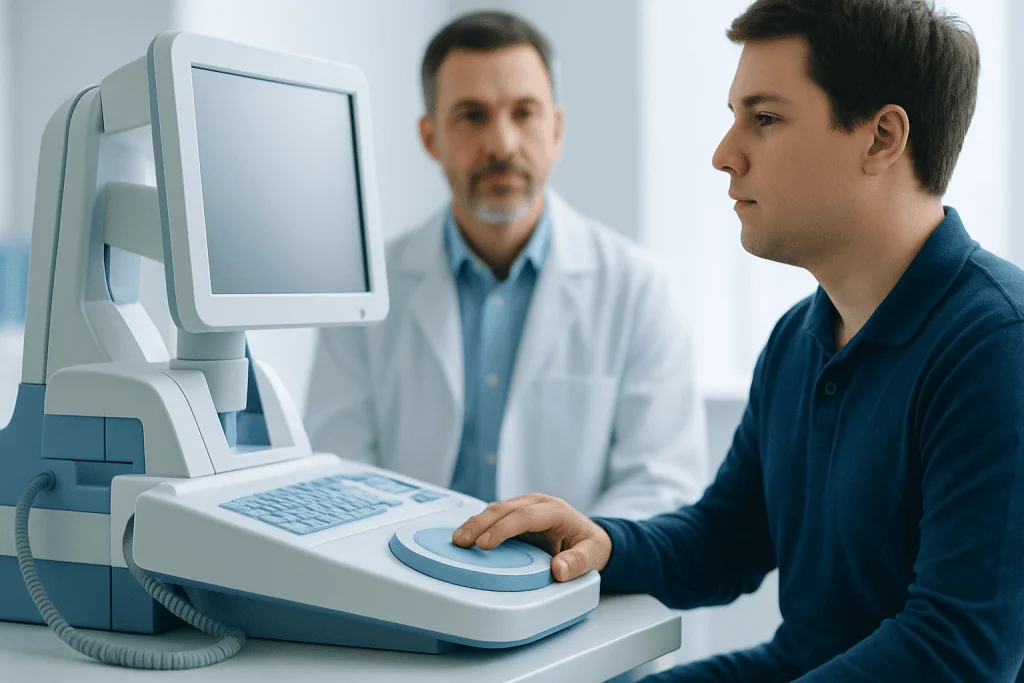
Autism testing can show whether a person demonstrates patterns in social communication and behavior that fit established diagnostic criteria. During assessment, clinicians look at areas such as eye contact, social reciprocity, conversation style, understanding of nonverbal cues, repetitive behaviors, focused interests, sensory responses, and adaptability to change. These findings are interpreted in light of the person’s age, language level, and developmental background.
Standardized tools may also help show how a person learns, reasons, solves problems, and manages attention. Neuropsychological testing can reveal a profile of strengths and difficulties that may not be obvious in a short office visit. For example, a person may have strong visual reasoning but struggle with planning, processing speed, or flexible thinking. This information can support school accommodations, workplace adjustments, or therapy planning.
Testing may also identify conditions that commonly occur alongside autism, including anxiety, attention difficulties, learning disorders, language disorders, sleep problems, or mood concerns. This broader picture matters because support plans are often most effective when they address the full range of needs rather than autism traits alone.
Importantly, assessment can show strengths as well as needs. Many autistic people have valuable abilities such as strong memory for detail, deep focus on preferred interests, honesty, creative problem-solving, or advanced knowledge in specific areas. Recognizing these features helps clinicians and families create balanced, respectful care plans.
What Testing Cannot Show

No single test can fully explain autism. There is no universal blood test, genetic test, brain scan, or questionnaire that can capture the lived experience of every autistic person. Although research tools may study biology or brain function, current clinical diagnosis still depends mainly on behavior, development, and expert interpretation.
Testing also cannot predict every future outcome. An assessment may describe current communication style, learning profile, adaptive skills, and support needs, but it cannot precisely forecast long-term independence, relationships, education, or career path. Development continues over time, and people often gain new skills with support, maturity, and self-understanding.
Another limitation is context. A person may behave differently at home, school, work, or in a clinic. Stress, tiredness, masking, language differences, intellectual ability, trauma, anxiety, and cultural expectations can all influence how someone appears during testing. For that reason, one brief session may miss important features unless clinicians gather information from multiple settings and sources.
Finally, scores do not define identity or worth. Neuropsychological testing provides structured data, but numbers alone cannot measure personality, motivation, resilience, creativity, or the quality of a person’s relationships. The best evaluations combine test results with clinical judgment and the perspective of the individual and family.
How the Assessment Process Works
An autism assessment usually begins with a detailed interview. For children, this often includes parents or caregivers who can describe pregnancy and birth history, early milestones, language development, play, social interactions, sensory sensitivities, routines, and school functioning. For adolescents and adults, clinicians may ask about childhood experiences, current relationships, daily living skills, education, work, and mental health.
Direct observation is another core part of the process. The clinician may watch how the person communicates, responds to social cues, uses gestures, shifts attention, handles transitions, and engages in conversation or play. Structured assessment tools may be used to make observations more consistent, but they are interpreted by trained professionals rather than read as simple pass-or-fail results.
Questionnaires from parents, teachers, partners, or the individual can provide useful information about behavior in daily life. Depending on the case, speech and language evaluation, occupational therapy input, adaptive functioning measures, or developmental pediatric review may also be recommended. When there are questions about thinking and learning, neuropsychological testing may be included as part of the wider evaluation.
Because autism can overlap with other conditions, multidisciplinary assessment is often helpful. A team may include child and adolescent psychiatrists, psychologists, neurologists, speech-language therapists, and educators. In more complex situations, clinicians may also consider whether a broader neurology consultation is needed to review seizures, movement concerns, developmental regression, or other neurological symptoms.
The Role of Neuropsychology
Neuropsychology focuses on cognitive and behavioral functions linked to brain development. In autism assessment, it is particularly useful when there are questions about attention, executive function, academic progress, memory, language processing, visual-spatial skills, or problem-solving. This information can clarify why a person is struggling in school, work, or daily routines even when autism is already suspected or diagnosed.
Executive function is one area commonly explored. These skills include planning, organization, impulse control, working memory, flexible thinking, and self-monitoring. Some autistic people have significant executive function challenges, which may affect time management, transitions, homework, decision-making, or independent living. Neuropsychological testing can help identify these patterns and suggest practical supports.
Testing can also help separate overlapping concerns. For example, inattention may relate to autism, anxiety, sleep problems, or coexisting ADHD. Learning difficulties may reflect a specific learning disorder, language-based challenges, or differences in processing speed. A fuller cognitive profile allows clinicians to understand how these pieces fit together instead of assuming that every difficulty is caused by autism alone.
Even so, neuropsychology is supportive rather than all-powerful. A person can have autism with average or high scores on many cognitive tests, and another person may have low scores for reasons unrelated to autism. That is why test results are interpreted alongside observation, developmental history, and functional needs. When broader behavioral or emotional concerns are present, clinicians may recommend child and adolescent psychiatry or adult mental health support as part of ongoing care.
Diagnosis, Treatment Options, and Support Planning
An autism diagnosis is made by a qualified clinician using established diagnostic criteria and a full clinical assessment. In some cases, the conclusion is clear. In others, clinicians may need time, follow-up, or additional information before deciding whether the pattern fits autism, another condition, or both. Diagnostic clarity can be especially important when support at school, work, or home depends on documented needs.
There is no single treatment that changes every aspect of autism, because autism is a neurodevelopmental difference rather than a one-size-fits-all illness. Support is tailored to the individual. It may include speech and language therapy, occupational therapy, behavioral and educational interventions, social communication support, mental health care, parent guidance, or coaching for daily living and executive skills.
When assessment identifies coexisting conditions, treating those concerns may significantly improve quality of life. Anxiety, depression, sleep problems, and attention difficulties can increase stress and make autistic traits harder to manage. Addressing these concerns does not remove autism, but it may help the person function more comfortably and confidently.
The most helpful plan is realistic, respectful, and individualized. Rather than trying to make a person appear “less autistic,” good care focuses on communication, participation, emotional well-being, safety, and independence in ways that match personal goals. Near the end of the diagnostic journey, some families seek multidisciplinary care at centers such as Acibadem International, where specialists in neuropsychology and related fields evaluate and treat international patients in JCI-accredited hospitals.
Self-care, Family Support, and Practical Next Steps
After an assessment, many people feel relief because the findings provide an explanation for long-standing challenges. Others may need time to process the results. It can help to review the report carefully, ask the clinician to explain unfamiliar terms, and request specific examples of how the findings apply to everyday life. A written summary of recommendations is often useful for school meetings, workplace discussions, or therapy planning.
Families and individuals can support progress by focusing on routines, communication strategies, and environments that reduce unnecessary stress. Predictable schedules, sensory-friendly adjustments, clear instructions, visual supports, and realistic expectations can make daily life easier. Strength-based planning is also important: interests and abilities can become powerful tools for learning, motivation, and self-esteem.
Support needs may change over time. A child entering school, a teenager facing social pressures, or an adult managing work demands may need reassessment or updated guidance. Follow-up is especially helpful if new concerns appear, such as burnout, anxiety, mood changes, or academic decline.
It is also reasonable to seek a second opinion if the results do not seem to match the person’s day-to-day experience. Autism assessment is complex, and a fresh review can sometimes clarify uncertainty. The goal is not to chase a label, but to reach the most accurate and helpful understanding possible.
When to See a Doctor
A medical or psychological evaluation is worth considering when social communication, behavior, or sensory patterns are causing persistent concern. In children, this may include delayed language, limited shared attention, repetitive play, intense distress with change, unusual sensory reactions, or difficulty engaging with peers. In older children, teens, and adults, signs may include chronic social misunderstanding, rigid routines, overwhelm in busy environments, or exhaustion from masking.
An assessment is also important when these traits affect learning, daily functioning, relationships, or emotional health. People sometimes seek evaluation after concerns about anxiety, school avoidance, workplace difficulties, or long-standing feelings of being different. The assessment can help determine whether autism, another condition, or a combination of factors is involved.
Urgent medical attention may be needed if there is developmental regression, loss of previously gained skills, seizures, self-harm, severe depression, or sudden major behavioral change. These situations may point to additional medical or mental health conditions that need prompt evaluation.
Whenever possible, it is helpful to see a clinician experienced in developmental and neuropsychological assessment. A thorough evaluation can bring clarity, reduce uncertainty, and support informed next steps for the person and their family.
Frequently asked questions
Can autism be diagnosed with one test?
No. Autism is not diagnosed with one simple test, scan, or lab result. Diagnosis usually depends on developmental history, clinical observation, standardized tools, and professional judgment.
What is the difference between autism assessment and neuropsychological testing?
Autism assessment looks specifically at social communication, behavior, sensory patterns, and developmental history. Neuropsychological testing examines thinking skills such as attention, memory, language, learning, and executive function, which can add useful detail but do not replace a full autism evaluation.
Can adults have an autism assessment?
Yes. Many people are assessed in adulthood, especially if earlier signs were missed or masked. Adult assessment usually includes current functioning, childhood history when available, and evaluation for overlapping mental health or attention-related conditions.
If test scores are normal, can a person still be autistic?
Yes. A person may perform well on some cognitive tests and still meet criteria for autism. Diagnosis is based on the overall clinical picture, not on one set of scores alone.
Why might autism be confused with other conditions?
Autism can overlap with anxiety, ADHD, language disorders, learning difficulties, and mood disorders. Some people also mask their differences, which can make diagnosis more complex and increase the need for a careful, experienced evaluation.
What happens after an autism assessment?
After assessment, the clinician usually explains the findings, gives a report, and recommends next steps. These may include therapies, school or workplace accommodations, mental health support, follow-up testing, or practical strategies for home and daily life.
References
- World Health Organization
- American Psychiatric Association
- Centers for Disease Control and Prevention
- National Institute of Mental Health
- American Academy of Pediatrics
This article is for general information only and is not a substitute for professional medical advice. Please consult a qualified doctor about your individual situation.
Neuropsychology in Turkey — costs, top hospitals & a free quote
JCI-accredited · board-certified surgeons · reply within 24h
Add us as a Preferred Source to see more of our trusted health content across Google Search, AI Overviews and Discover.