Pediatric EEG: How Brain Wave Testing Helps Diagnose Neurological Symptoms
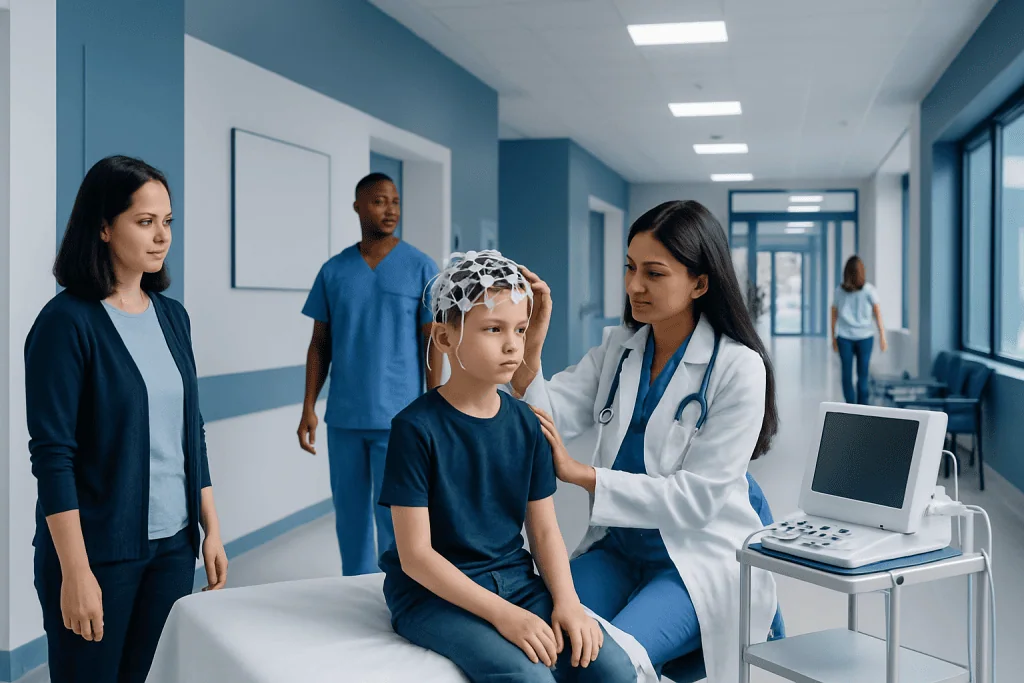
A pediatric EEG measures brain wave patterns using small sensors placed on the scalp. The test is painless and does not send electricity into the brain.
Key Takeaways
- A pediatric EEG measures brain wave patterns using small sensors placed on the scalp.
- The test is painless and does not send electricity into the brain.
- EEG can support the diagnosis of seizures and other neurological symptoms, but results are interpreted together with the child’s history and examination.
- Preparation may include clean hair, bringing comfort items, and sometimes adjusting sleep based on the doctor’s instructions.
- A normal EEG does not always rule out a neurological condition, and an abnormal EEG does not always mean epilepsy.
A pediatric EEG is a safe, painless test that records the brain’s electrical activity. It can help doctors understand symptoms such as seizures, unusual movements, staring spells, changes in awareness, and some sleep-related events in children.
Overview: What Is a Pediatric EEG?
A pediatric EEG, or electroencephalogram, is a test that records the brain’s natural electrical activity. Small sensors called electrodes are placed on the child’s scalp to detect brain wave patterns. The test does not hurt, and it does not deliver electricity into the body. Instead, it simply records signals that the brain is already producing.
Doctors use pediatric EEG to help evaluate symptoms that may come from the brain or nervous system. These can include suspected seizures, unusual staring episodes, sudden body jerks, fainting-like events, confusion spells, developmental concerns in some cases, or sleep-related behaviors. EEG is one part of a larger assessment that also includes a medical history, physical examination, and sometimes brain imaging or other tests.
Because children’s brains are still developing, brain wave patterns change with age. For this reason, EEG results in infants, toddlers, school-age children, and teenagers are interpreted by specialists who understand normal developmental differences. In many cases, the test helps show whether a symptom is likely related to abnormal electrical activity in the brain.
Why Doctors Recommend EEG for Neurological Symptoms
Pediatric EEG is most commonly requested when a child has episodes that may be seizures. These episodes are not always dramatic convulsions. They may appear as brief staring spells, lip smacking, sudden loss of awareness, repeated blinking, unexplained falls, or jerking movements during sleep or while awake. EEG can help doctors see whether these events are associated with changes in brain wave activity.
The test may also be helpful when symptoms are difficult to describe or happen very quickly. Parents or teachers may notice that a child “zones out,” becomes confused for a short time, or has unusual repetitive movements. In some children, EEG is used as part of the assessment for known seizure disorders such as epilepsy, or to monitor treatment response over time.
EEG can also contribute to the evaluation of certain sleep-related events, unexplained episodes of altered consciousness, and some neurological or developmental concerns. However, it is important to remember that EEG is not a stand-alone diagnosis. Doctors combine EEG findings with video recordings of events when available, clinical observations, and other tests if needed.
What Symptoms May Lead to a Pediatric EEG?
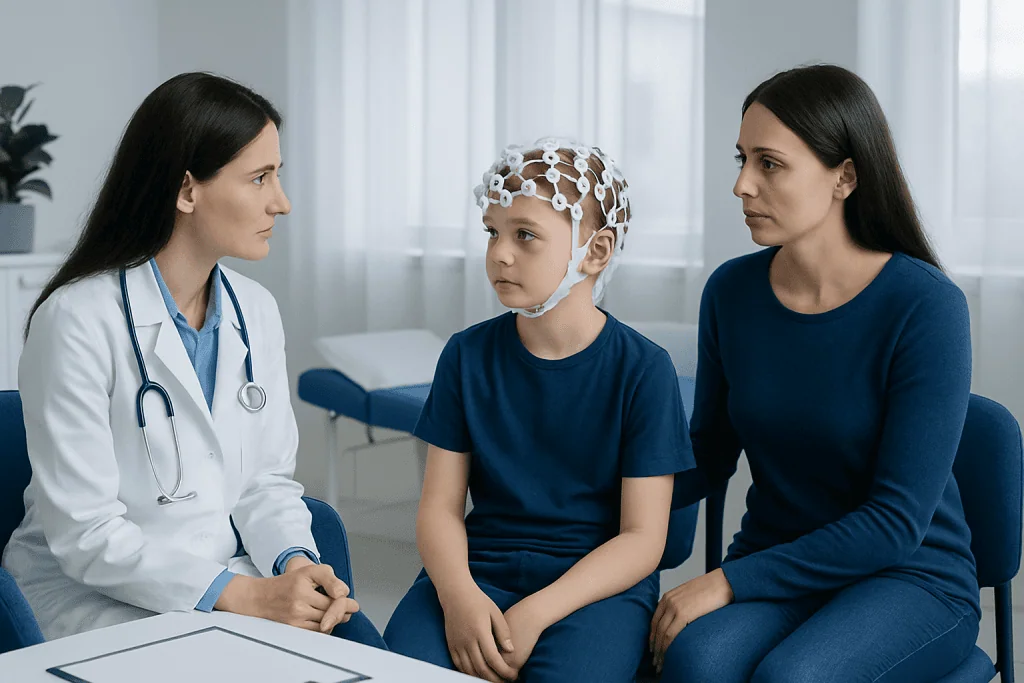
Symptoms that may lead a doctor to order an EEG can vary widely. Some are obvious, such as convulsions or repeated shaking. Others are subtler and may be mistaken for daydreaming, clumsiness, behavioral changes, or sleep problems. A child may have one type of symptom or several different kinds.
Common reasons for a pediatric EEG include:
- Staring spells or brief loss of awareness
- Sudden jerking or stiffening of the arms, legs, or body
- Episodes of confusion, unresponsiveness, or unusual behavior
- Possible seizures during sleep
- Fainting-like episodes when the cause is unclear
- Regression or changes in development in selected cases
- Follow-up after a previous seizure diagnosis
Not every child with these symptoms will have epilepsy, and not every child with epilepsy will have obvious EEG changes during a routine recording. This is why the timing of symptoms, the child’s age, sleep pattern, recent illness, medicines, and family history can all matter when the test is planned and interpreted.
How the Test Is Done and How to Prepare
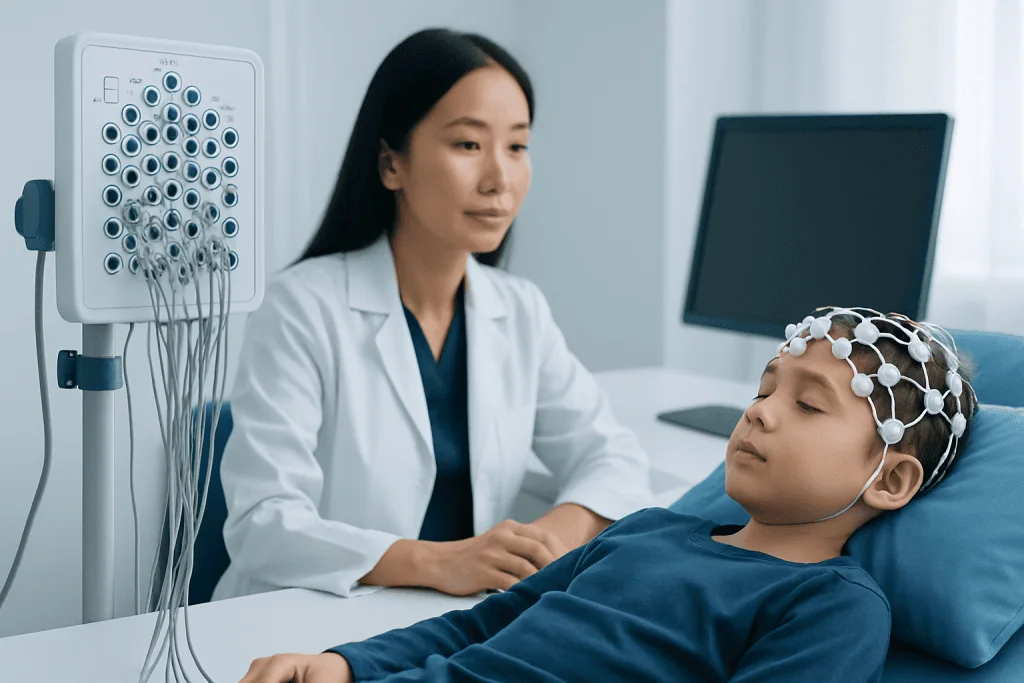
During a pediatric EEG, the child usually lies on a bed or sits in a comfortable position. A technician measures the head and places several electrodes on the scalp using a special paste or adhesive. The child may be asked to rest quietly, open and close the eyes, breathe deeply for a short period if age-appropriate, or look at a flashing light. These steps can help bring out brain wave patterns that are useful for diagnosis.
Routine EEG recordings are often relatively short, but some children need longer monitoring. Depending on the symptoms, the doctor may recommend a sleep-deprived EEG, an EEG during natural sleep, or longer video EEG monitoring. In some situations, extended monitoring provides more information because unusual events do not happen during a brief office-based recording. When clinically appropriate, doctors may recommend EEG testing or more detailed video EEG monitoring to capture symptoms and brain wave changes at the same time.
Preparation is usually simple. Hair should be clean and free of oils, sprays, or heavy styling products so the electrodes stick well. Parents may be asked to keep the child awake later than usual or wake them earlier if sleep is needed during the test. Bringing a favorite blanket, toy, bottle, or snack can also help younger children feel calm and secure.
Understanding the Results
EEG results are reviewed by a specialist, often a pediatric neurologist or neurophysiologist. The report looks at the background brain wave pattern, how it changes with wakefulness and sleep, and whether there are any unusual discharges that suggest a tendency toward seizures. Findings may be normal, nonspecific, or more strongly suggestive of a seizure disorder.
A normal EEG can be reassuring, but it does not always rule out seizures or other neurological conditions. Some children have intermittent events that simply do not occur during the recording, and some seizure types may not produce clear changes on a routine test. On the other hand, an abnormal EEG does not automatically mean a child has epilepsy. Certain patterns can appear in children without frequent clinical events, so interpretation always depends on the full medical picture.
If the EEG raises concern for seizure activity or another neurological disorder, the doctor may discuss next steps. These may include a repeat EEG, longer monitoring, blood tests, a sleep study, or brain imaging such as MRI if structural causes need to be evaluated. The goal is not only to label the symptom correctly, but also to understand why it is happening and how best to manage it.
What Happens After Diagnosis and Treatment Options
Care after a pediatric EEG depends on the reason the test was done and what it shows. If the findings support a seizure disorder, treatment may include observation, seizure medicines, education on safety, and follow-up with a pediatric neurology team. The treatment plan is personalized to the child’s age, seizure type, overall health, and frequency of symptoms.
Not all abnormal events in children are seizures. Some episodes turn out to be fainting, sleep-related movements, migraine-related symptoms, tics, behavioral events, or other neurological conditions. In those cases, treatment focuses on the actual cause rather than the EEG result alone. Additional assessment may be advised if the child also has persistent headaches, developmental changes, weakness, or concerns about the brain’s structure, and in selected situations pediatric neurology care helps coordinate this evaluation.
Families often need guidance on practical issues after diagnosis, such as school attendance, sports participation, sleep habits, and when to use emergency services. Clear communication is important. Near the end of the evaluation process, some families also seek care at specialized centers; Acibadem International’s multidisciplinary specialists and JCI-accredited hospitals diagnose and treat neurological conditions in children and support international patients when advanced assessment is needed.
Safety, Limitations, and When to See a Doctor
Pediatric EEG is considered very safe. The electrodes only record signals and do not affect brain activity. Some parts of the test, such as flashing lights or deep breathing, may briefly feel uncomfortable or tiring for a child, but they are closely supervised. Occasionally, these steps may trigger a seizure in a child who is already prone to seizures, which is one reason the test is done under trained observation.
Like any diagnostic test, EEG has limitations. It captures a period of time rather than every moment of a child’s life. Symptoms may not happen during the recording, and findings may be subtle. For this reason, parents are often encouraged to describe events in detail and, when safe and appropriate, record episodes on video to show the doctor.
Medical review is important if a child has a first suspected seizure, repeated staring spells, unexplained falls, episodes of unresponsiveness, unusual movements, developmental regression, or changes in behavior after an event. Emergency care is needed if a seizure lasts several minutes, repeats without recovery, happens in water, causes injury, or is followed by trouble breathing or persistent confusion. Prompt evaluation helps doctors decide whether EEG or other neurological tests are needed.
Frequently asked questions
Is a pediatric EEG painful?
No. A pediatric EEG is painless because the electrodes only record the brain’s electrical activity from the scalp. Some children may dislike the feeling of the paste or the need to sit still, but the test itself does not hurt.
How long does an EEG take for a child?
A routine EEG may take less than an hour, but the total visit can be longer because of preparation and electrode placement. Some children need extended or overnight video EEG monitoring if symptoms are infrequent or usually happen during sleep.
What should a child do before an EEG?
Parents are usually asked to wash the child’s hair and avoid oils, creams, or sprays on the scalp. Depending on the reason for the test, the doctor may also give instructions about sleep, meals, and regular medicines.
Can a normal EEG rule out seizures?
Not always. A child can have seizures even if a routine EEG is normal, especially if no event occurs during the recording. Doctors interpret the result together with the child’s symptoms, history, and examination.
Does an abnormal EEG always mean epilepsy?
No. Some EEG changes suggest a higher chance of seizures, but they do not confirm epilepsy on their own. Diagnosis depends on the full clinical picture, including what the child’s episodes look like and how often they happen.
Why might a doctor order video EEG instead of a routine EEG?
Video EEG records both the child’s behavior and brain wave activity at the same time. This is especially helpful when episodes are hard to describe, happen during sleep, or need to be matched to EEG changes to understand whether they are seizures.
References
- International League Against Epilepsy
- American Clinical Neurophysiology Society
- National Institute of Neurological Disorders and Stroke
- American Academy of Neurology
- World Health Organization
This article is for general information only and is not a substitute for professional medical advice. Please consult a qualified doctor about your individual situation.
Hair transplant in Turkey — costs, graft counts & a free assessment
JCI-accredited · board-certified surgeons · reply within 24h
Add us as a Preferred Source to see more of our trusted health content across Google Search, AI Overviews and Discover.

More from the Health Library


Related Specialists
Assoc. Prof. Dr. Didem Öncel Yakar
General Surgery
Dr. Tansel Yıldıran
Cardiology
Prof. Dr. Fuat Demirkıran
Gynecology & Obstetrics
Prof. Dr. Tolga Ergin
Gynecology & Obstetrics