How Long Do Neurophysiology Test Results Take and What Happens Next?

Some neurophysiology test results are discussed on the same day, but formal reports may take longer. Result timing depends on the type of test, how much data was recorded, and whether a specialist must analyze it.
Key Takeaways
- Some neurophysiology test results are discussed on the same day, but formal reports may take longer.
- Result timing depends on the type of test, how much data was recorded, and whether a specialist must analyze it.
- A result does not always give a diagnosis on its own; it is interpreted together with symptoms, history, and examination findings.
- Next steps may include reassurance, more testing, treatment, or referral to a neurologist or another specialist.
- Patients should ask when and how they will receive results before leaving the appointment.
Neurophysiology test results may be available immediately after some tests, while others take a few days if a specialist needs to review detailed recordings. What happens next depends on whether the results are normal, unclear, or show a nerve, muscle, brain, or sleep-related problem that needs follow-up.
Overview: what neurophysiology tests do
Neurophysiology tests assess how the nervous system is working rather than only how it looks on a scan. They measure electrical activity in nerves, muscles, or the brain and can help doctors understand symptoms such as numbness, tingling, weakness, muscle twitching, blackouts, seizures, sleep-related events, dizziness, or unexplained pain.
Common neurophysiology tests include electromyography (EMG), nerve conduction studies (NCS), electroencephalography (EEG), evoked potentials, and sleep-related studies in selected cases. Each test answers a different question. For example, EMG and NCS look at nerves and muscles, while EEG records brain wave activity.
Many patients are most concerned about how long neurophysiology test results will take and what the findings might mean. In practice, some information may be shared right away, especially if the doctor performs and interprets the test during the same visit. However, a formal result sometimes takes longer because the recordings need careful review and comparison with symptoms, examination findings, and other tests.
How long do neurophysiology test results usually take?
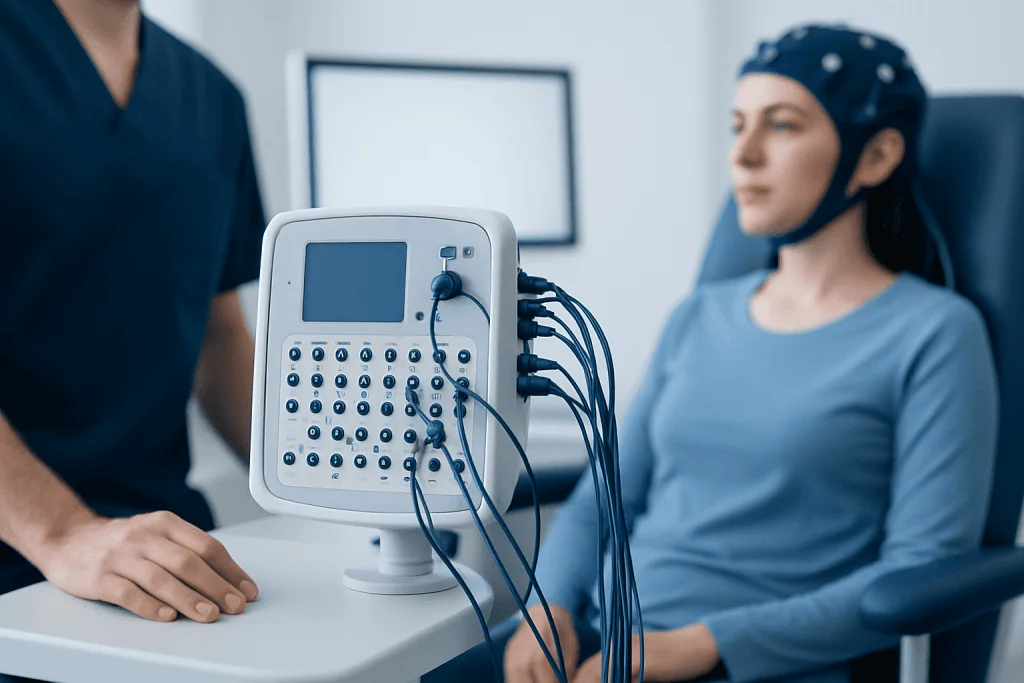
The timing of neurophysiology test results varies by test type and by hospital workflow. Some tests produce preliminary findings immediately. For example, during EMG or nerve conduction studies, the specialist may notice patterns while performing the test and may explain the general impression before the patient leaves. A formal written report may still follow later.
EEG results often take longer because the recording may need detailed analysis by a neurophysiologist or neurologist. A routine EEG may be reported within a few days, while prolonged, ambulatory, video, or sleep-related recordings can take longer because there is much more information to review. Evoked potentials may also require specialist interpretation before the final report is issued.
Other factors can affect timing. Results may be delayed if the specialist compares the tracing with prior studies, if the case is complex, or if other test results are needed for context. Weekends, public holidays, and the need for a multidisciplinary discussion can also add time. In many centers, patients are advised to expect anything from the same day to several days, and sometimes longer for advanced monitoring studies.
Before leaving the appointment, it is helpful for patients to ask three practical questions: when the result is expected, who will explain it, and whether they should arrange a follow-up visit. This can reduce uncertainty and make it easier to plan the next step.
Why timing differs between EMG, NCS, EEG, and other tests

Not all neurophysiology tests are interpreted in the same way. EMG and nerve conduction studies are interactive tests, and the doctor often adjusts the examination based on what is seen in real time. Because of this, the clinician may be able to give an early impression immediately, particularly when findings are clear. These tests are often used when symptoms suggest conditions affecting the peripheral nerves or muscles, such as carpal tunnel syndrome or a nerve injury.
EEG is different because it records electrical activity in the brain over time. Even a shorter routine EEG can contain subtle changes that require careful inspection. If the test includes sleep, prolonged recording, or video monitoring, reviewing the data can be time-consuming. A report may also need correlation with details about symptoms, medications, and whether an event happened during the recording.
Evoked potential tests measure how quickly electrical signals travel along specific sensory pathways, such as vision, hearing, or touch. These studies can support the evaluation of disorders affecting the brain, spinal cord, or optic pathways. They are usually not emergency tests, so results are often released after specialist review rather than discussed in detail immediately.
In some cases, neurophysiology is only one part of the diagnostic process. A doctor may combine it with imaging, blood tests, or clinical examination. For example, someone with seizures or unexplained episodes may need an EEG together with brain imaging such as MRI scanning to build a clearer picture.
What the results can show
Neurophysiology findings may be described as normal, abnormal, borderline, or inconclusive. A normal result can be reassuring, but it does not always completely rule out a condition. Some symptoms come and go, some disorders are too early to detect clearly, and some problems are better identified by a different test. This is why results are interpreted alongside the patient’s history and examination.
Abnormal findings can help locate where a problem may be occurring and how significant it appears to be. EMG and nerve conduction studies may suggest nerve compression, peripheral neuropathy, nerve root irritation, or a muscle disorder. EEG may show patterns that support a tendency toward seizures, though an EEG can also be normal in some people who still have epilepsy-related symptoms.
Sometimes the result helps narrow the possibilities rather than giving one final answer. For instance, it may show that symptoms are more likely to come from the peripheral nerves than from the brain, or that the issue affects one nerve rather than many. This can guide the next stage of testing and treatment more efficiently.
Patients may also hear terms such as mild, moderate, or severe. These words generally describe the extent of changes seen on the test, not how a person should expect to feel. Treatment decisions are based on the whole clinical picture, including symptoms, daily function, and the suspected cause.
What happens next after the results?
What happens after neurophysiology test results depends on the findings and the reason the test was ordered. If the result is normal and the symptoms have improved or are not concerning, the doctor may simply advise observation, symptom management, or routine follow-up. If the result is abnormal, the next step may involve treatment, more testing, or referral to a neurologist, neurosurgeon, rehabilitation specialist, sleep specialist, or another doctor depending on the pattern seen.
Further evaluation may include blood tests, imaging, or additional neurophysiology studies. For example, if symptoms suggest a structural cause, a doctor may recommend CT imaging or MRI. If a seizure disorder is being considered, a patient may need repeat EEG, prolonged monitoring, or assessment for epilepsy. If symptoms suggest a generalized nerve problem, more laboratory tests may be advised to look for underlying causes such as diabetes, vitamin deficiency, thyroid disease, or inflammation.
Treatment may range from lifestyle advice and medication review to splints, physical therapy, rehabilitation, or procedures and surgery when appropriate. If a nerve compression disorder is confirmed, management may focus on protecting the nerve and reducing pressure. If the findings suggest inflammation or an immune-related problem, specialist-directed medical treatment may be needed. If a muscle disease is suspected, the doctor may discuss further testing to define the subtype more accurately.
When a patient needs coordinated care, a center with neurology, imaging, rehabilitation, and other services can be helpful. Near the end of the pathway, some international patients choose centers such as Acibadem International, where multidisciplinary specialists in JCI-accredited hospitals evaluate neurophysiological disorders and plan treatment according to the individual case.
How patients can prepare for the follow-up appointment
Waiting for results can feel stressful, but a follow-up visit is often more useful when the patient arrives prepared. It can help to write down current symptoms, when they occur, what makes them better or worse, and whether anything has changed since the test. Bringing a full medication list is also important because some medicines can affect symptoms or the interpretation of episodes.
Patients may want to ask practical questions during the follow-up discussion. Examples include:
- Was the test normal, abnormal, or unclear?
- Does the result explain the symptoms fully, partly, or not yet?
- Are more tests needed?
- What treatments or self-care steps are appropriate now?
- When should symptoms be reviewed again?
If the doctor uses complex terminology, patients should feel comfortable asking for a plain-language explanation. It is reasonable to ask whether the result points to a problem in the brain, spinal cord, nerves, or muscles, and whether the changes are new, chronic, or uncertain. Clear communication can make the plan easier to follow.
For some people, a written copy of the report is helpful. Keeping copies of reports, scans, and previous test results can make future consultations smoother, especially if care involves more than one specialist or if treatment continues over time.
When to contact a doctor sooner
Most patients can safely wait for their planned result discussion. However, certain symptoms should prompt earlier medical advice rather than waiting for a routine appointment. These include rapidly worsening weakness, new difficulty walking, loss of bladder or bowel control, severe or sudden confusion, a prolonged seizure, repeated blackout episodes, or sudden changes in speech or vision.
Patients should also seek medical attention if symptoms become significantly worse after the test or if a new serious symptom appears. Neurophysiology tests themselves are generally low risk, but the condition being investigated may still need urgent assessment if it changes unexpectedly.
If there is uncertainty about whether symptoms are urgent, contacting the ordering doctor or local emergency service is the safest approach. People who have been told not to drive, work at heights, or operate machinery until results are clarified should continue to follow that advice unless a doctor says otherwise.
In non-urgent situations, the best next step is often a timely follow-up with the clinician who requested the study. That doctor can explain the findings in context and decide whether supportive care, specialist referral, or tests such as electroencephalography are needed.
Frequently asked questions
Can neurophysiology test results be given on the same day?
Sometimes, yes. For tests such as EMG and nerve conduction studies, the specialist may share an early impression immediately after the examination. A formal written report may still take longer, especially if the findings need careful review.
Why would EEG results take longer than other neurophysiology tests?
EEG recordings often contain a large amount of information that must be reviewed in detail. If the test was prolonged, included sleep, or used video monitoring, analysis usually takes more time. The doctor may also need to compare the recording with symptoms and other test results.
Does a normal neurophysiology test mean nothing is wrong?
Not always. A normal result can be reassuring, but some conditions may not show clear changes at the time of testing, and some symptoms are better explained by a different type of test. Doctors interpret the result together with the medical history, examination, and any imaging or laboratory findings.
What if the result is inconclusive?
An inconclusive result does not necessarily mean a serious problem. It usually means the test did not fully answer the question, so the doctor may recommend repeat testing, another type of study, or follow-up over time. The next step depends on the symptoms and how concerned the clinician is about the possible causes.
Who explains neurophysiology test results?
This varies by hospital and by test. Sometimes the neurophysiologist explains the general findings, while in other cases the referring neurologist or another doctor reviews the report at a later appointment. Patients can ask before leaving who will contact them and when.
Should treatment wait until the final report is ready?
Not always. If symptoms and early findings strongly suggest a likely diagnosis, a doctor may begin supportive treatment or safety advice before the final written report is issued. In other cases, it is safer to wait for full interpretation so treatment matches the most likely cause.
References
- World Health Organization
- National Institute of Neurological Disorders and Stroke
- American Clinical Neurophysiology Society
- National Institute for Health and Care Excellence
- Mayo Clinic
This article is for general information only and is not a substitute for professional medical advice. Please consult a qualified doctor about your individual situation.
Neurophysiology in Turkey — costs, top hospitals & a free quote
JCI-accredited · board-certified surgeons · reply within 24h
Add us as a Preferred Source to see more of our trusted health content across Google Search, AI Overviews and Discover.

More from the Health Library



Related Specialists

Dr. Sibel Özbek
Pediatrics
Assoc. Prof. Dr. Dilek Altun
Anesthesiology
Prof. Dr. Deniz Gökalp
Internal Medicine
Dr. Bülent Özmen
Orthopedic Surgery & Traumatology