What Is a Pediatric Dentist and When Should a Child See One?

Pediatric dentists are specially trained to care for children's teeth, gums, and oral development. A child's first dental visit is generally recommended by age 1 or within six months after the first tooth erupts.
Key Takeaways
- Pediatric dentists are specially trained to care for children's teeth, gums, and oral development.
- A child's first dental visit is generally recommended by age 1 or within six months after the first tooth erupts.
- Regular visits help prevent cavities, monitor growth, and build positive dental habits early.
- Parents should seek care sooner for tooth pain, dental injury, swelling, or signs of decay.
- Daily brushing with fluoride toothpaste, healthy eating, and routine checkups support long-term oral health.
A pediatric dentist is a dentist with additional training in caring for babies, children, and adolescents, including those with special healthcare needs. Children usually benefit from a first dental visit by age 1 or within six months of the first tooth coming in.
Overview: What Is a Pediatric Dentist?
A pediatric dentist is a dentist who has completed additional training focused on the oral health needs of infants, children, teenagers, and children with special healthcare needs. This training covers child growth and development, baby and permanent teeth, behavior guidance, cavity prevention, and treatment approaches that are appropriate for young patients.
Children are not simply small adults when it comes to dental care. Their teeth, jaws, bite, and oral habits change as they grow. A pediatric dentist is trained to recognize these changes and to guide families through each stage, from teething and thumb-sucking to school-age cavity prevention and monitoring how adult teeth come in.
Another important part of pediatric dentistry is creating a child-friendly experience. Pediatric dental teams are used to helping children feel comfortable, explaining care in age-appropriate ways, and supporting parents as they learn how to care for teeth at home. The goal is not only to treat problems but also to help children develop a positive relationship with dental care.
When Should a Child First See a Pediatric Dentist?

Most dental and pediatric organizations recommend that a child have a first dental visit by the first birthday or within six months after the first tooth appears, whichever comes first. This early visit may seem soon, but it helps detect concerns before they become bigger problems and gives parents practical advice for feeding, brushing, and fluoride use.
At this first appointment, the pediatric dentist usually checks how the teeth and jaws are developing, looks for early signs of tooth decay, and discusses habits that can affect oral health. These may include bottle use at bedtime, frequent sugary drinks, prolonged pacifier use, and thumb-sucking. The visit is also a good time for parents to ask questions about teething, cleaning the mouth, and what to expect as more teeth erupt.
After the first visit, the dentist recommends follow-up visits based on the child’s needs. Many children benefit from regular checkups every six months, although some may need more frequent monitoring if they have a higher risk of cavities, enamel problems, or developmental concerns.
What Does a Pediatric Dentist Treat?
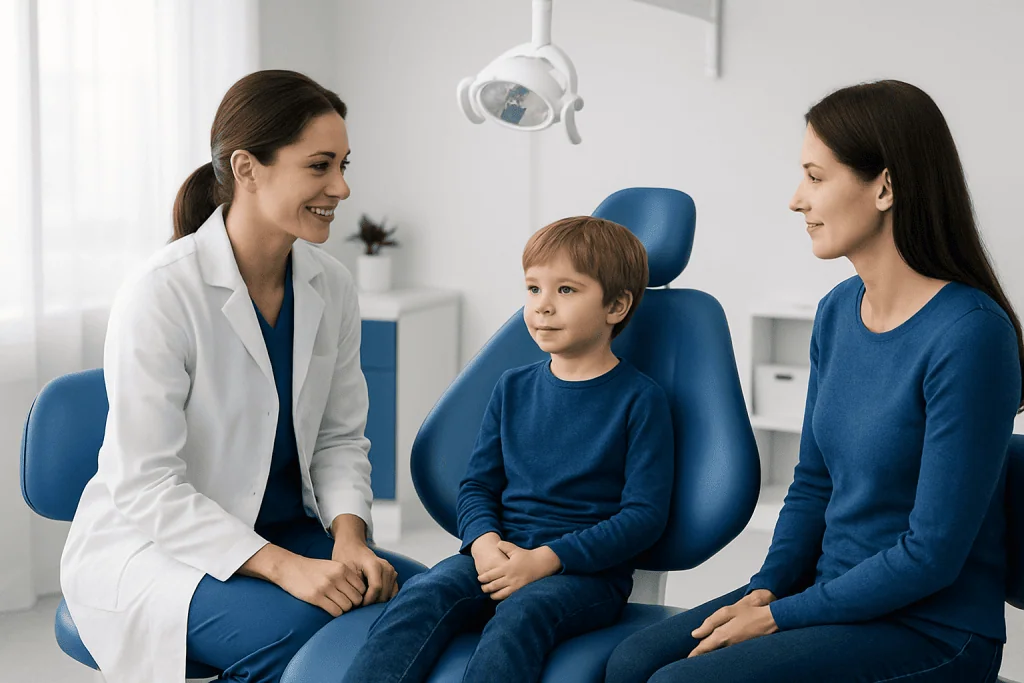
Pediatric dentists provide preventive, diagnostic, and restorative care. Prevention is a major focus because tooth decay is common in childhood and can often be avoided with early guidance. A pediatric dentist may clean the teeth, apply fluoride, place dental sealants when appropriate, and teach families how to brush and floss effectively.
They also diagnose and treat common dental problems in children. These include cavities, tooth sensitivity, gum irritation, dental trauma, early loss of baby teeth, delayed tooth eruption, and bite or jaw development concerns. If a child has severe decay, infection, or injury, the pediatric dentist coordinates treatment to protect both comfort and long-term oral development.
Some children may need additional services such as habit counseling, monitoring for speech- or bite-related concerns, or referral for tooth replacement options later in life if a permanent tooth is missing or lost. Pediatric dentists may also work closely with orthodontists and other specialists when a child’s oral development needs broader evaluation.
For children with anxiety, sensory sensitivities, medical conditions, or developmental differences, pediatric dentists are trained to adapt the visit and treatment plan. This can make dental care more manageable and safer for families who need extra support.
Signs a Child Should See a Pediatric Dentist Sooner
Some children should be seen before a routine checkup. A prompt dental visit is important if a parent notices tooth pain, sensitivity to hot or cold, swelling of the gums or face, bleeding gums, bad breath that does not improve, or white, brown, or black spots on the teeth. These can be signs of early or more advanced dental disease.
Dental injuries also need timely attention. A chipped, cracked, loose, or knocked-out tooth should be assessed as soon as possible. Even if the damage seems small, the dentist can check for injury to the tooth root, surrounding tissues, and developing permanent teeth underneath a baby tooth.
Other reasons for an earlier visit include delayed tooth eruption, crowding, difficulty chewing, jaw clicking, or oral habits that continue for a long time. Children who breathe through the mouth, snore regularly, or have enlarged tonsils may also benefit from evaluation, sometimes alongside an tonsillitis or ENT assessment if symptoms suggest airway or throat problems.
- Toothache or visible decay
- Swelling, pus, or fever with a dental problem
- Broken, loose, or knocked-out tooth
- Bleeding gums or persistent mouth sores
- Concerns about bite, jaw growth, or delayed teeth
What Happens During a Pediatric Dental Visit?
A pediatric dental visit usually begins with a medical and dental history. The dentist may ask about the child’s overall health, medications, allergies, diet, fluoride exposure, brushing habits, and any symptoms such as pain or sensitivity. In younger children, the examination may be done with the child sitting on a parent’s lap to help them feel secure.
The mouth, teeth, gums, tongue, bite, and jaw are then examined. Depending on the child’s age and needs, the visit may also include cleaning, fluoride treatment, and digital X-rays if the dentist needs more information about cavities, erupting teeth, or hidden problems. X-rays are used carefully and only when appropriate.
Parents usually receive guidance tailored to the child’s stage of development. This may include advice on brushing with fluoride toothpaste, introducing flossing, limiting sugary snacks and drinks, protecting teeth during sports, and managing habits such as pacifier use. If treatment is needed, the pediatric dentist explains the findings and the next steps in a clear, family-friendly way.
When a child requires more complex care, the dentist may discuss procedures such as fillings, crowns, space maintainers, or root canal treatment for certain teeth. The purpose is always to protect the child’s comfort, support normal eating and speech, and preserve healthy oral development.
Prevention and Daily Dental Care at Home
Good home care is the foundation of children’s oral health. Parents should begin cleaning the gums even before teeth erupt, then brush twice a day once the first tooth appears. A fluoride toothpaste is generally recommended in a small amount appropriate for the child’s age, and children should be supervised until they can brush effectively on their own.
Diet also matters. Frequent sugary snacks, juice, sweetened milk drinks, and bedtime bottles can increase the risk of decay. Offering water between meals, limiting sticky sweets, and encouraging balanced meals can help protect teeth. If a child uses a bottle, it is best not to put them to bed with anything other than water unless a doctor advises otherwise.
Regular checkups support prevention because they allow the dentist to spot early changes and offer treatments before discomfort develops. Depending on risk, a child may benefit from fluoride varnish, sealants, or close observation of enamel changes. Families should also ask about mouthguards if the child plays contact or high-impact sports.
Parents sometimes assume baby teeth are less important because they eventually fall out, but they play an essential role in chewing, speech, facial development, and holding space for permanent teeth. Protecting baby teeth can reduce pain, help nutrition and sleep, and support healthy adult teeth later on.
Choosing a Pediatric Dentist and When to Seek Additional Help
When choosing a pediatric dentist, families may look for a professional who communicates clearly, welcomes questions, and creates a calm environment for children. It can also be helpful to ask about experience with infants, anxious children, or children with special healthcare needs. A good fit often makes regular visits easier for both the child and the parent.
In some cases, dental care is part of broader health care. A child with facial swelling, fever, trouble swallowing, trauma, or severe pain may need urgent medical assessment as well as dental care. If a child has complex oral problems, missing teeth, severe infection, or jaw concerns, the pediatric dentist may coordinate care with other specialists, including oral surgeons or orthodontic teams.
For families seeking coordinated care abroad, Acibadem International’s multidisciplinary specialists and JCI-accredited hospitals diagnose and treat dental and related pediatric conditions for international patients. Where needed, children can be referred for advanced oral and dental surgery or for evaluation of associated conditions such as tooth decay that affect function and comfort.
Parents should contact a qualified dentist or doctor promptly if a child has ongoing pain, visible swelling, trauma, bleeding that does not stop, or signs of infection. Early attention is usually the best way to relieve discomfort and prevent complications.
Frequently asked questions
What is the difference between a pediatric dentist and a general dentist?
A pediatric dentist completes additional training focused on caring for infants, children, teenagers, and children with special healthcare needs. General dentists can also treat children, but pediatric dentists have more specialized education in child development, behavior guidance, and age-specific dental treatment.
At what age should a child first see a dentist?
A child should usually see a dentist by age 1 or within six months after the first tooth appears. This early visit helps prevent cavities and gives parents guidance on brushing, feeding habits, and healthy oral development.
How often should children have dental checkups?
Many children benefit from checkups every six months, but some may need to be seen more often depending on their cavity risk and oral health needs. The dentist recommends a schedule based on the child's age, habits, and dental findings.
Do baby teeth really matter if they fall out anyway?
Yes, baby teeth are very important. They help with chewing, speech, facial development, and keeping space for permanent teeth, and untreated problems in baby teeth can still cause pain, infection, and eating difficulties.
What are early signs of cavities in children?
Early signs may include white spots near the gumline, sensitivity, brown or black discoloration, visible holes, or complaints of pain. Because cavities can start quietly, regular dental visits are useful even when a child has no obvious symptoms.
Should a child see a pediatric dentist after a dental injury?
Yes, a child should be evaluated promptly after a chipped, loose, cracked, or knocked-out tooth. Quick assessment can help protect the tooth, reduce pain, and check for injury to the gums, jaw, or developing permanent teeth.
References
- American Academy of Pediatric Dentistry
- American Dental Association
- Centers for Disease Control and Prevention
- World Health Organization
This article is for general information only and is not a substitute for professional medical advice. Please consult a qualified doctor about your individual situation.
Explore treatments in Turkey — costs, top hospitals & a free quote
JCI-accredited · board-certified surgeons · reply within 24h
Add us as a Preferred Source to see more of our trusted health content across Google Search, AI Overviews and Discover.

Pediatrics
Complete healthcare for infants, children and adolescents across all sub-specialties.
232 specialists in this unitMore from the Health Library



Related Specialists

Asst. Prof. Dr. Mehmet Karaarslan
Internal Medicine
Assoc. Prof. Dr. Ayşe Ebru Bahadır
Ophthalmology
Assoc. Prof. Dr. Ahmet Özveren
Medical Oncology
Assoc. Prof. Dr. Barış Görgün
Orthopedic Surgery & Traumatology