

Paying a Treatment Deposit from Abroad: Safe Steps for Patients

Paying a treatment deposit from abroad safely means verifying bank details, using secure channels, and keeping records before travel to Turkey.
If you need to pay a treatment deposit from another country, the safest approach is to confirm exactly who you are paying, use a secure payment route, and keep a clear paper trail. This guide walks you through the practical steps so you can move forward with more confidence and fewer last-minute surprises.
At a glance
- Best time to pay: After your treatment plan, quote, and payment instructions are confirmed in writing
- Safest method: A bank transfer or approved secure payment link sent through official hospital channels
- What to verify: Hospital name, beneficiary details, IBAN/SWIFT, currency, amount, and your patient reference
- What to keep: Transfer receipt, email confirmations, invoice or quotation, and payment reference
- Main risk to avoid: Fraudulent bank detail changes sent by fake emails or unofficial messaging accounts
- If unsure: Pause and reconfirm with the international patient team using known contact details
Why a treatment deposit may be requested
When you are arranging treatment in another country, a deposit may be requested to confirm appointments, reserve operating theatre time, secure hospital admission dates, or begin administrative planning for your visit. This is common for international care because your treatment pathway often involves scheduling, coordination between departments, and travel timing.
Before you pay, make sure you understand what the deposit is for. You should know whether it is linked to admission, a procedure date, diagnostic testing, or another part of your treatment plan. It is also sensible to ask how the deposit will be applied to your final bill and what may happen if your plan changes after an in-person medical evaluation.
If you are working with Acibadem International, the international patient services team can usually help you understand which documents belong to your payment file, how to identify the correct payment route, and what reference details to include. That practical support can make the process feel more manageable, especially if you are coordinating care from abroad.
What to confirm before sending any money

The most important rule is simple: do not send a deposit until you have written confirmation of the treatment plan and payment instructions. Ideally, you should have a formal quotation or cost estimate, the full beneficiary information, the expected currency, and a patient identification or case reference to include with the transfer.
Check that the hospital name in your documents matches the beneficiary details exactly or in a clearly explainable way. If there is any difference in naming, ask for clarification before you proceed. You should also confirm whether bank charges are your responsibility and whether the receiving hospital must get the full amount net of fees.
It is wise to verify payment details through a second channel. For example, if you received bank instructions by email, call the hospital or international patient coordinator using a known official number from the hospital website or prior correspondence. This extra step can protect you from fraud, especially in cross-border medical payments where urgency and travel deadlines can make patients feel rushed.
- Confirm the hospital or institution name
- Confirm IBAN, account number, SWIFT/BIC, and bank name
- Confirm the exact amount and currency
- Confirm your patient name and reference to include
- Confirm what the deposit covers and how it appears on your account
How to pay safely from abroad
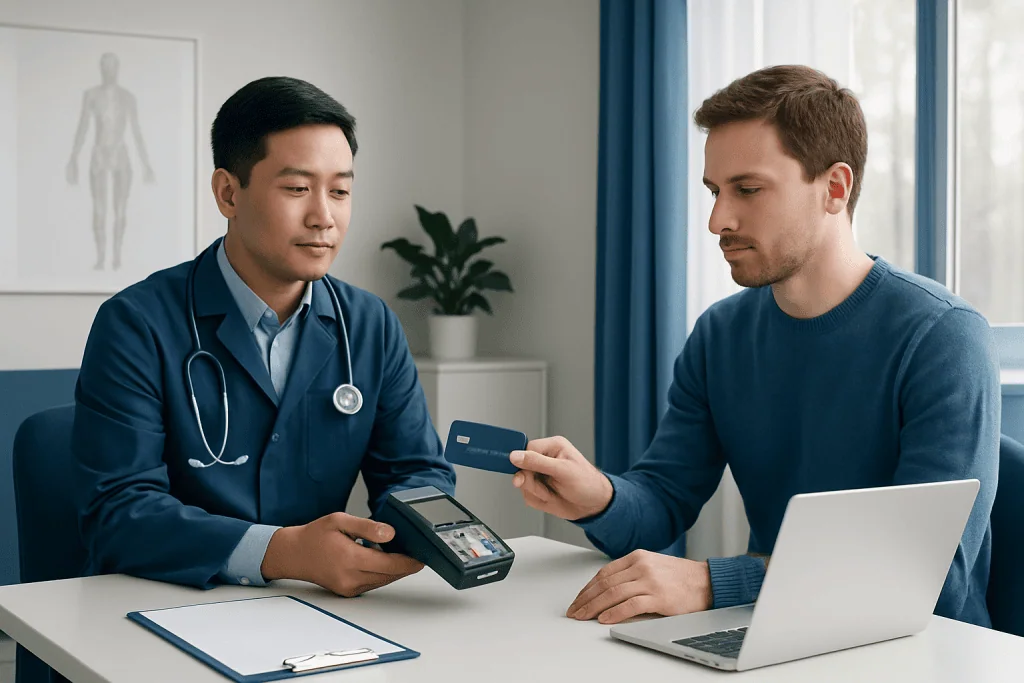
For many patients, an international bank transfer is the most straightforward method, especially for larger amounts. If the hospital provides a secure online payment link or approved card payment route, that may also be suitable. The safest option is always the one officially offered and documented by the hospital, not a personal account, informal payment request, or messaging app instruction.
When initiating a transfer, enter the beneficiary details carefully and include your patient reference exactly as instructed. If your bank allows a payment message or notes field, use it clearly so the hospital finance team can match your payment to your file without delay. Small clerical errors can slow confirmation, especially if several patients are paying similar amounts around the same time.
Use a secure internet connection and avoid making payments over public Wi-Fi in airports, hotels, or cafes. If you are using online banking, log in directly through your bank’s official website or app rather than through links in messages. If Acibadem International or another hospital has sent a payment link, check that it comes from an official address and that the page uses a secure connection before entering card details.
How to spot warning signs and avoid fraud
The most common risk in overseas payments is not the transfer itself but fraudulent instructions. Be cautious if you receive a message saying the hospital’s bank details have suddenly changed, especially if the message is urgent, poorly written, or asks you not to call. Criminals often rely on pressure and confusion.
Another warning sign is a request to send money to a personal bank account, a third-party company you do not recognize, or a country unrelated to your treatment destination. Hospitals and established healthcare groups usually have formal payment systems, clear beneficiary details, and finance teams that can verify information. You should also be careful with invoices or letters that contain spelling mistakes, inconsistent logos, or unusual email domains.
If anything feels off, stop immediately and verify through official channels you already trust. With a large healthcare network such as Acibadem International, international patient coordinators, interpreters, and administrative staff can help you reconfirm the correct route. It is always better to delay payment briefly than to send funds to the wrong place.
What happens after you pay
Once your payment has been sent, keep proof of transfer and email it to the hospital or upload it through the requested channel. A transfer receipt should show the sender name, amount, date, beneficiary details where possible, and your payment reference. Ask when you can expect the deposit to appear on your patient account, as international bank transfers may take time depending on the countries and banks involved.
Do not assume that payment alone confirms every part of your trip. You may still need written confirmation of your appointment schedule, admission timing, pre-arrival documents, passport details, visa planning, or medical records needed before travel. If you are coming to Turkey, coordinate payment confirmation alongside travel logistics so your arrangements stay aligned.
At Acibadem International, international patient services may help connect the payment confirmation process with your broader travel planning, such as accommodation guidance, airport transfer coordination, language support, and pre-arrival communication. That joined-up approach can reduce stress because you are not trying to manage finance and travel updates separately.
Practical questions to ask about refunds, changes, and final billing
It is sensible to ask what happens if your treatment plan changes after your in-person consultation. In some cases, the original estimate may need to be adjusted if additional tests are required or if the specialist recommends a different approach after examining you. A deposit is often part of a larger billing process, not a final price guarantee.
You should also ask about the refund process if treatment is postponed, cancelled, or found to be unsuitable after evaluation. The answer may depend on timing, the reason for the change, and whether any non-refundable services have already been arranged. Make sure any policy explanation is given in writing so you can refer back to it if needed.
Finally, ask how your final bill will be settled. You may need to pay the remaining balance before admission, at discharge, or in stages depending on the treatment plan. Knowing this in advance helps you prepare limits with your bank, plan transfer times, and avoid delays when you arrive in Istanbul or elsewhere in Turkey for care.
A calm way to manage the process from start to finish
Cross-border medical payments can feel intimidating because they combine health concerns with financial decisions and travel deadlines. A calm, organized routine makes a real difference: verify details, pay only through official channels, save every document, and ask for confirmation in writing. That approach protects you and helps the hospital support you efficiently.
Keep all payment-related documents in one folder, including your quote, passport copy if requested for registration, coordinator emails, transfer receipt, and any invoice or deposit confirmation. If you are traveling with a companion, consider giving them access to the same file in case they need to help while you are in transit or attending appointments.
If you ever feel uncertain, ask for clarification. Reputable international hospitals expect patients to have questions about overseas deposits, and a well-run international patient department should be able to explain the next step clearly. The goal is not just to pay, but to arrive knowing your arrangements are secure and understood.
Step by step
- Receive your treatment plan and written payment instructions. Wait until you have a clear treatment recommendation, an estimate or quotation, and formal payment details from the hospital. You should know what the deposit is for and how it will be recorded on your account before sending funds.
- Verify the payment details independently. Check the beneficiary name, bank name, IBAN or account number, SWIFT code, currency, and amount carefully. Then confirm the same details through a known official contact method, such as the hospital's international patient line or your named coordinator.
- Choose the approved payment method. Use the payment route officially provided by the hospital, such as a bank transfer or secure payment link. Avoid personal accounts, unusual third parties, or instructions sent only through informal messaging.
- Add your patient reference correctly. Include your full name and patient or case reference exactly as instructed so the finance team can match the deposit to your file. If your bank has a limited character field, prioritize the most important reference details first.
- Save proof immediately after payment. Download or screenshot your transfer confirmation and keep the official receipt from your bank. Send it promptly to the hospital using the requested email address or patient communication channel.
- Ask for confirmation that the deposit was received. International transfers can take time, so ask when you should expect acknowledgment. If you do not receive confirmation within the expected window, follow up with the finance or international patient team and provide the receipt again.
- Link payment confirmation with your travel planning. Once the deposit is matched to your file, confirm any next steps related to admission, appointments, travel dates, and required documents. This helps prevent a situation where payment is complete but another logistical detail is still missing.
Your checklist
- Written quotation or estimate received
- Official payment instructions confirmed through a trusted contact
- Beneficiary name, IBAN/SWIFT, bank, amount, and currency checked
- Patient name and reference prepared for the transfer note
- Bank transfer fees and exchange issues clarified
- Payment receipt saved and backed up
- Receipt sent to the hospital or international patient coordinator
- Deposit receipt or confirmation requested in writing
- Refund and billing questions asked before travel
Key takeaways
- Only pay a treatment deposit after you receive written instructions and a clear treatment-related quotation or estimate.
- Verify bank details through a second trusted channel to reduce the risk of fraud.
- Use official hospital payment methods and avoid personal or unfamiliar third-party accounts.
- Keep a complete record of the transfer, including your receipt and payment reference.
- Ask in advance how the deposit is applied, what happens if plans change, and when the final balance is due.
Frequently asked questions
Is it normal for a hospital abroad to ask for a treatment deposit?
Yes, it can be normal, especially when treatment scheduling, admission planning, or operating room time needs to be reserved for an international patient. What matters most is that the request comes through official channels and clearly explains what the deposit covers.
What is the safest way to pay a treatment deposit from abroad?
A bank transfer to verified hospital account details or an officially issued secure payment link is usually the safest route. Always confirm the details independently and keep proof of payment in case the finance team needs to trace the transfer.
How can I check that the bank details are genuine?
Compare the details across your quotation, invoice, and prior communications, then confirm them by calling or messaging a known official hospital contact. Do not rely only on a new email, especially if it says the account has changed or pushes you to act quickly.
Can the final cost be different from the deposit amount or estimate?
Yes. A deposit is typically an advance payment, while an estimate is often based on the information available before your in-person evaluation. Final billing may change if extra tests, longer stays, or a different treatment approach become necessary.
What should I do after I send the payment?
Save the transfer receipt immediately and send it to the hospital using the requested communication channel. Then ask when the funds are expected to appear on your account and request written confirmation once the deposit has been matched to your file.
What if I need to cancel or postpone my treatment?
Ask the hospital about its refund or rescheduling policy as early as possible and get the answer in writing. Whether a deposit is refundable can depend on timing, administrative work already completed, and the reason for the change.
Can Acibadem International help with the payment process as well as travel planning?
International patient teams can often help you understand official payment steps, required references, and how payment confirmation fits into your wider treatment journey. At Acibadem International, support may also extend to interpreters and practical travel or accommodation coordination, which can make the process easier to follow.
Add us as a Preferred Source to see more of our trusted health content across Google Search, AI Overviews and Discover.
More Patient Guides
Paying Medical Bills in Turkey: Cards, Bank Transfers, and Receipts
Paying medical bills in Turkey is usually done by card or bank transfer, with official receipts available through hospital billing teams in…
9 min read
Using International Insurance for Treatment in Turkey
International insurance for treatment in Turkey usually requires plan checks, pre-approval, and documents. In Istanbul, ask your hospital to verify benefits early.
9 min read
How to Budget for Extra Nights in Turkey After Treatment
Budget for extra nights in Turkey after treatment by planning hotel, meals, transport and follow-up needs in Istanbul with a simple buffer.
9 min read