

Traveling to Turkey with CPAP or Oxygen Support: A Practical Patient Checklist

Traveling to Turkey with CPAP or oxygen support is manageable with the right paperwork, airline planning, and hospital coordination in Istanbul.
If you use CPAP or need oxygen support, you can still travel to Turkey safely with some extra planning. This guide helps you organize flights, documents, equipment, power needs, and hospital coordination so your trip feels more predictable and less stressful.
At a glance
- Best time to prepare: Start 2-4 weeks before travel if possible
- Most important step: Confirm airline rules for CPAP, batteries, and onboard oxygen needs
- Key documents: Prescription, fit-to-fly note if needed, device details, contact numbers
- Power planning: Bring chargers, adapters, and approved backup batteries
- At the hospital: Tell your care team in advance what device and support you use
- Useful support: International patient teams can help coordinate logistics and communication
Start with a simple travel plan
Traveling to Turkey with CPAP or oxygen support usually becomes much easier once you break it into practical steps. Your main priorities are to confirm what you need medically during the journey, understand your airline’s equipment rules, and make sure your accommodation and hospital know about any support you rely on at night or during the day.
If your trip includes treatment in Istanbul or another Turkish city, try to prepare earlier than you would for a standard trip. A little extra time helps if an airline requests forms, if your equipment supplier needs to provide battery information, or if your doctor wants to update your travel letter.
It also helps to think about the trip in stages: getting to the airport, the flight itself, airport arrival in Turkey, transfer to your hotel, your hospital visit, and the return journey. When you plan each part separately, it is easier to spot where you may need help with power access, oxygen arrangements, luggage handling, or rest breaks.
What to ask your doctor before you fly
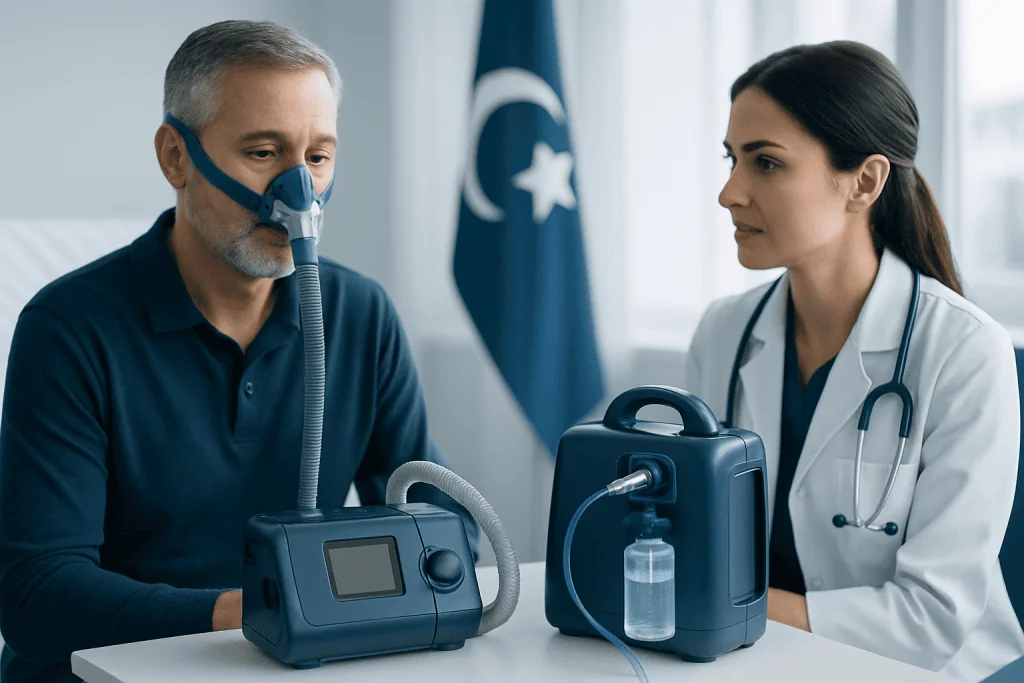
Before booking or finalizing your trip, ask your doctor whether you are fit to travel and what support you should use during the journey. If you use CPAP for sleep apnea, ask whether you need it only overnight or whether naps during layovers or long waits may also be important. If you use oxygen support, ask about your required flow rate, whether your needs change with walking, and whether air travel could affect you.
You may need a short medical summary or fit-to-fly note, especially if you use oxygen or have a recent change in your breathing condition. This document is often useful even when it is not formally required because it explains your diagnosis, current treatment, equipment, and any travel recommendations in clear terms.
Ask for written details that match your device exactly. Include the device name, whether it is portable, whether you need distilled water for humidification, what accessories you use, and any battery specifications if relevant. Keeping these details consistent across your doctor letter, prescription, and airline forms can prevent delays.
- Ask whether you can safely fly with your current oxygen or CPAP settings
- Request a recent prescription and a travel letter in English if possible
- Clarify whether you need oxygen during flight, at the airport, or only at your destination
- Check whether your medications need to stay in hand luggage
Airline rules matter more than many patients expect
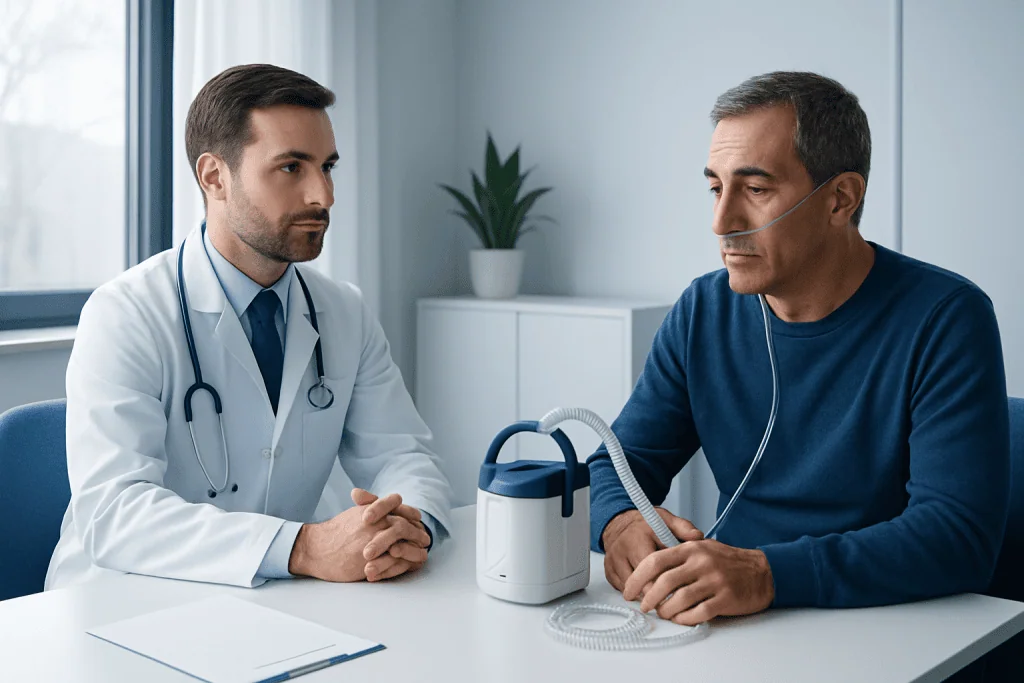
Every airline has its own process for passengers traveling with CPAP or oxygen support. Some allow CPAP devices in addition to your normal cabin bag allowance, while others have specific labeling or screening advice. Oxygen is more complicated because personal oxygen cylinders are often restricted, and airlines may require approved portable oxygen concentrators or advance medical clearance.
Contact your airline directly after booking and ask for their medical assistance or special services team. Confirm whether your device can be carried onboard, whether you can use it during the flight, what battery reserve is required, and whether they need forms completed by your doctor. Ask these questions for every flight segment, including codeshare flights, because rules can differ.
If you have a connection, check layover duration carefully. A short connection can be difficult if you walk slowly, need oxygen support, or need access to seating and power. Airport assistance can usually be arranged in advance, and this can make a major difference to your comfort and energy levels.
Keep your machine, prescription, and batteries in your hand luggage, not in checked baggage. Checked bags can be delayed, and medical equipment is safer when it stays with you throughout the journey.
Packing your CPAP or oxygen equipment for Turkey
Pack your equipment as if you may need to use it unexpectedly. For CPAP users, that usually means the machine, mask, tubing, power supply, extension cord if helpful, plug adapter, cleaning supplies, and any humidifier chamber you normally use. For oxygen users, pack approved portable equipment according to airline rules, spare cannulas or tubing, chargers, and written instructions for operation.
Label your equipment clearly with your name, phone number, and accommodation details in Turkey. Keep a paper copy of important documents with the device and save digital copies on your phone. If one item goes missing or you need help at security, this can save time and reduce stress.
It is wise to carry a small backup kit in a separate bag. This might include an extra mask cushion, spare tubing connectors, extra filters, batteries, and your medication list. If your treatment trip is being coordinated through an international patient department, such as the support teams available at Acibadem International, you can also share your device list in advance so staff understand what you are bringing and what you may need on arrival.
- Use your device’s travel case if you have one
- Bring enough supplies for the full stay plus a little extra
- Carry extension cables only if they are safe and in good condition
- Keep fragile parts protected from pressure and spills
Power, accommodation, and staying comfortable in Istanbul or beyond
One of the most common practical issues when traveling to Turkey with CPAP or oxygen support is power access. Turkey uses standard European-style plugs, so you may need an adapter depending on where you are traveling from. Check your device voltage compatibility before you leave, and bring the manufacturer’s recommended charger or power supply rather than a generic alternative.
Ask your hotel or serviced apartment about bedside socket access, elevator availability, and whether they can provide a quiet room if nighttime equipment noise or interrupted sleep is a concern. If you use humidification with CPAP, you may also want to ask about access to suitable water based on your clinician’s advice and device instructions.
If your trip is for treatment, share your equipment needs with your hospital before arrival. Acibadem International’s international patient services can help communicate practical needs such as oxygen support, mobility assistance, interpreter support, and transport coordination between the airport, hotel, and hospital. This is especially helpful if you are tired after travel or arriving for tests soon after landing.
How to coordinate with your hospital in Turkey
Let your hospital know early if you use CPAP at night or require oxygen support during your stay. This is important for room planning, pre-assessment, and any monitoring your clinical team may want to arrange. It is also useful for admissions staff so they understand whether you are bringing your own device or need local arrangements discussed in advance.
For international patients, a coordinated approach can remove a lot of uncertainty. At JCI-accredited Acibadem International hospitals, multidisciplinary teams and international patient coordinators are used to helping people arrive with ongoing medical needs, including breathing support devices, mobility aids, and medication schedules. That does not replace your own doctor’s instructions, but it can make the hospital side of the trip smoother.
Send a concise summary before you travel. Include your diagnosis, normal support routine, device model, daytime and nighttime needs, recent changes in symptoms, and any concerns about sleep, exertion, or transport. If you have a companion, make sure they also understand the equipment and know who to contact if plans change.
Return travel and what to watch during your stay
Your return journey deserves the same level of planning as your outbound flight. If you are having treatment in Turkey, ask before discharge whether anything has changed that affects travel, such as your oxygen needs, energy levels, medication timing, or fit-to-fly advice. Do not assume your original plan still fits if you have had a procedure, sedation, or a change in respiratory symptoms.
During your stay, pay attention to signs that you are becoming more breathless than usual, sleeping poorly without your normal support, or struggling to manage the equipment. Seek medical advice promptly rather than trying to push through discomfort. If you are under the care of a hospital team, report changes early so they can advise you safely.
Before leaving your hotel for the airport, do a final check of your room, bedside area, and bathroom shelves. Small but important items such as mask parts, chargers, battery packs, adapters, and prescriptions are easy to forget when you are packing in a hurry.
Step by step
- 1. Speak to your doctor. Confirm whether you are fit to travel and exactly what breathing support you may need during flights, stopovers, sleep, and recovery. Ask for a prescription, a brief medical letter, and any airline forms to be completed early.
- 2. Check the airline's medical equipment policy. Contact the airline's special assistance team and ask about CPAP carriage, portable oxygen concentrators, battery rules, and onboard use. Repeat this for all flight segments, especially if more than one airline is involved.
- 3. Prepare your documents and device details. Keep printed and digital copies of your prescription, doctor letter, passport, itinerary, and equipment information. Include the device model, battery type, and emergency contact numbers in one easy-to-find folder.
- 4. Pack for reliability, not just convenience. Carry your essential medical equipment in hand luggage and bring key spare parts, chargers, and approved batteries. Pack enough supplies for the whole trip plus extra in case of delays.
- 5. Arrange accommodation and ground transport. Choose a place with lift access if needed, easy bedside power, and a calm sleep environment. If you are traveling for care, ask your hospital or international patient coordinator about airport transfer and practical arrival support.
- 6. Inform the hospital before you arrive. Share your CPAP or oxygen routine, current symptoms, and device information with the hospital in advance. This helps the team plan admissions, room arrangements, and any support you may need during your stay.
- 7. Reconfirm your return trip. Before traveling home, check whether your medical condition or support needs have changed. If you had treatment in Turkey, ask for updated travel advice and any documents needed for the flight back.
Your checklist
- Doctor letter or fit-to-fly note, if advised
- Current prescription for CPAP, oxygen, and medications
- Airline approval or completed medical forms if required
- CPAP machine or approved oxygen equipment in hand luggage
- Chargers, plug adapters, and backup batteries
- Mask, tubing, cannulas, filters, and spare small parts
- Medication list and emergency contact details
- Hospital and accommodation contact numbers in Turkey
- Travel insurance documents, if applicable
Key takeaways
- Traveling to Turkey with CPAP or oxygen support is usually manageable with early planning.
- Your airline's rules on devices, batteries, and onboard use are essential and can vary.
- Carry medical equipment and key documents in hand luggage, not checked baggage.
- Tell your hospital and accommodation in advance about your breathing-support needs.
- If you are receiving care, international patient teams can help coordinate logistics and communication.
Frequently asked questions
Can I bring my CPAP machine on a flight to Turkey?
In many cases, yes, but you should still confirm directly with your airline. Ask whether the CPAP counts as medical equipment, whether it can be used onboard, and whether there are any battery or packaging requirements.
Can I travel to Turkey if I use oxygen support?
Many patients can travel, but oxygen arrangements need more planning than CPAP travel. Your doctor should confirm your travel fitness and oxygen needs, and your airline must approve the specific equipment you will use.
Do I need a doctor's letter for CPAP or oxygen travel?
It is strongly recommended, and for oxygen support it may be required by the airline. A clear letter can explain your condition, device, prescription, and any medical recommendations, which helps at check-in, security, and during hospital admissions.
Should I pack my CPAP or oxygen device in checked luggage?
No, essential breathing-support equipment should travel with you in hand luggage whenever possible. This reduces the risk of damage or delay and makes the device available if you need it during a stopover or after arrival.
What should I tell the hospital in Turkey before arrival?
Tell them what device you use, when you use it, whether you need oxygen at rest or with walking, and whether anything has changed recently. If you are attending Acibadem International, the international patient team can also help coordinate interpreters, transfers, and practical arrival details.
Will I need a power adapter for my device in Turkey?
Possibly, depending on the country you are traveling from and your device's plug type. Check your manufacturer's guidance, confirm voltage compatibility, and bring the correct adapter and charger before leaving home.
What if my condition changes after treatment and before my flight home?
Do not assume your original travel plan is still safe. Speak with your treating team before departure so they can advise whether you need updated medications, oxygen planning, a revised fit-to-fly note, or a change to your travel timing.
Add us as a Preferred Source to see more of our trusted health content across Google Search, AI Overviews and Discover.
More Patient Guides

Can You Fly to Turkey After Chemotherapy? Travel Timing and Safety Checks
Can you fly to Turkey after chemotherapy? Often yes, if your oncology team confirms your blood counts, infection risk, and hydration are…
9 min read
How to Travel Around Istanbul During Treatment
How to travel around Istanbul during treatment: use taxis, hospital shuttles and simple route planning in Istanbul, Turkey, to stay safe and…
9 min read
Flying to Turkey for Surgery: How to Lower DVT Risk on Long-Haul Trips
Flying to Turkey for surgery? Lower DVT risk with simple in-flight, pre-travel, and arrival steps for safer long-haul travel to Istanbul.
9 min read