REM Sleep Without Atonia: What an Abnormal Sleep Study Finding Can Mean

REM sleep without atonia is a laboratory finding, not a diagnosis by itself. It means muscle activity is present during REM sleep when muscles are normally very relaxed.
Key Takeaways
- REM sleep without atonia is a laboratory finding, not a diagnosis by itself.
- It means muscle activity is present during REM sleep when muscles are normally very relaxed.
- This finding is often associated with REM sleep behavior disorder, especially when dream-enactment symptoms are present.
- Medications, obstructive sleep apnea, and technical or clinical factors can sometimes contribute to the finding.
- A sleep specialist may recommend follow-up based on symptoms, exam findings, and the full sleep study.
REM sleep without atonia is a sleep study finding in which the usual muscle relaxation of REM sleep is reduced or absent. It can be seen in REM sleep behavior disorder, but it may also appear with medications, other sleep conditions, or without clear symptoms, so the finding needs careful medical interpretation.
Overview
REM sleep without atonia, often shortened to RSWA, is an abnormal finding seen on an overnight sleep study called polysomnography. During normal REM sleep, the brain is active and dreaming is common, but most body muscles become temporarily relaxed or “switched off.” This natural muscle relaxation is called atonia. When that expected relaxation is incomplete and extra muscle activity appears on the recording, the study may be reported as REM sleep without atonia.
RSWA is important because it can help explain certain nighttime behaviors, especially when a person talks, shouts, punches, kicks, or otherwise acts out dreams during sleep. In that setting, the finding may support a diagnosis of REM sleep behavior disorder. However, RSWA does not always mean that a person has this disorder. Some people have the sleep study finding without obvious dream enactment, and others may have contributing factors such as medicines or untreated sleep apnea.
For patients reading a sleep report, the wording can sound worrying. In many cases, the best next step is not to assume the worst, but to review the result with a qualified sleep specialist. The meaning depends on the person’s symptoms, medications, age, neurological history, and the details of the sleep study itself.
What It Can Mean
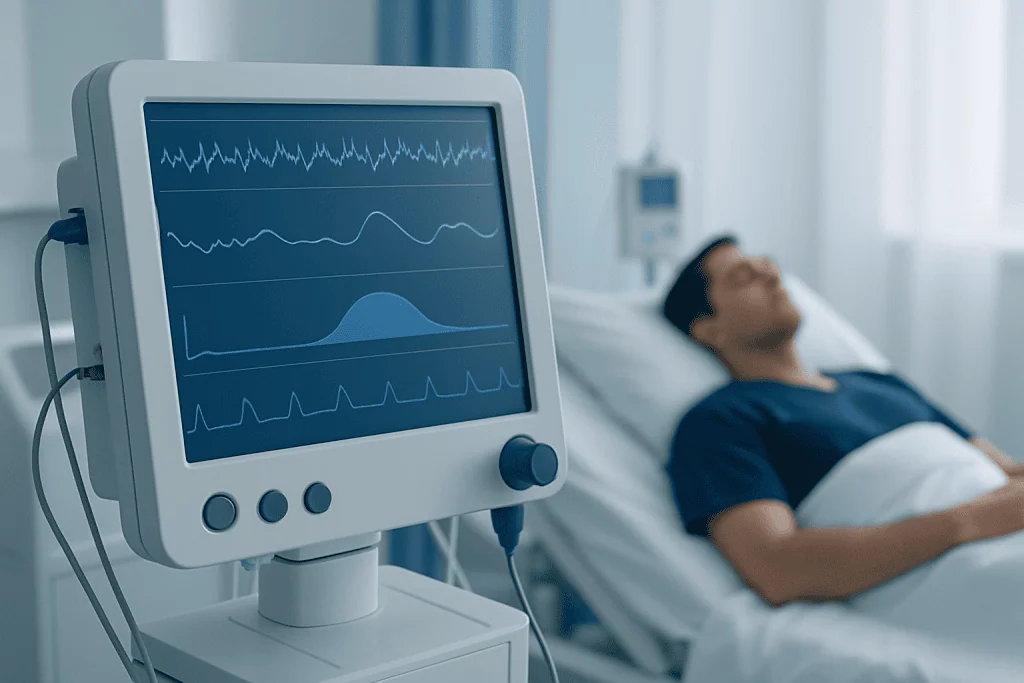
The most recognized association of REM sleep without atonia is REM sleep behavior disorder, or RBD. In RBD, the normal paralysis of REM sleep is lost enough that a person may physically act out dreams. These actions can range from mild hand movements and talking to more forceful movements such as kicking or jumping from bed. A sleep study showing RSWA can help confirm that these events are arising from REM sleep rather than from another sleep problem.
RSWA can also be seen in people who do not clearly act out dreams. In those cases, it may be an isolated laboratory finding, a temporary effect of medication, or a clue that closer follow-up is needed. Certain antidepressants and other medicines that affect brain chemicals involved in sleep regulation are known to increase muscle activity during REM sleep in some patients.
Another important point is that not all unusual movements in sleep are due to RSWA or RBD. Conditions such as sleep apnea, periodic limb movements, nighttime seizures, and confusional arousals can sometimes mimic dream-enactment behaviors. This is why doctors interpret RSWA together with the video recording, breathing signals, and the person’s sleep history rather than relying on a single line in the report.
Symptoms and Clues That Often Go With It

By itself, REM sleep without atonia may cause no symptoms that a person notices. Often it is found because a bed partner reports unusual sleep behaviors or because a sleep study is ordered for another reason. When RSWA is linked to REM sleep behavior disorder, common clues include talking, laughing, swearing, shouting, grabbing, punching, flailing, or kicking during sleep, especially in the later part of the night when REM sleep is more common.
People may also describe vivid, action-filled dreams that seem to match the movements. For example, someone may dream of defending themselves, running away, or chasing something, while their body is moving at the same time. Some wake up quickly and can recall the dream. Others only learn about the episodes from a partner or from finding signs of nighttime injury.
Symptoms that deserve attention include falling out of bed, bruises, repeated disruption of a partner’s sleep, or movements that seem forceful or dangerous. Not everyone with RSWA has these issues, but when they are present, the main goal is to understand the cause and reduce the risk of harm during sleep.
Causes and Risk Factors
REM sleep without atonia can happen for several reasons. A common and clinically important cause is REM sleep behavior disorder. RSWA may also be more likely in older adults and in people with certain neurological conditions that affect the brain circuits involved in REM sleep. In some cases, it appears before other neurological symptoms become noticeable, which is one reason specialists may recommend follow-up rather than ignoring the finding.
Medications are another well-recognized factor. Antidepressants, especially those that affect serotonin or norepinephrine, can increase muscle tone during REM sleep in some people. Other drugs or substance withdrawal may also influence REM sleep patterns. A doctor may review current medicines carefully before deciding what the finding means.
Sleep-disordered breathing can complicate interpretation as well. Repeated breathing interruptions and arousals may create movements that resemble dream enactment or make the recording harder to assess. Sometimes treating a coexisting problem such as sleep apnea treatment helps clarify whether the REM muscle activity remains significant. Technical factors, night-to-night variation, and individual differences in muscle activity can also affect how RSWA appears on a study.
- Possible contributors include REM sleep behavior disorder
- Certain antidepressants or other neuroactive medicines
- Obstructive sleep apnea and frequent arousals
- Neurological disorders affecting REM sleep control
- Alcohol or sedative withdrawal in some situations
How Doctors Diagnose and Interpret It
REM sleep without atonia is diagnosed on an overnight polysomnogram, ideally with synchronized video recording. The study measures brain waves, eye movements, muscle activity, breathing, heart rhythm, and body movements during sleep. To identify RSWA, sleep specialists pay close attention to muscle channels, usually from the chin and sometimes the limbs, during periods of REM sleep.
The interpretation is more detailed than simply noting that movement occurred. Specialists look for sustained or brief bursts of muscle activity during REM and determine whether the pattern meets accepted scoring criteria. They also review the video to see whether any behaviors occurred and whether those behaviors match REM sleep rather than awakenings, seizures, or breathing-related arousals.
Evaluation does not stop at the sleep study. Doctors usually ask about dream enactment, injuries, medications, alcohol use, neurological symptoms, mood disorders, and bed partner observations. Depending on the history, the clinician may recommend further assessment through a neurological examination or additional testing. A careful diagnosis matters because treatment is based on the underlying problem, not just the presence of RSWA on paper.
Treatment Options and Follow-Up
There is no single treatment for REM sleep without atonia because the right approach depends on why it is happening. If the finding is associated with REM sleep behavior disorder, treatment focuses on improving safety and reducing sleep-related behaviors. If medications appear to contribute, the prescribing doctor may consider whether an alternative is appropriate. If another sleep disorder is present, treating that condition may reduce confusing symptoms and improve sleep quality overall.
When dream enactment is confirmed, treatment may include practical safety steps and, in selected cases, medication recommended by a sleep specialist. Patients should not start, stop, or change prescription medicines on their own. The benefits and risks need individual review, especially in older adults and in people with balance problems, memory concerns, or other medical conditions.
Follow-up is often an important part of care. Some patients with isolated RSWA do not go on to develop significant symptoms, while others may need periodic reassessment, particularly if new neurological symptoms appear. In complex cases, a multidisciplinary team may be helpful. Acibadem International’s multidisciplinary specialists in JCI-accredited hospitals evaluate sleep-related movement symptoms and can coordinate care when neurological and sleep findings overlap.
Self-Care, Safety, and When to See a Doctor
If REM sleep without atonia is reported on a sleep study, the most helpful self-care step is to discuss the result with the clinician who ordered the test or with a sleep neurologist. Patients should keep track of any nighttime events, dream enactment, injuries, falls from bed, or daytime symptoms such as sleepiness. A bed partner’s observations can be especially valuable because many people are unaware of their own nighttime behaviors.
Simple bedroom safety measures may reduce injury risk while evaluation is underway. Examples include moving sharp or breakable objects away from the bed, padding nearby furniture edges, placing the mattress lower if falls occur, and considering separate sleeping arrangements temporarily if a partner is at risk of injury. Good sleep habits, regular sleep timing, and avoiding sleep deprivation may also help reduce nighttime disturbances in some people.
A person should seek medical attention promptly if sleep behaviors are violent, cause injury, begin suddenly after a new medicine, or occur along with fainting, confusion, weakness, tremor, memory changes, or other neurological symptoms. In some situations, clinicians may recommend a more detailed sleep study review or repeat evaluation. The aim is to identify the cause clearly and support safe, restorative sleep.
Frequently asked questions
Is REM sleep without atonia the same as REM sleep behavior disorder?
No. REM sleep without atonia is a sleep study finding that shows extra muscle activity during REM sleep, while REM sleep behavior disorder is a clinical diagnosis based on symptoms plus supportive testing. Many people with RBD have RSWA, but not everyone with RSWA has RBD.
Can medications cause REM sleep without atonia?
Yes, some medications can increase muscle activity during REM sleep. Antidepressants are a common example, but the meaning depends on the full clinical picture. A person should speak with the prescribing doctor before making any medication changes.
Does this finding mean someone has Parkinson's disease or another neurological disorder?
Not necessarily. RSWA can be seen for several reasons, and many people with this finding do not have a neurodegenerative disease. Still, because it can sometimes be associated with neurological conditions, a doctor may recommend follow-up if there are suggestive symptoms or exam findings.
What symptoms should make someone take this sleep study result more seriously?
Dream enactment, shouting, punching, kicking, falling out of bed, and any nighttime injury deserve medical review. New tremor, slowness, stiffness, memory changes, or balance problems are also important to mention. These symptoms do not confirm a specific diagnosis, but they can help guide the next steps.
Can REM sleep without atonia happen without any symptoms?
Yes. Some people have RSWA on a sleep study even though they do not remember unusual dreams or movements. In these cases, the finding may simply be monitored, or the doctor may look for medications, sleep apnea, or other explanations.
How is REM sleep without atonia treated?
Treatment depends on the cause, not just the test result itself. Doctors may address contributing medications, manage coexisting sleep disorders, recommend bedroom safety changes, or treat confirmed REM sleep behavior disorder when needed. A personalized plan is best made with a sleep specialist.
References
- American Academy of Sleep Medicine
- National Institute of Neurological Disorders and Stroke
- National Institute on Aging
- Mayo Clinic
- International Classification of Sleep Disorders
This article is for general information only and is not a substitute for professional medical advice. Please consult a qualified doctor about your individual situation.
Explore treatments in Turkey — costs, top hospitals & a free quote
JCI-accredited · board-certified surgeons · reply within 24h
Add us as a Preferred Source to see more of our trusted health content across Google Search, AI Overviews and Discover.

More from the Health Library



Related Specialists

Dr. Bahar Anayurdu
Radiology
Assoc. Prof. Dr. Umut Dişel
Internal Medicine
Assoc. Prof. Dr. Şafak Yıldırım Dişli
Medical Oncology
Dr. Gansukh Bataa
Anesthesiology