How Neuropsychiatric Disorders Are Diagnosed

Diagnosis usually starts with a detailed history of symptoms, medical background, and daily functioning. Neuropsychiatric assessment considers both psychiatric symptoms and possible neurological causes.
Key Takeaways
- Diagnosis usually starts with a detailed history of symptoms, medical background, and daily functioning.
- Neuropsychiatric assessment considers both psychiatric symptoms and possible neurological causes.
- Tests may include cognitive screening, blood work, brain imaging, and sometimes EEG or neuropsychological evaluation.
- Many conditions can look similar, so diagnosis often focuses on ruling out reversible or urgent causes first.
- An accurate diagnosis helps guide treatment, follow-up, and support for the patient and family.
Neuropsychiatric disorders are diagnosed through a careful process that looks at both brain health and mental health. Doctors combine interviews, physical and neurological exams, cognitive testing, and selected investigations to understand symptoms and identify the most likely cause.
Overview: what diagnosis involves
Neuropsychiatric disorders affect thinking, mood, behavior, perception, or personality in ways that may relate to both the brain and mental health. Diagnosis is not based on a single scan or blood test. Instead, it is a structured clinical process that brings together information from the patient, family members, examination findings, and selected tests.
A neuropsychiatric evaluation is often considered when symptoms overlap between neurology and psychiatry. Examples include sudden confusion, memory problems, major personality change, hallucinations, seizures with behavioral changes, movement symptoms with depression or anxiety, or cognitive decline. In these situations, doctors look beyond symptoms alone and ask whether they may be linked to a brain disorder, a primary psychiatric condition, medication effects, sleep problems, substance use, infection, autoimmune disease, or a metabolic problem.
The goal is to answer a few key questions: what symptoms are present, when did they begin, how severe are they, what might be causing them, and what treatment or support is needed. Diagnosis may happen in one visit for straightforward concerns, but more complex cases may require several appointments and input from different specialists.
Symptoms and patterns doctors pay attention to
Doctors begin by understanding exactly what has changed. Neuropsychiatric symptoms can include memory loss, poor concentration, disorganized thinking, mood swings, anxiety, depression, irritability, apathy, hallucinations, delusions, sleep disturbance, impulsive behavior, or loss of social judgment. Some people also have headaches, tremor, seizures, weakness, balance problems, or changes in speech and coordination.
The pattern of symptoms is especially important. A sudden onset over hours or days may suggest delirium, infection, intoxication, withdrawal, stroke, or another urgent medical problem. A gradual change over months or years may point more toward a neurodegenerative condition, chronic psychiatric illness, or the effects of long-term medical disease. Symptoms that come and go can suggest seizures, migraine-related events, sleep disorders, medication effects, or fluctuating neurological conditions.
Doctors also look at how symptoms affect daily life. They may ask whether the person can manage work, school, finances, medications, household responsibilities, driving, or social relationships. Family observations can be very helpful, especially if the patient has memory gaps, reduced insight, or changes in judgment.
- When symptoms started and how quickly they progressed
- Whether there are triggers such as illness, injury, stress, or new medications
- Any changes in sleep, appetite, energy, or substance use
- Effects on safety, independence, and relationships
Medical history, psychiatric history, and risk factors

A detailed history is one of the most important parts of neuropsychiatric disorders diagnosis. Doctors ask about past medical conditions such as epilepsy, stroke, head injury, thyroid disease, autoimmune disorders, liver or kidney disease, infections, and sleep apnea. They also review past psychiatric diagnoses, hospitalizations, counseling, and responses to previous treatments.
Medication review is essential because many prescribed drugs, over-the-counter products, supplements, and recreational substances can affect mood, attention, sleep, or cognition. Alcohol and drug use may worsen symptoms directly or cause withdrawal states that mimic psychiatric or neurological illness. Recent medication changes are especially relevant in older adults and in people with multiple health conditions.
Family history can provide clues, particularly for mood disorders, psychosis, dementia, movement disorders, or hereditary neurological conditions. Social history also matters. Doctors may ask about educational background, occupational exposures, travel, major life events, trauma, and the level of support available at home. These details help place symptoms in context and can guide what tests are needed next.
Some patients are evaluated because they may have a specific underlying condition that affects behavior or thinking, such as Alzheimer’s disease or Parkinson’s disease. Others may need assessment after a seizure or episodes concerning for epilepsy, especially when there are unusual sensory experiences, memory lapses, or changes in awareness.
Physical, neurological, and mental status examination
After the history, the doctor performs a physical examination and a focused neurological examination. This helps identify signs of brain, spinal cord, nerve, or systemic disease. The examination may include checking strength, reflexes, coordination, sensation, balance, eye movements, speech, and gait. Abnormal findings can suggest that symptoms are not purely psychiatric and may have an identifiable neurological basis.
A mental status examination is also central to diagnosis. It assesses appearance, behavior, speech, mood, thought process, thought content, perception, attention, memory, insight, and judgment. For example, the clinician may note whether the person is oriented to time and place, can follow conversation, recalls recent events, or shows signs of hallucinations or delusional thinking.
Cognitive screening tests may be used during the visit to get a quick overview of memory, language, attention, and executive function. These screening tools do not provide a complete diagnosis on their own, but they can show whether more in-depth testing is needed. They are often especially useful when the main concerns involve forgetfulness, confusion, or difficulty planning and organizing.
Tests used to support the diagnosis
Not every person needs extensive testing. Investigations are chosen based on symptoms, age, medical history, and examination findings. Blood tests are commonly used to look for reversible causes such as infection, inflammation, thyroid problems, vitamin deficiencies, electrolyte imbalance, liver or kidney dysfunction, or other metabolic disturbances. In some cases, doctors may check autoimmune markers or screen for infectious causes when clinically appropriate.
Brain imaging may be recommended if there are red flags such as new neurological symptoms, seizures, rapidly changing cognition, head trauma, suspected stroke, or concern for a structural brain problem. Depending on the situation, this may involve MRI imaging or CT scanning. These tests can help identify bleeding, tumors, inflammation, stroke, hydrocephalus, or changes linked with degenerative disease.
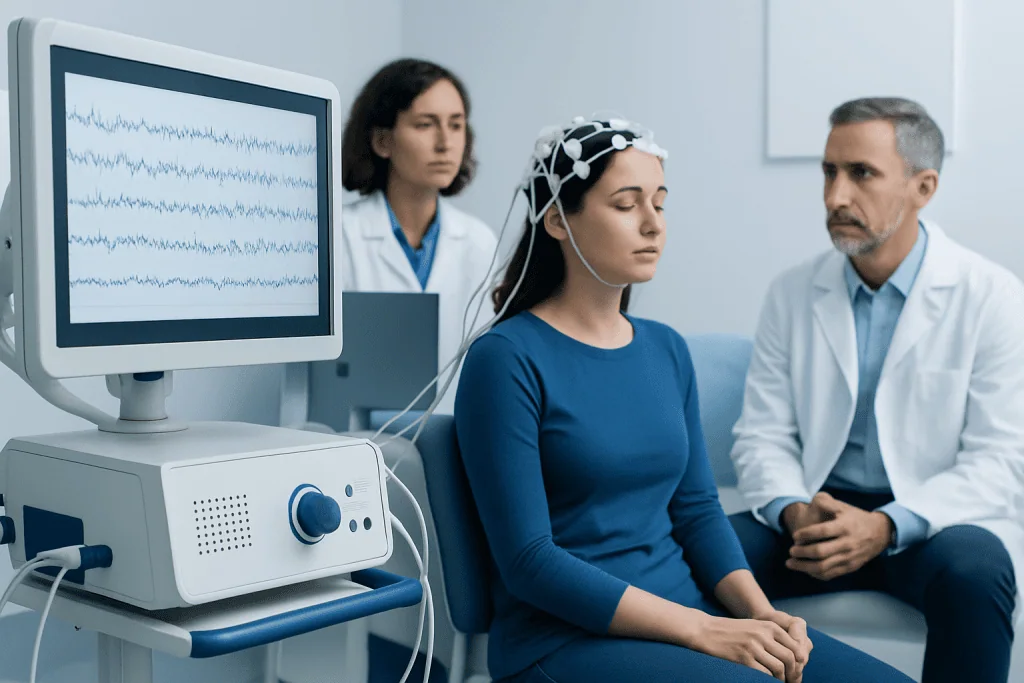
When episodes of altered awareness, unusual movements, or suspected seizure activity are part of the picture, doctors may request electroencephalography (EEG). Formal neuropsychological assessment can also be very helpful. It provides a detailed profile of memory, attention, language, visual-spatial skills, and executive function, which can support diagnosis and establish a baseline for future comparison.
In selected cases, additional studies may be needed. These can include sleep studies, lumbar puncture, genetic testing, toxicology screening, or specialist consultations. The need for tests varies widely, and a careful clinician aims to order those that are most likely to answer a meaningful clinical question.
How doctors distinguish between similar conditions
Many neuropsychiatric disorders share overlapping symptoms, which is why diagnosis can take time. Depression may look like memory loss. Seizures may be mistaken for panic attacks. Delirium, dementia, psychosis, medication side effects, and sleep deprivation can all present with confusion or behavioral change. A key part of diagnosis is creating a differential diagnosis, which means considering several possible explanations and narrowing them down step by step.
Doctors often begin by ruling out urgent or reversible causes. For example, sudden confusion may require rapid assessment for infection, stroke, medication toxicity, or metabolic disturbance. In an older adult, new hallucinations may need evaluation for vision problems, dementia-related syndromes, Parkinsonian conditions, or medication effects rather than being assumed to be a primary psychiatric illness.
Timing, associated neurological signs, age at onset, and response to previous treatment all help with this process. If symptoms follow a head injury, the approach may differ from symptoms that developed gradually over years. If seizures, movement abnormalities, or focal neurological findings are present, neurological causes move higher on the list. If cognitive changes occur mainly during severe mood episodes, the diagnostic pathway may focus more on mood disorders with cognitive effects.
What happens after diagnosis
Once the most likely diagnosis is identified, the care team discusses a treatment plan tailored to the underlying cause and the person’s needs. Treatment may include medication, psychotherapy, rehabilitation, cognitive support, management of sleep problems, treatment of seizures or movement symptoms, and care for any contributing medical illness. For many people, the most effective plan combines neurological and psychiatric expertise.
Follow-up is important because symptoms can evolve over time. Sometimes the initial diagnosis becomes clearer only after observing the course of illness and the response to treatment. Repeat cognitive testing, updated imaging, or further specialist review may be useful if symptoms change or progress.
Family education and practical support are often part of good care. Loved ones may need guidance on communication, medication routines, safety planning, and what symptoms should prompt urgent review. Near the end of the diagnostic journey, some patients benefit from multidisciplinary centers where neurology, psychiatry, psychology, and imaging services work together. Acibadem International’s multidisciplinary specialists and JCI-accredited hospitals diagnose and treat neuropsychiatric conditions for international patients when coordinated expert care is needed.
When to seek medical help
Medical advice should be sought when there is a clear change in mood, behavior, memory, personality, or thinking that affects daily life or worries family members. Even mild symptoms deserve attention if they are persistent, worsening, or unusual for the person. Early assessment can identify treatable causes and help prevent complications.
Urgent evaluation is needed for sudden confusion, new seizures, severe agitation, suicidal thoughts, major personality change, hallucinations with disorientation, weakness on one side, trouble speaking, high fever with altered behavior, or symptoms after a head injury. These may signal a medical or neurological emergency rather than a routine mental health concern.
It can help to prepare for the appointment by bringing a list of symptoms, medications, prior test results, and examples of everyday difficulties. A relative or trusted friend may provide useful observations, especially if the patient has memory problems or reduced awareness of changes. This information can make the diagnostic process more accurate and efficient.
Frequently asked questions
What is a neuropsychiatric disorder?
A neuropsychiatric disorder is a condition that affects both brain function and mental or behavioral health. It may involve changes in mood, thinking, memory, perception, or behavior, and the cause can be neurological, psychiatric, medical, or a combination of these.
Is there one test that confirms a neuropsychiatric diagnosis?
Usually no. Diagnosis is typically based on a combination of medical history, mental status assessment, neurological examination, and targeted tests such as blood work, imaging, or cognitive evaluation.
Why might brain imaging be needed?
Brain imaging can help doctors look for structural or other brain-related causes of symptoms. It is especially useful when there are seizures, head injury, focal neurological signs, sudden change, or concern for stroke, bleeding, tumor, or inflammation.
Who is involved in diagnosing neuropsychiatric disorders?
Diagnosis may involve a neurologist, psychiatrist, neuropsychologist, primary care doctor, and sometimes other specialists. A team approach is often helpful when symptoms overlap between brain disorders and mental health conditions.
Can neuropsychiatric symptoms be caused by a reversible medical problem?
Yes. In some people, symptoms are linked to treatable issues such as infection, thyroid disease, vitamin deficiency, medication effects, sleep disorders, seizures, or metabolic imbalance. This is one reason a careful medical workup is so important.
How long does the diagnostic process take?
It depends on the complexity of the case. Some conditions can be recognized quickly, while others require several visits, observation over time, and additional testing before doctors can make the most accurate diagnosis.
References
- World Health Organization
- National Institute of Mental Health
- National Institute of Neurological Disorders and Stroke
- American Psychiatric Association
- American Academy of Neurology
This article is for general information only and is not a substitute for professional medical advice. Please consult a qualified doctor about your individual situation.
Explore treatments in Turkey — costs, top hospitals & a free quote
JCI-accredited · board-certified surgeons · reply within 24h
Add us as a Preferred Source to see more of our trusted health content across Google Search, AI Overviews and Discover.

More from the Health Library



Related Specialists

Prof. Dr. Burak Tander
Pediatric Surgery
Dr. Tuğçe Özdemir Gültekin
Neurology
Prof. Dr. Ayşe Sesin Kocagöz
Clinical Laboratory
Dyt. Gökçe Kozanoğlu
Nutrition & Diet