When Headache Needs Brain Imaging: MRI and CT Red Flags Explained

Most headaches are not caused by a brain tumor, bleed, or other structural problem. MRI and CT are used when red flags suggest a possible secondary headache.
Key Takeaways
- Most headaches are not caused by a brain tumor, bleed, or other structural problem.
- MRI and CT are used when red flags suggest a possible secondary headache.
- A sudden severe headache, new neurologic symptoms, fever, head injury, or cancer history can change the need for imaging.
- CT is often used in emergencies, while MRI gives more detail in many non-emergency situations.
- A normal scan can be reassuring, but follow-up still matters if symptoms continue or change.
Most headaches do not need brain imaging, especially when symptoms fit a common primary headache pattern. MRI or CT becomes important when certain warning signs, examination findings, or sudden changes raise concern for a secondary cause.
Overview: When Is Brain Imaging Needed for Headache?
Headache is one of the most common reasons people seek medical care. In most cases, headaches are caused by primary headache disorders such as tension-type headache or migraine, which means the headache itself is the condition rather than a sign of another disease. For these common patterns, brain imaging is often not necessary when the history and neurological examination are typical and otherwise reassuring.
Brain imaging becomes useful when there are clues that a headache may be secondary to another problem, such as bleeding, infection, inflammation, a mass, abnormal pressure, or a blood vessel disorder. Doctors look for these clues in the person’s symptoms, medical history, age, risk factors, and examination findings. These warning signs are often called “red flags.”
The two main imaging tests are computed tomography (CT) and magnetic resonance imaging (MRI). CT is fast and widely available, which makes it especially helpful in urgent situations such as sudden severe headache or recent head trauma. MRI takes longer but provides more detailed images of the brain and nearby structures, so it is often preferred when the situation is not an emergency and a more complete evaluation is needed.
Symptoms and Red Flags That May Call for Imaging
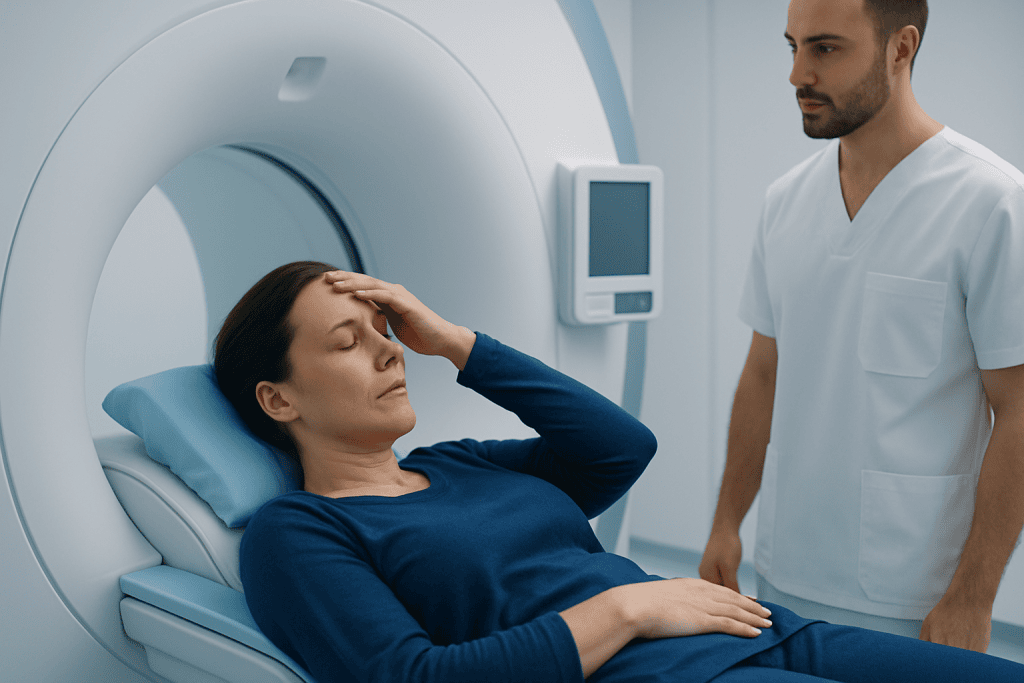
The most important red flag is a sudden, severe headache that reaches maximum intensity within seconds to minutes. People often describe this as the “worst headache of my life” or a thunderclap headache. This type of headache needs urgent medical assessment because it can be linked to bleeding around the brain or other serious vascular causes.
Imaging is also more likely to be needed when headache occurs with new neurological symptoms or abnormal findings on examination. These may include weakness, numbness, trouble speaking, confusion, fainting, seizures, double vision, new imbalance, or a marked change in alertness. A headache with fever, stiff neck, or a significant change in mental status may suggest infection or inflammation and also needs prompt evaluation.
Other warning signs include a new headache after age 50, a headache that is steadily worsening over days or weeks, a new pattern in someone who does not usually have headaches, or a headache that wakes a person from sleep or is worse with coughing, straining, or position change. Headache after head injury, during pregnancy or the postpartum period, or in someone with cancer, HIV, immune suppression, or blood-thinning medication also deserves closer review.
- Sudden severe thunderclap headache
- New neurological symptoms or seizures
- Fever, neck stiffness, confusion, or altered consciousness
- Recent head trauma
- New or changing headache in older age
- Headache with cancer, immune suppression, or anticoagulant use
Why These Red Flags Matter
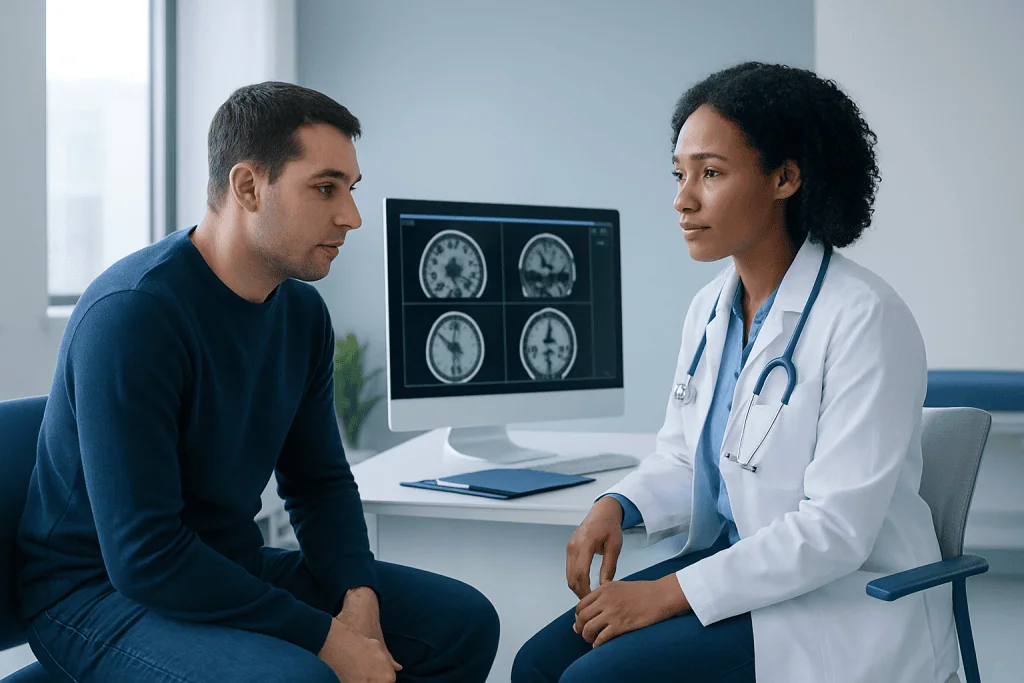
Doctors recommend imaging not because every red flag means a dangerous condition is present, but because these signs increase the chance that the headache has a secondary cause. The goal is to identify problems that need urgent treatment and to avoid missing conditions where early care can make a major difference.
For example, a sudden severe headache can be associated with bleeding in or around the brain, especially subarachnoid hemorrhage. Headache with focal neurological deficits may point to a stroke, a mass, inflammation, or a blood vessel problem. A headache that is worse when lying down, bending over, or coughing may suggest altered pressure inside the skull. Persistent headache with fever may raise concern for meningitis, sinus complications, or brain infection.
In some situations, imaging helps rule out structural causes before the headache is treated as migraine or another primary headache disorder. This can be especially helpful when symptoms overlap, because serious conditions do not always look dramatic at first. At the same time, doctors try to avoid unnecessary scans, since incidental findings can create anxiety and lead to extra tests that may not improve care.
MRI or CT: Which Scan Is Used and Why?
CT and MRI both create pictures of the brain, but they are used differently. A head CT is quick, which is why it is commonly chosen in emergency departments. It is very useful for detecting acute bleeding, skull fractures, some large masses, and urgent complications after trauma. When a headache starts suddenly and severely, brain CT is often the first imaging test because time matters.
MRI gives more detailed views of the brain tissue, blood vessels, nerves, pituitary region, and the back part of the brain. It can detect many causes of secondary headache that may not be as visible on CT, including small tumors, inflammation, demyelinating disease, changes related to abnormal pressure, or certain vascular conditions. In non-emergency settings, brain MRI is often preferred when imaging is truly indicated.
Sometimes contrast dye is used to highlight blood vessels or areas of inflammation. In selected cases, doctors may order specialized imaging such as MR angiography, CT angiography, or venous imaging if they are concerned about aneurysm, artery dissection, or a venous clot such as cerebral venous thrombosis. The best test depends on the timing of symptoms, the suspected diagnosis, the person’s age, pregnancy status, kidney function, and the urgency of the situation.
How Doctors Decide Whether Imaging Is Appropriate
The decision to order imaging begins with a careful history. Clinicians ask when the headache started, how quickly it peaked, where it is located, how it feels, what makes it better or worse, and whether there are associated symptoms such as visual changes, weakness, vomiting, or fever. They also review past headache patterns, medication use, and medical conditions such as cancer, clotting disorders, pregnancy-related risks, or recent infection.
A neurological examination is just as important. This may include checking strength, sensation, reflexes, coordination, vision, eye movements, speech, balance, and mental status. Blood pressure, temperature, and neck stiffness can provide additional clues. If the headache history and examination match a familiar migraine pattern and there are no red flags, imaging may not add useful information.
Doctors also consider how urgently an answer is needed. If there is concern for an emergency such as bleeding, hydrocephalus, or acute stroke, rapid assessment can involve imaging as part of a broader plan that may include laboratory tests or urgent specialist review. In selected cases, imaging may be followed by other tests such as a lumbar puncture if the scan is normal but clinical concern remains high. Advanced vascular imaging like MR angiography may be considered when the headache pattern suggests a blood vessel cause.
What to Expect From Imaging and What Results Can Mean
A non-contrast head CT is brief and usually completed within minutes. It is painless, though the scanner can feel close around the head. MRI takes longer and can be noisy, but it is also painless. Some people find MRI uncomfortable because of the enclosed space, so the team may provide strategies to help with claustrophobia. If contrast is used, a clinician will check whether it is safe based on allergies and kidney health.
A normal scan can be very reassuring, but it does not always explain every headache. Many people with migraine, tension-type headache, or other primary headache disorders have completely normal imaging. This is expected and does not mean the symptoms are not real. Instead, it helps exclude dangerous structural causes and supports a diagnosis based on symptoms and examination.
Sometimes imaging finds an incidental abnormality unrelated to the headache, such as a harmless cyst, mild sinus changes, or age-related findings. These results can sound worrying, but many do not require treatment. The interpreting radiologist and treating doctor will explain whether any finding is likely to be important, whether follow-up is needed, and how it fits with the person’s symptoms.
Self-Care, Follow-Up, and When to Seek Urgent Help
Even when imaging is not needed, headaches still deserve proper evaluation and management. Keeping a headache diary can help identify triggers, timing, menstrual patterns, sleep issues, missed meals, dehydration, or medication overuse. Good hydration, regular meals, sleep routines, stress management, and guided treatment for migraine or tension-type headache often reduce symptoms and improve quality of life.
People should contact a doctor if headaches become more frequent, change in character, stop responding to usual treatment, or begin to interfere with daily life. Follow-up is especially important if there are repeated emergency visits, progressive symptoms, or uncertainty about the diagnosis. A specialist may help if migraine, cluster headache, medication-overuse headache, or another chronic pattern is suspected.
Urgent medical attention is needed for sudden severe headache, headache after significant head injury, new weakness or confusion, seizure, fainting, high fever with stiff neck, or vision loss. These symptoms should not be observed at home. For international patients who need coordinated assessment, Acibadem International’s multidisciplinary specialists in JCI-accredited hospitals diagnose and treat headache-related conditions using modern neuroradiology and neurological care pathways.
Frequently asked questions
Do most headaches need an MRI or CT scan?
No. Most headaches are caused by primary headache disorders such as migraine or tension-type headache and do not need brain imaging when the story and examination are typical. Imaging is usually reserved for headaches with red flags or an unusual pattern.
What is the main difference between MRI and CT for headache?
CT is faster and is often used in emergencies, especially when sudden bleeding or head injury is a concern. MRI takes longer but provides more detailed images and is often preferred in non-emergency situations when a structural cause needs a closer look.
What is a thunderclap headache?
A thunderclap headache is a headache that reaches maximum intensity very quickly, often within less than a minute. It needs urgent medical evaluation because it can be linked to serious causes such as bleeding around the brain or certain blood vessel disorders.
Can a brain tumor cause headache?
Yes, but most headaches are not caused by a brain tumor. Doctors become more concerned when headache is new and progressive or occurs with vomiting, seizures, personality change, or neurological deficits such as weakness or visual problems.
If my scan is normal, can I still have severe headaches?
Yes. Migraine and other primary headache disorders can cause severe symptoms even when MRI or CT is normal. A normal scan helps rule out many dangerous structural causes, but treatment may still be needed for ongoing headache management.
Is radiation a concern with CT scans?
CT uses ionizing radiation, so doctors try to order it only when the expected benefit outweighs the risk. MRI does not use radiation, which is one reason it may be preferred when the situation is not urgent and MRI can answer the question well.
References
- American College of Radiology
- American Headache Society
- National Institute of Neurological Disorders and Stroke
- Radiological Society of North America
- World Health Organization
This article is for general information only and is not a substitute for professional medical advice. Please consult a qualified doctor about your individual situation.
Explore treatments in Turkey — costs, top hospitals & a free quote
JCI-accredited · board-certified surgeons · reply within 24h
Add us as a Preferred Source to see more of our trusted health content across Google Search, AI Overviews and Discover.

More from the Health Library



Related Specialists

Dr. İhsan Atabay
Gynecology & Obstetrics
Dr. Ceyhun Solakoğlu
Intensive Care
Prof. Dr. Nida Bayık
Gynecology & Obstetrics
Prof. Dr. Fuat Bilgen
Cardiovascular Surgery