MRI With Sedation: When It May Be Needed and How Safety Is Managed
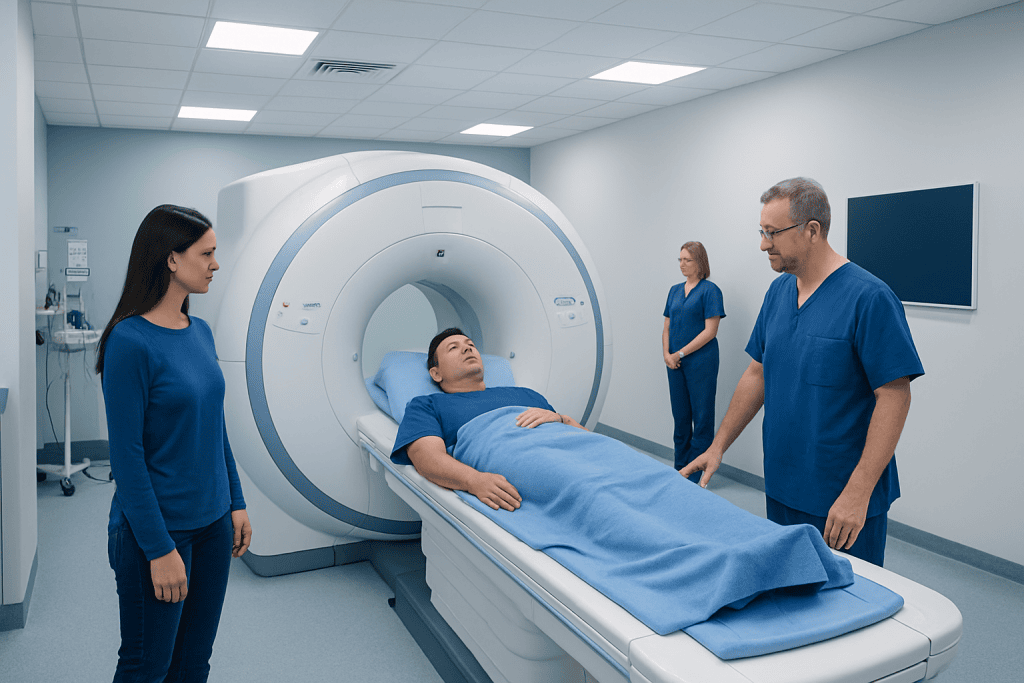
MRI with sedation is used when staying still during the scan may be difficult or distressing. It may help children, people with claustrophobia, severe anxiety, pain, or certain neurological conditions.
Key Takeaways
- MRI with sedation is used when staying still during the scan may be difficult or distressing.
- It may help children, people with claustrophobia, severe anxiety, pain, or certain neurological conditions.
- Safety starts before the scan with medical screening, fasting instructions, and medication review.
- During sedation, trained staff monitor breathing, oxygen level, heart rate, and comfort.
- Most patients go home the same day, but they usually need time to recover and may need an escort.
MRI with sedation may be recommended when a person cannot comfortably remain still for the scan because of anxiety, claustrophobia, pain, movement disorders, or young age. Careful screening, close monitoring, and recovery checks help make the process as safe and smooth as possible.
Overview: What MRI With Sedation Means
MRI with sedation means medicines are used to help a patient feel calm, sleepy, or relaxed during a magnetic resonance imaging scan. MRI is a detailed imaging test that uses a powerful magnet and radio waves to create pictures of organs, joints, blood vessels, the brain, and other body structures. Because the scanner is narrow, loud, and requires stillness for clear images, some people find the experience difficult.
Sedation is not needed for every MRI. Many adults complete MRI scans without any medicine, especially when they receive clear instructions, ear protection, and reassurance from the imaging team. However, when fear, discomfort, or involuntary movement could make the scan unsuccessful or too stressful, sedation may help the test be completed safely and with better image quality.
The level of sedation can vary. In some cases, a person remains awake but very relaxed. In others, the person may be drowsy and remember little of the scan. For some patients, especially young children or those unable to stay still at all, deeper sedation or anesthesia may be considered. The exact approach depends on age, health status, the type of MRI, and how long the scan is expected to take.
When Sedation May Be Needed for an MRI
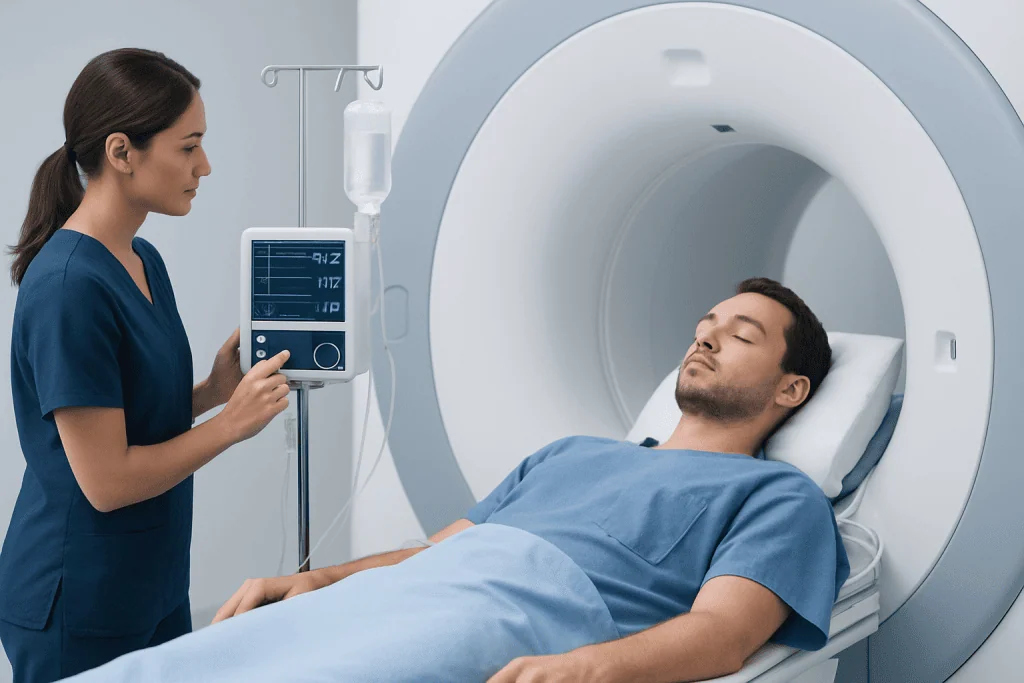
The most common reason for MRI with sedation is difficulty remaining still. MRI images can become blurry when the body moves, even slightly, and some scans take 20 to 60 minutes or longer. Sedation may be helpful for people with strong claustrophobia, severe anxiety, panic symptoms, chronic pain that makes lying flat hard, or conditions that cause tremor or involuntary movement.
Children often need sedation more often than adults, especially infants, toddlers, and younger school-age children who may not understand why they must stay still inside the scanner. A sedated MRI can also be considered for people with developmental differences, cognitive impairment, or certain neurological or behavioral conditions that make cooperation difficult. In some cases, teams first try non-medicine strategies such as child-life support, mock scanners, music, or comfort items.
Sometimes the body area being examined influences the decision. Brain, spine, abdominal, and certain joint MRIs may require longer scan times or repeated sequences. Sedation may also be considered if a previous MRI had to be stopped or repeated because of movement or distress. The goal is not simply comfort; it is also to obtain accurate images that can help guide diagnosis and treatment.
- Claustrophobia or panic in enclosed spaces
- Young age and inability to stay still
- Movement disorders, tremor, or involuntary motions
- Pain that makes lying still difficult
- Developmental, cognitive, or behavioral challenges
- A previous unsuccessful MRI due to distress or motion
How Safety Is Assessed Before Sedation

Safety planning begins well before the scan. The medical team reviews the patient’s age, weight, medical history, allergies, current medicines, and any prior reactions to sedation or anesthesia. They also ask about conditions that may affect breathing or heart function, such as asthma, sleep apnea, airway problems, seizures, or significant lung or cardiac disease. This helps the team choose the safest sedation plan for that individual.
Fasting instructions are a key part of preparation. Patients are often asked not to eat or drink for a certain period before sedation because a full stomach can increase the risk of vomiting and breathing complications. The exact timing depends on age and the type of sedation or anesthesia being used. Families should follow the instructions given by the care team closely and ask questions if anything is unclear.
Medication review is also important. Some regular medicines should be taken as usual, while others may need to be adjusted on the day of the scan. The team also checks for metal implants, devices, or fragments because MRI itself has strict magnetic safety rules. Sedation does not replace routine MRI screening; both are essential. If needed, patients may be evaluated by specialists before imaging, especially when they have complex medical conditions.
What Happens During a Sedated MRI
On the day of the scan, the patient is typically checked in, prepared, and assessed again before sedation starts. This may include measuring vital signs, confirming fasting, and reviewing consent. Depending on the plan, sedation medicine may be given by mouth, through the nose, or through a vein. In some cases, an intravenous line is placed first so medicines and fluids can be given more easily.
During the scan, trained professionals continuously monitor the patient. Monitoring commonly includes oxygen level, heart rate, breathing pattern, and blood pressure. Staff also watch the patient’s comfort and depth of sedation. MRI environments require special equipment that is compatible with the magnetic field, so monitoring devices and procedures are adapted specifically for use in the MRI suite.
If deeper sedation or anesthesia is needed, the patient may be cared for by an anesthesiologist or another qualified sedation provider with support from radiology staff. The team is prepared to respond if breathing becomes too slow, oxygen drops, or the patient has an unexpected reaction. Although complications are uncommon when proper protocols are followed, sedation is never treated casually. Careful observation is one of the main reasons MRI with sedation can be performed safely.
Benefits, Risks, and Possible Side Effects
The main benefit of MRI with sedation is that it helps the scan be completed with less distress and better image quality. When a person can stay still and comfortable, the radiologist is more likely to get clear pictures the first time. This may reduce the need for repeat imaging and can be especially important when evaluating conditions involving the brain, spine, abdomen, or complex joints. In some patients, MRI findings may be used alongside tests such as MRI scanning or other imaging plans to guide the next steps in care.
Like any medical intervention, sedation has potential risks. Common short-term effects can include sleepiness, dizziness, nausea, irritability, headache, or a sore throat if airway support was needed. More serious but less common risks include slowed breathing, low oxygen levels, blood pressure changes, allergic reactions, or unexpected responses to medication. The risk level depends on the patient’s age, overall health, airway anatomy, and the depth of sedation.
For many people, the benefits outweigh the risks when the scan is medically important and the chance of distress or motion is high. The care team aims to use the lowest level of sedation that will still allow the MRI to be completed. This balance helps protect safety while supporting accurate diagnosis, whether the scan is being used to investigate pain, seizures, tumors, inflammation, or conditions such as claustrophobia that may interfere with medical imaging.
Recovery and Aftercare After the Scan
After the MRI is finished, the patient is moved to a recovery area where staff continue to monitor them until they are awake enough and stable enough to leave. This recovery period may last a short time or longer, depending on the medicines used, the person’s age, and how deeply they were sedated. Before discharge, the team usually checks breathing, alertness, hydration, and the ability to sit up or walk safely when appropriate.
It is normal to feel sleepy or less coordinated for several hours after sedation. Because of this, adults are often advised not to drive, use machinery, sign important documents, or drink alcohol until the effects have fully worn off. Children may be more tired than usual, briefly irritable, or nap longer that day. Light food and fluids may be restarted as directed once nausea is not a problem.
The team will explain what symptoms are expected and what would need medical attention after going home. Families should seek advice if there is repeated vomiting, trouble breathing, unusual confusion, persistent weakness, a rash, or if the patient is difficult to wake. In centers that care for international patients, including Acibadem International, multidisciplinary specialists in JCI-accredited hospitals coordinate imaging, sedation, and follow-up planning with attention to patient safety and comfort.
How Patients Can Prepare and Reduce the Need for Sedation
Good preparation can sometimes reduce anxiety and, in selected patients, avoid the need for sedation altogether. Understanding how the MRI works, how long it may last, and what the sounds are like can make the experience less intimidating. Many imaging centers offer earplugs or headphones, communication through an intercom, and the ability to stop briefly if needed. Relaxation breathing and guided support can also help.
For children, practical preparation may include simple explanations, rehearsal at home, or play-based teaching. Parents can ask whether a mock MRI, distraction methods, or child-life services are available. Adults with known anxiety may benefit from discussing their concerns in advance rather than waiting until the day of the scan. When appropriate, the doctor may review alternatives such as an open or wider-bore MRI scanner, or other imaging approaches such as CT scanning if clinically suitable.
Preparation should also include following all medical instructions carefully. This means arriving on time, bringing a list of medicines, reporting any illness such as fever or cough, and removing metal objects before the scan. Patients who are being evaluated for neurological symptoms may have MRI as part of a broader workup that can include consultations, neurology care, or management of conditions such as epilepsy or movement disorders.
When to Speak With a Doctor Before Scheduling
It is a good idea to discuss sedation early if there is a history of severe claustrophobia, panic attacks, airway problems, obstructive sleep apnea, prior difficult sedation, or serious heart or lung disease. The referring doctor and imaging team can help decide whether mild sedation, deeper sedation, or anesthesia is most appropriate, or whether a non-sedation strategy might work just as well. Early planning is especially helpful for children and medically complex patients.
Patients should also ask questions if they are pregnant, breastfeeding, taking many medications, or have implanted medical devices. Not every implant is unsafe in MRI, but each one must be checked carefully. Bringing prior records, implant cards, and recent medical information can make the planning process easier and safer.
In general, MRI with sedation is considered when the expected value of the scan is high and the patient is unlikely to tolerate the study without help. A doctor can explain why MRI has been recommended, whether sedation is truly needed, what alternatives exist, and how the risks are minimized. Clear communication helps patients and families feel informed, reassured, and ready for the day of the scan.
Frequently asked questions
Is MRI with sedation safe?
MRI with sedation is generally safe when it is planned carefully and provided by trained professionals. Safety depends on proper screening, fasting instructions, MRI-compatible monitoring, and observation during recovery. The team also adjusts the sedation plan based on age, medical history, and the expected length of the scan.
Who is most likely to need sedation for an MRI?
Sedation is more often used for young children, people with severe claustrophobia, and patients who cannot lie still because of pain, tremor, or neurological conditions. It may also be recommended if a previous MRI could not be completed successfully. The decision is individualized rather than routine.
Will a patient be completely asleep during a sedated MRI?
Not always. Some patients receive light or moderate sedation and remain sleepy but not fully asleep, while others may need deeper sedation or anesthesia. The level chosen depends on the patient’s needs, the body area being scanned, and how much stillness is required.
Why are fasting instructions important before sedation?
Fasting lowers the risk of vomiting and breathing problems while sedative medicines are working. The exact fasting period varies depending on the patient’s age and the type of sedation. It is important to follow the imaging center’s instructions exactly and ask if anything is uncertain.
How long does recovery take after MRI sedation?
Recovery time varies with the medicine used and the patient’s age and health. Many people are ready to go home the same day after a period of monitoring, but they may still feel sleepy for several hours. Children and adults should follow discharge instructions closely once they are home.
Can someone drive home after a sedated MRI?
In most cases, no. Sedation can affect alertness, judgment, and coordination for a while after the scan. Adults are usually asked to arrange for a responsible escort and avoid driving or other risky activities until the effects have completely worn off.
References
- Radiological Society of North America
- American College of Radiology
- Society for Pediatric Anesthesia
- National Institute for Health and Care Excellence
- World Health Organization
This article is for general information only and is not a substitute for professional medical advice. Please consult a qualified doctor about your individual situation.
Joint and spine care in Turkey — expert assessment & treatment
JCI-accredited · board-certified surgeons · reply within 24h
Add us as a Preferred Source to see more of our trusted health content across Google Search, AI Overviews and Discover.
Check your numbers in seconds
BMI, calories, due date, blood pressure and 30+ more clinical calculators — free, instant, doctor-reviewed ranges.