Cancerous tumor on vertebrae: Outlook, Stages, and Treatment Options Explained

A cancerous tumor on vertebrae may start in the spine or, more commonly, spread there from another cancer. Back pain, weakness, numbness, and changes in walking or bladder and bowel control need prompt medical attention.
Key Takeaways
- A cancerous tumor on vertebrae may start in the spine or, more commonly, spread there from another cancer.
- Back pain, weakness, numbness, and changes in walking or bladder and bowel control need prompt medical attention.
- Imaging, biopsy, and staging tests help doctors define the tumor type and choose treatment.
- Treatment may include surgery, radiotherapy, systemic cancer therapy, pain control, and rehabilitation.
- Outlook depends on the cancer type, extent of spread, spinal stability, and whether nerves or the spinal cord are affected.
A cancerous tumor on vertebrae is a malignant growth in the bones of the spine or a cancer that has spread there from another part of the body. Outlook varies widely, but timely diagnosis and treatment can often help control pain, protect nerve function, stabilize the spine, and improve quality of life.
Overview: what a cancerous tumor on vertebrae means
A cancerous tumor on vertebrae is a malignant tumor involving one or more bones of the spine. It can begin in the vertebra itself, which is called a primary bone or spinal tumor, or it can spread to the spine from another site such as the breast, lung, prostate, kidney, or thyroid. In adults, spread from another cancer is much more common than a cancer that starts in the vertebrae.
The vertebrae protect the spinal cord and support the body’s weight, so a tumor in this area can affect both bone strength and nerve function. Some tumors mainly cause pain by weakening the bone; others can press on nearby nerves or the spinal cord and lead to numbness, weakness, or difficulty walking. This is why doctors assess not only the cancer itself, but also spinal stability and any signs of nerve compression.
The outlook for a cancerous tumor on vertebrae is not the same for everyone. It depends on factors such as where the cancer started, how aggressive it is, whether it has spread elsewhere, how much of the spine is involved, and how quickly treatment begins. Many people benefit from a combined care plan that focuses on cancer control, symptom relief, and preserving day-to-day function.
Symptoms and warning signs
The most common symptom is back or neck pain that does not improve as expected. The pain may be persistent, worse at night, or more noticeable when lying down. Some people describe a deep, aching pain in one area of the spine, while others feel pain that radiates around the chest, abdomen, arms, or legs if a nerve is irritated.
When a tumor affects the spinal cord or nerve roots, neurological symptoms can develop. These may include tingling, numbness, leg or arm weakness, trouble with balance, or difficulty walking. In more urgent cases, a person may notice new problems with bladder or bowel control, which can signal spinal cord compression and needs prompt assessment.
Other symptoms depend on the underlying cancer and whether it is localized or metastatic. Some people have fatigue, unexplained weight loss, or pain in other bones. A vertebra weakened by tumor may also fracture more easily, causing sudden worsening pain or a change in posture. Any new severe spinal pain in a person with known cancer should be evaluated without delay.
- Persistent back or neck pain
- Pain that is worse at night or at rest
- Numbness, tingling, or weakness
- Difficulty walking or balance changes
- Changes in bladder or bowel control
- Sudden pain from a possible vertebral fracture
Causes, types, and who is at risk

There are two broad categories of malignant vertebral tumors. Primary tumors start in the tissues of the spine itself, including bone, cartilage, blood-forming cells, or nearby structures. Examples include certain sarcomas, plasmacytoma, and other less common malignant bone tumors. Secondary tumors, also called metastases, occur when cancer cells travel to the spine from another organ. These are far more common than primary vertebral cancers.
Risk factors depend on the tumor type. A person with a history of cancer has a higher chance of developing spinal metastases, especially from cancers that commonly spread to bone. For primary tumors, risk may be linked to inherited syndromes, prior radiation exposure, or specific blood and bone disorders, although many cases happen without a clear cause. Age also matters, as some tumors are more common in older adults while others are seen in younger people.
Doctors often consider whether the lesion looks more like a tumor that began in the spine or one that spread from elsewhere. This distinction guides both testing and treatment. In some cases, a vertebral tumor is the first clue that an underlying cancer exists. If a broader cancer evaluation is needed, clinicians may also assess for related conditions such as bone metastasis or other spinal tumors to understand the full picture.
Stages and outlook
People often ask about stages, but staging works differently depending on the diagnosis. Primary vertebral cancers are usually staged using systems that look at tumor size, local invasion, spread to lymph nodes, and distant metastasis. Some specialists also describe the anatomic extent within and around the vertebra, because this helps with surgical planning. For metastatic disease, doctors focus more on the stage of the original cancer, the number of spinal and non-spinal lesions, and the effect on spinal stability and neurological function.
Outlook depends on several practical questions: Is the cancer curable or controllable? Is it sensitive to treatments such as radiation, chemotherapy, hormone therapy, targeted therapy, or immunotherapy? Has the tumor caused a fracture or spinal cord compression? Can the spine be stabilized if needed? A slow-growing tumor with limited spread generally has a more favorable outlook than an aggressive cancer that has spread widely or caused major neurological injury.
Importantly, outlook is not defined by scans alone. Pain control, mobility, independence, and response to treatment all matter. Even when cure is not possible, treatment can often reduce symptoms, protect the spinal cord, support walking and self-care, and improve comfort. Patients often do best when oncology, spine surgery, radiation oncology, radiology, rehabilitation, and pain specialists plan care together.
How diagnosis is made
Diagnosis usually begins with a medical history, physical examination, and a careful neurological assessment. Doctors ask about the pattern of pain, prior cancer history, weakness, numbness, walking changes, fever, weight loss, and the timing of symptoms. They also check for tenderness over the spine, reflex changes, muscle strength, and sensation.
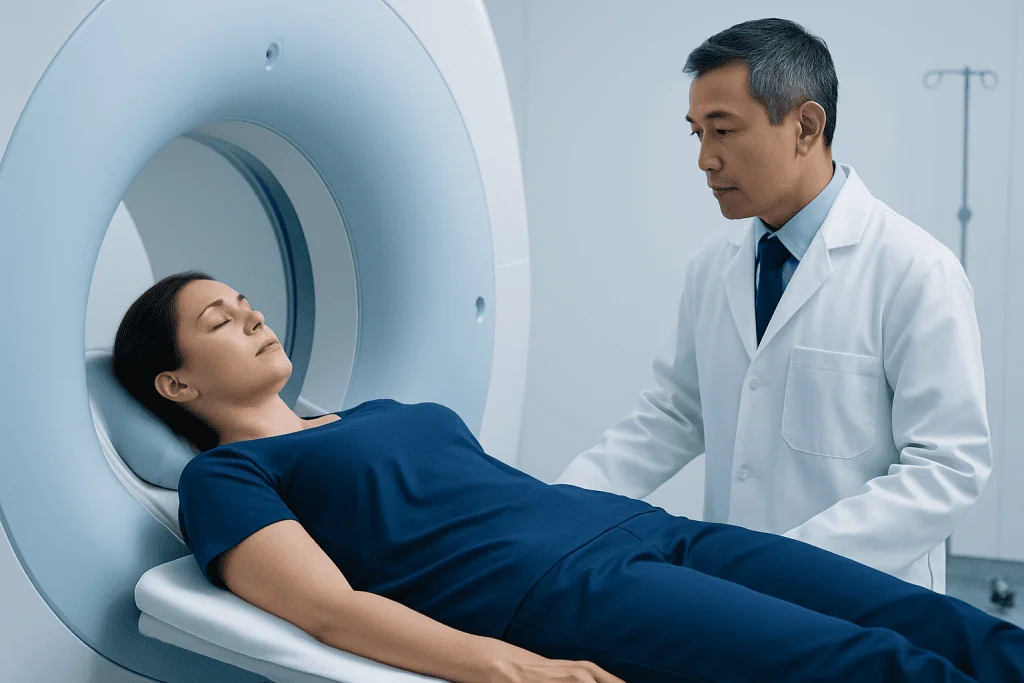
Imaging is central to diagnosis. MRI is often the most useful test because it shows the vertebrae, spinal cord, nerves, and nearby soft tissues in detail. CT scans can help define bone destruction or fracture, and PET-CT or bone scans may be used to look for disease elsewhere in the body. X-rays may identify collapse or alignment problems, but they are usually not enough on their own to fully assess a malignant vertebral tumor.
A biopsy is often needed to confirm the exact tumor type before treatment begins, especially if the diagnosis is uncertain or if no primary cancer is known. Pathology results help distinguish between primary bone tumors, metastases, blood-related cancers, and some noncancerous conditions that can mimic them. Blood tests may also support the evaluation, but they do not replace imaging and tissue diagnosis.
Treatment options
Treatment is tailored to the individual and often combines several approaches. The goals are to control the cancer, relieve pain, preserve or restore nerve function, and keep the spine stable. Some tumors respond well to radiation or systemic therapy, while others require surgery because they compress the spinal cord or have severely weakened a vertebra.
Surgery may be considered when there is spinal instability, a vertebral fracture, significant pressure on the spinal cord, or a need for tissue diagnosis. Depending on the situation, surgery can decompress nerves, remove part of the tumor, and stabilize the spine with instrumentation. In selected patients, minimally invasive techniques may also help with stabilization or symptom relief. General surgical planning may involve spine surgery together with cancer-directed care.
Radiation therapy is a common treatment for spinal metastases and some primary tumors. It can reduce pain and shrink tumor tissue pressing on nerves. Systemic treatment depends on the cancer type and may include chemotherapy, hormone therapy, targeted therapy, immunotherapy, or medicines used for bone-strengthening support. For some patients, care may also include radiation oncology and broader medical oncology treatment planning. Pain management, physical therapy, and rehabilitation remain important throughout recovery and long-term follow-up.
Prevention, self-care, and living with the condition
There is no guaranteed way to prevent a primary cancerous tumor on vertebrae. However, attending routine cancer follow-up after a previous cancer diagnosis can help identify spread earlier, sometimes before severe symptoms develop. General health habits such as not smoking, staying physically active within a person’s ability, and seeking evaluation for persistent back pain may support earlier diagnosis and overall health.
Self-care focuses on safety and symptom control. A person with a vertebral tumor should avoid heavy lifting or activities that sharply worsen pain unless a doctor has advised that these are safe. If the spine is unstable, bracing or activity modification may be recommended. Good communication about pain, numbness, weakness, and any changes in walking or self-care can help the medical team adjust treatment quickly.
Living with a spinal cancer diagnosis can be physically and emotionally demanding. Rehabilitation may improve strength, movement, and confidence after treatment. Support from pain specialists, oncology nurses, psychologists, and social workers can also be helpful. Near the end of the care pathway, some patients may choose assessment at centers such as Acibadem International, where multidisciplinary specialists in JCI-accredited hospitals evaluate and treat complex spinal and oncologic conditions for international patients.
When to seek medical care
Medical review is important for back or neck pain that persists, progressively worsens, or is accompanied by unusual fatigue, weight loss, or a known history of cancer. Prompt assessment is especially important if pain is severe at night, follows a minor strain but feels disproportionate, or is associated with tenderness over the spine.
Urgent medical attention is needed for possible nerve or spinal cord involvement. Warning signs include new weakness in the arms or legs, numbness spreading over time, trouble walking, loss of balance, or changes in bladder or bowel control. These symptoms do not always mean cancer, but they do require fast evaluation because early treatment may protect nerve function.
People already diagnosed with cancer should tell their care team promptly about any new spinal pain. Sudden severe pain, especially after a cough, twist, or minor movement, may suggest a weakened vertebra or fracture. Early imaging and specialist input can guide the safest next steps.
Frequently asked questions
Is a cancerous tumor on vertebrae always primary bone cancer?
No. In adults, a cancerous tumor on vertebrae is more often a metastasis, meaning cancer has spread there from another part of the body. Primary cancers that start in the vertebrae are much less common.
What is usually the first symptom of a vertebral cancerous tumor?
Persistent back or neck pain is often the earliest symptom. The pain may gradually worsen, become more noticeable at night, or not improve with usual rest and self-care.
Can a cancerous tumor on vertebrae be treated successfully?
Many cases can be treated effectively, although the goal differs from person to person. Treatment may aim to cure, control tumor growth, relieve pain, protect the spinal cord, or improve daily function depending on the diagnosis and stage.
How do doctors tell whether the tumor started in the spine or spread there?
Doctors use imaging, medical history, and often a biopsy to identify the tumor type. They may also perform tests to look for a primary cancer elsewhere in the body if one is not already known.
Does every vertebral tumor need surgery?
No. Some tumors are managed mainly with radiation therapy or systemic cancer treatment. Surgery is usually considered when there is spinal instability, fracture, significant spinal cord compression, or a need for tissue diagnosis and decompression.
When is a vertebral tumor a medical emergency?
It becomes urgent when there are signs of spinal cord or nerve compression, such as new weakness, worsening numbness, trouble walking, or loss of bladder or bowel control. Rapid assessment can be important to prevent lasting nerve damage.
References
- National Cancer Institute
- American Cancer Society
- National Institute of Neurological Disorders and Stroke
- National Comprehensive Cancer Network
- World Health Organization
This article is for general information only and is not a substitute for professional medical advice. Please consult a qualified doctor about your individual situation.
Joint and spine care in Turkey — expert assessment & treatment
JCI-accredited · board-certified surgeons · reply within 24h
Add us as a Preferred Source to see more of our trusted health content across Google Search, AI Overviews and Discover.