What does strep look like without tonsils? A Doctor-Reviewed Answer

Tonsil removal lowers the amount of tonsil tissue present, but it does not prevent strep throat completely. Strep without tonsils often causes sore throat, fever, painful swallowing, red throat, and swollen lymph nodes in the neck.
Key Takeaways
- Tonsil removal lowers the amount of tonsil tissue present, but it does not prevent strep throat completely.
- Strep without tonsils often causes sore throat, fever, painful swallowing, red throat, and swollen lymph nodes in the neck.
- A throat swab or rapid strep test is usually needed because symptoms can overlap with viral infections.
- Treatment depends on test results and symptoms; confirmed strep is commonly treated with antibiotics.
- Medical care is important if symptoms are severe, persistent, or accompanied by breathing trouble, dehydration, or rash.
Yes, a person can still get strep throat after having their tonsils removed. Without tonsils, strep usually looks like a sudden sore throat with throat redness, pain when swallowing, fever, and swollen neck glands rather than the classic picture of swollen tonsils with white patches.
Overview: yes, strep can still happen without tonsils
When people ask what does strep look like without tonsils, the short answer is that it can look very similar to ordinary strep throat, just without enlarged or pus-covered tonsils. A person may still develop a sudden sore throat, pain with swallowing, fever, tender lymph nodes in the neck, and a throat that appears red or inflamed.
Tonsils are part of the immune tissue in the throat, but they are not the only place where Streptococcus pyogenes (group A streptococcus) can infect. Even after tonsillectomy, the back of the throat, soft palate, uvula, and surrounding tissues can become irritated and infected. This means a person can still have strep throat without the most recognizable visual sign many people expect.
Because the appearance may be less obvious after tonsil removal, symptoms and testing become especially important. A healthcare professional may consider strep throat among several possible causes of sore throat, including viral infections, allergies, acid reflux, and other bacterial infections.
What strep may look and feel like after tonsil removal

Without tonsils, strep often looks less dramatic on visual inspection, but the person usually still feels significantly unwell. The throat may appear bright red, especially at the back of the mouth, and swallowing may feel sharp or burning. Some people also notice a headache, body aches, fatigue, or loss of appetite.
Instead of white patches sitting on the tonsils, there may be redness on the throat walls, uvula, or soft palate. Small red spots on the roof of the mouth can sometimes occur. The lymph nodes under the jaw or along the sides of the neck may become swollen and tender, which can be an important clue when tonsils are no longer present.
Common features may include:
- Sudden onset of sore throat
- Pain with swallowing
- Fever
- Red or inflamed throat
- Tender swollen neck glands
- Bad breath
- Headache or body aches
- Nausea, especially in children
Symptoms that are more suggestive of a viral infection than strep include cough, runny nose, hoarseness, and mouth ulcers. However, symptoms alone do not always give a definite answer, which is why proper testing is often recommended.
Why strep can occur even after tonsillectomy
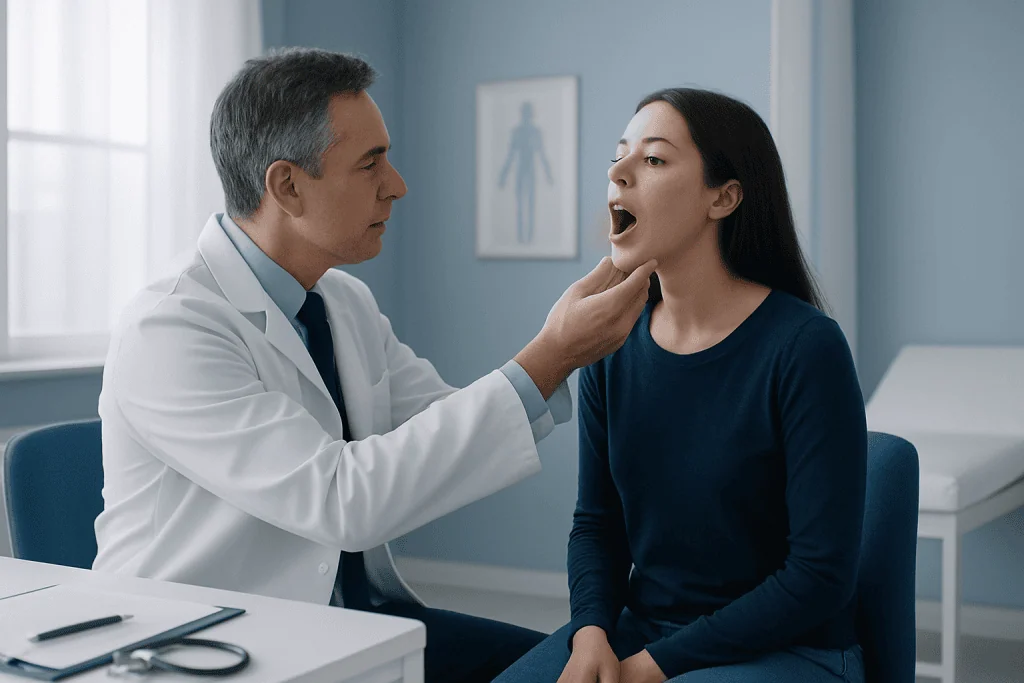
A tonsillectomy removes most tonsil tissue, but it does not remove all tissue in the throat that can become inflamed or infected. Group A strep bacteria can still attach to and infect the lining of the throat. As a result, surgery may reduce some throat infections in certain people, but it does not make someone immune to strep.
There can also be small differences in anatomy after surgery. The absence of tonsils may make infection less visually obvious to a parent or patient looking in the mirror, but discomfort can still be substantial. In some cases, a small amount of tonsil tissue remains after surgery and may still become infected, although this is not the usual reason a person gets sore throat symptoms after tonsillectomy.
Exposure risk still matters. Strep spreads through respiratory droplets and close contact, especially in households, schools, workplaces, and other shared spaces. Frequent handwashing, avoiding shared utensils, and limiting close contact with sick individuals can help reduce the risk.
How doctors tell strep apart from other sore throats
Many sore throats are caused by viruses, and they can feel very similar to strep in the early stages. That is why doctors do not rely only on appearance, especially when there are no tonsils to examine. They usually ask about fever, cough, exposure to someone with strep, swallowing pain, rash, and the timing of symptoms.
A physical exam may show throat redness, swollen lymph nodes, or signs pointing away from strep, such as nasal congestion or hoarseness. The most useful next step is often a rapid strep test or throat swab. If the rapid test is negative but suspicion remains high, a throat culture may be considered, depending on the person’s age and clinical situation.
In some settings, a doctor may also assess for related problems involving the nose, sinuses, or deeper throat structures, especially if symptoms are persistent or unusual. Evaluation by an ear, nose, and throat specialist may be helpful in selected cases, and this can be part of broader ENT care.
Treatment options and symptom relief
If testing confirms strep throat, treatment commonly includes antibiotics prescribed by a doctor. Antibiotics can shorten the illness modestly, reduce spread to others, and help prevent certain complications. It is important to take medication exactly as directed and not to use leftover antibiotics or someone else’s prescription.
Symptom relief also matters. Rest, fluids, warm soups, soothing teas, and soft foods can make swallowing easier. Over-the-counter pain relievers or fever reducers may help when used as directed by a healthcare professional or product instructions. Saltwater gargles and humidified air can also ease throat irritation for some people.
If tests do not show strep, treatment usually focuses on the likely cause, such as a viral infection or irritation. Persistent or recurrent sore throat may sometimes prompt evaluation for other issues involving the throat and nearby tissues, and a doctor may consider further throat infection treatment depending on the findings.
When to seek medical care
A person should seek medical care for a sore throat that is severe, lasts more than a few days, or is accompanied by fever, swollen neck glands, or significant pain when swallowing. Testing is especially helpful when there is known exposure to strep or when symptoms begin suddenly without cough or runny nose.
Urgent evaluation is needed if there is trouble breathing, drooling, inability to swallow fluids, signs of dehydration, neck swelling, or a muffled voice. A rash, worsening weakness, or confusion also deserves prompt medical attention. These symptoms do not always mean a serious problem, but they should not be ignored.
Children, older adults, and people with weakened immune systems may need earlier assessment. If sore throats keep recurring, doctors may look for related conditions such as sinus disease, reflux, sleep-related mouth breathing, or another throat disorder, including tonsillitis in cases where residual tissue or surrounding throat structures are involved.
Self-care, prevention, and follow-up
Good self-care can support recovery and reduce spread. People with suspected or confirmed strep should rest, stay hydrated, wash hands often, and avoid sharing drinks, utensils, or toothbrushes. If antibiotics are prescribed, replacing a toothbrush after the doctor advises it may be helpful in some cases, though practices vary.
Prevention focuses mainly on reducing exposure. Covering coughs and sneezes, cleaning commonly touched surfaces, and staying home from school or work when acutely ill can help protect others. Managing general health, sleep, and hydration also supports the body’s response to infections.
If symptoms do not improve as expected, follow-up matters. A doctor may reassess the diagnosis, check for another infection, or look for complications. For international patients who need specialist assessment, Acibadem International’s multidisciplinary physicians in JCI-accredited hospitals evaluate and treat throat infections and related conditions, including through comprehensive check-up services when appropriate.
Frequently asked questions
Can you get strep throat if you do not have tonsils?
Yes. Tonsil removal does not completely prevent strep throat because the bacteria can still infect the lining of the throat and nearby tissues. Some people may have fewer throat infections after surgery, but strep can still occur.
What are the main symptoms of strep without tonsils?
The most common symptoms are sudden sore throat, pain when swallowing, fever, throat redness, and tender swollen lymph nodes in the neck. Some people also develop headache, fatigue, stomach upset, or bad breath. What is usually missing is the classic picture of swollen tonsils with white patches.
Can strep be harder to recognize after a tonsillectomy?
Yes, it can be less obvious when looking in the mouth because there are no tonsils to become enlarged or coated. That is why symptom pattern and testing are important. A clinician may recommend a rapid strep test or throat culture if strep is suspected.
Does a red throat without tonsils always mean strep?
No. Many conditions can cause a red throat, including viral infections, allergies, dry air, reflux, and irritation from smoking or mouth breathing. Strep is one possibility, but a test is often needed to confirm it.
How is strep treated in someone without tonsils?
Treatment is generally the same as for other people with confirmed strep throat. A doctor may prescribe antibiotics and suggest supportive care such as fluids, rest, and pain relief measures. It is important to complete the prescribed treatment and seek follow-up if symptoms worsen or do not improve.
When should a sore throat without tonsils be checked by a doctor?
Medical evaluation is a good idea if the sore throat is severe, comes with fever, swollen neck glands, or makes swallowing difficult. Urgent care is needed for breathing problems, dehydration, drooling, neck swelling, or a muffled voice. Recurrent sore throats also deserve assessment.
References
- Centers for Disease Control and Prevention
- American Academy of Otolaryngology–Head and Neck Surgery
- National Institute of Allergy and Infectious Diseases
- Mayo Clinic
- MedlinePlus
This article is for general information only and is not a substitute for professional medical advice. Please consult a qualified doctor about your individual situation.
Explore treatments in Turkey — costs, top hospitals & a free quote
JCI-accredited · board-certified surgeons · reply within 24h
Add us as a Preferred Source to see more of our trusted health content across Google Search, AI Overviews and Discover.

More from the Health Library



Related Specialists

Prof. Dr. Sevgi Bilgen
Anesthesiology
Prof. Dr. Ali Aydınlar
Cardiology
Dr. Süheyla Yeldan Vatansever
Pediatrics
Assoc. Prof. Dr. Betül Mazlum
Pediatric & Adolescent Psychiatry