

How to treat swollen lymph nodes in neck naturally: Common Causes, Warning Signs, and When to Worry

Swollen lymph nodes in the neck are often a sign that the immune system is responding to infection or inflammation. Natural care can help ease discomfort: rest, fluids, warm compresses, and gentle pain relief if appropriate.
Key Takeaways
- Swollen lymph nodes in the neck are often a sign that the immune system is responding to infection or inflammation.
- Natural care can help ease discomfort: rest, fluids, warm compresses, and gentle pain relief if appropriate.
- The most important step is identifying the cause, such as a cold, sore throat, dental problem, or skin irritation.
- Lymph nodes that stay enlarged for more than a couple of weeks, feel hard or fixed, or occur with fever, weight loss, or night sweats need medical evaluation.
- Children and adults can both develop swollen neck nodes, but the causes and urgency can differ depending on symptoms.
How to treat swollen lymph nodes in neck naturally usually means supportive care rather than trying to shrink the nodes directly. Rest, hydration, warm compresses, and managing the underlying infection or irritation often help, but swelling that is persistent, very painful, hard, or unexplained should be assessed by a doctor.
Overview: what swollen neck lymph nodes usually mean
For people searching how to treat swollen lymph nodes in neck naturally, the first step is understanding that swollen nodes are usually a symptom, not a disease on their own. Lymph nodes are small, bean-shaped structures that help the body filter germs and support immune defense. When they enlarge, they are often reacting to a nearby infection or inflammation in the throat, ears, sinuses, scalp, or mouth.
In many cases, swollen lymph nodes in the neck improve as the underlying cause gets better. This is why supportive measures such as rest, fluids, warm compresses, and avoiding unnecessary touching can be helpful. Natural care may reduce tenderness and support recovery, but it does not replace medical treatment when the cause is bacterial, persistent, or unclear.
Neck lymph nodes may feel soft, tender, and mobile under the skin during a routine viral illness. That pattern is commonly reassuring. By contrast, nodes that continue growing, feel very firm, appear without a recent infection, or are accompanied by other concerning symptoms deserve a proper medical assessment.
How to treat swollen lymph nodes in neck naturally
Natural care focuses on comfort and recovery while the immune system responds to the trigger. A warm, not hot, compress applied to the area for short periods may ease pain and help local circulation. Good hydration, nutritious meals, and enough sleep also support healing, especially when the swelling is linked to a viral infection such as a cold.
It is usually best not to squeeze, massage aggressively, or repeatedly press on the lymph nodes. Frequent handling can increase irritation and make the area feel more swollen or sore. Gentle neck movement is fine, but intense pressure is not recommended.
Simple self-care steps may include:
- Drinking plenty of water and warm fluids
- Resting and avoiding overexertion
- Using a warm compress for 10 to 15 minutes at a time
- Eating soft foods if swallowing is uncomfortable
- Maintaining good oral hygiene if there is gum, tooth, or throat irritation
If discomfort is significant, a doctor or pharmacist may advise appropriate over-the-counter pain relief, depending on the person’s age, medical history, and other medicines. Natural measures can be useful, but they should be paired with attention to the likely cause. For example, a dental abscess, bacterial throat infection, or skin infection may not improve without targeted treatment.
Common causes of swollen lymph nodes in the neck

The most common causes are everyday infections. Viral upper respiratory infections, influenza, COVID-19, ear infections, sinus infections, and throat infections can all make neck lymph nodes enlarge temporarily. Children often develop noticeable swollen nodes because their immune systems are frequently responding to common infections.
Inflammation in nearby tissues can also be responsible. Dental problems, gum disease, tonsillitis, scalp irritation, infected skin lesions, or even a cut in the head and neck region may lead to localized lymph node swelling. In these cases, the nodes are reacting to a problem close by rather than being the main issue themselves.
Less commonly, swollen neck nodes can be linked to chronic infections, immune conditions, or cancers involving the blood, lymphatic system, or nearby structures. Doctors may consider causes such as lymphoma or head and neck cancers when swelling is persistent, unexplained, or associated with red-flag symptoms. Most swollen nodes are not cancer, but ongoing or unusual changes should not be ignored.
Some medications and recent vaccinations can also lead to temporary lymph node enlargement as the immune system becomes activated. A careful history helps doctors understand whether the swelling fits a normal immune response or needs further investigation.
Symptoms and warning signs to watch for
Swollen lymph nodes may appear as small lumps on one or both sides of the neck, under the jaw, or behind the ears. They can be tender, especially when swallowing, turning the head, or touching the area. Some people notice them while shaving, applying skin care products, or looking in the mirror during an illness.
Features that often suggest a short-term reactive process include tenderness, a soft or rubbery feel, and improvement over several days as cold or throat symptoms settle. Accompanying symptoms may include nasal congestion, sore throat, cough, fever, fatigue, or ear discomfort.
Warning signs that should prompt medical review include:
- Swelling lasting longer than two to four weeks
- Nodes that are hard, fixed in place, or steadily enlarging
- Severe pain, marked redness, or warmth over the area
- High fever or worsening illness
- Unexplained weight loss or drenching night sweats
- Difficulty swallowing, breathing, or opening the mouth
These features do not automatically mean a serious disease, but they do mean the swelling should be evaluated rather than managed only at home.
How doctors diagnose the cause
Diagnosis begins with a history and physical examination. A doctor will ask how long the swelling has been present, whether it is painful, and whether there have been symptoms such as sore throat, fever, tooth pain, recent infection, weight loss, or travel exposure. The size, location, texture, and mobility of the nodes can offer useful clues.
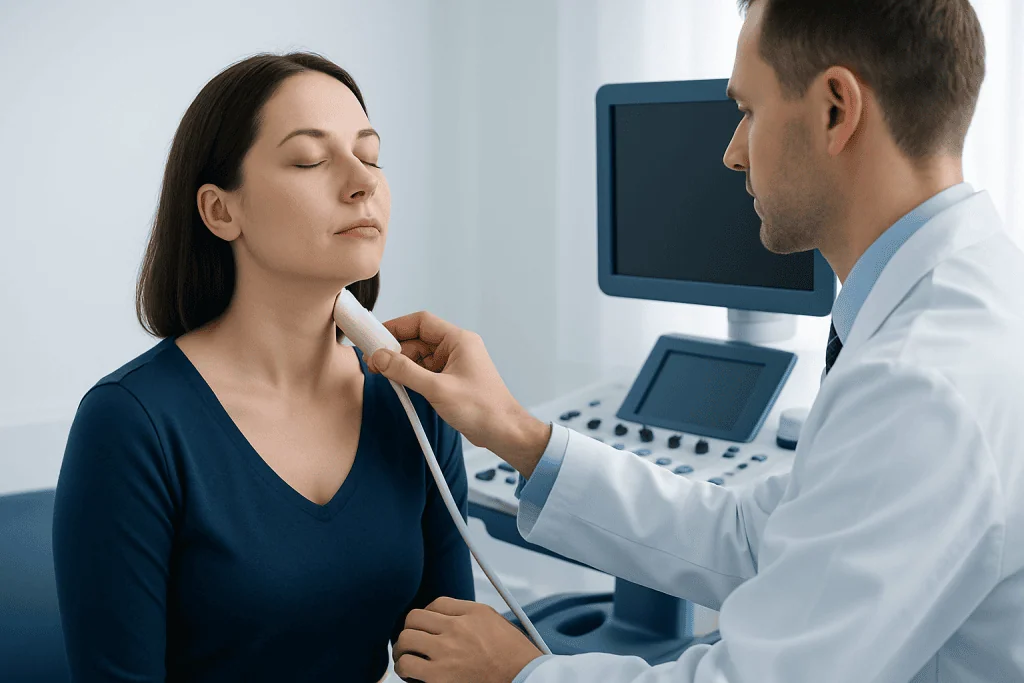
Depending on the suspected cause, testing may include blood tests, throat swabs, or imaging. Neck ultrasound is often used to look more closely at enlarged lymph nodes and nearby tissues. In selected cases, doctors may request MRI imaging or CT scanning when deeper structures need evaluation or when there is concern about an abscess, tumor, or a difficult-to-locate source.
If a dental issue, sinus condition, or persistent throat problem is suspected, the person may be referred to the appropriate specialist. In rare situations, a biopsy is needed to determine the exact cause of lymph node enlargement. That decision is usually based on persistence, appearance on examination or imaging, and the presence of concerning associated symptoms.
Treatment options beyond home care
Treatment depends on the underlying cause rather than the swelling alone. Viral infections usually improve with time and supportive care. Bacterial infections may need prescription antibiotics, while dental infections may require urgent dental treatment. If there is an abscess, drainage may sometimes be necessary.
When swollen nodes are linked to tonsil or throat disease, ENT assessment can help identify whether recurrent infection or another structural problem is involved. In some people, enlarged tonsils or repeated tonsillitis may be part of the picture, and a specialist may discuss options such as tonsillectomy if clinically appropriate.
If the doctor suspects a deeper cause in the neck or salivary glands, further tests or specialist care may be arranged. Management can range from observation and follow-up to more advanced treatment depending on the findings. In complex cases, a multidisciplinary team may be involved to evaluate infection, immune disease, or cancer-related causes safely and thoroughly.
Near the end of the diagnostic pathway, if specialist assessment is needed, Acibadem International’s multidisciplinary specialists and JCI-accredited hospitals evaluate and treat patients with neck swelling and related conditions, including more serious causes such as neck cancer, when indicated.
Prevention and self-care habits that may help
Not all swollen lymph nodes can be prevented, because they are often part of a healthy immune response. Still, practical habits may reduce the risk of some common triggers. Regular handwashing, staying up to date with recommended vaccines, and avoiding close contact with people who have contagious infections can lower the chance of upper respiratory illnesses.
Good oral and dental care matters because gum disease, tooth infections, and mouth inflammation can all trigger neck node swelling. Brushing, flossing, routine dental visits, and seeking prompt attention for tooth pain can help prevent this pathway. Skin care for the scalp and face is also useful, especially when there are cuts, acne lesions, or irritation.
At home, self-care is safest when it is simple. People should avoid repeated checking of the lump, harsh massage, or using unproven supplements in place of proper medical advice. If symptoms are mild and clearly linked to a recent cold, monitoring for gradual improvement over several days is often reasonable.
When to seek medical care
Medical care is appropriate if swollen neck lymph nodes do not improve, keep getting larger, or appear without an obvious explanation. A doctor should also assess swelling that is very painful, associated with significant redness or pus, or accompanied by high fever, severe sore throat, or signs of dehydration.
Urgent care is important if there is trouble breathing, difficulty swallowing saliva, a muffled voice, neck stiffness, or rapid worsening swelling. These symptoms can signal a deeper infection or airway problem and should not be managed only with home remedies.
Even when the situation is not urgent, persistent swollen nodes deserve a careful review. Early assessment can clarify whether the cause is a routine infection, a dental or ENT issue, or something that needs more specialized testing and treatment.
Frequently asked questions
Can swollen lymph nodes in the neck go away on their own?
Yes, they often do when they are caused by a mild viral infection or temporary inflammation. The lymph nodes usually become smaller as the underlying illness improves, though they may take a little time to return fully to normal.
What is the best natural remedy for swollen lymph nodes in the neck?
There is no single remedy that treats all cases, because the main issue is usually the underlying cause. Warm compresses, rest, fluids, and avoiding repeated touching are common supportive measures that may reduce discomfort while the body recovers.
Should swollen lymph nodes be massaged?
Aggressive massage is not recommended. Repeated pressure can irritate the area and make the swelling or tenderness seem worse, so gentle observation is usually better than trying to manipulate the nodes.
How long is too long for a swollen lymph node to stay enlarged?
If a lymph node stays enlarged for more than two to four weeks, keeps growing, or does not match a recent minor infection, it should be checked by a doctor. Persistence does not always mean something serious, but it does warrant evaluation.
Are swollen lymph nodes in the neck a sign of cancer?
Most swollen neck lymph nodes are caused by infection or inflammation, not cancer. However, hard, fixed, painless, or unexplained nodes, especially with weight loss or night sweats, need medical assessment to rule out more serious causes.
Can allergies cause swollen lymph nodes in the neck?
Allergies themselves do not usually cause significant lymph node swelling. However, irritation, sinus problems, or secondary infection occurring around the same time may lead to enlarged nodes, which is why the whole symptom pattern matters.
References
- Centers for Disease Control and Prevention
- National Health Service
- Mayo Clinic
- American Academy of Otolaryngology–Head and Neck Surgery
- National Cancer Institute
This article is for general information only and is not a substitute for professional medical advice. Please consult a qualified doctor about your individual situation.
Explore treatments in Turkey — costs, top hospitals & a free quote
JCI-accredited · board-certified surgeons · reply within 24h
Add us as a Preferred Source to see more of our trusted health content across Google Search, AI Overviews and Discover.

More from the Health Library



Related Specialists

Assoc. Prof. Dr. Muharrem Koçyiğit
Anesthesiology
Dr. Hakan Kutlu
Infectious Diseases & Clinical Microbiology
Prof. Dr. Fatih Ata Genç
General Surgery
Prof. Dr. Başak Oyan Uluç
Medical Oncology