Cancer pictures images? A Doctor-Reviewed Answer
Cancer pictures images may show examples of warning signs, but they are not a reliable way to diagnose cancer. Many non-cancerous conditions can look similar to cancer in photos.
Key Takeaways
- Cancer pictures images may show examples of warning signs, but they are not a reliable way to diagnose cancer.
- Many non-cancerous conditions can look similar to cancer in photos.
- Internal cancers usually cannot be recognized from ordinary pictures and need medical tests.
- A doctor may use an exam, imaging, laboratory tests, and sometimes a biopsy to make a diagnosis.
- Any symptom that is new, worsening, bleeding, painful, or not healing should be checked by a healthcare professional.
Cancer pictures images can be useful for learning what some cancers may look like, especially on the skin or in the mouth, but images alone cannot confirm or rule out cancer. The safest approach is to use pictures as general education and seek medical evaluation for any new, changing, or persistent symptom.
What cancer pictures images can and cannot tell you
Cancer pictures images can help answer a common question: what should a suspicious change look like? The short answer is that photos may provide examples, but they cannot diagnose cancer. A lesion, lump, sore, or discoloration can look concerning in an image and still be caused by a harmless condition, while some cancers may look subtle or resemble everyday skin, mouth, or nail changes.
This is why doctors do not diagnose cancer from appearance alone. They consider where the change is located, how long it has been present, whether it is growing or bleeding, personal risk factors, and whether testing is needed. For many cancers, especially those inside the body, ordinary pictures are not useful at all because the disease cannot be seen without medical imaging or direct examination.
In practice, images are best used for education, not self-diagnosis. They may help a person notice that a mole has changed, a sore is not healing, or a breast contour has altered. But the next step should be medical review, not reassurance or panic based only on online photos.
Why cancers can look different from one person to another
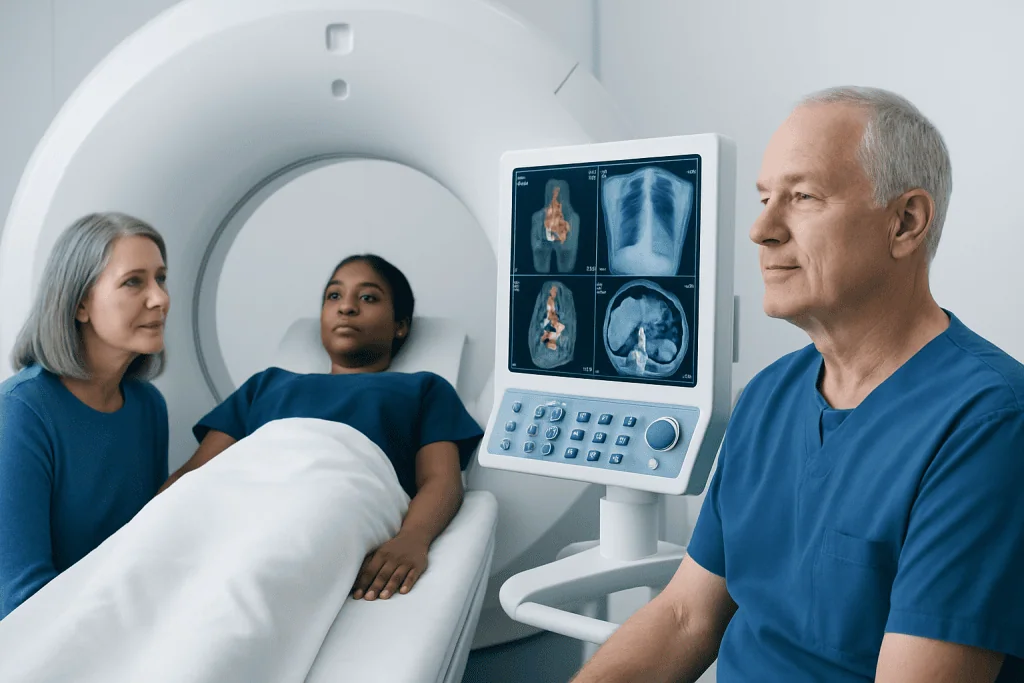
There is no single “cancer look.” Appearance can vary depending on the type of cancer, the part of the body involved, skin tone, age, and how advanced the condition is. Even within one cancer type, such as cancer, some cases may appear red, dark, ulcerated, swollen, crusted, or almost unchanged to the untrained eye.
Photos found online may also be misleading because lighting, camera quality, filters, angle, and magnification can change how a spot looks. A close-up image may make a small change appear dramatic, while a distant photo may hide texture, asymmetry, or border irregularity. Comparing a personal symptom with internet images can therefore create false reassurance or unnecessary fear.
Another important point is that many non-cancerous conditions can mimic cancer in pictures. Common examples include eczema, psoriasis, fungal infections, warts, cysts, bruising, mouth ulcers, hemorrhoids, benign moles, and inflammatory breast changes. Because overlap is common, a professional assessment is the safest way to interpret what is seen.
Types of cancer where pictures may be somewhat helpful
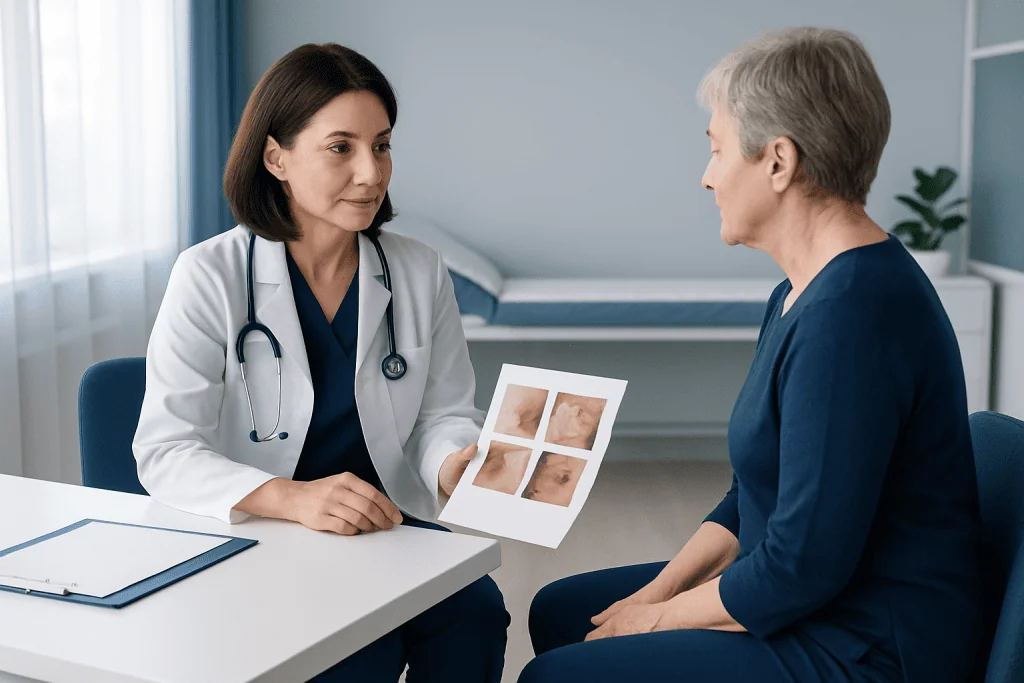
Pictures are most useful when a cancer affects a visible surface of the body. This includes some forms of skin cancer, lip or oral cancers, and certain changes involving the breast, nail, or external genital area. Even then, images should be treated as examples rather than proof.
For skin-related concerns, educational image galleries may help people recognize warning signs such as a mole that becomes asymmetric, develops irregular borders, changes color, or grows over time. A sore that does not heal, a pearly bump, a scaly patch, or a lesion that bleeds repeatedly can also be important. In some cases, doctors may recommend evaluation for skin cancer and, if needed, a biopsy to identify the cause.
Breast cancer pictures may show dimpling, redness, nipple inversion, or visible swelling, but many breast cancers do not cause obvious external changes. A lump may be felt before anything is seen, and some cases are found only on screening. Oral cancers may appear as persistent white or red patches, ulcers, or thickened areas, but common mouth irritation can look similar.
By contrast, most internal cancers cannot be recognized through ordinary photos. Symptoms such as unexplained weight loss, ongoing fatigue, persistent cough, blood in stool, or abdominal pain require medical assessment rather than visual comparison with internet images.
Common warning signs that deserve attention
While images cannot diagnose cancer, some patterns should prompt a person to pay attention. A change is more concerning when it is new, persistent, enlarging, bleeding, painful, firm, or not healing as expected. Any spot, lump, or sore that continues for several weeks without a clear explanation should be discussed with a healthcare professional.
Symptoms vary by body area, but examples can include:
- A mole or skin lesion that changes in size, shape, color, or texture
- A sore that does not heal or repeatedly crusts or bleeds
- A new lump in the breast, neck, testicle, or under the skin
- Persistent mouth ulcer, white patch, or red patch
- Unexplained bleeding, such as coughing blood or blood in stool or urine
- A lasting cough, hoarseness, difficulty swallowing, or change in bowel habits
- Unexplained weight loss, ongoing fatigue, or night sweats
These signs do not automatically mean cancer. Many have non-cancerous causes. The key message is persistence or progression: if something is not settling, keeps returning, or appears to be worsening, it is reasonable to have it checked.
How doctors evaluate a suspicious change
When a person brings in a concerning image or symptom, the diagnosis starts with a conversation and physical examination. The doctor will ask when the problem began, whether it has changed, whether there is pain or bleeding, and whether there are relevant factors such as smoking, family history, sun exposure, prior cancers, or unexplained weight loss.
If the concern is on the skin or another visible surface, the area may be examined closely and photographed for medical follow-up. If the concern involves an internal organ, imaging tests may be needed. Depending on symptoms, a doctor may recommend MRI, ultrasound, mammography, CT, endoscopy, or blood tests. Screening and diagnostic tests are selected based on the symptom and the body area involved, not on the appearance of online images.
In many cases, the only way to know for sure is to examine tissue under a microscope. That is why a biopsy is often considered the gold standard when cancer is suspected. If cancer is confirmed, the person may then be referred for additional tests to determine the type, stage, and most appropriate treatment plan, which can include chemotherapy or other therapies depending on the diagnosis.
Safer ways to use online images and self-checks
Online photos can be helpful if they are used carefully. The safest approach is to see them as a guide to noticing changes, not as a substitute for professional care. Good educational resources usually explain that examples vary and that photos cannot capture texture, tenderness, timing, or the full medical context.
For visible areas such as the skin, breasts, mouth, or nails, a person can become familiar with what is normal for their own body. Periodic self-checks may make it easier to notice a new mole, a changing patch, a new lump, or asymmetry. If a change is found, taking a clear photo with the date can help track whether it is enlarging or healing, but it should not delay making an appointment.
It is also wise to avoid comparing one isolated image with a personal symptom and drawing conclusions. Searching for “worst-case” images can increase anxiety and may not reflect early or typical presentations. If uncertainty remains, a clinician can decide whether watchful waiting, follow-up photography, screening, or prompt testing is the best next step.
When to seek medical care
Medical care should be sought if a person notices a new or changing lump, mole, sore, patch, or swelling that lasts for several weeks or appears to worsen. Prompt review is especially important if there is bleeding, rapid growth, color change, ulceration, unexplained pain, trouble swallowing, persistent cough, or blood in stool or urine.
Urgent assessment is also sensible when symptoms are accompanied by unexplained weight loss, marked fatigue, shortness of breath, or a strong family history of certain cancers. Even when the cause is not cancer, persistent symptoms deserve attention so the right diagnosis can be made and appropriate treatment started.
For people who need specialist evaluation, Acibadem International’s multidisciplinary specialists in JCI-accredited hospitals diagnose and treat cancer for international patients, using appropriate imaging, pathology, and oncology care. The most suitable pathway depends on the symptom, body area, and test results rather than on appearance alone.
Frequently asked questions
Can cancer be diagnosed from pictures alone?
No. Cancer pictures images may show examples of suspicious changes, but they cannot confirm a diagnosis. Doctors usually need a medical history, examination, and often tests such as imaging or biopsy.
What kind of cancer is most likely to be visible in images?
Skin cancer is one of the most visible types because it affects the body’s surface. Some mouth, lip, nail, breast, and external genital changes may also be seen, but many internal cancers cannot be recognized in ordinary photos.
If a spot looks like online cancer pictures, does that mean it is cancer?
Not necessarily. Many harmless conditions can resemble cancer in photos, including infections, eczema, cysts, bruises, and benign moles. Similar appearance is a reason to get checked, not a reason to assume the diagnosis.
How long should someone watch a suspicious change before seeing a doctor?
A change that lasts several weeks, grows, bleeds, becomes painful, or does not heal should be assessed. Earlier review is sensible if the symptom is rapidly changing or is associated with other warning signs such as weight loss or unexplained bleeding.
Are online image searches helpful or harmful?
They can be helpful for general awareness if the source is reliable and the images are used as examples only. They can be harmful when they lead to self-diagnosis, delay medical care, or increase anxiety through comparison with severe or unrepresentative photos.
What tests might a doctor order after seeing a suspicious lesion or symptom?
That depends on the body area and the symptom. A doctor may recommend a physical exam, dermoscopy, blood tests, imaging such as ultrasound or MRI, endoscopy, or a biopsy to determine exactly what is causing the change.
References
- World Health Organization
- American Cancer Society
- National Cancer Institute
- Centers for Disease Control and Prevention
- NHS
This article is for general information only and is not a substitute for professional medical advice. Please consult a qualified doctor about your individual situation.
Oncology care in Turkey — second opinion and treatment plan
JCI-accredited · board-certified surgeons · reply within 24h
Add us as a Preferred Source to see more of our trusted health content across Google Search, AI Overviews and Discover.

More from the Health Library
Related Specialists

Prof. Dr. Erkin İsmail
General Surgery
Prof. Dr. Selçuk Palaoğlu
Neurosurgery
Dr. Nazife Kartal Kara
Gynecology & Obstetrics
Dr. Aysel Özkaynak
Gynecology & Obstetrics