Shingles on hip: A Complete Medical Guide for Patients

Shingles on hip is caused by reactivation of the chickenpox virus already present in the body. The rash usually affects one side and may involve the hip, buttock, upper thigh, or groin.
Key Takeaways
- Shingles on hip is caused by reactivation of the chickenpox virus already present in the body.
- The rash usually affects one side and may involve the hip, buttock, upper thigh, or groin.
- Antiviral treatment works best when started early, especially within 72 hours of rash onset.
- Pain can begin before the rash and sometimes persists after the skin has healed.
- Older adults and people with weakened immune systems have a higher risk of complications.
Shingles on hip is a localized outbreak of the varicella-zoster virus that usually causes burning pain, tingling, and a one-sided blistering rash over the hip, buttock, groin, or upper thigh. It is treatable, and seeing a doctor early—ideally within 72 hours of the rash appearing—can help reduce symptoms and the risk of lingering nerve pain.
Overview: what shingles on hip means
Shingles on hip refers to shingles that appears along the skin supplied by nerves in the lower trunk or upper leg. Shingles is caused by the varicella-zoster virus, the same virus that causes chickenpox. After a person recovers from chickenpox, the virus remains inactive in nerve tissue and can reactivate years later as shingles.
When shingles affects the hip area, symptoms often appear on one side of the body only. The rash may involve the outer hip, lower back, buttock, groin, or upper thigh, depending on which nerve is affected. Because the hip is a common site for friction from clothing and movement, the rash can feel especially uncomfortable during walking, sitting, or sleeping.
Although shingles can be very painful, it is usually manageable with prompt medical care. Early treatment can help shorten the course of the illness and may reduce the chance of long-term nerve pain, known as postherpetic neuralgia.
Symptoms and how the rash may appear on the hip
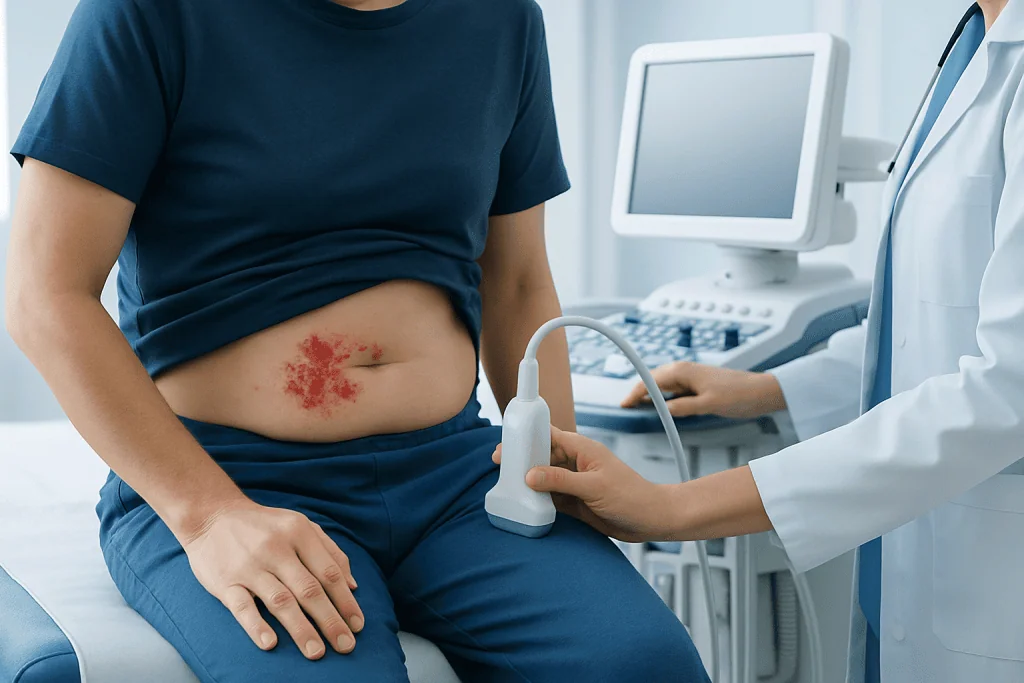
Shingles on hip often starts before any visible rash appears. A person may notice burning, tingling, itching, stabbing pain, or unusual skin sensitivity over part of the hip or upper thigh. Some people also feel tired, develop a mild fever, or have a general sense of being unwell.
Within a few days, a red patch or band may appear, followed by clusters of small fluid-filled blisters. These blisters usually stay on one side of the body and follow a stripe-like pattern along the affected nerve. On the hip, this pattern may wrap from the lower back toward the side of the hip or extend from the buttock into the groin or upper leg.
Common symptoms include:
- Pain, burning, or tingling on one side of the hip
- A blistering rash that crusts over in 7 to 10 days
- Skin tenderness or pain with clothing contact
- Itching or sensitivity after the blisters dry
- Occasional fever, headache, or fatigue
Not every case looks the same. In some people, pain is much more noticeable than the rash. In others, especially those with weaker immune systems, the rash may be more widespread or severe and may need closer medical evaluation.
Why shingles develops and who is at higher risk
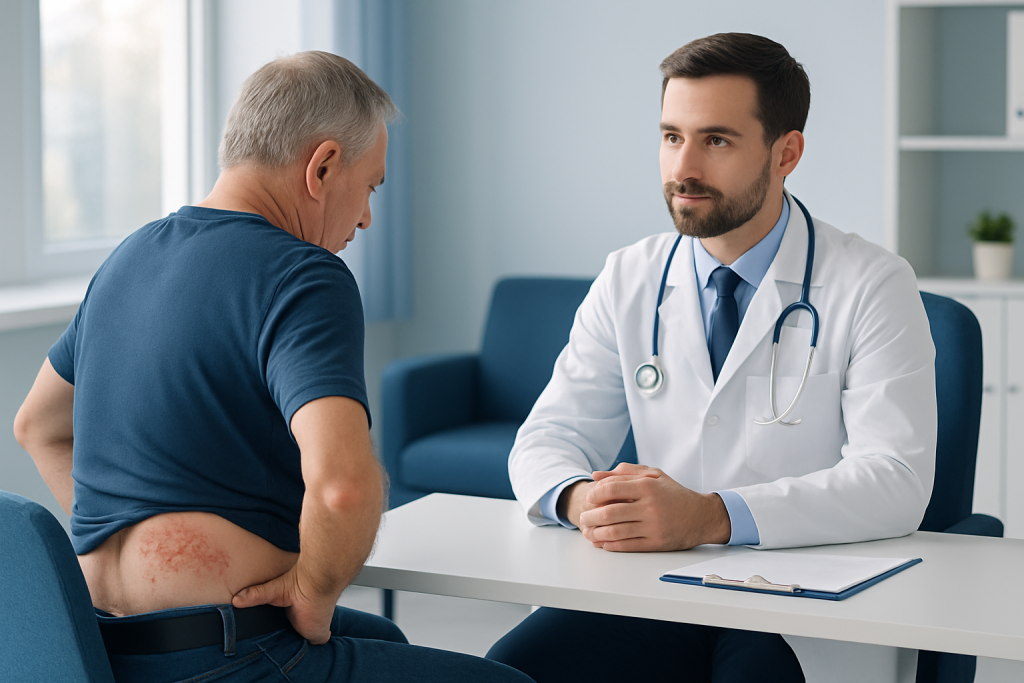
Shingles develops when the varicella-zoster virus becomes active again after remaining dormant in a nerve root. Doctors do not always know exactly why reactivation occurs in one person and not another, but it is more common when immune defenses are less effective.
Risk increases with age, especially after 50, because immune responses to the virus naturally decline over time. People with cancer, HIV infection, autoimmune disease, or those taking medicines that suppress the immune system may also have a higher chance of developing shingles. Stress, recent illness, or poor general health may contribute, although they are not considered sole causes.
Shingles itself is not spread from one person to another in the same way as a cold. However, the virus in shingles blisters can pass to someone who has never had chickenpox or the chickenpox vaccine, causing chickenpox rather than shingles. Covering the rash and avoiding direct contact with blisters can help reduce this risk.
How doctors diagnose shingles on hip
Doctors usually diagnose shingles on hip by listening to the symptoms and examining the rash. The pattern of pain and blisters limited to one side of the body is often characteristic. A clinician may ask when the pain began, when the rash appeared, whether there has been prior chickenpox, and whether any immune problems or medications are present.
Testing is not always necessary, but it can be helpful when the diagnosis is uncertain. For example, if the rash is unusual, widespread, or resembles another skin condition, a sample from a blister may be tested for varicella-zoster virus. Sometimes shingles can be confused with herpes simplex, skin irritation, allergic rash, or certain bacterial skin infections.
If the pain is severe or the rash is in a sensitive area such as the face, or if there are concerns about complications, further assessment may be needed. In some situations, doctors may evaluate for immune system problems or other conditions that could affect healing.
Treatment options and pain relief
The main medical treatment for shingles is antiviral medication. These medicines work best when started early, ideally within 72 hours after the rash appears, though doctors may still prescribe them later in selected cases. Antiviral treatment can shorten the illness and may lower the risk of complications, especially in older adults or people with significant pain.
Pain control is also an important part of treatment. Depending on the severity of symptoms, a doctor may recommend over-the-counter pain relievers, prescription pain medicines, or drugs that help calm irritated nerves. For persistent or severe nerve-related pain, a specialist may discuss options used in pain management. Some patients with prolonged recovery may also benefit from coordinated neurology care when nerve symptoms continue.
Skin care supports healing. The affected area should be kept clean and dry, and loose clothing can reduce friction on the hip. Cool compresses may soothe discomfort. Blisters should not be scratched or deliberately opened, because this can increase the chance of skin infection.
If complications are suspected, treatment may need to be adjusted. In people with extensive rash, weakened immunity, or severe symptoms, doctors may recommend closer monitoring or hospital-based care. At the end of the care pathway, some patients may also need specialist support for recovery from nerve pain related to shingles.
Prevention, home care, and recovery
Vaccination is the most effective way to reduce the risk of shingles and its complications in eligible adults. A doctor can advise whether shingles vaccination is appropriate based on age, health status, and local recommendations. Vaccination does not treat an active outbreak, but it can help prevent future episodes and reduce the likelihood of long-lasting pain.
At home, recovery is supported by rest, hydration, gentle skin care, and avoiding anything that rubs or irritates the rash. Soft fabrics and loose-fitting clothing are often more comfortable when the hip area is affected. Many people find that symptoms improve over two to four weeks, though skin sensitivity or fatigue may last longer.
Practical self-care steps include:
- Taking medicines exactly as prescribed
- Keeping the rash covered if possible
- Washing hands after touching the area
- Avoiding close contact with pregnant people who are not immune, newborns, and immunocompromised individuals until blisters crust over
- Monitoring for increasing redness, pus, fever, or worsening pain
For international patients who need specialist evaluation, Acibadem International’s multidisciplinary teams in JCI-accredited hospitals diagnose and treat shingles-related conditions, including cases involving significant nerve pain or complex recovery.
Possible complications of shingles on the hip
The most common complication of shingles is pain that continues after the rash has healed. This is called postherpetic neuralgia. It can feel like burning, shooting pain, deep aching, or extreme skin sensitivity, and it is more likely in older adults and in people whose initial shingles pain was severe.
Another possible complication is bacterial infection of the skin if blisters are scratched or broken open. Warning signs include spreading redness, warmth, swelling, pus, or fever. Although uncommon on the hip compared with shingles on the face, nerve irritation can also cause prolonged numbness, altered sensation, or discomfort with movement.
People with weakened immune systems may face a higher risk of more extensive shingles or slower healing. For that reason, prompt medical review is especially important in anyone who is immunocompromised, has cancer treatment, takes immune-suppressing medicine, or develops a rash that is unusually widespread.
When to seek medical care
Medical care should be sought promptly if a new painful rash appears on one side of the hip, especially if blisters develop. Early diagnosis matters because antiviral medicine is most effective when started as soon as possible. It is best not to wait for the rash to become severe before speaking with a doctor.
Urgent medical attention is important if the pain is intense, the rash is rapidly spreading, there is fever or confusion, or the person has a weakened immune system. Care is also needed if the rash appears near the eye, on the face, or if there are signs of skin infection such as increasing redness, pus, or marked swelling.
People should also contact a doctor if pain continues after the skin has healed or if the diagnosis is uncertain. Symptoms on the hip can sometimes be mistaken for muscle strain, sciatica, contact dermatitis, or other skin disorders, so professional assessment helps guide the right treatment.
Frequently asked questions
What does shingles on the hip look like?
It often appears as a red patch or band with clusters of small blisters on one side of the hip, buttock, groin, or upper thigh. The rash usually follows the path of a nerve and does not cross the body's midline.
Can shingles on the hip cause pain before the rash appears?
Yes. Many people first notice burning, tingling, itching, or sharp pain in the hip area before any rash is visible. This early stage can last a few days and may be mistaken for a muscle or nerve problem.
Is shingles on the hip contagious?
Shingles itself is not passed from one person to another. However, fluid from the blisters can spread varicella-zoster virus to someone who has never had chickenpox or the chickenpox vaccine, causing chickenpox. Keeping the rash covered and avoiding direct contact with blisters helps reduce this risk.
How long does shingles on the hip last?
The rash commonly blisters, dries, and crusts over within about 7 to 10 days, and many cases improve over 2 to 4 weeks. Pain and skin sensitivity may last longer, especially in older adults or when nerve pain continues after the rash heals.
When should antiviral treatment be started?
Antiviral medicines are usually most helpful when started within 72 hours after the rash begins. Even if more time has passed, a doctor may still recommend treatment depending on age, pain severity, immune status, or whether new blisters are still appearing.
Can shingles on the hip be mistaken for sciatica or a pulled muscle?
Yes. Before the rash appears, the pain may feel like nerve pain, deep aching, or a musculoskeletal injury. Once the one-sided blistering rash develops, the diagnosis becomes clearer, but a doctor should confirm it if symptoms are uncertain.
References
- Centers for Disease Control and Prevention
- National Institute on Aging
- National Health Service
- Mayo Clinic
- World Health Organization
This article is for general information only and is not a substitute for professional medical advice. Please consult a qualified doctor about your individual situation.
Shingles in Turkey — costs, top hospitals & a free quote
JCI-accredited · board-certified surgeons · reply within 24h
Add us as a Preferred Source to see more of our trusted health content across Google Search, AI Overviews and Discover.