Knee numb: What the Evidence Actually Says About Benefits and Risks

Knee numb is a symptom, not a health goal, and it often relates to a nerve problem around the knee, thigh, leg, or lower back. Short-lived numbness from pressure or kneeling can be harmless, but persistent, worsening, or painful numbness needs medical assessment.
Key Takeaways
- Knee numb is a symptom, not a health goal, and it often relates to a nerve problem around the knee, thigh, leg, or lower back.
- Short-lived numbness from pressure or kneeling can be harmless, but persistent, worsening, or painful numbness needs medical assessment.
- Research supports cause-based treatment such as activity modification, physical therapy, diabetes management, or surgery in selected cases.
- Self-treatment that repeatedly applies heat, ice, pressure, or tight supports to a numb area can increase the risk of skin injury because normal sensation is reduced.
- Urgent care is important if knee numbness comes with weakness, severe back pain, bowel or bladder changes, fever, trauma, or a cold or pale leg.
Knee numb usually means sensation is reduced because a nerve is irritated, compressed, stretched, or injured. Evidence does not support trying to make a knee numb for health benefits; the safest approach is to identify the cause, watch for warning signs, and treat the underlying problem.
Overview: what knee numb usually means
Knee numb means there is reduced or altered feeling in or around the knee. People may describe it as tingling, pins and needles, a “dead” patch of skin, burning, or an area that feels less sensitive to touch. In most cases, numbness is a sign that a sensory nerve is irritated or not working normally for a period of time.
Evidence from neurology, orthopedic, and rehabilitation practice shows that knee numbness is usually explained by nerve compression, minor trauma, inflammation, postsurgical nerve changes, metabolic nerve damage such as diabetic neuropathy, or referred symptoms from the lower back. It is less often caused by a problem inside the knee joint itself. That is why the location of the numbness, how long it lasts, and whether there is weakness or pain matter as much as the knee symptoms.
The idea that a “numb knee” might have health benefits is not supported by clinical evidence. Temporary loss of feeling can reduce awareness of pain, but it does not treat the cause and may allow overuse, delayed diagnosis, burns from heat packs, or skin injury from pressure or tight braces. The goal is not to create numbness, but to understand why it is happening and whether it needs treatment.
Symptoms and patterns doctors pay attention to

Knee numbness can affect the front, side, back, or a small patch near the kneecap. Some people notice it only after kneeling, crossing the legs, long periods of sitting, or exercise. Others have constant altered sensation, sometimes with pain that shoots from the thigh or lower back, suggesting the source may be higher up along the nerve pathway.
Symptoms that help narrow the cause include whether the numbness is on one side or both, whether there is swelling or redness, and whether it comes with weakness, tripping, balance problems, or foot numbness. For example, numbness on the outer lower leg or top of the foot may point to peroneal nerve involvement, while numbness extending from the lower back into the leg may fit nerve root irritation such as a herniated disc.
After procedures around the knee, a small numb patch can occur because tiny skin nerves are stretched or cut. This can happen after injury repair or knee replacement and is often expected rather than dangerous, although the area may remain altered for some time. In contrast, a newly numb, cold, pale, or very painful leg needs urgent evaluation because blood flow or a major nerve could be affected.
- Tingling or pins and needles
- Reduced touch or temperature sensation
- Burning, stinging, or electric-shock feelings
- Associated weakness, instability, or back pain
- A small numb patch after surgery or direct trauma
What causes knee numb: what the evidence supports
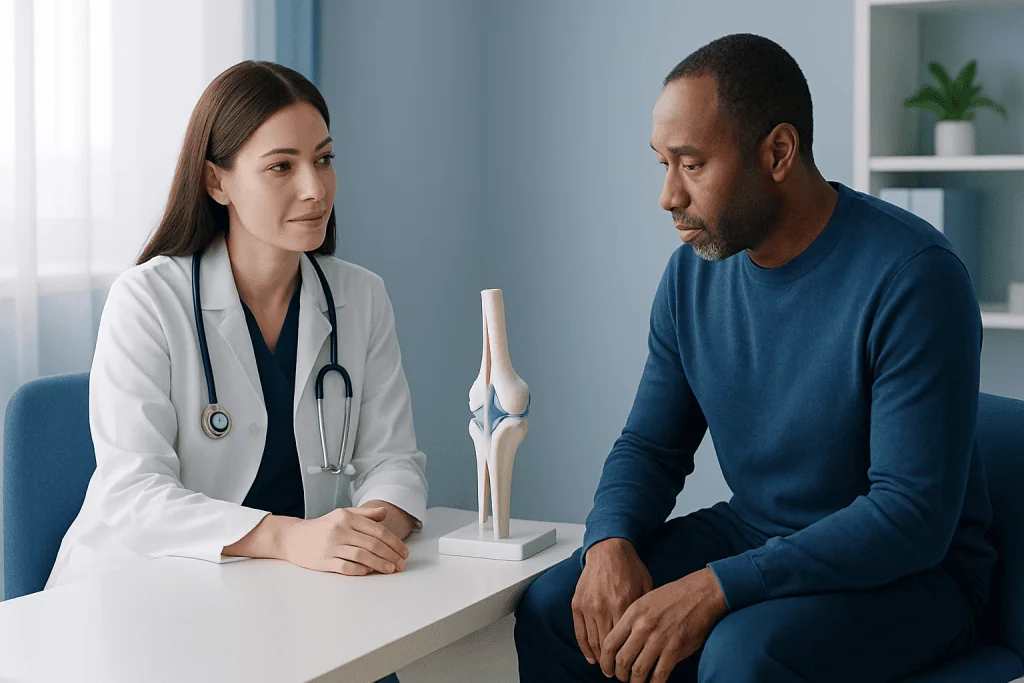
Clinical evidence supports several common explanations for knee numbness. The simplest is transient pressure on a superficial nerve from kneeling, squatting, tight clothing, braces, or prolonged positioning. This usually improves once the pressure is relieved. Another well-recognized cause is irritation of nerves around the knee, especially the peroneal nerve near the outer knee or branches of the saphenous nerve near the inner knee.
Lower back conditions can also be responsible. Nerves that supply feeling to the knee and leg begin in the spine, so lumbar disc problems, spinal narrowing, or inflammation can send numbness down the leg even when the knee joint itself looks normal. Diabetes and other causes of peripheral neuropathy may produce numbness that can involve the knees as part of a broader pattern in the legs. Inflammatory arthritis, swelling, or injuries can also irritate nearby nerves.
Some causes are less common but important, such as nerve injury after fractures, dislocation, surgery, or severe twisting injuries. A mass, cyst, or scar tissue can compress a nerve. Vascular problems do not usually cause isolated numbness, but poor circulation may coexist with pain, color change, coolness, or cramping and should not be overlooked.
What evidence does not support is the idea that numbness itself is beneficial therapy. Numbing creams, prolonged icing, or very tight supports may temporarily blunt discomfort but do not reliably improve long-term outcomes unless used appropriately as part of a broader treatment plan. In fact, excessive cold, repeated pressure, or unmonitored topical products can worsen skin or nerve irritation in sensitive individuals.
Risks, interactions, and situations that can make it worse
The main risk of a numb area is reduced protective sensation. If the skin cannot fully feel heat, cold, rubbing, or pressure, a person may unknowingly develop irritation, blisters, or minor injuries. This is especially relevant for people with diabetes, circulation problems, or existing neuropathy, because healing may be slower and complications may be easier to miss.
Some self-care habits can interact poorly with numbness. Applying heat packs for too long, using ice directly on the skin, wearing tight knee sleeves for long periods, or continuing high-impact exercise despite a numb patch may all increase the chance of harm. Alcohol misuse, uncontrolled blood sugar, and certain medications that affect nerves can also contribute to persistent symptoms and should be reviewed with a clinician.
Over-the-counter pain relievers may ease discomfort but they do not explain why sensation is reduced. Topical numbing products can further mask warning signs and should be used cautiously, especially if the skin is broken or the diagnosis is unclear. People taking blood thinners, those with skin disease, or those with severe neuropathy should be especially careful with compression devices, injections, or any treatment that could cause unnoticed bruising or tissue injury.
How knee numbness is diagnosed
Diagnosis begins with a history and physical examination. A clinician will usually ask when the numbness started, whether there was trauma, surgery, prolonged kneeling, back pain, diabetes, or weight loss, and whether the symptoms are stable or spreading. The exact location of altered feeling often gives important clues about which nerve may be involved.
The physical examination may include checking skin sensation, reflexes, muscle strength, walking pattern, spinal movement, and circulation in the leg. If there is concern for a nerve problem beyond the knee, the clinician may also examine the hip, ankle, and lower back. When swelling, locking, instability, or injury history suggests a structural knee problem, orthopedic assessment may be needed, sometimes alongside evaluation for a meniscus tear or ligament injury.
Tests are chosen based on the likely cause. Blood tests may be used when diabetes, vitamin deficiency, thyroid disease, or inflammation is suspected. Nerve conduction studies and electromyography can help assess how well nerves and muscles are working. Imaging such as ultrasound, X-ray, or MRI may be helpful if a mass, injury, or spinal cause is suspected; in selected cases, this may include MRI evaluation.
Treatment options: evidence-based and cause-specific
Treatment works best when it targets the underlying cause. For temporary pressure-related numbness, simple changes such as avoiding prolonged kneeling, adjusting posture, loosening tight gear, and allowing the nerve to recover may be enough. If symptoms are linked to overuse, graded activity changes and rehabilitation are often more helpful than complete rest.
When numbness is related to nerve irritation, back problems, or movement patterns, structured physical therapy and rehabilitation can help improve flexibility, strength, gait, and nerve mobility. If diabetes or another metabolic condition is contributing, controlling the underlying disease is a key part of treatment. A clinician may consider medicines for neuropathic pain if burning or electric pain is prominent, but medication choice depends on the person’s overall health and other prescriptions.
Surgery is not needed for most people, but it may be considered when there is a significant structural injury, persistent nerve compression, or progressive weakness. After knee surgery, a small numb area may simply be monitored if it is stable and expected. Acibadem International’s multidisciplinary specialists in JCI-accredited hospitals evaluate and treat knee and nerve-related conditions for international patients when further assessment or treatment is needed.
- Activity modification and avoiding direct pressure on the nerve
- Rehabilitation for posture, strength, flexibility, and gait
- Treatment of diabetes, vitamin deficiency, or inflammatory conditions
- Careful use of pain relief measures without masking worsening symptoms
- Surgical evaluation in selected cases of compression, trauma, or major structural damage
Self-care and prevention
Prevention focuses on reducing repeated nerve irritation and protecting the skin if sensation is reduced. Using knee pads for work that involves kneeling, taking movement breaks during long sitting, and avoiding positions that compress the outer knee can help. Well-fitted footwear and gradual training changes may also reduce strain on the leg and lower back.
General health measures matter because nerves are affected by the whole body, not only the knee. Keeping blood sugar in target range, limiting alcohol, maintaining a healthy weight, and correcting nutritional deficiencies when identified can support nerve health. Exercise is usually beneficial, but it should be appropriate to the diagnosis and should not repeatedly provoke numbness.
At home, it is sensible to inspect a numb area for redness, blisters, or skin breakdown, especially after exercise or using braces. Heat and ice should be used cautiously and only for short periods with a protective layer, because reduced sensation can make burns or frost injury easier to miss. If numbness is becoming more frequent, spreading, or associated with pain or weakness, self-care should give way to a medical review.
When to seek medical care
Medical care is appropriate if knee numbness lasts more than a short time, keeps returning, spreads down the leg, or interferes with walking, exercise, sleep, or daily life. A clinician should also assess numbness that follows a fall, twist, direct blow, or recent surgery, especially if swelling, instability, or increasing pain is present.
Urgent care is needed if numbness appears with leg weakness, foot drop, severe lower back pain, fever, loss of bowel or bladder control, or a leg that is pale, blue, cold, or suddenly swollen. These features can point to a more serious nerve, spine, or circulation problem. A person should also seek prompt care if they have diabetes or known neuropathy and notice skin injury or infection in an area that feels numb.
Frequently asked questions
Is knee numbness ever normal?
Brief numbness after kneeling awkwardly or sitting in one position can happen because a nerve is under temporary pressure. It should ease once the pressure is removed. If it lasts, keeps coming back, or is paired with pain or weakness, it should be checked.
Can a knee joint problem cause numbness by itself?
A knee joint problem can contribute indirectly if swelling, injury, or inflammation irritates a nearby nerve. However, numbness often suggests nerve involvement rather than a problem limited only to cartilage or the joint surface. That is why doctors may also examine the back, hip, and lower leg.
Does numbness mean nerve damage?
Not always. Numbness can come from temporary compression or irritation that improves with time and activity changes. Persistent or worsening numbness raises more concern for ongoing nerve dysfunction and deserves assessment.
Should a person exercise with a numb knee?
Light activity may be reasonable if symptoms are brief and clearly related to posture or pressure, but exercise should not repeatedly trigger numbness. Activities that increase symptoms, create instability, or involve impact on a poorly felt area are best avoided until the cause is clearer. A clinician or physical therapist can help guide safe return to exercise.
Can diabetes cause numbness around the knee?
Yes. Diabetes can affect peripheral nerves and cause numbness, tingling, burning, or reduced sensation in the legs. Although it often starts in the feet, symptoms can extend upward and should be reviewed, especially if blood sugar has been difficult to control.
What tests might be needed for knee numbness?
Not everyone needs testing. Depending on the history and examination, a doctor may order blood tests, imaging, or nerve studies to check for nerve compression, back-related causes, injury, or metabolic conditions. The choice depends on the symptom pattern and any warning signs.
References
- National Institute of Neurological Disorders and Stroke
- American Academy of Orthopaedic Surgeons
- National Institute of Arthritis and Musculoskeletal and Skin Diseases
- American Diabetes Association
- Mayo Clinic
This article is for general information only and is not a substitute for professional medical advice. Please consult a qualified doctor about your individual situation.
Joint and spine care in Turkey — expert assessment & treatment
JCI-accredited · board-certified surgeons · reply within 24h
Add us as a Preferred Source to see more of our trusted health content across Google Search, AI Overviews and Discover.

More from the Health Library



Related Specialists

Assoc. Prof. Dr. Tunay Erden
Orthopedic Surgery & Traumatology
Dr. Zuhal Başkan
Medical Oncology
Prof. Dr. Vahit Emre Özden
Orthopedic Surgery & Traumatology
Dyt. Ceren Güven
Nutrition & Diet