How Much Does a DHI Hair Transplant Cost in Turkey? 2026 Prices vs USA, UK & Germany

Published market ranges suggest DHI hair transplant prices in Turkey are often lower than in the USA, UK, and Germany. A personal consultation is needed to confirm candidacy, estimate graft numbers, and provide an accurate quote.
Key Takeaways
- Published market ranges suggest DHI hair transplant prices in Turkey are often lower than in the USA, UK, and Germany.
- A personal consultation is needed to confirm candidacy, estimate graft numbers, and provide an accurate quote.
- The lowest advertised price may not reflect surgeon experience, accreditation, aftercare, or package inclusions.
- Comparing offers is easier when patients check what is included, such as consultation, medications, transfers, and follow-up.
- Quality and safety matter as much as cost, especially when choosing an experienced team and an accredited hospital setting.
DHI hair transplant cost Turkey is generally lower than in the USA, UK, and Germany based on published market ranges, but there is no single fixed price for every patient. The final quote depends on the number of grafts, the complexity of hair loss, the surgeon’s plan, and what is included in the treatment package.
Overview: How much does a DHI hair transplant cost in Turkey?
The phrase dhi hair transplant cost turkey usually refers to the total price of direct hair implantation performed in Turkey, including some or all parts of the medical journey. Based on indicative published market ranges, DHI hair transplant prices in Turkey are commonly lower than those seen in the USA, UK, and Germany. However, no responsible provider can confirm an exact personal price without first reviewing the patient’s hair loss pattern, donor area, scalp health, and treatment goals.
In practical terms, the final cost is shaped less by the country alone and more by the treatment plan. DHI may require different levels of surgical time, graft handling, and team involvement than other methods, and those details influence the quote. A patient with early thinning and a limited graft requirement may receive a very different estimate from someone needing more extensive density restoration.
This article focuses on how to interpret cost information safely and realistically. Rather than relying on headline prices alone, it helps patients compare countries, understand what a package may include, and recognize the clinical factors that can move the price up or down.
Turkey vs USA, UK, and Germany: indicative 2026 market ranges

Published market ranges change over time, and they vary between hospital-based programs, specialist clinics, and city centers. For that reason, the figures below should be read as broad, indicative market ranges rather than fixed clinic prices. Final pricing always follows an individual consultation and formal quote.
The comparison below is intended to show the general pricing pattern patients often see when researching DHI internationally.
| Country | Indicative published market range for DHI | Approximate savings vs higher-cost markets |
|---|---|---|
| Turkey | Often in the lower published international range | Baseline |
| USA | Often several times higher than Turkey, depending on city and graft plan | Turkey may be roughly 50% to 75% lower in many published comparisons |
| UK | Typically higher than Turkey in many private clinic comparisons | Turkey may be roughly 40% to 70% lower |
| Germany | Usually higher than Turkey in published private-market ranges | Turkey may be roughly 30% to 60% lower |
These percentages are only broad comparison estimates drawn from market patterns, not guaranteed savings for any individual case. Differences in surgeon experience, graft counts, package design, and whether treatment takes place in a hospital environment can change the comparison significantly.
What a DHI package in Turkey may include
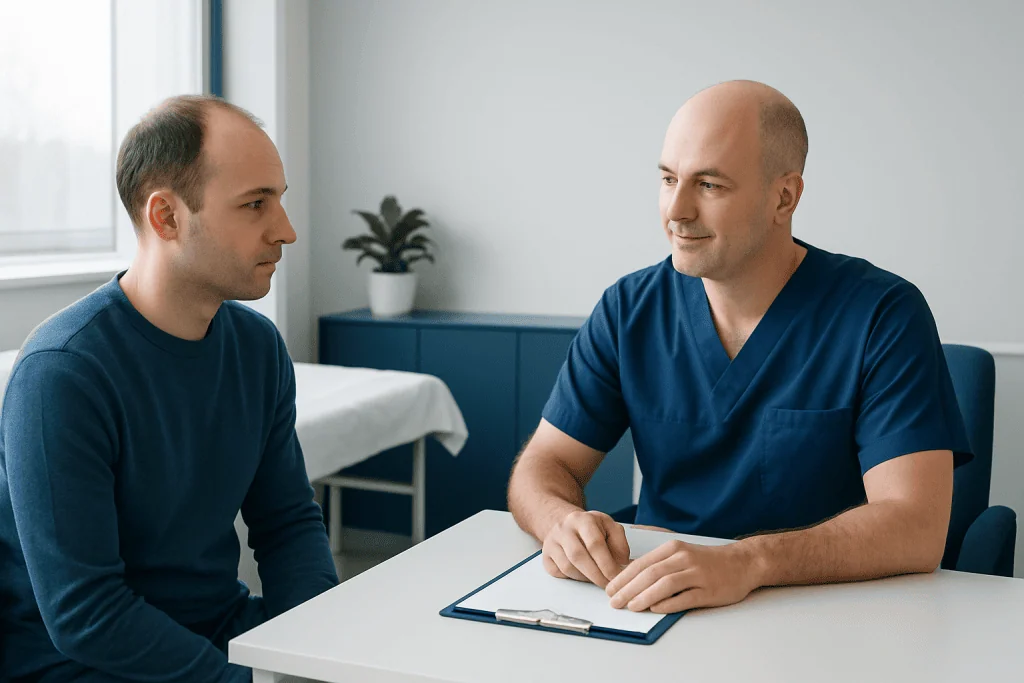
When patients compare DHI options abroad, the package structure can be as important as the base surgical fee. Some quotes cover only the procedure itself, while others combine several parts of the care pathway into one overall package. This is one reason why two offers that look similar at first can differ meaningfully in value.
A typical package may include:
- Pre-treatment consultation and assessment
- Hair and scalp examination
- The DHI procedure itself
- Local anesthesia and medical supplies
- Basic medications or aftercare products
- Interpreter support for international patients
- Airport and hotel transfers in some programs
- Early follow-up review and post-procedure instructions
Patients should ask for a written breakdown of what is and is not included. Important exclusions can include blood tests, extra medications, additional treatments for recovery, hotel accommodation, or management of unexpected medical needs. For readers comparing techniques, the core method used for hair transplantation should also be clarified during consultation so the quote reflects the planned procedure accurately.
Why DHI pricing varies from one patient to another
DHI is not a one-price treatment. The number of grafts is one of the main cost drivers, but it is not the only one. A patient with a small frontal correction may need a very different approach from someone with extensive crown thinning or advanced patterned hair loss. In addition, hairline design, hair caliber, donor density, and the need for careful angulation can all affect surgical complexity.
The skill mix of the medical team also matters. In many settings, price reflects surgeon involvement, the experience of the supporting team, and whether the procedure is performed in an accredited hospital environment or a smaller outpatient clinic. Higher standards of infection control, preoperative evaluation, and postoperative support may influence overall cost but can also contribute to safety and consistency.
Some patients may also need evaluation for underlying causes of hair loss before a transplant is advised. Conditions such as alopecia are not always managed in the same way, and not every type of hair loss is best treated with surgery. If inflammation, scarring, nutritional issues, or active shedding are present, a doctor may recommend treating the underlying problem first.
DHI, FUE, and quality considerations beyond price
DHI is often discussed alongside FUE because both are modern hair restoration approaches, but they are not identical terms in day-to-day pricing discussions. DHI generally refers to a method of implantation that may require different instruments, workflow, and time. As a result, DHI can sometimes be quoted differently from standard FUE packages, even within the same center.
Patients should be careful not to treat every online comparison as like-for-like. One center may advertise a low figure for a limited graft plan, while another may quote a more comprehensive package with broader aftercare and a different level of surgeon participation. Understanding the planned method is especially helpful when comparing FUE hair transplant options with DHI-based plans.
Quality markers are worth checking before making a decision. These can include physician qualifications, transparent consultation processes, realistic candidacy assessment, and whether care is delivered in a recognized hospital environment. For some international patients, JCI-accredited hospitals may offer added reassurance around institutional standards, coordination, and patient safety processes.
How to compare quotes carefully and plan the total budget
A useful quote should explain what the patient is paying for, not simply state a headline price. Asking the same questions of each provider can make comparison easier. For example, patients can ask how many grafts are expected, who performs each stage of the procedure, what aftercare is included, and whether any costs are likely to be added later.
It is also sensible to look beyond the procedure fee and consider the full travel budget. International patients may need to factor in flights, hotel stay, local transport, time away from work, and any follow-up costs after returning home. If the care plan includes additional restorative procedures, such as PRP treatment for scalp support in selected cases, that should be confirmed separately rather than assumed.
A transparent consultation can help align medical planning with financial planning. Good providers usually explain whether the patient is a suitable candidate, what result is realistic, how long recovery may take, and what the final quote includes. This approach supports informed decision-making and reduces the risk of choosing based on price alone.
When to seek medical care before booking
Not all hair loss should be treated as a cosmetic issue alone. Medical review is important if hair loss is sudden, patchy, rapidly worsening, associated with itching or scaling, or accompanied by redness, pain, or scarring on the scalp. A transplant should usually be delayed until the cause is assessed and, where possible, stabilized.
Patients should also seek medical advice if they have chronic health conditions, take blood-thinning medicines, have a history of poor wound healing, or have had previous scalp procedures. A doctor may recommend blood tests, a dermatology assessment, or adjustments to the treatment plan before surgery is considered.
Near the end of the decision process, some patients prefer consultation in a multidisciplinary setting. Acibadem International’s specialists and JCI-accredited hospitals evaluate and treat international patients with personalized planning, including options for DHI hair transplant when clinically appropriate.
Frequently asked questions
Is DHI hair transplant in Turkey cheaper than in the USA or UK?
In many published market comparisons, DHI in Turkey is generally less expensive than in the USA and UK. The exact difference varies by graft number, surgeon experience, setting, and what the quote includes. A personal consultation is still needed to confirm the real cost for an individual patient.
Why can two DHI quotes in Turkey be very different?
Quotes can differ because the treatment plan may not be the same. Important variables include the number of grafts, surgeon involvement, hospital versus clinic setting, aftercare, and whether travel-related services are included. A lower headline price does not always mean a like-for-like service.
Does DHI always cost more than FUE?
Not always, but DHI is often priced differently because the implantation method, tools, and operating workflow may differ. Some providers group techniques under broader hair transplant pricing, while others separate them clearly. The best way to compare is to ask exactly which method is planned and what the quote covers.
What should patients check before accepting a hair transplant package?
Patients should confirm the expected graft range, the doctor’s assessment of candidacy, and who performs each part of the procedure. They should also ask what is included in the quote, such as medications, follow-up, transfers, and accommodation. A written breakdown can help avoid misunderstandings.
Can a final DHI price be given online without a consultation?
A general estimate may be possible, but a final price should follow a proper medical review. Hair loss pattern, donor area, scalp condition, and the desired design all affect the plan. Responsible providers usually give a confirmed quote only after assessing these details.
When should someone see a doctor before considering a hair transplant?
Medical review is important if hair loss is sudden, patchy, inflamed, painful, or associated with scaling or scarring. A doctor should also assess patients with significant medical conditions or those taking certain medicines. Treating an underlying cause first may be safer and more effective than proceeding directly to surgery.
References
- American Academy of Dermatology
- International Society of Hair Restoration Surgery
- National Health Service
- Mayo Clinic
This article is for general information only and is not a substitute for professional medical advice. Please consult a qualified doctor about your individual situation.
DHI Hair Transplant in Turkey — costs, top hospitals & a free quote
JCI-accredited · board-certified surgeons · reply within 24h
Add us as a Preferred Source to see more of our trusted health content across Google Search, AI Overviews and Discover.

Hair Transplant
Modern FUE and DHI hair restoration with natural, lasting results.