3000 Grafts Hair Transplant: Coverage, Cost Factors, and What to Expect

A 3000 grafts hair transplant usually suits moderate hair loss rather than very extensive baldness. Coverage varies based on graft placement, hair caliber, curl, color contrast, and scalp laxity or donor density.
Key Takeaways
- A 3000 grafts hair transplant usually suits moderate hair loss rather than very extensive baldness.
- Coverage varies based on graft placement, hair caliber, curl, color contrast, and scalp laxity or donor density.
- A surgeon balances natural appearance, donor preservation, and long-term hair loss planning when designing treatment.
- Cost factors depend on technique, surgical complexity, team expertise, and the overall treatment plan rather than graft number alone.
- Recovery is gradual, with early shedding expected and visible regrowth developing over several months.
- Medical evaluation is important to confirm the cause of hair loss and decide whether transplantation is appropriate.
A 3000 grafts hair transplant is commonly used for moderate hair loss and may rebuild the hairline while adding density to the front and mid-scalp. The exact coverage depends on the size of the thinning area, hair characteristics, donor availability, and whether the crown also needs treatment.
Overview: what 3000 grafts can realistically cover
A 3000 grafts hair transplant can often treat moderate hair loss by restoring the frontal hairline, filling the frontal scalp, and improving density through the mid-scalp. In some people, it may also contribute limited coverage to the crown, but using the same number of grafts across too large an area can reduce overall density. For this reason, surgeons usually focus on the areas that matter most cosmetically and frame the face naturally.
A graft is a naturally occurring group of hair follicles taken from the donor area, usually the back or sides of the scalp. One graft may contain one, two, three, or sometimes more hairs. Because the number of hairs per graft differs from person to person, 3000 grafts does not look identical in every patient even when the graft count is the same.
Coverage is not just about surface area. Hair thickness, texture, wave or curl pattern, color contrast between the hair and scalp, and the quality of the donor area all affect the final visual result. A person with coarse, dark, curly hair may achieve the appearance of fuller coverage than someone with very fine, straight hair and high scalp contrast.
Hair transplantation is usually most effective when hair loss has a stable pattern and the donor zone is healthy. In many cases, the surgeon also considers medical treatment to help protect existing hair, especially in patients with ongoing male pattern baldness or female pattern hair loss.
Who may be a good candidate
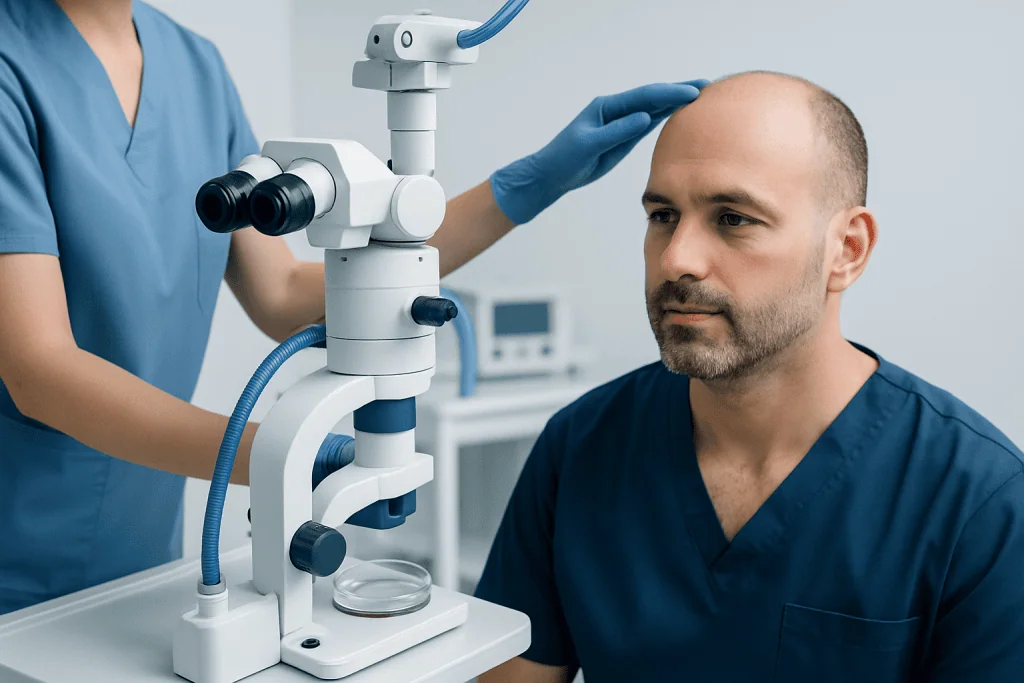
A 3000 grafts hair transplant may be suitable for adults with moderate thinning or recession who have enough healthy donor hair to safely support the procedure. It is often considered when non-scarring hair loss has created a receding hairline, thinning in the frontal scalp, or diffuse reduction in density that has not responded enough to medical care alone.
Good candidates generally have realistic expectations. A transplant redistributes existing hair; it does not create new follicles. This means results depend on how much donor hair is available and how carefully it must be preserved for future needs. In someone with advanced baldness, 3000 grafts may improve appearance but may not fully cover the front, mid-scalp, and crown at the same density.
The pattern and likely progression of hair loss also matter. Surgeons often assess how current loss compares with broader staging patterns, which can help patients understand what may happen over time. Related planning discussions may include Norwood scale stages and how many grafts different stages usually require.
People with active scalp inflammation, untreated medical causes of shedding, unrealistic cosmetic goals, or poor donor quality may need further evaluation before surgery. A specialist may recommend stabilizing the scalp first, adjusting medications, or delaying surgery until the pattern of loss is clearer.
How surgeons estimate coverage and density

When planning a 3000 grafts hair transplant, the surgeon looks at both the recipient area and the donor area. The recipient area includes the hairline, temples, frontal scalp, mid-scalp, and crown. The donor area is assessed for density, hair caliber, follicle quality, and how many grafts can be removed without making the donor region appear thin.
The hairline usually receives special attention because it is the most visible part of the transplant. Single-hair grafts may be placed at the front to create a softer, more natural edge, while multi-hair grafts are often used just behind it to build density. If too many grafts are spread into the crown in the same session, the front may look underpowered, so priorities are discussed before surgery.
Density is not usually measured only by total graft number. Surgeons consider how many grafts per square centimeter are needed for a natural illusion of fullness in each zone. Existing native hair is also important because transplanted grafts may be blended with retained hair to create better visual density than graft numbers alone might suggest.
Patients comparing graft-count articles often find it helpful to review related topics such as 2000 grafts hair transplant and 4000 grafts hair transplant to understand how treatment goals shift as hair loss becomes more or less extensive.
Procedure types and what happens during surgery
The most common techniques for a 3000 grafts hair transplant are follicular unit extraction and follicular unit transplantation. In follicular unit extraction, individual follicular units are removed directly from the donor area. In follicular unit transplantation, a strip of scalp is removed from the donor zone and then separated into grafts under magnification. Each method has advantages and may be chosen based on hairstyle preferences, donor characteristics, scarring considerations, and surgical goals.
During surgery, the scalp is numbed with local anesthesia. The team harvests grafts, prepares them carefully, and places them into tiny recipient sites designed to match the natural angle and direction of hair growth. The process can take several hours because graft handling, placement pattern, and preservation of follicle viability are important for survival and cosmetic outcome.
Procedure planning includes more than the day of surgery. The surgeon will discuss hairline design, donor management, whether one session is enough, and whether future sessions might be useful if hair loss progresses. Patients may be evaluated for hair transplant options alongside medical treatment to support long-term hair retention.
Some patients also have conditions such as diffuse thinning or a higher risk of continued loss in non-transplanted areas. In these situations, a balanced strategy may include PRP treatment for hair loss or medication guidance as part of an overall care plan, depending on the diagnosis and clinician recommendation.
Recovery timeline and expected results
Recovery after a 3000 grafts hair transplant is usually gradual. Mild swelling, redness, scabbing, tenderness, or tightness can occur in the first days after the procedure. Most patients receive instructions on washing, sleeping position, physical activity, and how to avoid rubbing or scratching the scalp while the grafts are settling.
It is common for transplanted hairs to shed in the first few weeks. This can feel surprising, but it is usually part of the normal cycle. The follicles remain in place under the skin and typically begin producing new hair in the following months. Early regrowth may be fine or uneven at first before thickening over time.
Visible improvement often begins after several months, with continued maturation through the first year. The exact timeline differs by person and by treatment area. The crown may appear slower than the frontal scalp, while density in the hairline and mid-scalp can become noticeable earlier.
Because surrounding native hair may continue to thin, long-term maintenance matters. Some patients benefit from ongoing medical support such as mesotherapy for hair loss or other clinician-directed therapies, especially when transplantation is part of a broader plan for progressive hair loss.
Cost factors and treatment planning
The cost of a 3000 grafts hair transplant depends on several clinical and logistical factors rather than graft count alone. Important variables include the surgical technique used, the complexity of the hairline design, the size and pattern of the recipient area, donor harvesting difficulty, the experience of the surgical team, anesthesia needs, and post-procedure follow-up.
Additional planning factors can also influence the overall treatment pathway. These include whether preoperative blood tests or scalp assessments are needed, whether medical treatment is recommended before or after surgery, and whether the patient may need staged sessions over time. Someone seeking both frontal restoration and crown work may need a different strategy than someone focused only on the hairline.
Travel, time away from work, aftercare products, and future maintenance can also shape practical decision-making. Rather than focusing only on the number 3000, it is usually more helpful to ask what the grafts are expected to achieve, how donor hair will be preserved, and whether the plan matches the likely progression of hair loss.
For international patients, centers such as Acibadem International offer evaluation and treatment through multidisciplinary specialists in JCI-accredited hospitals, with attention to diagnosis, planning, and follow-up. A consultation should always clarify expected coverage, the reasoning behind graft allocation, and the alternatives if surgery is not the best first step.
Prevention, self-care, and when to seek medical care
Not all hair loss should be treated with transplantation first. Gentle hair care, avoiding traction from tight hairstyles, managing heat and chemical damage, and addressing nutritional or medical issues may help reduce avoidable shedding. Early assessment is especially useful when the diagnosis is uncertain or the hair loss pattern is changing quickly.
Medical care is appropriate if hair loss is sudden, patchy, associated with itching, scaling, burning, pain, or visible scalp rash, or if there is rapid shedding after illness, childbirth, major stress, or medication changes. These features may suggest causes other than pattern hair loss and may require targeted treatment before any cosmetic procedure is considered.
Anyone considering a 3000 grafts hair transplant should seek specialist advice if they have a family history of extensive baldness, prior scalp surgery, scarring, autoimmune disease, or very limited donor density. A proper examination can help determine whether the scalp is healthy enough for surgery and whether the likely result matches the patient’s goals.
Patients should also contact their clinician after surgery if they develop increasing pain, marked swelling, fever, spreading redness, drainage, or any concern about healing. Prompt review helps distinguish expected recovery from a possible complication and supports safe aftercare.
Frequently asked questions
Is 3000 grafts enough for a full head of hair?
Usually not. A 3000 grafts hair transplant is more commonly used to improve moderate hair loss, especially the hairline, frontal scalp, and part of the mid-scalp. People with extensive baldness often need a staged approach or must prioritize the most visible areas.
How much area can 3000 grafts cover?
The answer depends on the size of the thinning area and the density goal. In many cases, 3000 grafts can provide meaningful coverage to the front and mid-scalp, while crown coverage may be limited if the same session must also rebuild the hairline.
Will 3000 grafts look dense?
They can look naturally fuller when placed strategically, especially if the patient has thick or curly hair and some existing native hair. However, density is influenced by hair caliber, color contrast, donor quality, and how broadly the grafts are spread.
How long does it take to see results after a 3000 grafts hair transplant?
Early shedding is common in the first weeks, so visible improvement is not immediate. New growth often begins after several months, with continued thickening and maturation over the first year.
Does the crown usually get treated with 3000 grafts?
Sometimes, but not always. If both the hairline and crown need work, the surgeon may recommend focusing first on the frontal areas because they frame the face and usually have the greatest cosmetic impact.
Can women have a 3000 grafts hair transplant?
Yes, in selected cases. Women with stable donor hair and a suitable pattern of thinning may be candidates, but they need careful assessment because some forms of female hair loss are diffuse and not ideal for transplantation.
What if hair loss continues after the transplant?
A transplant does not stop ongoing thinning in non-transplanted hair. This is why doctors often discuss long-term planning and may recommend medical treatment or follow-up care to help preserve existing hair.
References
- American Academy of Dermatology
- International Society of Hair Restoration Surgery
- British Association of Dermatologists
- National Health Service
- Mayo Clinic
This article is for general information only and is not a substitute for professional medical advice. Please consult a qualified doctor about your individual situation.
Hair transplant in Turkey — costs, graft counts & a free assessment
JCI-accredited · board-certified surgeons · reply within 24h
Add us as a Preferred Source to see more of our trusted health content across Google Search, AI Overviews and Discover.

More from the Health Library



Related Specialists

Assoc. Prof. Dr. Şevket Tolga Tombul
Urology
Asst. Prof. Dr. Hülya Kuşoğlu
Infectious Diseases & Clinical Microbiology
Prof. Dr. Murat Şamlı
Urology
Dr. Tuğba Emüroğlu
Internal Medicine