Hair Transplant After 10 Days: Timeline, What’s Normal, and Care Tips
At 10 days, transplanted grafts are usually more secure, but the scalp may still look pink, dry, or slightly sensitive. Mild scabbing, itching, tightness, and temporary shedding can be normal parts of healing.
Key Takeaways
- At 10 days, transplanted grafts are usually more secure, but the scalp may still look pink, dry, or slightly sensitive.
- Mild scabbing, itching, tightness, and temporary shedding can be normal parts of healing.
- Patients should avoid scratching, picking scabs, heavy sun exposure, and any activity their surgeon has restricted.
- Warning signs such as worsening pain, spreading redness, pus, fever, or a bad odor need medical review.
- The cosmetic result is not visible at 10 days; meaningful regrowth usually takes months.
Hair transplant after 10 days is often a turning point in recovery: most patients notice fewer scabs, milder redness, and a more settled scalp. Even so, healing is still ongoing, so gentle washing, sun protection, and following the surgeon’s aftercare advice remain important.
Overview: What Hair Transplant After 10 Days Usually Looks Like
Hair transplant after 10 days is usually a normal healing stage rather than the final result. By this point, many patients see that crusts are loosening, the scalp feels less tender, and the transplanted area looks calmer than it did during the first week. The grafts are generally more secure than they were in the first few days, but the skin is still recovering.
It is also common for the scalp to look uneven at this stage. Some people still have pinkness, dryness, or a “stubbly” appearance where transplanted hairs remain visible. Others may notice that the donor area at the back or sides of the scalp still feels mildly sore or numb. These changes do not usually mean something is wrong.
A helpful way to think about day 10 is that the procedure site has moved past the most delicate phase, but not past the healing phase. Patients still need to follow aftercare instructions closely. If a broader view of the procedure is helpful, they can read about hair transplant and how recovery unfolds over time.
What Is Normal at Day 10
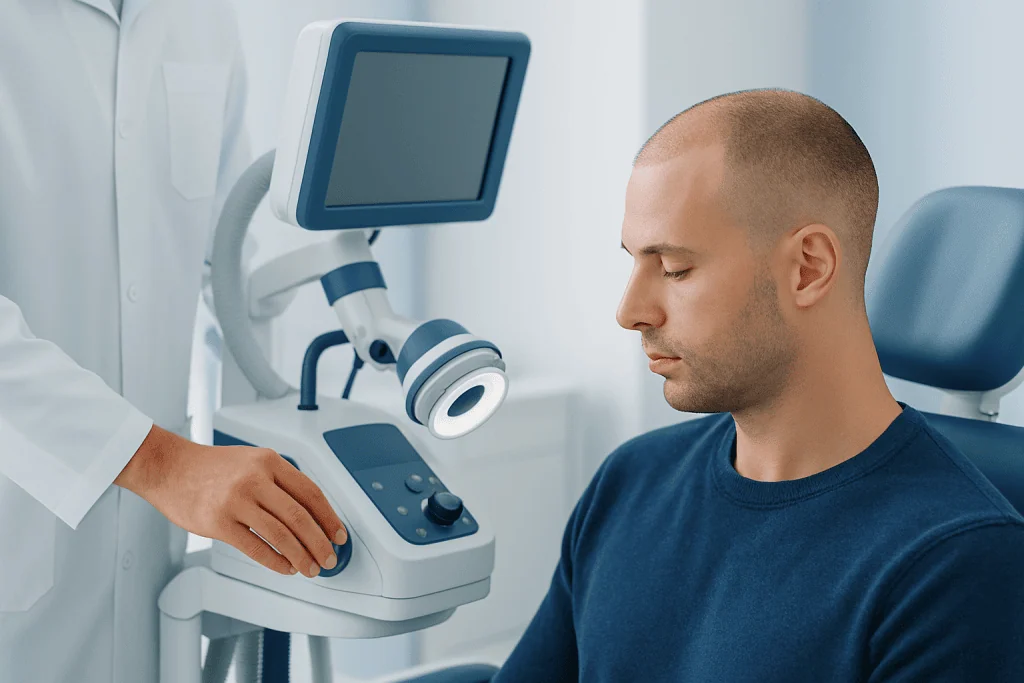
Many normal findings can still be present 10 days after a hair transplant. The exact appearance depends on the technique used, the size of the transplant, individual skin type, and how closely aftercare instructions were followed. It is common for one patient’s scalp to look nearly healed while another’s still appears visibly pink.
Normal features at this stage may include:
- Light scabbing or flaking that is coming away gradually
- Mild redness or pinkness in the recipient area
- Itching as the skin heals
- Dryness or a tight feeling of the scalp
- Short transplanted hairs still visible above the skin
- Mild tenderness or reduced sensation in the donor area
Some swelling may have already resolved by day 10, especially forehead swelling that can appear during the first few days. A small amount of sensitivity when washing the scalp can still be expected. Patients should not judge the success of the transplant by how dense it looks now, because the early appearance does not predict the final result.
Another important point is that the surrounding native hair may look thinner for a while. This can happen because the scalp is healing or because of temporary shedding. In some people, this overlaps with existing pattern hair loss such as male pattern baldness, which can affect how the area appears during recovery.
Symptoms and Changes That May Happen Next

After day 10, patients often enter a less dramatic but still active recovery period. Scabs usually continue to clear, and the scalp often becomes more comfortable. However, some changes that seem worrying at first are expected. One common example is shedding of transplanted hairs over the following days or weeks.
This temporary shedding is often called “shock loss.” The hair shafts may fall out, but the transplanted follicles usually remain beneath the skin and later begin a new growth cycle. Because of this, seeing hairs come out does not necessarily mean the grafts have failed. This stage can be emotionally difficult, but it is often part of the normal timeline.
Patients may also notice:
- Intermittent itching
- Mild numbness or tingling
- Continued pinkness, especially in fair or sensitive skin
- Pimple-like bumps later on as hairs start to re-emerge
Since day 10 is only one step in a longer process, it can help to compare it with the full hair transplant recovery timeline. That broader timeline explains why the visible appearance can change several times before meaningful regrowth starts.
Care Tips at 10 Days
At 10 days, aftercare is still important even though the grafts are more stable. Patients should continue following the surgeon’s specific instructions because individual recommendations may differ based on the technique used and the condition of the scalp. In general, gentle handling remains the best approach.
Helpful care measures often include:
- Washing the scalp gently as instructed, without vigorous rubbing
- Letting remaining scabs shed naturally rather than picking them off
- Using only approved shampoos, lotions, or sprays
- Protecting the scalp from direct sunlight
- Avoiding scratching, tight hats, or friction on the recipient area
- Sleeping in a comfortable position if the scalp is still sensitive
Patients are often eager to resume normal exercise, work routines, and headwear. The timing varies, so they should use their surgeon’s advice rather than general online timelines. Activities that cause heavy sweating, rubbing, or pressure on the scalp may still need to be limited for a little longer.
People who are planning future treatment may also benefit from understanding how transplant size relates to planning and healing. For example, hair graft count discussions can help explain why recovery differs between smaller and larger sessions.
What to Avoid
Even when healing seems to be going well, certain habits can irritate the scalp or interfere with recovery. Day 10 is not the time to test whether the area is “back to normal.” The skin barrier is still repairing, and unnecessary trauma may increase irritation.
Patients are usually advised to avoid:
- Picking at crusts or peeling flaky skin by force
- Scratching the scalp, even if itching is noticeable
- Strong hair products, dyes, or harsh topical treatments unless approved
- Intense sun exposure or tanning
- Swimming in pools, the sea, or hot tubs if not yet cleared
- High-contact sports or anything that could injure the scalp
Smoking and excess alcohol may also be discouraged in the early recovery period because they can affect circulation and skin healing. If patients are unsure about going back to exercise, travel, shaving, or wearing helmets or caps, it is safest to ask the treating team directly rather than rely on general advice.
Long-term planning matters too. Recovery can be influenced by the underlying pattern and progression of hair loss, including classifications such as the Norwood scale, which doctors use to describe male pattern thinning.
When to Seek Medical Care
Most symptoms at day 10 are mild and improving. The main question is whether the scalp is gradually getting better or becoming more inflamed and painful. A little redness, itching, or dryness can be normal, but worsening symptoms deserve attention.
Patients should contact their surgeon or seek medical care if they notice:
- Increasing pain rather than steady improvement
- Spreading redness, warmth, or swelling
- Pus, cloudy drainage, or a bad smell
- Bleeding that does not stop with gentle pressure
- Fever or feeling unwell
- Sudden loss of many grafts after trauma to the scalp
These signs do not always mean a serious problem, but they can suggest infection, significant irritation, or another complication that should be assessed by a professional. It is better to ask early than to wait and worry.
If revision of aftercare or specialist follow-up is needed, a center with experience in scalp and hair restoration can help guide the next steps. Acibadem International’s multidisciplinary specialists and JCI-accredited hospitals diagnose and treat hair loss and provide evaluation for international patients when appropriate.
What Results to Expect After Day 10
Ten days after a hair transplant is far too early to judge the final cosmetic outcome. At this stage, the focus is on healing, not growth. Even if the transplanted area looks patchy or thinner than expected, that does not reflect the end result.
In many patients, the visible hairs shed during the first few weeks, and a quieter period follows before new hairs begin to emerge. Early regrowth may start after several months, but the timing varies from person to person. Hair texture, thickness, and density continue to mature over time.
Patience is an important part of recovery. Comparing the scalp from one day to the next often creates unnecessary anxiety because progress is gradual. Looking at improvement over weeks and months gives a more accurate picture.
Patients who have concerns about healing, density, or future progression of hair loss should discuss them during follow-up visits. In some cases, medical therapy, scalp care, or future procedural planning may be recommended alongside the transplant itself.
Frequently asked questions
Are hair grafts secure after 10 days?
In most cases, grafts are much more secure by day 10 than they are in the first few days after the procedure. However, the scalp is still healing, so patients should continue to treat the area gently and follow their surgeon’s aftercare advice.
Is it normal to still have scabs 10 days after a hair transplant?
Yes, some light scabbing or flaking can still be normal at 10 days, especially if healing is slower or the transplant was larger. Scabs should come away gradually with gentle washing, not by picking.
Why does the scalp still look red after 10 days?
Mild redness or pinkness is common because the skin is still recovering from tiny incisions made during the transplant. It can last longer in people with fair or sensitive skin, but it should generally improve rather than worsen.
Can transplanted hairs fall out after day 10?
Yes. Temporary shedding of transplanted hair shafts in the following days or weeks is common and usually does not mean the follicles are lost. The follicles often stay in place and later begin a new growth cycle.
Can patients wear a hat 10 days after a hair transplant?
This depends on the surgeon’s instructions, the type of hat, and how the scalp is healing. If headwear is allowed, it should be loose and should not rub or press on the transplanted area.
When should someone worry after a hair transplant?
They should seek medical advice if symptoms are worsening instead of improving, especially with increasing pain, spreading redness, pus, fever, or a bad odor. These signs may point to infection or irritation and should be checked by a clinician.
References
- American Academy of Dermatology
- International Society of Hair Restoration Surgery
- British Association of Dermatologists
- National Health Service
- Mayo Clinic
This article is for general information only and is not a substitute for professional medical advice. Please consult a qualified doctor about your individual situation.
Hair transplant in Turkey — costs, graft counts & a free assessment
JCI-accredited · board-certified surgeons · reply within 24h
Add us as a Preferred Source to see more of our trusted health content across Google Search, AI Overviews and Discover.