

Vestibular Migraine Treatment: When Dizziness Is Not an Ear Problem

Vestibular migraine can cause vertigo or dizziness even when ear tests are normal. Diagnosis is based on symptoms, migraine history, and ruling out other causes.
Key Takeaways
- Vestibular migraine can cause vertigo or dizziness even when ear tests are normal.
- Diagnosis is based on symptoms, migraine history, and ruling out other causes.
- Treatment may include trigger management, acute symptom relief, and preventive migraine medicines.
- Regular sleep, hydration, meals, and stress management often help reduce episodes.
- New or severe neurological symptoms should be assessed urgently.
Vestibular migraine is a migraine-related condition that can cause dizziness, vertigo, motion sensitivity, and balance problems, sometimes without a strong headache. Treatment usually focuses on confirming the diagnosis, avoiding triggers, and using medicines and lifestyle measures to reduce attacks.
Overview
Vestibular migraine is a form of migraine that mainly affects balance and spatial orientation. Instead of causing only head pain, it can lead to vertigo, dizziness, motion sensitivity, unsteadiness, nausea, and trouble tolerating busy visual environments. For some people, headache is mild or even absent during attacks, which is one reason the condition is often confused with an inner ear problem.
The word “vestibular” refers to the body’s balance system, which involves the inner ear, brain, and eyes working together. In vestibular migraine, the symptoms are thought to come from migraine-related changes in the nervous system rather than from an ear infection or ear damage. This means a person may feel as if the room is spinning, rocking, or shifting even when hearing is normal.
Episodes can last from minutes to hours, and sometimes longer. Between attacks, some people feel completely well, while others notice lingering sensitivity to motion, fatigue, or “brain fog.” Because symptoms overlap with other balance disorders, careful evaluation is important before starting a treatment plan.
Symptoms
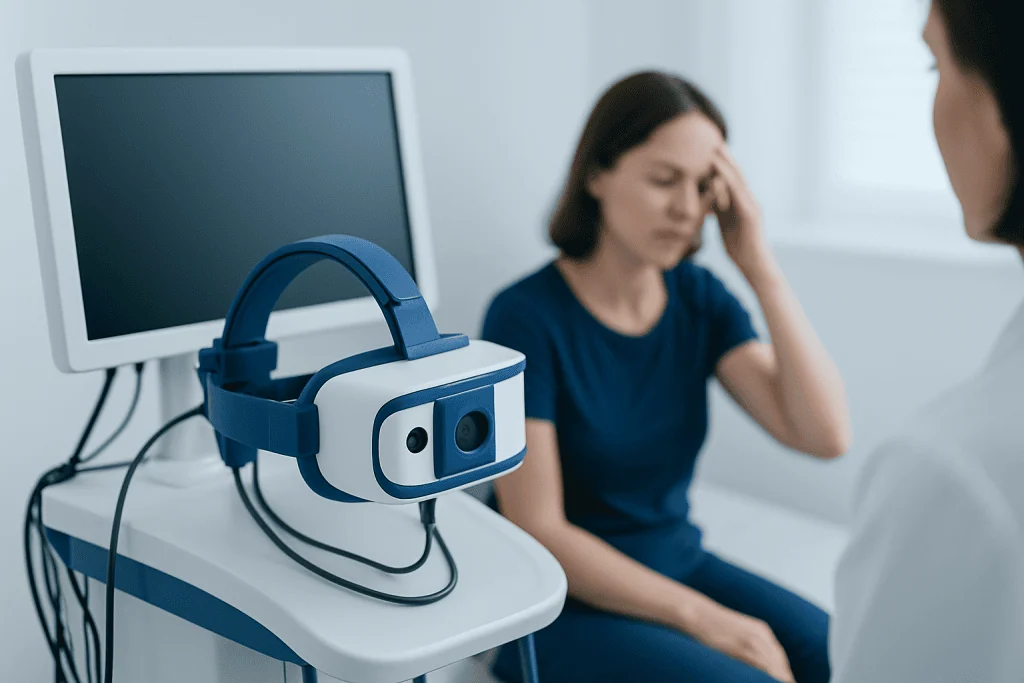
Symptoms of vestibular migraine vary from person to person. The most common complaint is vertigo, which may feel like spinning, swaying, rocking, or a sudden loss of balance. Some people notice symptoms when turning the head, walking through crowded spaces, riding in a car, or looking at moving screens and patterned floors.
Other common symptoms include nausea, vomiting, sensitivity to light or sound, blurred vision, and difficulty focusing. Some people have a typical migraine headache before, during, or after the dizzy spell, while others do not. A history of migraine, motion sickness, or sensitivity to visual motion can make the diagnosis more likely.
A vestibular migraine attack may include:
- Vertigo or dizziness
- Unsteadiness or imbalance
- Motion sensitivity
- Nausea with or without vomiting
- Headache, pressure, or head discomfort
- Sensitivity to light, sound, or smells
- Visual aura, such as flashing lights or zigzag lines, in some people
- Difficulty concentrating during or after an episode
Symptoms can overlap with conditions such as benign paroxysmal positional vertigo, Ménière disease, and anxiety-related dizziness. That is why repeated or unexplained episodes deserve medical attention rather than self-diagnosis alone.
Causes and Risk Factors

The exact cause of vestibular migraine is not fully understood, but it is linked to migraine pathways in the brain that affect balance, sensory processing, and pain. During an attack, the brain may become unusually sensitive to movement, visual input, and signals from the inner ear. This can create dizziness even when the ears themselves are structurally normal.
A personal or family history of migraine is one of the strongest risk factors. Hormonal changes, especially around menstruation, can also play a role in some people. The condition can affect adults of any age and may also occur in adolescents and children, though symptoms may be described differently in younger patients.
Common triggers are similar to those seen in other migraine disorders. They may include:
- Stress or sudden letdown after stress
- Poor sleep or changes in sleep schedule
- Skipping meals or dehydration
- Caffeine excess or withdrawal
- Alcohol in some individuals
- Certain foods, if personally identified as triggers
- Bright lights, screen exposure, or busy visual environments
- Hormonal fluctuations
Not every dizzy spell in a person with migraine is vestibular migraine. Inner ear disorders, medication side effects, low blood pressure, neurological illness, and anxiety can also contribute to dizziness. A doctor’s assessment helps separate these possibilities and guides the right treatment.
How It Is Diagnosed
There is no single blood test or scan that proves vestibular migraine. Diagnosis is usually based on a detailed symptom history, a migraine history, physical examination, and exclusion of other likely causes. Doctors often ask how long the episodes last, whether there is spinning or imbalance, what triggers symptoms, and whether light sensitivity, nausea, or headache occur around the same time.
Because dizziness can come from many systems in the body, the evaluation may include a neurological examination, hearing assessment, and balance testing when appropriate. Imaging such as MRI may be recommended if symptoms are new, unusual, progressive, or associated with warning signs. These tests are often used to rule out other conditions rather than to confirm vestibular migraine itself.
It can be especially important to distinguish vestibular migraine from inner ear disorders. Some patients are first treated for recurrent “ear vertigo” before it becomes clear that the pattern fits migraine. In selected cases, doctors may also consider related balance conditions such as migraine or vertigo when building the differential diagnosis.
Keeping a symptom diary can be very helpful. Recording the timing of dizziness, headache, menstrual cycle, sleep, meals, stress, and possible triggers can reveal patterns and make follow-up visits more productive.
Vestibular Migraine Treatment Options
Vestibular migraine treatment usually has two goals: relieving symptoms during an attack and reducing how often attacks happen. The plan depends on how frequent, severe, and disabling the episodes are. A doctor may recommend a combination of lifestyle measures, medicines used during attacks, and preventive treatment if symptoms happen often or interfere with work, driving, or daily activities.
During an acute episode, treatment may focus on easing nausea, motion sensitivity, and migraine symptoms. Some people are advised to rest in a quiet, dark room, stay hydrated, and limit sudden movement until symptoms settle. Migraine-specific or anti-nausea medicines may be considered, depending on the person’s pattern of symptoms and other health conditions. Broader migraine treatment strategies are often adapted for vestibular symptoms as well.
If attacks are frequent, preventive treatment may be discussed. Options may include medicines commonly used to prevent migraine, such as certain blood pressure medicines, anti-seizure medicines, antidepressants, or newer migraine-targeted therapies when appropriate. Doctors choose them carefully based on side effects, other medical issues, age, and whether headache, anxiety, or sleep problems are also present.
Some patients also benefit from vestibular rehabilitation, a form of physical therapy designed to improve balance and reduce motion sensitivity. This can be especially useful when symptoms linger between attacks or when the person becomes less active because of fear of dizziness. In some cases, a multidisciplinary evaluation that includes neurology and neurology expertise helps clarify the diagnosis and tailor treatment.
Prevention and Self-care
Daily habits can make a meaningful difference in vestibular migraine control. Many people improve when they follow a regular routine for sleep, meals, hydration, and physical activity. The goal is to reduce sudden changes that can make the migraine brain more sensitive.
Helpful self-care steps often include drinking enough water, not skipping meals, limiting personal food triggers if they are clearly identified, and reducing excess caffeine or alcohol when they worsen symptoms. Stress management can also help. Gentle exercise, relaxation techniques, and pacing activities may reduce the cycle of tension, poor sleep, and symptom flares.
For people with motion or visual sensitivity, practical adjustments can help. These may include taking breaks from screens, using consistent lighting, avoiding rapid head movements during a flare, and gradually returning to normal activity rather than staying inactive for long periods. Some people with persistent imbalance may benefit from formal physical therapy and rehabilitation focused on balance retraining.
Self-care does not replace medical evaluation. Persistent or changing symptoms should still be reviewed by a qualified doctor, especially if current strategies are no longer helping or if the diagnosis remains uncertain.
When to See a Doctor
Anyone with repeated episodes of unexplained vertigo, dizziness, or imbalance should see a doctor, especially if symptoms interfere with walking, driving, work, or quality of life. Medical assessment is also important when dizziness occurs with migraine symptoms, because treatment can be different from treatment for an ear disorder.
Urgent medical attention is needed if dizziness comes with chest pain, fainting, severe dehydration, a new severe headache, weakness, numbness, trouble speaking, double vision, or difficulty walking that is suddenly worse than usual. These symptoms can point to problems that need immediate care and should not be assumed to be migraine.
If symptoms are complex or the diagnosis is unclear, specialist input may be useful. Acibadem International’s multidisciplinary specialists in JCI-accredited hospitals evaluate and treat vestibular migraine and related balance disorders for international patients.
Follow-up matters because treatment often needs adjustment over time. With the right diagnosis and a structured plan, many people are able to reduce attacks and regain confidence in daily activities.
Frequently asked questions
Is vestibular migraine an ear problem?
Vestibular migraine is usually considered a migraine-related nervous system disorder rather than a primary ear disease. It affects balance and motion processing, so symptoms can feel very similar to an inner ear problem. That is why careful evaluation is often needed.
Can vestibular migraine happen without a headache?
Yes. Some people have vertigo, dizziness, nausea, or visual sensitivity with little or no head pain. A history of migraine or migraine features such as light sensitivity can still support the diagnosis.
How long do vestibular migraine attacks last?
Attack length varies widely. Some episodes last minutes, while others continue for hours or occasionally longer. A doctor can help determine whether the pattern fits vestibular migraine or another balance disorder.
What helps during a vestibular migraine attack?
Many people feel better resting in a quiet, dim environment, staying hydrated, and limiting sudden head movement. Depending on the situation, a doctor may also prescribe medicine for migraine symptoms or nausea. Treatment should be individualized rather than copied from someone else’s plan.
Can vestibular migraine be prevented?
In many cases, yes, the frequency of attacks can be reduced. Common approaches include regular sleep, steady meals, hydration, stress management, trigger awareness, and preventive migraine medicines when needed. Improvement often takes time and follow-up.
Is vestibular rehabilitation useful?
It can be helpful, especially for people with lingering imbalance, motion sensitivity, or fear of movement between attacks. These exercises are designed to retrain balance and improve tolerance to motion. They work best when guided by a qualified clinician and matched to the person’s diagnosis.
References
- American Migraine Foundation
- National Institute of Neurological Disorders and Stroke
- Bárány Society
- International Headache Society
- National Institute on Deafness and Other Communication Disorders
This article is for general information only and is not a substitute for professional medical advice. Please consult a qualified doctor about your individual situation.
Migraine in Turkey — costs, top hospitals & a free quote
JCI-accredited · board-certified surgeons · reply within 24h
Add us as a Preferred Source to see more of our trusted health content across Google Search, AI Overviews and Discover.
Check your numbers in seconds
BMI, calories, due date, blood pressure and 30+ more clinical calculators — free, instant, doctor-reviewed ranges.

More from the Health Library



Related Specialists

Assoc. Prof. Dr. Ahmet Özveren
Medical Oncology
Dr. Göker Utku Değer
Orthopedic Surgery & Traumatology
Dr. Işıl Kesimci
Intensive Care
Prof. Dr. Kazım Üzüm
Pediatric Cardiology