

Follow-Up Tests After Treatment in Turkey: When You May Need Imaging or Labs

Follow-up tests after treatment in Turkey may include imaging or labs if your doctor needs to monitor healing, symptoms, or medication effects.
After treatment in Turkey, you may be advised to have imaging or laboratory tests before you travel home or once you are back. This guide helps you understand why follow-up tests are sometimes needed, how to plan them around travel, and what practical steps make the process smoother.
At a glance
- Who this is for: International patients returning home after treatment in Turkey
- Main purpose: To help you plan scans, blood tests, and other follow-up checks safely
- Common timing: Before discharge, within days to weeks, or at scheduled milestones
- What to organize: Reports, images, prescriptions, appointments, and a contact point
- Travel tip: Confirm whether any test should happen before you fly
Why follow-up tests may be part of your plan
Follow-up tests after treatment in Turkey are not unusual, and they do not automatically mean something is wrong. In many cases, your medical team simply wants to confirm that recovery is progressing as expected, check how your body is responding to treatment, or create a clear baseline for future comparison once you are back home.
The type of follow-up you need depends on the treatment you had, your medical history, your medicines, and any symptoms you develop afterward. Some patients need only a routine blood test or wound check, while others may need imaging such as ultrasound, X-ray, CT, MRI, or a repeat specialist review at a specific interval.
If you are traveling internationally, timing matters. A test that would be easy to schedule locally can become more complicated if it is needed just after you return home or if it affects whether you are fit to fly. That is why it helps to ask before discharge what needs to happen in Turkey, what can wait, and what should be arranged in your home country.
At Acibadem International, international patient services can help you understand your discharge plan, gather your reports, and coordinate practical communication between hospital teams and your next doctor. This can make the transition home feel more organized and less stressful.
Which imaging or lab tests you may be asked to have
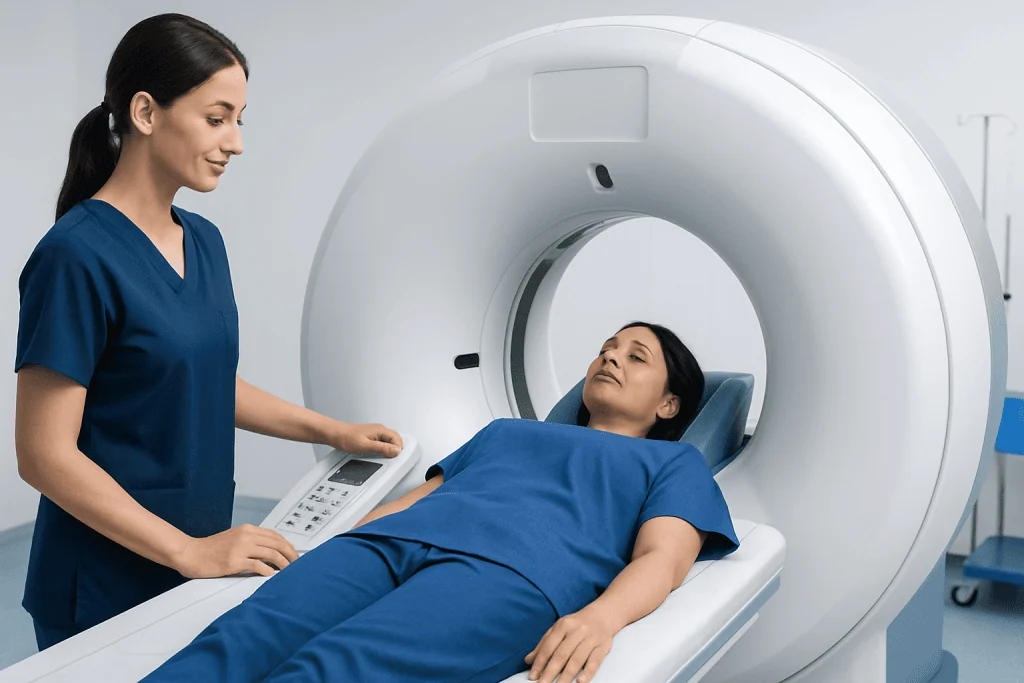
Imaging tests are usually requested when your doctor needs a visual check on healing, positioning, swelling, fluid collection, blood flow, or treatment response. Depending on your case, this could include an ultrasound, chest X-ray, mammography, CT, MRI, bone scan, or another modality that suits the area being monitored.
Laboratory tests are often used to assess infection markers, blood counts, kidney or liver function, electrolytes, clotting, hormone levels, inflammation, or medication effects. If you started new medicines, had a major procedure, or received treatment that can affect organs or blood values, repeat labs may be part of safe follow-up.
Some follow-up checks are standard at fixed intervals, while others are symptom-driven. For example, new pain, swelling, fever, unusual drainage, shortness of breath, dizziness, or medication side effects may prompt extra testing sooner than planned. Your care team may also recommend tests if they want to compare your progress with pre-treatment results.
If you are unsure why a test has been requested, ask for the purpose in plain language. It is reasonable to ask what the test is checking, when it should be done, how urgent it is, and what symptoms should make you seek care earlier.
When tests should happen: before you fly or after you return home

One of the most important questions is whether your follow-up test needs to happen before travel. Some checks are best completed in Turkey, especially if they are tied closely to discharge, medication adjustment, drain removal, post-operative imaging, or confirmation that you are stable for a long journey. In those cases, delaying the test until after your flight may not be ideal.
Other tests can safely be done after you return home, especially if they are planned at a later milestone such as two weeks, six weeks, or three months after treatment. If that is the case, you will want to leave Turkey with a written schedule stating what should be done, when it should be done, and which specialty should review the results.
Travel can also affect timing. Long flights, time-zone changes, jet lag, mobility limitations, and the stress of travel may influence how soon you can comfortably attend a scan or blood draw at home. If a test is needed very soon after arrival, try to arrange it before you leave Turkey or book it in advance in your home country.
For patients treated at Acibadem International, discharge coordination often includes practical guidance on whether a test is urgent, routine, or conditional on symptoms. This can be particularly helpful if your treatment involved several specialties and your follow-up plan includes more than one checkpoint.
What to take home with you
Your results and records matter as much as the test itself. Before you leave Turkey, ask for a discharge summary in English if needed, your medication list, instructions for wound care or activity restrictions, and a clear follow-up schedule. If imaging was performed, ask how the images and reports will be shared, such as on a secure portal, CD, film, or digital link.
It is also helpful to have copies of important pre-treatment results if your home doctor may need comparisons later. This can include pathology reports, operative notes, blood tests, radiology reports, and specialist recommendations. Keeping everything in one folder, both digitally and on paper, can save time if you need urgent review after travel.
If language is a concern, ask whether key documents can be translated or summarized in English before discharge. International patient teams and interpreters can often help ensure that instructions are easier to follow once you are home and no longer face-to-face with your treating team.
Make sure you also know who to contact if results raise a question. A named department, international patient coordinator, or hospital contact point is reassuring when you are in another country and need clarification quickly.
How to coordinate care with your doctor at home
Follow-up works best when your home doctor understands what treatment you had in Turkey and what questions still need monitoring. If possible, book a review appointment with your local physician or specialist before you travel, especially if you already know you will need blood tests, a scan, stitch removal, medication monitoring, or rehabilitation review soon after returning.
Share your discharge summary and ask your local doctor whether they can order the recommended tests on the suggested timeline. This is particularly important in healthcare systems where specialist imaging or laboratory access may take time. Planning early reduces the risk of missed deadlines or confusion over who is responsible for ordering what.
If your local team has questions, it can help to authorize communication between hospitals. Acibadem International commonly supports international patients by helping transfer records and clarifying follow-up instructions, which can be useful when your treatment involved surgery, oncology, cardiology, orthopedics, fertility care, or another specialty where continuity matters.
You should also ask who will review the results once the tests are done. A scan or blood test is only one part of care; the key step is knowing whether the results go to your doctor at home, back to your treating team in Turkey, or both.
Warning signs that may mean you need testing sooner
Even with a well-planned schedule, symptoms can change the timeline. Seek medical advice promptly if you develop fever, worsening pain, sudden swelling, unusual bleeding, increasing redness, shortness of breath, chest pain, severe headache, confusion, persistent vomiting, dehydration, or any symptom your team specifically warned you about. These may not always require imaging or labs, but they should not be ignored.
Medication side effects can also trigger early testing. Blood thinners, pain medicines, antibiotics, steroids, hormone therapies, and other treatments may sometimes require monitoring for bleeding risk, infection, kidney or liver function, glucose changes, or other safety checks depending on your situation.
If you are unsure whether a symptom is urgent, use common-sense safety first. Contact your local emergency service for severe symptoms, and separately inform your treating team if appropriate. For non-emergency concerns, a call to your home doctor or the international patient contact provided by your hospital can help you decide whether you need a same-day review, labs, or imaging.
Remember that travel fatigue can overlap with recovery symptoms. Mild tiredness may be expected, but symptoms that are worsening, sudden, or out of proportion deserve attention rather than watchful waiting alone.
Step by step
- Ask for a written follow-up plan before discharge. Before leaving the hospital, ask exactly which tests may be needed, why they are needed, and when they should happen. A written timeline is easier to follow than verbal instructions, especially after travel.
- Confirm whether any test must be done in Turkey. Some imaging or lab checks are important before you fly or before your medication is adjusted. Make sure you understand what cannot safely be postponed until you return home.
- Collect your reports, images, and medication list. Take copies of discharge documents, radiology reports, blood results, prescriptions, and any pathology or procedure notes. Keep both digital and printed copies if possible so you can share them quickly.
- Book your home follow-up early. If you know you will need tests after travel, try to arrange appointments before you leave Turkey. This is especially useful if access to imaging or specialist reviews can take time in your home country.
- Know who will review the results. Clarify whether results should go to your local doctor, your treating team in Turkey, or both. This prevents delays where a test is done but no one has responsibility for interpreting the next step.
- Watch for symptoms that may change the schedule. New fever, swelling, unusual pain, bleeding, breathlessness, or medication side effects may mean earlier review is needed. Do not wait for a routine appointment if symptoms are worsening or severe.
Your checklist
- Discharge summary in English if needed
- List of recommended follow-up tests and exact timing
- Copies of imaging reports and access to image files
- Recent blood test results and any pending results
- Medication list with doses and duration
- Contact details for your hospital team or coordinator
- Home doctor or specialist appointment booked
- Travel advice confirmed, including fitness to fly if relevant
Key takeaways
- Follow-up imaging or lab tests after treatment in Turkey are often routine and used to monitor recovery or treatment response.
- The most important practical point is timing: some tests should be completed before you fly, while others can be arranged at home.
- Leave Turkey with a written plan, copies of reports, and a clear contact person for questions.
- Coordinate early with your doctor at home so recommended tests are not delayed.
- Seek prompt medical advice if new or worsening symptoms appear, even if your planned follow-up date is later.
Frequently asked questions
Do follow-up tests mean my treatment in Turkey did not work?
Not necessarily. Follow-up tests are often a routine part of good aftercare and may simply confirm healing, establish a baseline, or monitor the effects of treatment or medication. Many patients have blood tests or imaging even when recovery is going exactly as expected.
Should I have my scan or blood test before I leave Turkey?
It depends on the purpose and timing of the test. If it affects discharge, fitness to fly, medication changes, or early complication monitoring, your doctor may want it done in Turkey. If it is scheduled for a later recovery milestone, it may be reasonable to arrange it in your home country.
What if I cannot get an appointment quickly when I return home?
Try to arrange local follow-up before you travel if you already know you will need it. If delays are likely, ask your team in Turkey whether the test can be done earlier there or whether an alternative local plan is acceptable. Keeping complete records also helps your home doctor prioritize what is most important.
Can Acibadem International help after I go home?
International patient services can often help with practical coordination such as sharing records, clarifying discharge instructions, and guiding you on which department to contact. This is useful if you or your local doctor need context about the treatment you received or the planned follow-up schedule.
What records should I keep for follow-up care?
Keep your discharge summary, prescriptions, procedure notes if provided, pathology results if relevant, imaging reports, image files, and recent blood test results. It also helps to have a written timeline of when each follow-up test or appointment should happen.
If I feel well, can I skip the recommended tests?
It is best not to skip them without discussing it with a doctor. Some issues do not cause obvious symptoms early on, and routine tests may be designed to catch changes before they become more serious. If a test is difficult to arrange, ask whether the timing can be adjusted rather than simply canceling it.
Who should I contact if I develop symptoms after I return home?
For severe or urgent symptoms, contact your local emergency services or seek immediate medical care. For non-emergency concerns, contact your local doctor and, if relevant, the hospital contact or international patient coordinator who managed your case in Turkey so your follow-up can be guided appropriately.
Add us as a Preferred Source to see more of our trusted health content across Google Search, AI Overviews and Discover.
More Patient Guides

When Can You Fly After Surgery in Turkey? A Procedure-Specific Guide
When can you fly after surgery in Turkey? Your safe travel date depends on your procedure, recovery, fit-to-fly review and airline rules.
8 min read
At Acibadem, How to Prepare for a Safe Flight Home
Safe flight home after treatment starts with medical clearance, medication planning, and airport support from Turkey or Istanbul.
9 min read
Returning Home with New Medicines from Turkey: How to Organize Your First Week
Returning home with new medicines from Turkey is easier when you organize your first week with clear labels, timing, supplies, and follow-up…
9 min read