

Flying to Turkey with Medical Devices or Implants: What to Prepare Before Travel

Flying to Turkey with medical devices or implants is usually manageable if you carry device documents, medicines, and airport letters before travel.
If you are flying to Turkey with a medical device or implant, the key is simple preparation: carry the right documents, pack medicines correctly, and tell your airline and care team about any support you may need. A little planning before departure can make airport screening, boarding, and your arrival in Turkey much smoother.
At a glance
- Best time to prepare: Start 2-3 weeks before departure
- Most important documents: Device card, doctor letter, prescription list, passport
- Carry-on essentials: Medicines, chargers, batteries, backup supplies
- Who to inform: Airline, airport assistance team, receiving hospital
- Special attention: Security screening, oxygen or battery rules, mobility support
What counts as a medical device or implant when you travel
When you are planning a trip for treatment or follow-up, it helps to think broadly about what airport staff, airlines, and your hospital may consider a medical device. This can include implanted items such as pacemakers, defibrillators, joint replacements, stents, cochlear implants, pain pumps, neurostimulators, and breast implants. It can also include external devices like CPAP machines, insulin pumps, glucose monitors, wheelchairs, walkers, portable oxygen equipment, feeding pumps, or drainage systems.
Not every device creates the same travel considerations. Some mainly affect airport screening, while others change how you pack, whether you need airline approval, or what support you need during the flight. Battery-powered devices, oxygen-related equipment, and anything that uses medication delivery often need extra checks before you leave home.
If you are unsure whether your device matters for travel, assume it does and ask. Your local doctor, the device manufacturer, your airline, and your receiving hospital in Turkey can all help clarify what is needed. If you are traveling to Acibadem International, the international patient team can usually help you understand what information to share in advance so your arrival and appointments are easier to coordinate.
The documents you should carry with you
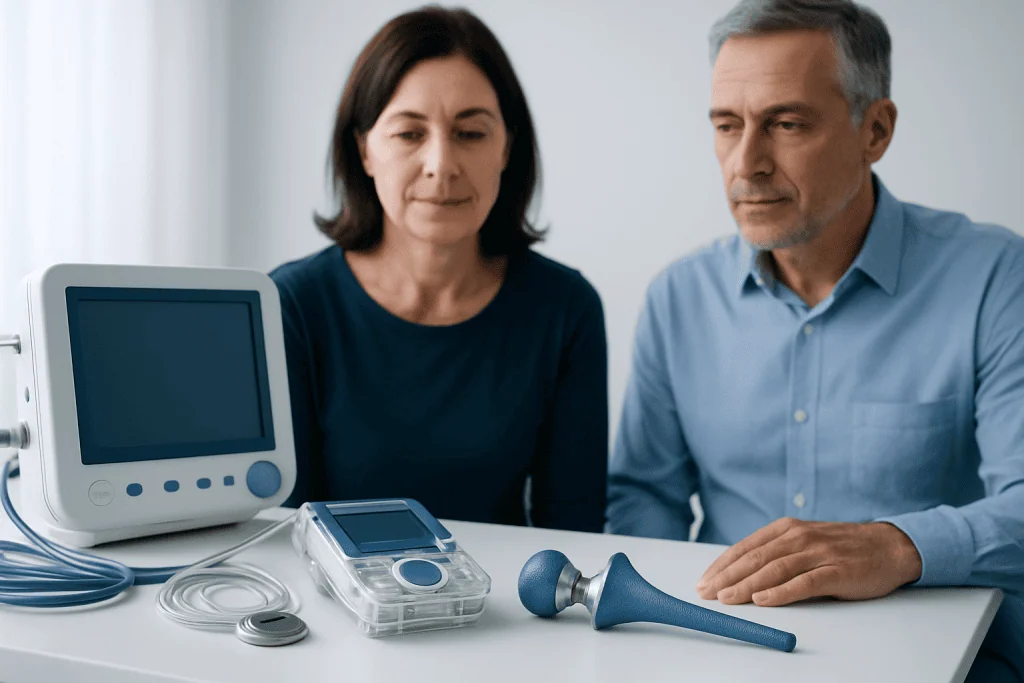
Your most helpful travel tool is a small, organized set of medical documents kept in your hand luggage. At minimum, carry your device identification card if you have one, a recent doctor letter explaining your condition and device, your current prescription list, and contact details for both your home clinician and the hospital you will visit in Turkey.
Your doctor letter should be practical, not overly technical. It should state what device or implant you have, whether it affects airport security screening, whether you need medicines or supplies in your cabin bag, and whether you need any assistance during the journey. If you use a battery-powered device or oxygen-related equipment, ask for this to be clearly mentioned.
It is wise to keep both paper and digital copies. Store scanned copies on your phone and email them to yourself or a family member. If your records are not in English, ask whether a short English summary can be provided; this can be especially useful at check-in, security, or on arrival in Istanbul or elsewhere in Turkey.
If you are traveling for care at Acibadem International, send your records ahead of time if requested. This helps the care coordination team prepare for your visit, check whether any special scheduling is needed, and guide you on what to bring on the day of your appointment.
Airport security and screening with implants

Airport security can feel stressful if you have an implant or wear an external device, but in most cases it is manageable with a calm explanation and your documents ready. Tell security staff before screening that you have an implant or medical device. If you have a card from the manufacturer or your doctor, present it early rather than waiting for questions.
Some implants, such as joint replacements, may trigger metal detectors. Others, such as pacemakers or neurostimulators, may require special handling depending on the screening method used at the airport. Rules and screening technologies can vary, so it is safest not to assume that every airport will follow the same process.
If your device manufacturer has specific screening guidance, follow that advice and carry it with you. You can politely request alternative screening if needed, especially if you have been advised to avoid certain scanners or prolonged contact with handheld screening equipment. Build extra time into your airport arrival so you do not feel rushed if additional checks are needed.
If you travel through Istanbul Airport or another major Turkish airport, staff are used to supporting international passengers with medical needs. Still, clear communication helps. A simple sentence such as, “I have an implanted medical device and documentation with me,” often makes the process smoother.
Packing medicines, batteries, chargers, and backup supplies
Always keep essential medicines and device-related supplies in your carry-on, not your checked luggage. Bags can be delayed, and some items should not be exposed to extreme temperatures in the hold. Pack enough for your entire trip plus a small extra margin in case of delays, schedule changes, or an extended stay.
If your device uses batteries, a charger, connection cables, or a remote control, pack those where you can reach them easily. Label everything clearly. If you rely on disposable supplies such as infusion sets, dressings, tubing, sensors, catheters, or masks, divide them between bags if possible so one problem does not leave you without everything.
Before flying, check your airline’s rules for batteries, especially lithium batteries, spare battery packs, and powered mobility equipment. Airlines often have specific requirements for watt-hour limits, terminal protection, packaging, and advance approval. This is particularly important for power wheelchairs, CPAP units with battery packs, and other powered medical devices.
A practical packing list may include:
- Your device card and doctor letter
- All prescription medicines in original packaging where possible
- Chargers, plugs, adapters, and spare batteries
- Extra dressings or consumables for several days beyond your planned stay
- A simple written summary of what to do if the device alarms, stops, or needs troubleshooting
When to contact the airline and your hospital before travel
Do not wait until the day of travel if you may need special support. Contact your airline as soon as your flights are booked if you use a wheelchair, require airport assistance, travel with portable oxygen, carry a powered device, need priority boarding, or may have difficulty walking long distances. Large airports can involve a lot of walking, waiting, and transfers.
Ask the airline exactly what they require. Some airlines need advance forms for oxygen, battery-powered equipment, or fitness-to-fly confirmation. Others may ask for device specifications or manufacturer details. Get this in writing if possible, and keep a screenshot or email confirmation with your travel documents.
You should also inform your receiving hospital in Turkey about any implant or device before you arrive. This matters not only for logistics but also for your care planning. For example, imaging compatibility, assistance moving around the hospital, or the need for charging access may affect your appointment day.
At Acibadem International, international patient services can help coordinate practical points such as interpreter support, arrival planning, and sharing your records with the relevant team before you come. That can be especially helpful if you have a complex device, reduced mobility, or several specialists involved in your care.
Planning for the flight, arrival in Turkey, and your first days
Try to make the travel day physically easy on yourself. Choose comfortable clothing that gives you access to any external device without making you feel exposed. Keep medicines, snacks, water guidance from your doctor, and anything you may need for symptom management close at hand. If you are at risk of fatigue, breathlessness, pain, or low blood sugar, plan around that rather than trying to push through a long airport day.
On arrival in Turkey, pace yourself. Immigration, baggage collection, and ground transport can take time. If you have arranged airport assistance or a hospital transfer, confirm the meeting point before departure and keep local contact numbers available. If your phone may not work immediately on landing, print the key details as backup.
During your first 24 hours, focus on keeping your routine stable. Charge devices, organize supplies, check that your medicines are stored correctly, and note the route and timing for your hospital visit. If anything about your device changes during travel, such as unusual alerts, swelling, pain, or malfunction, contact your doctor or the receiving team promptly.
If you are heading to Acibadem International, you may find it reassuring that their hospitals regularly support international patients with interpreters, coordinated scheduling, and practical guidance around admission and follow-up. Even so, bring your own documents and supplies rather than assuming everything can be replaced immediately on arrival.
Red flags and situations where you should ask for medical advice before flying
Most people with stable implants or medical devices can fly, but not every situation is routine. Ask your doctor for advice before travel if your device was implanted very recently, if you have had a recent infection, if the device has been adjusted lately, or if you have had new symptoms such as chest pain, fainting, worsening shortness of breath, bleeding, or device alarms.
You should also seek advice if you are traveling with oxygen, have significant mobility limitations, need regular wound care, or depend on a device that would create a serious problem if it stopped working mid-journey. In those cases, your doctor may recommend a specific fitness-to-fly plan, extra monitoring, or changes to your itinerary.
Do not rely on general online advice for device-specific restrictions. Airline policies, airport processes, and individual medical conditions vary. Your own clinician and the device manufacturer are the safest sources for instructions that apply to you.
If your trip to Turkey is for surgery, imaging, or specialist review, mention your device early when booking. That allows the hospital team to advise you on compatibility questions, preparation steps, and whether any extra records are needed before your appointment.
Step by step
- List every device, implant, and essential supply. Write down everything you use or have implanted, including model names if you know them. This helps you ask the right questions of your doctor, airline, and receiving hospital instead of relying on memory under stress.
- Request a travel letter from your doctor. Ask for a short, clear letter in English if possible. It should explain your condition, your device or implant, your medicines, and any special needs during screening or the flight.
- Check airline rules early. Review your airline's medical equipment, battery, oxygen, and mobility assistance policies as soon as you book. If approval is needed, complete it well before departure so you are not trying to solve paperwork at the airport.
- Pack all essentials in your carry-on. Keep medicines, device supplies, chargers, batteries, and backup items with you in the cabin. Add enough extra supplies for delays and keep items organized so they are easy to show if asked.
- Allow more time at the airport. Arrive earlier than usual in case security screening takes longer or you need assistance moving through the terminal. Extra time lowers stress and gives staff room to help you properly.
- Share your medical information with the hospital in Turkey. Send relevant records ahead if your hospital requests them. This helps the team prepare for your visit and advise you on practical points such as imaging compatibility, mobility support, or what to bring.
- Make an arrival plan for your first 24 hours. Know how you will get from the airport to your accommodation or hospital, how to charge or store your equipment, and who to call if something changes. A simple written plan can prevent last-minute confusion after a long flight.
Your checklist
- Passport and travel insurance details
- Device or implant identification card
- Doctor letter for travel and airport screening
- Current medication list and prescriptions
- All medicines in carry-on luggage
- Chargers, adapters, cables, and spare batteries
- Extra device supplies for delays or extended stay
- Airline approval emails for special equipment if needed
- Hospital contact details in Turkey and at home
Key takeaways
- Most people can manage flying to Turkey with medical devices or implants safely with advance planning.
- Carry device documents, medicines, and essential supplies in your hand luggage, not checked baggage.
- Tell your airline and airport staff early if you need screening adjustments, mobility support, or approval for equipment.
- Share device details with your hospital in Turkey before travel so appointments and support can be planned properly.
- Ask your own doctor for advice if your device is new, recently adjusted, or causing symptoms.
Frequently asked questions
Can I fly to Turkey if I have a pacemaker or other implant?
In many cases, yes, if your condition is stable and your doctor has not advised against travel. Carry your implant card and a doctor letter, and tell airport security before screening.
Will airport scanners affect my implanted device?
Screening methods and device guidance can vary, so you should follow the advice given by your doctor and device manufacturer. If you have documentation about screening precautions, show it to security staff and request alternative screening if appropriate.
Do I need a medical certificate to travel with a device or implant?
Not everyone needs formal clearance, but a doctor letter is strongly recommended. Some airlines specifically require additional forms for oxygen, powered equipment, or certain medical conditions, so check with your carrier in advance.
Should I pack my device supplies and medicines in checked luggage?
No, essential medicines and device-related supplies should stay in your carry-on whenever possible. Checked bags can be delayed, lost, or exposed to temperatures that may not be suitable for some medicines or equipment.
What if I use a battery-powered medical device on the journey?
Check the airline's battery policy before you fly, especially for lithium batteries and spare power packs. Bring chargers and backup power if advised, and keep manufacturer details available in case the airline asks for specifications.
Do I need to tell my hospital in Turkey about my implant before arrival?
Yes, that is a good idea, especially if you are attending for treatment, imaging, or surgery. The hospital may need to consider compatibility, mobility support, appointment timing, or other practical details before you arrive.
Can Acibadem International help if I am traveling with a complex device?
Acibadem International's patient services can help you organize records, coordinate with the hospital team, and plan practical support such as interpreters or arrival logistics. It is still important to bring your own documents, supplies, and any airline approvals with you.
Add us as a Preferred Source to see more of our trusted health content across Google Search, AI Overviews and Discover.
More Patient Guides

Pain Control After Treatment in Turkey: What Patients Should Expect and Ask About
Pain control after treatment in Turkey usually includes a tailored medicine plan, clear warning signs, and follow-up support before you leave Istanbul.
9 min read
Managing Medicines Across Borders After Treatment in Turkey
Managing medicines across borders after treatment in Turkey means carrying clear documents, checking import rules, and planning refills before you fly.
8 min read
When to Delay Your Medical Trip to Turkey for Safety Reasons
When to delay your medical trip to Turkey: postpone travel if you have new illness, unstable symptoms, infection, or unsafe recovery logistics.
8 min read