Childhood Seizure Staring Spells: When an EEG Evaluation Is Needed

Many staring spells in children are harmless, but some are seizures that need medical assessment. An EEG records brain electrical activity and is a key test when seizure-related staring spells are suspected.
Key Takeaways
- Many staring spells in children are harmless, but some are seizures that need medical assessment.
- An EEG records brain electrical activity and is a key test when seizure-related staring spells are suspected.
- Absence seizures often cause sudden pauses in activity with brief unresponsiveness and quick recovery.
- Parents can help by noting how long episodes last, what the child does during them, and whether the child responds.
- Prompt evaluation is important if staring spells are frequent, affect learning, or occur with unusual movements or confusion.
Childhood staring spells are common, but not all are seizures. When episodes are brief, repetitive, or linked to unresponsiveness, an EEG evaluation can help identify whether a child has absence seizures or another neurological condition.
Overview
Staring spells are episodes in which a child seems to look blankly ahead, pause activity, or appear briefly disconnected from their surroundings. In many cases, this behavior is not caused by a seizure. Children may daydream, become deeply focused, feel tired, or briefly “zone out” during routine activities. Even so, some staring spells are seizure-related and deserve closer attention.
One of the most common seizure types linked to staring is an absence seizure. During an absence seizure, a child may suddenly stop what they are doing, stare, and not respond for a few seconds before returning to normal activity. Because these episodes are often short and subtle, they can be mistaken for inattention or behavior problems. This is one reason careful evaluation is important.
An electroencephalogram, or EEG, is a test that records the brain’s electrical activity. It is often used when a doctor wants to determine whether childhood seizure staring spells are actually seizures or another cause of brief unresponsiveness. The EEG does not hurt, and it can provide valuable information about whether abnormal brain wave patterns are present.
Symptoms and signs to notice
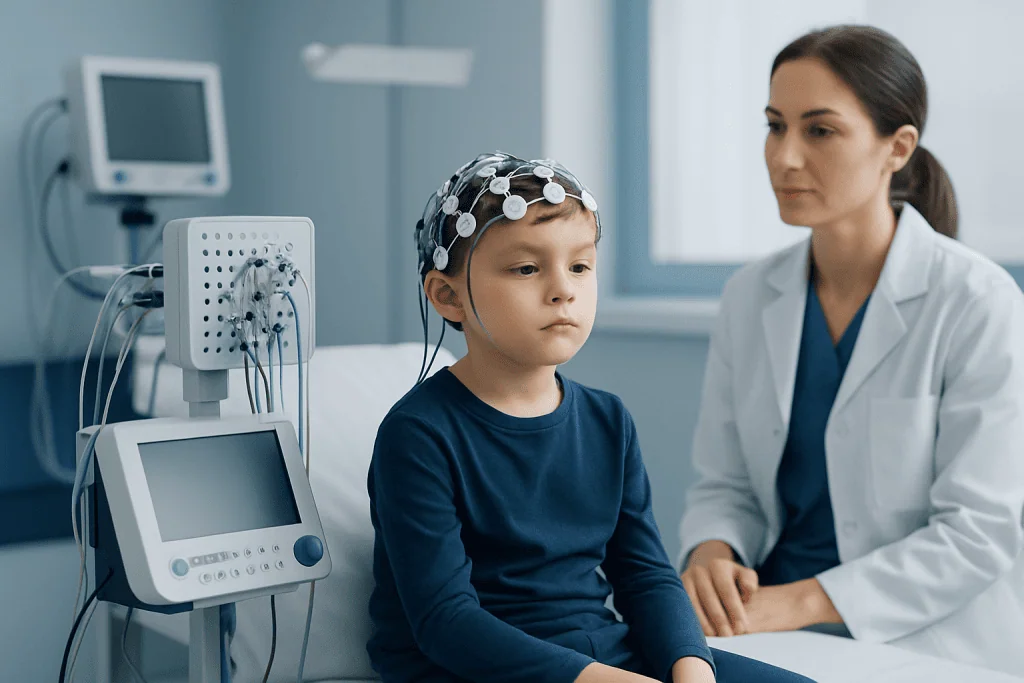
Parents, caregivers, and teachers are often the first to notice a pattern. A child with seizure-related staring spells may suddenly stop speaking mid-sentence, pause while eating or playing, or fail to respond when their name is called. The episode is typically brief, and the child often resumes activity right away without realizing anything happened.
Some children also have subtle associated signs. These may include blinking, lip smacking, chewing movements, small hand motions, or slight eyelid fluttering. In some seizure types, the child may seem confused, sleepy, or disoriented afterward, though classic absence seizures usually end quickly without a prolonged recovery period.
Features that may raise concern for seizures include:
- Episodes that happen repeatedly over days or weeks
- Sudden onset and abrupt ending
- Lack of response to voice or touch during the event
- Brief automatisms such as blinking or mouth movements
- Changes in school performance, attention, or memory
- Events followed by confusion, fatigue, or unusual behavior
Not every child will show the same pattern. Keeping track of what happens before, during, and after an episode can help a pediatric neurologist decide whether the events are more likely to be seizures, daydreaming, fainting, sleep-related events, or another issue.
Causes and risk factors

Childhood seizure staring spells can occur for several reasons. A common cause is absence epilepsy, a condition in which brief seizures produce sudden pauses in awareness. Other seizure types can also look like staring episodes, including focal impaired awareness seizures, which begin in one part of the brain and may be associated with repetitive movements or a longer recovery phase. Families looking into related seizure disorders may also encounter information on epilepsy.
Not all staring spells are neurological seizures. Children may daydream, become engrossed in play, feel emotionally overwhelmed, or have attention difficulties. In some situations, sleep deprivation, stress, fever, certain medications, or illness may make episodes more noticeable or may lower the threshold for seizures in a child who is already predisposed.
Risk factors for seizure-related staring spells can include a family history of seizures, a known neurological condition, developmental differences, prior head injury, or a history of brain infection or structural brain abnormality. However, many children with absence seizures are otherwise healthy and have normal development. That is why the pattern of the events, rather than risk factors alone, guides the need for testing.
When an EEG evaluation is needed
An EEG evaluation is often recommended when a child has repeated staring episodes that cannot be clearly explained by daydreaming or distraction. Doctors are especially likely to suggest an EEG if the child does not respond during spells, if episodes occur many times a day, or if there are associated movements such as eyelid fluttering or lip smacking. An EEG may also be advised when school concerns arise because brief seizures can interfere with attention and learning.
The goal of the EEG is to look for abnormal electrical patterns in the brain that support a diagnosis of epilepsy or a specific seizure type. For example, children with absence seizures often show a characteristic pattern during the test. Some EEGs are performed while the child is awake, while others include sleep or sleep deprivation to increase the chance of capturing abnormalities. In some cases, a longer or video EEG is useful if routine testing is inconclusive.
Parents sometimes worry that a normal EEG means nothing is wrong, but interpretation can be more nuanced. A normal routine EEG does not completely rule out seizures, because abnormal activity may not happen during the recording. If concern remains high, the specialist may recommend follow-up testing, additional monitoring, or referral for more advanced EEG evaluation and pediatric neurology assessment.
How doctors diagnose staring spells
Diagnosis begins with a detailed history. The doctor will ask when the episodes started, how long they last, how often they happen, and whether the child responds when spoken to or touched. Video recordings from a phone can be very helpful, especially when the events are brief and do not happen during the office visit.
The physical and neurological examination helps look for clues about overall brain and nervous system function. Depending on the child’s age and symptoms, the doctor may ask about sleep habits, recent illness, school performance, development, and any family history of seizures or neurological conditions. If the episodes are associated with fainting, headache, weakness, or abnormal movements, other causes may also need to be considered.
Testing often includes an EEG, and in some cases brain imaging may be recommended if the history suggests focal seizures or another structural concern. A specialist may discuss whether pediatric neurology care is appropriate, especially when spells are frequent, the diagnosis is uncertain, or treatment decisions are needed. The process is designed to separate seizure disorders from non-seizure causes so the child receives the most appropriate care.
Treatment options and what happens next
Treatment depends on the cause. If the staring spells are confirmed to be seizures, the doctor may recommend anti-seizure medication tailored to the seizure type, the child’s age, and overall health. Many children with absence seizures respond well to treatment and are able to continue normal daily activities with good follow-up. The specialist will explain the expected benefits, possible side effects, and the importance of regular review.
If the episodes are not seizures, treatment focuses on the underlying explanation. That may mean reassurance for benign daydreaming, support for sleep problems, attention evaluation, or management of another neurological or medical issue. In some children, observation over time is appropriate if the pattern is not clearly concerning and the examination is otherwise normal.
Follow-up matters because symptoms can change as a child grows. Doctors may repeat EEG testing, adjust medication, or recommend further assessment if new symptoms appear. In some cases, additional services such as child neurology evaluation or developmental support can help families understand the diagnosis and plan daily routines, school communication, and safety measures.
Prevention, self-care, and when to see a doctor
Not all seizure-related staring spells can be prevented, but healthy routines may help reduce triggers in some children. Adequate sleep, regular meals, good hydration, and taking prescribed medication exactly as directed are all important. Families should also inform teachers and caregivers about what the episodes look like and what to do if one occurs.
Keeping a seizure diary can be very useful. Parents can note the date, time, duration, what the child was doing beforehand, whether the child responded, and how they behaved afterward. Short videos, when safely possible, often help the doctor distinguish among seizure types and non-seizure events.
A child should be seen by a doctor if staring spells are frequent, increasing, affecting school or daily activities, or happening with jerking, stiffening, falls, confusion, or unusual behavior. Urgent medical care is needed if an episode lasts several minutes, causes injury, involves trouble breathing, or if the child does not return to their usual state. Near the end of the evaluation process, some families may seek care at centers such as Acibadem International, where multidisciplinary specialists in JCI-accredited hospitals diagnose and treat neurological conditions in international patients.
Frequently asked questions
Are all staring spells in children seizures?
No. Many children have staring episodes related to daydreaming, fatigue, deep concentration, or attention difficulties. A medical evaluation helps determine whether the spells are harmless or due to seizures.
What does an absence seizure look like?
An absence seizure often looks like a sudden blank stare with brief unresponsiveness. The child may pause mid-activity for a few seconds and then quickly return to normal without remembering the event.
When should a child have an EEG for staring spells?
An EEG is often considered when staring spells are frequent, repetitive, and involve a lack of response. It is especially helpful if teachers or parents notice abrupt pauses, eyelid fluttering, or episodes that interfere with learning.
Can an EEG miss seizures?
Yes. A routine EEG may be normal if no abnormal brain activity occurs during the recording. If suspicion remains high, the doctor may recommend repeat testing, sleep-deprived EEG, or longer video EEG monitoring.
How can parents help the doctor make a diagnosis?
Parents can keep a record of when episodes happen, how long they last, and whether the child responds during them. A brief video of the event, if safely obtained, can also be very helpful during the medical visit.
Do staring seizures affect school performance?
They can. Frequent brief seizures may interrupt attention, learning, and classroom participation, especially if they happen many times a day. Proper diagnosis and treatment can help reduce this impact.
References
- World Health Organization
- International League Against Epilepsy
- American Academy of Pediatrics
- National Institute of Neurological Disorders and Stroke
- Centers for Disease Control and Prevention
This article is for general information only and is not a substitute for professional medical advice. Please consult a qualified doctor about your individual situation.
Explore treatments in Turkey — costs, top hospitals & a free quote
JCI-accredited · board-certified surgeons · reply within 24h
Add us as a Preferred Source to see more of our trusted health content across Google Search, AI Overviews and Discover.