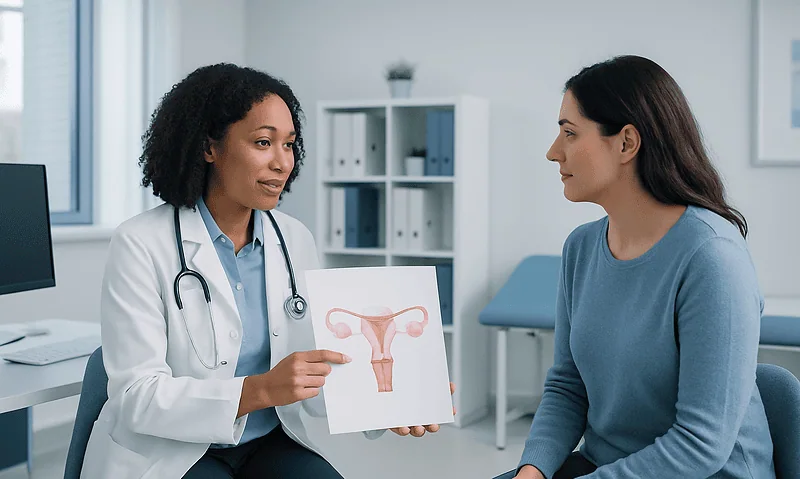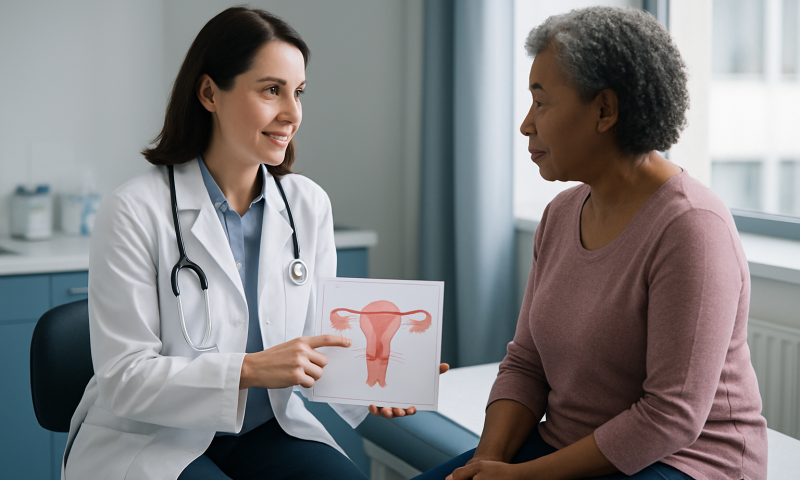
What Happens During a Hysteroscopy: The Thin Scope, the Cervix and How Long It Takes
A hysteroscopy is an examination of the inside of the uterus using a thin, lighted telescope passed through the vagina and cervix, so no…
Read article

Articles on the health of women: periods, fertility, pregnancy, menopause, breast and pelvic health, with clear guidance on when a symptom should be seen by a doctor.
A hysteroscopy is an examination of the inside of the uterus using a thin, lighted telescope passed through the vagina and cervix, so no…
You have two ovaries, one on each side of the uterus, low in the pelvis, roughly a few inches below the belly button and…
Shoulder-tip pain after gynecologic laparoscopy is usually caused by leftover carbon dioxide gas irritating the diaphragm, which shares nerve pathways with the shoulder. It…
Uterine fibroids that cause no symptoms are usually monitored with periodic check-ups rather than treated, because they are benign and typically shrink after menopause.…
A hysterectomy does not cure endometriosis, because the condition is tissue growing outside the uterus, and removing the uterus leaves those lesions behind. Surgery…
Polycystic ovary syndrome is usually identified from a combination of signs rather than a single test: periods that are irregular, infrequent, or absent; evidence…
ICSI (intracytoplasmic sperm injection) is a laboratory technique used within an IVF cycle. In conventional IVF, thousands of sperm are placed with each egg…
A hysterectomy usually takes about one hour in the operating room, though complex or cancer-related procedures can run two to three hours. Most people…
Menopause itself is a single point in time: the day marking 12 consecutive months without a period, typically around age 51. The transition around…
Pain after a hysterectomy is usually strongest in the first two to three days and then eases steadily, with most people needing regular pain…
Usually, no. If you have definitely had chickenpox before, you are almost certainly immune, and contact with an infected person during pregnancy poses very…
Yes. Most people with polycystic ovaries or PCOS can get pregnant, although it may take longer or require help. The main obstacle is irregular…
Most couples who have regular, unprotected sex conceive within a year, roughly 84 out of 100, according to UK national health data. The…
Endometriosis is tissue similar to the womb lining growing outside the uterus, most often on the ovaries, pelvic lining, bowel or bladder. Inside the…
A smear test, also called cervical screening or a Pap test, is a quick check in which a clinician gently collects cells…
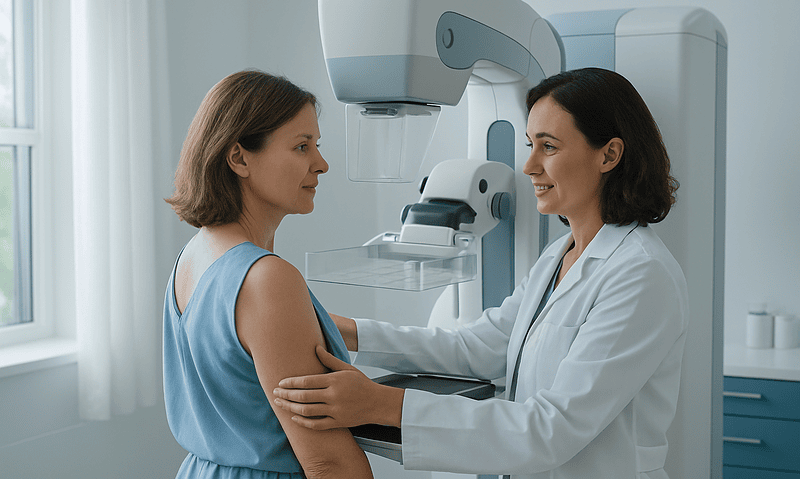
A mammogram is a low-dose X-ray of the breast, used either to screen for cancer before symptoms appear or to investigate a lump or…
Ovarian cysts fall into distinct types, and the type largely decides the plan. Functional cysts arise from normal ovulation and usually disappear on their…
You cannot guarantee prevention, but you can meaningfully lower your risk of gestational diabetes by entering pregnancy near a healthy weight, staying physically active…
Choose which cookies you allow. Essential cookies are always on because the site cannot work without them.