

Uterine Fibroids: When Monitoring Is Enough and When Medication or Surgery Is Considered
Key Takeaways
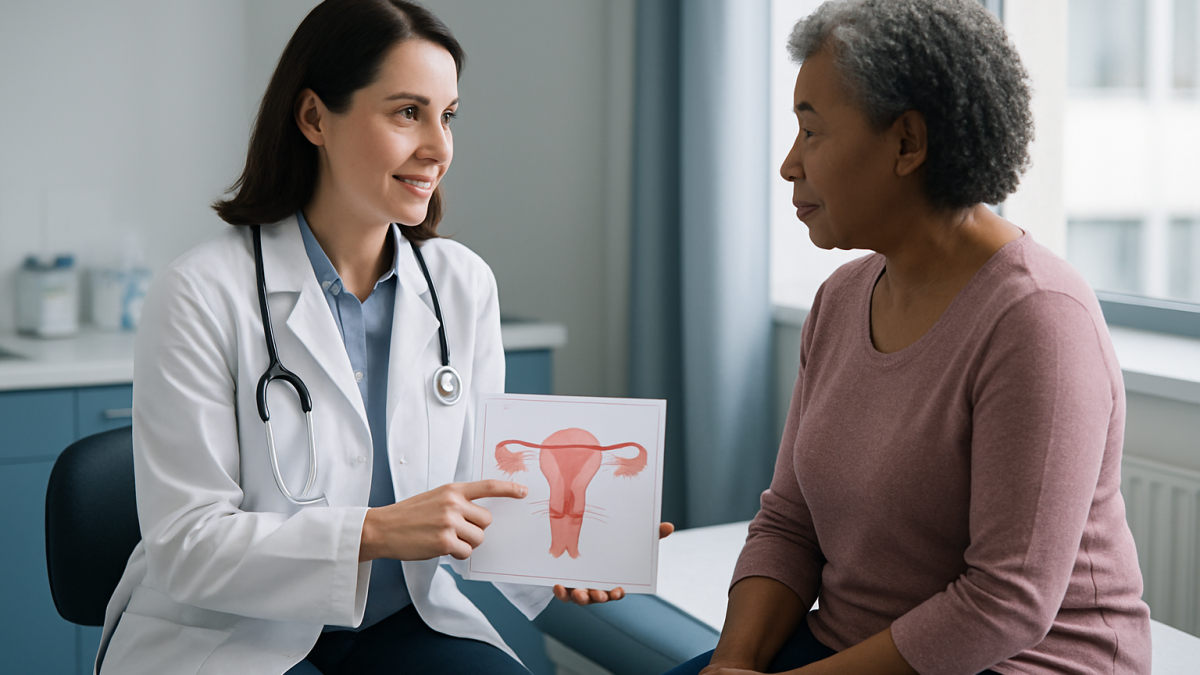
- Fibroids that cause no symptoms are usually monitored rather than treated, because they are benign and most shrink after menopause without intervention.
- Fibroid location often predicts symptoms better than size: submucosal fibroids inside the cavity drive heavy bleeding, while subserosal ones on the surface cause pressure.
- No medicine removes a fibroid; medication classes either reduce bleeding and pain or temporarily shrink fibroids, which regrow once treatment stops.
- Hysterectomy is the only treatment after which fibroids cannot recur, and it is also the most invasive and the least commonly needed.
- Uterine artery embolization shrinks fibroids without an incision and typically allows return to normal activity within one to two weeks, but is usually avoided when pregnancy is planned.
- Slowly developing iron-deficiency anemia is the most common real harm of untreated symptomatic fibroids and is one of the clearest signals that monitoring alone is no longer enough.
Uterine fibroids that cause no symptoms are usually monitored with periodic check-ups rather than treated, because they are benign and typically shrink after menopause. Medication is generally considered when bleeding, pain or pressure affect daily life, and surgery or a uterus-sparing procedure when symptoms persist, fibroids are large or growing, or fertility is a concern. The right path depends on symptoms, age, plans for pregnancy and the treating team's assessment.
The ultrasound report arrives in the patient portal before the follow-up call does. Three words stand out: “multiple uterine leiomyomas.” A search on the phone translates that into fibroids, and within minutes one browser tab is promising a supplement that dissolves them, another describes a hysterectomy, and a third insists nothing needs to be done at all. The heavy periods that prompted the scan now feel like a decision waiting to be made.
That whiplash is common, and it is worth pausing on. Fibroid treatment options really do run the full range from doing nothing beyond a yearly check to major surgery, and the same fibroid can sit at either end depending on whose body it is in. Size matters less than most people expect. Symptoms, age, and whether pregnancy is on the horizon matter far more.
This article walks through how clinicians actually sort those options, what each one involves, and what the evidence does and does not support.
Why watchful waiting is a real fibroid treatment option, not a delay
Clinicians call it “watchful waiting” or “expectant management,” which is a plain way of saying: keep an eye on it, and act only if something changes. For fibroids, this is not a consolation prize. It is often the recommended plan.
The logic rests on three facts. Fibroids are benign (non-cancerous) growths of the muscle wall of the uterus, so leaving them in place carries no risk that they will become malignant; a cancerous fibroid-like tumor, called leiomyosarcoma, is a separate and rare disease rather than a fibroid that turned. Many fibroids cause no symptoms at all and are discovered by chance during a scan for something else. And because fibroid growth depends on the hormones estrogen and progesterone, most shrink after menopause without any intervention (NHS).
What monitoring usually looks like is a symptom conversation and, if the clinician judges it useful, a repeat pelvic ultrasound to see whether the fibroid has grown. The interval varies with the individual situation and is set by the treating team; there is no universal schedule. The point is to notice a change early enough that options remain open.
Watchful waiting is not a passive state for the person living it. Keeping a simple diary of period heaviness, pain, and any new pressure symptoms turns a vague sense that “things are worse” into information a doctor can act on. Iron levels may be checked if bleeding is heavy, because a slow drift into anemia can happen without dramatic symptoms (Mayo Clinic).
The honest framing is this: monitoring is chosen because the treatments all carry some cost in recovery, side effects or risk, and for someone with mild or no symptoms that cost is not worth paying yet.
What actually happens inside the uterus when fibroids cause symptoms
A fibroid begins as a single muscle cell in the uterine wall that starts dividing when it should not. Over years it forms a firm, rubbery knot ranging from smaller than a pea to larger than a grapefruit. Roughly 1 in 3 women develop at least one, most often between the ages of 30 and 50 (NHS), and by age 50 the majority of women have had them, many without ever knowing (NIH).
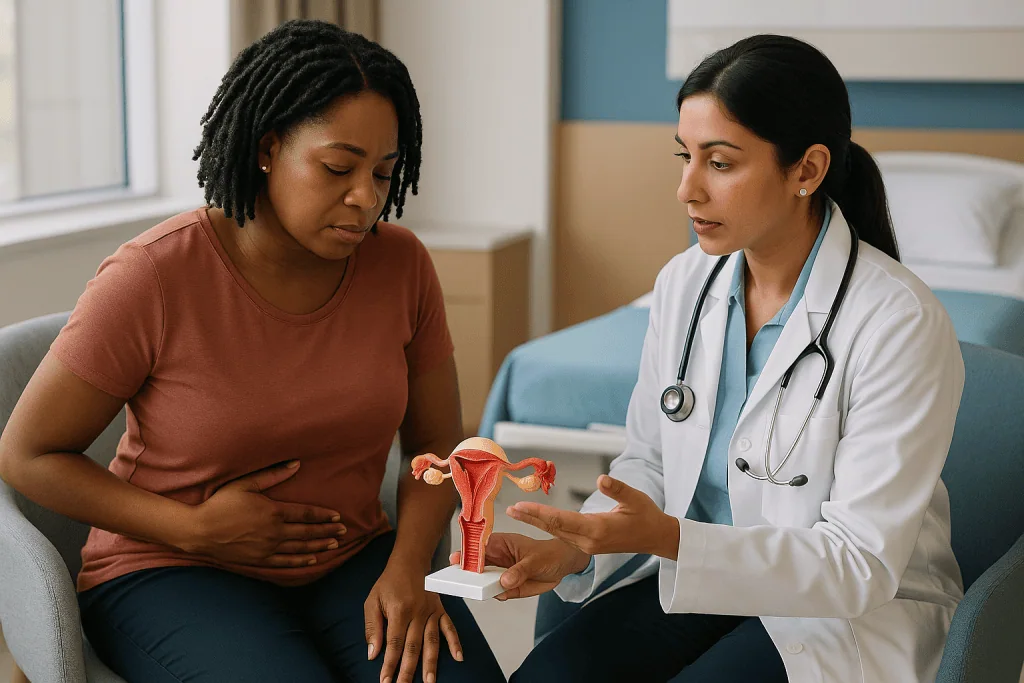
Where the fibroid sits explains most of what a person feels. Clinicians describe three main positions:
- Submucosal: bulging into the uterine cavity, just under the lining. Even small ones here can cause very heavy or prolonged periods, because they enlarge the bleeding surface and interfere with how the uterus clamps down to stop flow.
- Intramural: within the thickness of the muscle wall. These can enlarge the uterus overall and contribute to both bleeding and a sense of pelvic fullness.
- Subserosal: on the outer surface, sometimes on a stalk. These rarely change periods but press on neighbors: the bladder in front (frequent urination), the rectum behind (constipation), or nerves and vessels in the pelvis (backache, leg swelling).
That geography is why two people with the “same size” fibroid can have completely different experiences, and why a report that lists only dimensions tells a fraction of the story.
Pain from fibroids usually comes from pressure or from heavy cramping periods. Sudden, sharp pain is less typical and can signal a fibroid outgrowing its blood supply (degeneration) or twisting on its stalk, both of which need prompt assessment (Cleveland Clinic).
Understanding this mechanism reframes the treatment question. The goal is not to eliminate every fibroid on the scan; it is to address the specific problem a specific fibroid is causing.
Who is usually asked to wait, and who is usually offered treatment
Guidelines from the NHS and major US centers converge on the same sorting principle: treat the person, not the picture. In practice, the conversation tends to fall into three groups.
Usually asked to wait. Someone with fibroids found incidentally, with periods that are manageable, no anemia and no pressure symptoms, will typically be offered monitoring. So will someone approaching menopause with tolerable symptoms, since the natural drop in estrogen and progesterone often does the work that a procedure would (NHS).
Usually offered medication first. When heavy bleeding is the main complaint and there is no urgency around fertility, medicines that lighten periods are commonly the first step. They are reversible, they can be stopped if unhelpful, and for some people they are enough.
Usually offered a procedure. Surgery or a uterus-sparing procedure comes into the discussion when symptoms persist despite medication, when anemia is significant or recurrent, when a fibroid is large or growing quickly, when there is doubt about the diagnosis, or when a fibroid distorts the uterine cavity in someone trying to conceive (Mayo Clinic).
Two factors weigh heavily throughout. Age relative to menopause shifts the balance toward waiting; a fibroid that is troublesome at 38 may be a non-issue at 52. And plans for pregnancy shift the balance toward uterus-sparing choices and away from anything that would damage the lining or remove the organ.
Notice what is missing from this list: a size threshold above which surgery becomes automatic. Large fibroids that cause no trouble can be watched; small ones in the wrong spot can justify a procedure. The treating team weighs the whole picture, and the person’s own priorities about bleeding, fertility and recovery time are part of that picture, not an afterthought.
Fibroid treatment options at a glance
Before going deeper into each approach, it helps to see the landscape side by side. The table below summarizes the main categories as described by mainstream guidance; specifics for any individual are for the treating team to determine.

| Approach | What it does | Uterus kept? | Typical role |
|---|---|---|---|
| Watchful waiting | Symptom review and periodic imaging | Yes | No or mild symptoms; near menopause |
| Non-hormonal medicines | Reduce bleeding or pain during periods; do not shrink fibroids | Yes | Heavy or painful periods, first-line |
| Hormonal medicines | Thin the lining, lighten or stop periods; some temporarily shrink fibroids | Yes | Heavy bleeding; short-term shrinkage before surgery |
| Hysteroscopic myomectomy | Removes fibroids inside the cavity through the cervix, no incision | Yes | Submucosal fibroids causing bleeding or affecting fertility |
| Abdominal or laparoscopic myomectomy | Removes fibroids from the wall or surface, uterus repaired | Yes | Symptomatic fibroids when future pregnancy is wanted |
| Uterine artery embolization | Blocks blood supply so fibroids shrink | Yes | Symptomatic fibroids; pregnancy not planned |
| Focused ultrasound or ablation | Heats fibroid tissue to shrink it | Yes | Selected fibroids; availability varies |
| Endometrial ablation | Destroys the uterine lining to reduce bleeding | Yes | Heavy bleeding with small fibroids; no future pregnancy |
| Hysterectomy | Removes the uterus | No | Severe symptoms, other options failed or unsuitable, no future pregnancy |
Two patterns stand out. Every option except one keeps the uterus, so “treatment” and “hysterectomy” are far from synonyms. And every uterus-sparing option leaves open the possibility of new fibroids forming later, which is one reason age and proximity to menopause carry so much weight in the decision (Mayo Clinic; NHS).
Fibroid medication options: what each class actually does
No tablet removes a fibroid. That single fact clears up most confusion about medicines. What they can do is change the symptoms, and some can temporarily shrink the fibroid. Clinicians choose among several classes, and the prescribing clinician decides whether any is suitable, for how long and in what form (NHS).
Antifibrinolytics (tranexamic acid is the generic name) slow the breakdown of blood clots in the uterine lining, so bleeding during a period is reduced. They are taken only on bleeding days and do not affect hormones or fertility.
Anti-inflammatory pain relievers (NSAIDs) reduce prostaglandins, the chemicals that drive cramping and contribute to heavy flow. They ease pain and may modestly lighten bleeding.
Progestin-releasing intrauterine systems are small devices placed in the uterus that release a hormone locally, thinning the lining so periods become much lighter or stop. They also provide contraception. They are generally not suitable when a fibroid significantly distorts the cavity.
Combined hormonal contraceptives and oral or injected progestins regulate the cycle and thin the lining, reducing flow. They do not shrink fibroids.
GnRH analogues switch off the ovaries’ hormone production, creating a temporary menopause-like state. Fibroids shrink and bleeding often stops, but hot flashes and bone density loss limit use to short courses, typically in the months before surgery to make an operation easier (NHS). Fibroids regrow once treatment stops. Newer oral GnRH antagonists work on the same pathway and are sometimes combined with low-level hormone “add-back” to soften side effects; their role is defined by the prescribing clinician.
Timelines are worth knowing. Bleeding-focused medicines usually show their effect within a few cycles; hormonal shrinkage is measured over a few months and reverses after stopping. If a medicine is not helping, that is information to bring back to the clinician, not a reason to change it alone.
Can you heal fibroids without surgery?
It depends entirely on what “heal” means. If the goal is to make heavy periods lighter and pain manageable, then yes, many people manage fibroids without surgery for years, using medication, a uterus-sparing procedure, or simply time (MedlinePlus). If the goal is to make the fibroid disappear through diet, herbs or supplements, the honest answer is that no such approach has been shown to do that.
There is genuine middle ground. Uterine artery embolization and focused ultrasound shrink fibroids without a surgical incision. Hormonal medicines shrink them temporarily. Menopause shrinks them permanently for most people. None of these are “surgery,” and all are supported by mainstream evidence.
What about the claims that circulate most widely online?
- Diet. Observational studies have linked higher intake of fruit, vegetables and dairy with a somewhat lower likelihood of developing fibroids, and higher red meat and alcohol intake with a higher likelihood (NIH). Those are associations about risk, not evidence that changing diet shrinks an existing fibroid. A balanced diet is sensible for many reasons; it is not a treatment.
- Vitamin D. Low levels have been associated with fibroids in observational research. Whether correcting a deficiency changes fibroid growth is still being studied, and no guideline recommends it as treatment.
- Herbal remedies. Green tea extract and various traditional preparations have small or low-quality trials behind them. The evidence does not support presenting any of them as effective, and some supplements interact with prescribed medicines.
- Castor oil packs, detoxes, “fibroid cleanses.” No evidence of any effect on fibroid tissue.
Anyone considering a supplement should tell their clinician, not because the conversation will be disapproving, but because it belongs in the same picture as everything else being tried. The realistic non-surgical path is symptom control plus patience, with the treating team monitoring for change.
What is the most effective treatment for fibroids? An honest answer
Search engines love this question and hate the true answer, which is that “most effective” depends on what is being measured.
Measured by permanence, hysterectomy is the only treatment after which fibroids cannot return, for the obvious reason that the uterus is gone (Mayo Clinic). It is also the most invasive option, ends fertility, and carries the recovery and risks of major surgery.
Measured by preserving fertility, myomectomy is generally the preferred surgical route, because it removes the fibroids and leaves the uterus in place. The trade-off is that new fibroids can form over time, and some people eventually need a second procedure.
Measured by avoiding an incision, embolization and focused ultrasound come out ahead, with shorter recoveries. Both leave the fibroid tissue in place, shrunken rather than removed, and both are usually reserved for people not planning pregnancy.
Measured by reversibility and lowest risk, medicines win. They can be tried and stopped. They also stop working when stopped, and they do nothing for pressure symptoms from a bulky uterus.
Measured by doing nothing harmful at all, watchful waiting is unbeatable, provided symptoms are mild.
Comparative trials do exist. Research comparing embolization with surgery, for instance, has generally found that embolization offers faster recovery while surgery offers a lower chance of needing further treatment later. That pattern of trade-offs, rather than a winner, is the consistent finding across the literature summarized by NIH and NHS sources.
So the useful reframing is: which outcome matters most to this person? Someone who cannot afford six weeks away from a physically demanding job weighs recovery time heavily. Someone hoping to conceive weighs fertility preservation above everything. Someone who has had three procedures and is exhausted may weigh permanence highest. The treating team’s role is to match the option to the priority, and to say plainly when a preferred option is not medically suitable.
Uterus-sparing procedures: myomectomy, embolization and ablation
Most people who need more than medication will be offered something that keeps the uterus. Here is what each involves in plain terms.
Myomectomy is surgery to remove fibroids while repairing and keeping the uterus. The route depends on where the fibroids are. Hysteroscopic myomectomy passes a thin camera and instrument through the cervix to shave away fibroids inside the cavity; there is no cut in the abdomen. Laparoscopic (keyhole) myomectomy uses small abdominal incisions and a camera. Open (abdominal) myomectomy uses a larger incision and is chosen for numerous or very large fibroids. Because the uterine wall is cut and stitched, clinicians may later advise a planned cesarean delivery, depending on the extent of the repair (Johns Hopkins).
Uterine artery embolization (UAE) is performed by an interventional radiologist, a doctor who treats conditions through blood vessels using imaging guidance. A thin tube is threaded from an artery at the groin or wrist to the arteries feeding the uterus, and tiny particles are released to block the fibroids’ blood supply. Starved of blood, the fibroids shrink over the following months. It is usually not recommended for people planning pregnancy, because of uncertainty about effects on the uterine lining and ovarian blood flow (NHS).
MRI-guided focused ultrasound directs high-intensity sound waves through the abdominal wall to heat and destroy fibroid tissue, with no incision. It suits only certain fibroid sizes and positions, and availability is limited.
Radiofrequency ablation uses heat delivered by a needle-like probe, placed laparoscopically or through the cervix, to shrink individual fibroids.
Endometrial ablation is different in aim: it destroys the uterine lining to reduce bleeding rather than treating the fibroids themselves, and is considered only when fibroids are small and future pregnancy is not wanted.
Each carries its own risks, from infection and bleeding to, for embolization, a period of cramping and low-grade fever afterward. Alternatives and suitability are for the treating team to lay out for the individual.
Do fibroids need to be removed? When hysterectomy enters the conversation
Hysterectomy, the surgical removal of the uterus, is the treatment most people fear when they hear “fibroids,” and the one most people will never need. It sits at the far end of the pathway, and guidelines describe it as a consideration when symptoms are severe, other treatments have failed or are unsuitable, and the person does not want future pregnancies (NHS).
What it involves varies. The uterus may be removed through the vagina, through small laparoscopic incisions, with robotic assistance, or through a larger abdominal incision, with the route depending on uterine size and surgical judgment. The cervix may be kept or removed. The ovaries are usually left in place when they are healthy, which means hysterectomy for fibroids does not by itself cause menopause; the ovaries continue producing hormones until their natural decline (Cleveland Clinic). Periods stop permanently.
The appeal is finality: fibroids cannot recur without a uterus, and bleeding problems end. The costs are those of major surgery. Recovery is the longest of any fibroid treatment, there are risks of bleeding, infection, injury to bladder or bowel, and blood clots, and fertility ends. Some people also describe an emotional adjustment that deserves acknowledgment rather than dismissal.
For a person who has cycled through medication, perhaps a myomectomy, and is still anemic and exhausted, hysterectomy can be a relief chosen with clear eyes. For a person with a first diagnosis and moderate symptoms, it is rarely the starting point, and a clinician who leaps to it without walking through the alternatives should prompt a request for a second conversation.
So, do fibroids need to be removed? Only when they are causing a problem that removal will solve and lesser steps cannot. Many are never removed at all. The decision belongs to the person and their treating team, weighing symptoms, age, fertility wishes and what has already been tried.
What the following days and weeks usually look like after fibroid treatment
Recovery is where the options separate most sharply in everyday terms. The ranges below come from NHS and Mayo Clinic guidance; an individual’s timeline is set by their own healing and their surgical team’s advice.
Medication. There is no recovery period as such. Bleeding-focused medicines act within the cycle they are taken; hormonal options may take two or three cycles to settle, sometimes with irregular spotting at first. Hormone-suppressing medicines can bring hot flashes within weeks.
Hysteroscopic myomectomy. Usually a same-day procedure. Light bleeding and cramping for a few days is typical, with return to normal activity often within a few days to a week.
Uterine artery embolization. An overnight stay is common. Cramping in the first day or two can be significant and is managed with prescribed pain relief; a low-grade fever and fatigue in the first week are recognized effects. Most people return to usual activities within one to two weeks, while fibroid shrinkage continues over several months (NHS).
Laparoscopic myomectomy. Typically a hospital stay of one to two nights. Return to light activity often within two to four weeks, with heavy lifting avoided longer.
Open myomectomy or abdominal hysterectomy. A hospital stay of a few days and a fuller recovery of around six to eight weeks are the usual expectations, with fatigue often outlasting wound healing (NHS).
Across all procedures, early gentle walking is encouraged to reduce blood clot risk, and driving resumes only when emergency braking would not cause pain. Follow-up is arranged by the treating team, and imaging after embolization or ablation is usually scheduled months later, when shrinkage can be measured. Anyone traveling for care should plan to remain near the treating team until cleared, and arrange follow-up before leaving.
What happens if fibroids go untreated?
For most people, very little. That is the finding behind every guideline’s endorsement of watchful waiting. Fibroids that are not causing symptoms tend to stay that way, grow slowly if at all, and shrink after menopause (MedlinePlus).
The question is more pointed for someone who does have symptoms and chooses, or is asked, to wait. A few possibilities deserve straight discussion.
Anemia. Heavy periods month after month can deplete iron faster than diet replaces it. The result is fatigue, breathlessness on stairs, and sometimes a racing heart. This is the most common real harm of untreated symptomatic fibroids, and it is checkable with a blood test and treatable. It is also one of the clearest signals that monitoring has run its course (Mayo Clinic).
Growth and pressure. Some fibroids enlarge over years. A bulkier uterus can press on the bladder, causing frequency or, rarely, difficulty emptying; on the bowel, causing constipation; or on the ureters, the tubes draining the kidneys, which is uncommon but taken seriously.
Fertility and pregnancy. Most people with fibroids conceive and carry without difficulty. Fibroids that distort the cavity are associated with lower conception rates and higher miscarriage risk, and large fibroids can be associated with malposition of the baby or cesarean delivery. Whether removal helps depends on location and is a specialist conversation (Johns Hopkins).
Cancer. Fibroids do not transform into cancer. Leiomyosarcoma is rare and is thought to arise separately. Rapid growth after menopause, however, is a reason for prompt evaluation rather than reassurance.
What untreated fibroids do not do is silently damage other organs, spread, or shorten life. The costs of waiting are mostly measured in quality of life and iron stores, both of which the person and their clinician can track together and act on when the balance tips.
What people often get wrong about fibroid symptoms and treatment
Fibroids attract a remarkable amount of confident misinformation. These are the corrections clinicians find themselves making most often.
“Big fibroid means surgery.” Size alone rarely decides anything. A large, silent subserosal fibroid in someone close to menopause may never need treatment, while a small submucosal one in a 34-year-old with anemia may warrant a procedure (Mayo Clinic).
“Fibroids turn into cancer.” They do not. The rare cancer that can resemble a fibroid is a different disease.
“Treatment means hysterectomy.” Every option in this article except one keeps the uterus.
“Certain foods shrink fibroids.” No diet has been shown to shrink an existing fibroid. Observational links between diet and fibroid risk are about who develops them, not how to treat them (NIH). Cutting out whole food groups on the strength of a social media post is more likely to cause nutritional gaps than to change a scan.
“Soy causes fibroids.” Evidence is inconsistent and does not support avoiding soy foods.
“Hysterectomy causes menopause.” Only if the ovaries are removed too, which is not routine for fibroids (Cleveland Clinic).
“Once treated, fibroids are gone for good.” After any uterus-sparing treatment, new fibroids can form. This is not treatment failure; it is the nature of the condition in a uterus still exposed to hormones.
“Heavy periods are just something to put up with.” Bleeding that soaks through protection hourly, lasts beyond a week, or leaves someone anemic is a medical issue with several effective management options, and normalizing it delays help.
“If it doesn’t hurt, it doesn’t matter.” Pain is only one symptom. Silent anemia and bladder pressure count too.
The thread connecting these myths is a tendency to treat the fibroid as the enemy rather than the symptoms as the problem. Evidence-based care flips that around.
Questions to ask your care team about fibroid treatment options
A good consultation should leave a person able to explain, in their own words, why a particular path was suggested. These questions help get there. Writing them down beforehand, and bringing someone to listen, makes a difference when the conversation moves fast.
- Where exactly are my fibroids, and which one is most likely causing my symptoms?
- Is monitoring reasonable for me right now, and what would change your advice?
- How often would you want to recheck, and would that involve imaging or just a conversation?
- Have my iron levels been checked, and should they be?
- Which medicines might help my particular symptom, how do they work, and what side effects should I expect?
- How long would you suggest trying a medicine before we decide whether it is working?
- If I want to become pregnant in the future, which options keep that open and which close it?
- For any procedure you are suggesting: what does it involve, what is the typical recovery, and what are the specific risks for someone with my fibroid pattern?
- What are the chances I would need further treatment later, based on the evidence for my situation?
- Are there options you are not offering, and why not?
- How will we know if the treatment has worked?
- What symptoms should prompt me to contact you before the next appointment?
Two things are worth asking oneself as well. What matters most: stopping the bleeding, keeping the uterus, minimizing time off, or finality? And how much uncertainty feels tolerable? Someone comfortable with a wait-and-see plan and someone who wants a decisive solution can both be right, provided the medical facts support the choice.
A clinician who welcomes these questions is doing the job well. A second opinion is a normal part of major decisions, not a sign of distrust, and most treating teams will say so (Johns Hopkins).
When to call your doctor
Watchful waiting only works if watching is actually happening. Whether someone is monitoring, taking medication or recovering from a procedure, certain signs mean the plan needs revisiting sooner than scheduled. Contact the treating team promptly, or seek urgent care where indicated, for any of the following (NHS; Mayo Clinic):
- Bleeding that soaks through a pad or tampon every hour for several hours, or passing large clots repeatedly.
- Dizziness, fainting, breathlessness, chest discomfort or a racing heartbeat alongside heavy bleeding, which can signal significant blood loss or anemia.
- Sudden, severe pelvic or abdominal pain, especially with fever or vomiting, which may indicate a fibroid twisting or losing its blood supply.
- Inability to pass urine, or pain and fever with urination.
- Any vaginal bleeding after menopause, or a fibroid that appears to grow rapidly after menopause.
- During pregnancy: pelvic pain, bleeding or reduced fetal movement.
After a procedure, the surgical team will give specific instructions, but the general red flags are: fever, a wound that becomes red, swollen or leaks, worsening rather than easing pain, heavy bleeding, foul-smelling discharge, a swollen or painful calf, or sudden shortness of breath. The last two can indicate a blood clot and need emergency assessment.
Less dramatic changes still deserve a call rather than a wait: periods gradually becoming heavier or longer, new pressure on the bladder or bowel, or a medicine that seems to have stopped helping. None of these mean surgery is inevitable. They mean the information has changed, and the plan should be reviewed with the people who know the full picture.
Every decision described in this article, from whether to keep waiting to which procedure fits, rests with the individual and their treating team. An article can explain the map; it cannot choose the route.
Frequently asked questions
What is the most effective treatment for fibroids?
There is no single most effective treatment, because effectiveness depends on the goal. Hysterectomy is the only permanent option but ends fertility and involves major surgery. Myomectomy preserves the uterus but fibroids can recur. Embolization avoids an incision with shorter recovery. Medicines are reversible but only control symptoms. The treating team matches the option to what matters most for the individual.
Can you heal fibroids without surgery?
Symptoms can often be managed without surgery through medication, uterus-sparing procedures such as embolization, or simply time until menopause, when fibroids typically shrink. No diet, herb or supplement has been shown to make an existing fibroid disappear. Non-surgical care means controlling bleeding and pain while the treating team monitors for change, not dissolving the fibroid itself.
What happens if fibroids go untreated?
For most people, nothing serious; fibroids without symptoms tend to remain stable and shrink after menopause. When heavy bleeding goes untreated, gradual iron-deficiency anemia is the main risk, along with growing pressure on the bladder or bowel if fibroids enlarge. Fibroids do not turn into cancer. Rapid growth after menopause should always be evaluated promptly.
What foods should I avoid with fibroids?
No food needs to be avoided to treat fibroids, because diet has not been shown to shrink existing ones. Observational research links higher fruit, vegetable and dairy intake with lower fibroid risk, and higher red meat and alcohol intake with higher risk, but these describe who develops fibroids rather than how to treat them. A balanced diet supports overall health and iron levels.
Do fibroids need to be removed?
Only when they cause a problem that removal would solve and lesser steps cannot. Many fibroids are never removed. Removal is considered when bleeding or pressure persists despite medication, anemia recurs, a fibroid is large or growing quickly, or one distorts the uterine cavity in someone trying to conceive. The decision rests with the person and their treating team.
What fibroid medication options exist and how do they work?
Antifibrinolytics slow clot breakdown to reduce bleeding; anti-inflammatory pain relievers ease cramping; progestin intrauterine systems and hormonal contraceptives thin the lining so periods lighten; GnRH analogues and antagonists suppress ovarian hormones so fibroids temporarily shrink. None removes a fibroid. Suitability, form and duration are decided by the prescribing clinician.
How do I know if watchful waiting is right for my fibroids?
Watchful waiting is usually reasonable when fibroids cause no or mild symptoms, iron levels are normal, there are no pressure problems, and especially when menopause is approaching. It becomes less suitable if bleeding worsens, anemia develops, fibroids grow noticeably, or fertility plans change. A clinician reviews these factors and sets the follow-up interval for the individual.
Can fibroids come back after treatment?
Yes, after any treatment that keeps the uterus, including myomectomy, embolization and ablation, new fibroids can form because the uterus remains exposed to estrogen and progesterone. Hysterectomy is the only option after which fibroids cannot recur. Age matters: someone close to menopause is less likely to develop new fibroids than someone in their thirties.
Will fibroid treatment affect my ability to get pregnant?
It depends on the treatment. Myomectomy is designed to preserve fertility and may improve it when a fibroid distorts the cavity, though a planned cesarean may later be advised. Embolization and endometrial ablation are generally not recommended for people planning pregnancy. Hysterectomy ends fertility. Anyone hoping to conceive should raise this before any decision is made.
How long is recovery after fibroid surgery?
Recovery ranges widely by procedure, according to NHS guidance. Hysteroscopic myomectomy often allows normal activity within days. Embolization typically means one to two weeks. Laparoscopic myomectomy usually involves two to four weeks of lighter activity. Open myomectomy or abdominal hysterectomy commonly requires around six to eight weeks. Individual timelines are set by the surgical team.
References
- NHS – Fibroids: Treatment
- NHS – Fibroids overview
- MedlinePlus – Uterine Fibroids
- Cleveland Clinic – Uterine Fibroids
This article is for general information only and is not a substitute for professional medical advice. Please consult a qualified doctor about your individual situation.

More from the Blog
Can Ovarian Cysts Be Cancerous, Cause Bleeding or Affect Fertility?
Most ovarian cysts are not cancerous. The majority are functional cysts that form during a normal menstrual cycle and usually disappear on their own…

Ovarian Cyst Surgery Recovery: Bloating, Spotting and When Lifting and Exercise Resume
Ovarian cyst surgery recovery usually takes about one to two weeks after keyhole (laparoscopic) removal and several weeks after open surgery, though individual timelines…

Menopause Fatigue and Blood Pressure Changes
Yes, menopause can make you tired. Falling and fluctuating estrogen levels disturb sleep through night sweats, contribute to insomnia and low mood, and can…

Endometriosis in Teenagers: How Care Is Planned Gently and When Laparoscopy Is Considered
Endometriosis in teenagers is real and increasingly recognized, and symptoms can begin within a few years of the first period. Care is usually planned…

How Laparoscopic Myomectomy Removes Fibroids: The Procedure and Time in Hospital
A laparoscopic myomectomy removes uterine fibroids through several small abdominal incisions while leaving the uterus in place. Under general anesthesia, a surgeon uses a…
What Size of Ovarian Cyst Is Dangerous? Centimetres, Millimetres and What They Mean
There is no single size at which an ovarian cyst becomes dangerous. Most cysts are small, fluid-filled and disappear on their own within a…