

Getting Pregnant with PCOS: What Helps, What Does Not and When to Seek Fertility Care
Key Takeaways
- Polycystic-looking ovaries on a scan are only one of three diagnostic features; PCOS requires at least two, and the scan finding alone often means nothing for fertility.
- The WHO estimates PCOS affects 8 to 13 percent of women of reproductive age and is the leading cause of infertility from absent ovulation, yet most people with it conceive with treatment.
- Cycles longer than 35 days or fewer than nine periods a year are the Mayo Clinic’s markers of irregular ovulation and a reason to seek help before the usual one-year wait.
- Up to 70 percent of people with PCOS have insulin resistance, according to the Cleveland Clinic, which is why blood sugar, sleep and activity sit at the center of fertility planning.
- For those carrying excess weight, the NHS reports that losing around 5 percent of body weight can significantly improve PCOS symptoms, though the syndrome also occurs at lean weights where weight loss is not the answer.
- Urine ovulation kits can give misleading positives in PCOS because luteinizing hormone often runs high, so a timed progesterone blood test is a more reliable check of ovulation.
Yes. Most people with polycystic ovaries or PCOS can get pregnant, although it may take longer or require help. The main obstacle is irregular or absent ovulation, not the ovaries themselves. Healthy daily habits, modest weight change where it applies, ovulation-inducing medicines and, for some, IVF are established routes, and with treatment most people with PCOS are able to conceive.
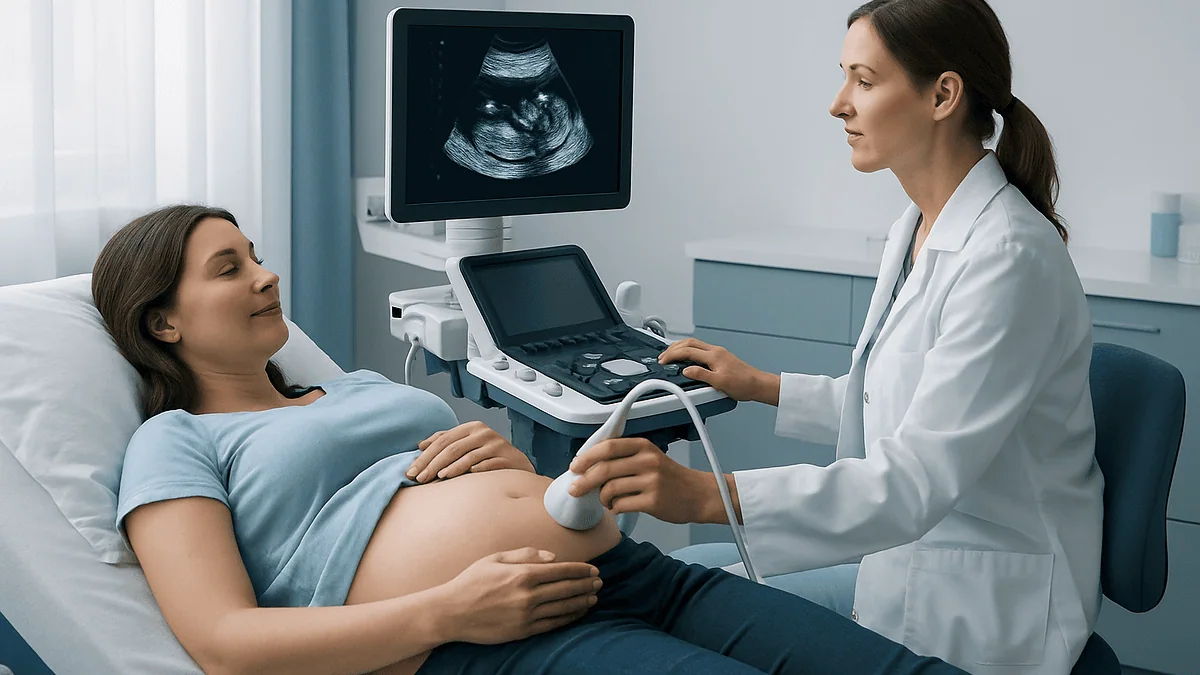
The sonographer says it almost casually, eyes on the screen: “Your ovaries look polycystic.” She means it as a description. You hear it as a verdict. By the time you are back in the car, you have already typed the question into your phone, thumb hovering over the word infertile.
That gap between what a scan shows and what it means is where a lot of unnecessary grief lives. Polycystic ovaries are common, often harmless, and not the same thing as polycystic ovary syndrome. Even the syndrome, which does make conception harder for many people, is one of the most treatable causes of fertility trouble medicine knows about.
What follows is the conversation a good clinician would have with you if the appointment ran an hour instead of ten minutes: what actually stands in the way, how to tell whether you are ovulating, what the evidence says about weight and lifestyle, which treatments exist and how they work, and the moments when waiting is the wrong move.
Can you get pregnant with polycystic ovaries?
Yes, and the first thing worth untangling is the language. “Polycystic ovaries” is a picture on an ultrasound: ovaries that contain many small follicles, each holding an immature egg. Plenty of people with that picture have regular periods, normal hormone levels and no trouble conceiving at all. The NHS notes that polycystic-looking ovaries are only one of three features used to diagnose the syndrome, and a diagnosis requires at least two of them: irregular or absent periods, signs of raised androgens (male-type hormones) such as excess facial hair or acne, and the scan appearance itself.
Polycystic ovary syndrome is the condition that can interfere with fertility. According to the World Health Organization, it affects an estimated 8 to 13 percent of women of reproductive age and is a leading cause of infertility, mostly because it disrupts ovulation. Those are big numbers. They also mean that fertility clinics see PCOS every single day, and the pathways for helping people conceive are well worn.
So the honest answer to the search query is not a hedge. If your ovaries look polycystic but your cycles are regular, your fertility is probably no different from anyone else’s. If you have the full syndrome, you may need more time or more help, but the NHS is direct on the point: most women with PCOS are able to get pregnant with treatment. The rest of this article is about closing the distance between “most” and “you.”
What are the chances of getting pregnant with PCOS?
Anyone who quotes you a single percentage is guessing. There is no reliable “PCOS pregnancy rate,” because PCOS is not one condition with one severity. A 26-year-old who ovulates every seven weeks and a 38-year-old who has not had a period in a year both carry the same diagnosis and face very different odds.
What the evidence does support is a sequence. PCOS lowers the chance of pregnancy per month mainly by reducing how often an egg is released. Restore ovulation, and much of that lost chance comes back. The WHO describes PCOS as the most common cause of infertility due to anovulation, and the NHS states plainly that most women with PCOS can conceive with treatment. Fertility clinics treat PCOS as one of the more optimistic diagnoses to walk in with, precisely because the missing piece, ovulation, is something medicine can often switch back on.
Your personal odds hinge on a short list of factors: whether and how often you ovulate now, your age, your partner’s sperm quality, whether your fallopian tubes are open, and whether insulin resistance or other health conditions are in the mix. None of those can be judged from an ultrasound alone, which is why the useful question is rarely “Can I?” It is “Am I ovulating, and if not, what is the fastest safe way to change that?” Everything else in your plan flows from that one answer.
Can I still ovulate with polycystic ovaries?
Often, yes. PCOS tends to make ovulation unpredictable rather than impossible. Some people release an egg most months, just late; others ovulate a handful of times a year; a smaller group barely ovulate at all without help. Where you sit on that spectrum shapes everything.
The Mayo Clinic describes irregular periods in PCOS as fewer than nine periods a year or cycles longer than 35 days. A period arriving every 40 to 50 days usually means ovulation happened, just on its own timetable. Months with no bleeding at all point to cycles where no egg matured. Confusingly, bleeding is not proof of ovulation either: when the uterine lining builds up for weeks without the hormonal signal that follows egg release, it can eventually shed on its own, producing a heavy, unpredictable bleed that looks like a period but did not involve an egg.
Why does this matter so much? Because sperm can only meet an egg in a narrow window of roughly a day after ovulation, and sperm survive inside the body for several days beforehand. With a 28-day cycle you can guess that window. With a 47-day cycle followed by a 33-day one, guessing fails, and couples end up having well-timed intercourse in the wrong week. Half the battle in PCOS fertility is simply finding out whether the egg is coming, and when.
Tracking methods and blood tests can answer that question, and the section below walks through which ones hold up in PCOS and which ones mislead.
Why does PCOS make it harder to conceive?
Picture the ovary as a classroom where one follicle is supposed to be chosen each month, grow to maturity and release its egg. In PCOS, the selection stalls. A crowd of follicles begin to develop, none becomes dominant, and the small ones sit in the ovary looking, on a scan, like a string of pearls. Those are the so-called cysts. They are not disease cysts and they do not need removing; they are eggs waiting for a signal that never quite arrives.
Two hormonal patterns drive the stall. The first is an excess of androgens, produced by the ovaries and adrenal glands. Raised androgens interfere with follicle maturation and cause the visible symptoms of PCOS: acne, hair growth on the face and body, and thinning scalp hair. The second is insulin resistance. The Cleveland Clinic reports that up to 70 percent of people with PCOS have it. When cells respond sluggishly to insulin, the pancreas produces more, and high insulin levels push the ovaries to make more androgens while also disturbing the brain’s pulsing release of the hormones that trigger ovulation. Higher body weight can worsen insulin resistance, but many people at a lean weight have it too.
Layered on top is a tendency for luteinizing hormone (LH), the ovulation trigger, to run persistently high rather than surging once. That constant background level is one reason the classroom never gets its clear instruction.
None of this damages the eggs themselves. The Mayo Clinic lists infertility among PCOS complications, but the mechanism is a timing problem, not an egg-quality problem. That distinction is the reason the outlook is as good as it is.
How do I know if I’m ovulating with irregular cycles?
Start with the cheapest tool: a calendar. Note every first day of bleeding for three or four months. A pattern of cycles between 21 and 35 days, even if slightly uneven, suggests regular ovulation. Cycles stretching past 35 days, or months with nothing, suggest ovulation is late or missing, using the Mayo Clinic’s thresholds.
Body signals help fill in the picture. Cervical mucus typically becomes clear, slippery and stretchy in the days before an egg is released. Basal body temperature, taken before getting out of bed, rises slightly after ovulation and stays up until the next period; it confirms ovulation after the fact rather than predicting it, but a chart with a clear temperature shift is reassuring evidence that eggs are being released.
Urine ovulation kits deserve a caution. They detect the LH surge, and because LH can sit chronically elevated in PCOS, the kits may flash positive for days on end or turn positive without an egg following. Many people with PCOS find them frustrating and a little misleading. They are not useless, but treat a positive as a hint rather than a promise.
The clearest answers come from a clinic. A progesterone blood test drawn about a week after suspected ovulation shows whether the hormone that follows egg release is present. Ultrasound can track a follicle growing and then collapsing. A doctor can also check the hormones that distinguish PCOS from other causes of irregular cycles, such as thyroid or prolactin disorders, which have their own fixes.
If three months of tracking show few or no signs of ovulation, you have learned something valuable early, and you can take that record straight to an appointment.
How long should I try before getting help with PCOS?
The standard advice for couples in general, described by the Mayo Clinic, is to seek an evaluation after a year of regular unprotected sex if you are under 35, after six months if you are 35 to 40, and promptly if you are over 40. That timetable assumes a person is ovulating monthly. If you are not, every one of those months is a month with a low or zero chance, and the clock is not measuring what it is supposed to measure.
Here is where an opinion is warranted. Waiting a full year with cycles longer than 35 days, or with months of no bleeding, is not patience; it is lost time. Mainstream guidance, including the Mayo Clinic’s, encourages people with known irregular periods to talk to a clinician sooner rather than later, and a PCOS diagnosis is the clearest example of a reason to move early. An initial visit does not commit you to treatment. It gets you a confirmed diagnosis, baseline hormone and blood sugar checks, a look at other causes of infertility, and a plan you can pace to your own comfort.
A first appointment usually covers the timing and pattern of your periods, symptoms of raised androgens, weight and blood pressure, family history of diabetes, and how long you have been trying. A partner’s semen analysis is often requested early, because around a third of fertility problems involve a male factor and it makes no sense to treat one side of the equation without checking the other.
Going early also opens the door to the simplest fixes, the ones that cost nothing and are covered in the next two sections.
Does losing weight help you get pregnant with PCOS?
For some people, meaningfully. For others, it is the wrong lever entirely. Both statements are true, and the internet tends to shout only the first.
The NHS treatment guidance is specific: for people with PCOS who carry excess weight, losing even around 5 percent of body weight can produce a significant improvement in symptoms, including the return of more regular cycles. The mechanism runs through insulin. Modest reductions in weight improve insulin sensitivity, insulin levels fall, androgen production eases, and the follicle selection process that had stalled sometimes restarts on its own. Five percent is a smaller change than most people picture; for someone weighing 180 pounds it is 9 pounds, a shift a fair number of people achieve through steadier meals and more daily movement rather than anything dramatic.
Now the other half. PCOS occurs at every body size, and a substantial group of people with the syndrome are at a weight where losing more offers no fertility benefit and may cause harm. If your weight is already in a healthy range, being told to “just lose weight” is not evidence-based care; it is a shortcut. Your path runs through the medical options discussed below, not through a smaller number on a scale.
Two more cautions. Rapid or extreme dieting can itself suppress ovulation, and the weight-loss conversation has been used for decades to dismiss people with PCOS rather than treat them. If you leave an appointment feeling judged rather than helped, that is a reason to seek a second clinician, not a reason to give up.
What lifestyle changes help fertility with PCOS?
Think of this less as a fertility diet and more as building the metabolic conditions in which ovulation is most likely. The NHS and Mayo Clinic frame lifestyle change as first-line management for PCOS, and the target is insulin, not virtue.
Food quality matters more than any named eating plan. Meals built around vegetables, legumes, whole grains, fruit, nuts and lean protein produce gentler rises in blood sugar than meals heavy in refined starches and sugary drinks, and gentler rises mean less insulin. Regular physical activity works on the same pathway from the other direction: muscle that is used regularly pulls glucose out of the blood with less insulin required. Most public health bodies recommend at least 150 minutes of moderate activity a week for adults, and brisk walking counts.
Sleep is underrated. The Mayo Clinic lists sleep apnea among PCOS complications, and poor or interrupted sleep worsens insulin resistance. Loud snoring, gasping at night or waking unrefreshed are worth mentioning to a doctor. Smoking harms egg quality and fertility in everyone, and stopping is one of the most effective things any person trying to conceive can do. Alcohol is best kept low or avoided once you are actively trying.
Supplements come up constantly. A folic acid supplement is recommended for anyone who could become pregnant, to reduce the risk of neural tube defects, and that applies with PCOS as much as without. For the popular PCOS supplements, including inositol and vitamin D, the picture is genuinely uncertain: some small trials suggest improvements in cycle regularity, but larger and better-designed studies have not consistently confirmed a fertility benefit. Say that honestly, and ask your clinician before adding anything, because supplements can interact with prescribed medicines.
What fertility treatments are available for PCOS?
When ovulation does not return on its own, treatment follows a stepwise path described by the NHS. The steps are ordered from least to most intensive, and many people conceive before reaching the end of the list. Decisions about which medicine, and for how long, belong with the prescribing clinician; what follows is the shape of the journey.
| Step | What it does | Typical pattern |
|---|---|---|
| Oral ovulation induction | Tablets taken for a few days early in the cycle nudge the brain and ovary to select and release a mature egg | Cycle-by-cycle, often with ultrasound monitoring; NHS guidance describes it as the usual first medical step |
| Insulin-sensitizing medicine | Improves the body’s response to insulin, which can lower androgens and support ovulation; sometimes added if tablets alone do not work | Taken daily over months; benefit builds gradually rather than in a single cycle |
| Injectable hormones | Deliver the follicle-stimulating signal directly to the ovary | Daily injections with close scanning; the NHS notes a higher chance of multiple pregnancy and overstimulation |
| Laparoscopic ovarian drilling | Keyhole surgery using heat or laser to reduce androgen-producing ovarian tissue | One-off procedure considered when medicines have not worked |
| IVF | Eggs collected, fertilized in the laboratory, embryo transferred | Used when other steps fail or when other fertility factors coexist |
Two clinical realities shape this path in PCOS specifically. First, polycystic ovaries respond strongly to stimulation, which is why monitoring matters: the goal is one egg, not five. Second, the response to the first tablets is a useful diagnostic in itself, and clinicians adjust quickly when a cycle does not produce ovulation.
Not every step suits every person. Age, weight, tubal status, sperm results and how long you have already been trying all feed into where a clinician suggests starting.
What is the best age to have a baby with PCOS?
The same age you would choose without PCOS, adjusted for one practical fact: if you may need treatment, you need time to fit it in.
Fertility in women declines with age for everyone, gradually through the early thirties and more steeply after the mid-thirties, as the Mayo Clinic’s infertility guidance notes; egg number and egg quality both fall. PCOS does not switch that biology off. There is a hopeful thread in the research suggesting people with PCOS may keep a larger pool of follicles into their late thirties and could see their cycles become more regular as ovarian reserve naturally shrinks. That observation is real, but it is not a strategy. The evidence does not show that PCOS extends the fertile years in any way you should plan around, and egg quality at 40 is egg quality at 40, regardless of diagnosis.
What PCOS changes is the arithmetic of the plan. If you are 27 and ovulating sporadically, you have years to try, track, adjust habits, and use medicines if needed. If you are 36, the same steps still work, but the Mayo Clinic’s six-month threshold for seeking help applies, and beginning the conversation before you start trying is wise so no months are lost to waiting.
Younger is not automatically simpler, either. Insulin resistance and weight tend to increase with age in PCOS, so getting metabolic health on a good footing in your twenties pays off whenever you decide to conceive. The best age is the one that fits your life, entered with a clear diagnosis and a clinician already on your side.
Is being pregnant with PCOS high risk?
It carries higher risks than average for certain complications, and most of those complications are ones antenatal care is already built to watch for. That is a different thing from a dangerous pregnancy.
The Mayo Clinic lists gestational diabetes, pregnancy-induced high blood pressure, miscarriage and premature birth among PCOS complications. The thread connecting the first two is insulin resistance: pregnancy naturally makes the body less sensitive to insulin so that more glucose reaches the baby, and a person who starts pregnancy with reduced insulin sensitivity has less room to absorb that shift. The same metabolic background raises the chance of blood pressure problems.
What this means in practice is earlier and closer screening rather than alarm. Many maternity services offer a glucose test earlier in pregnancy for people with PCOS, along with the standard blood pressure checks at every visit. Both conditions are manageable when caught, and catching them is the whole point of the schedule.
The most useful risk reduction happens before conception. A preconception visit can check blood sugar and blood pressure, review any medicines, confirm folic acid supplementation, and address smoking or sleep apnea. Where weight is a factor, the NHS’s point about modest change applies here too, because it improves insulin sensitivity heading into a pregnancy that will test it.
Miscarriage is the fear that sits under all of this. The risk is somewhat raised in PCOS, likely for hormonal and metabolic reasons that are still being studied, but the majority of PCOS pregnancies continue to term. Losing a pregnancy is never something you caused by having a diagnosis.
When should you see a doctor about PCOS and fertility?
Make an appointment now, without waiting to “try for a year,” if any of these describe you: cycles regularly longer than 35 days, fewer than nine periods a year, no period for three months or more while not pregnant, or a PCOS diagnosis combined with a plan to conceive in the coming year. Add symptoms of raised androgens such as new facial hair growth, persistent adult acne or thinning hair, and the case for an early visit is stronger still.
Seek care promptly, rather than at the next routine slot, for red-flag signs. Very heavy bleeding that soaks through pads or tampons hourly for several hours, or bleeding accompanied by dizziness or fainting, needs urgent assessment. Sudden severe pelvic pain, particularly on one side, can signal an ovarian cyst that has twisted or ruptured, or an ectopic pregnancy, and is an emergency if you might be pregnant. Once pregnant, a severe headache, visual disturbance, sudden swelling of the face or hands, or pain under the ribs can indicate dangerously raised blood pressure and should be assessed the same day.
Mental health belongs on this list. The Mayo Clinic notes that depression and anxiety are more common in PCOS, and fertility struggles compound both. Low mood that lingers for weeks, loss of interest in things you normally enjoy, or thoughts of self-harm are reasons to speak to a clinician in their own right, not side issues to be handled after the baby.
Bring your cycle record, a list of medicines and supplements, and your questions written down. Appointments are short; preparation makes them count.
PCOS fertility myths that get in the way
“The cysts have to be removed before I can conceive.” They are not cysts in the surgical sense. They are follicles paused mid-development, and they resolve when ovulation resumes. Surgery is reserved for ovarian drilling, a specific procedure to reduce androgen-producing tissue, not for removing follicles.
“The pill caused my PCOS or my infertility.” Hormonal contraception is commonly used to manage PCOS symptoms, and it masks irregular cycles while you take it. Stopping it reveals the pattern that was there all along; it does not create it. Fertility returns after stopping, and if cycles stay irregular, that is PCOS showing itself, not damage from the medicine.
“If I had PCOS, I’d be overweight.” The Cleveland Clinic notes that insulin resistance is present in up to 70 percent of people with PCOS, but that leaves a large group without it, and the syndrome occurs across every body size. Lean PCOS is real, frequently missed, and just as deserving of proper treatment.
“I got pregnant once, so I don’t have it anymore.” PCOS is a lifelong condition. Fertility often fluctuates within it, and conceiving one child says nothing about whether the next attempt will be easy. The WHO estimates that up to 70 percent of affected women worldwide remain undiagnosed, and a previous pregnancy is one of the reasons people are told they cannot possibly have it.
“It’s all in the diet.” Food and movement genuinely help many people, as the NHS guidance on modest weight change shows. They are one tool. Treating them as the only legitimate one delays the medical care that resolves ovulation problems for a great many people who did nothing wrong at the dinner table.
Frequently asked questions
What are the chances of getting pregnant with polycystic ovaries?
There is no single figure, because chances depend on whether you ovulate, your age and other fertility factors. Polycystic ovaries on a scan without the full syndrome usually do not lower fertility at all. With PCOS, the main problem is infrequent ovulation, and the NHS states that most women with PCOS are able to get pregnant with treatment once ovulation is restored.
Can I still ovulate with polycystic ovaries?
Yes, most people with PCOS ovulate at least some of the time, just unpredictably. Periods arriving every 40 to 50 days usually mean an egg was released; months without bleeding suggest it was not. Bleeding alone is not proof, since the lining can shed without ovulation. A progesterone blood test about a week after suspected ovulation gives the clearest answer.
What is the best age to have a baby with PCOS?
The age that suits your life, entered with a plan. Fertility declines with age for everyone, more steeply after the mid-thirties, and PCOS does not change that biology. Because treatment can take time, people with PCOS benefit from starting the conversation with a clinician before they begin trying, particularly from 35 onward, when the Mayo Clinic advises seeking help after six months.
Is being pregnant with PCOS high risk?
It carries higher risks of gestational diabetes, high blood pressure in pregnancy, miscarriage and preterm birth, according to the Mayo Clinic, mostly linked to insulin resistance. These are conditions routine antenatal care is designed to detect, and people with PCOS are often offered earlier glucose screening. Optimizing blood sugar, blood pressure and sleep before conception reduces the risk further.
How long does it take to get pregnant with PCOS?
It varies widely and cannot be predicted from the diagnosis alone. People who ovulate irregularly may conceive naturally within months; those who rarely ovulate may need medicines to trigger egg release. The Mayo Clinic advises evaluation after a year under 35 and six months from 35 to 40, but with irregular cycles it is reasonable to seek assessment sooner rather than waiting.
Do ovulation tests work if you have PCOS?
They can, but they are less reliable. The kits detect luteinizing hormone, which often sits persistently high in PCOS, so they may read positive for many days or without an egg following. Treat a positive as a hint. Cycle tracking, cervical mucus changes, basal body temperature and, most reliably, a timed progesterone blood test or ultrasound give a clearer picture.
Does losing weight help you get pregnant with PCOS?
For people carrying excess weight, yes: the NHS reports that losing even around 5 percent of body weight can significantly improve PCOS symptoms, including cycle regularity, by improving insulin sensitivity. For people already at a healthy weight, further weight loss offers no fertility benefit and can suppress ovulation. PCOS occurs at every body size, and treatment should reflect that.
Can PCOS cause miscarriage?
The risk of miscarriage is somewhat raised in PCOS, as the Mayo Clinic notes among its complications, probably because of hormonal and metabolic factors that researchers are still studying. The majority of PCOS pregnancies continue to term. Good blood sugar control and general preconception health may help, and a loss is never something a person caused by having the condition.
Can you get pregnant with PCOS naturally without medication?
Many people do. Those who ovulate, even irregularly, can conceive with well-timed intercourse, and for some, changes in diet, activity, sleep and modest weight loss are enough to restore regular cycles. When ovulation does not return, medicines that trigger egg release are the usual next step, described by the NHS as the first line of fertility treatment for PCOS.
What fertility treatment is used first for PCOS?
Oral ovulation-inducing tablets, taken for a few days early in the cycle to prompt the ovary to mature and release an egg, are the usual first medical step according to NHS guidance. Cycles are often monitored by ultrasound. If they do not work, options include insulin-sensitizing medicines, injectable hormones, ovarian drilling surgery or IVF, with the choice made by your clinician.
References
- World Health Organization: Polycystic ovary syndrome fact sheet
- NHS: Polycystic ovary syndrome (PCOS)
- NHS: Polycystic ovary syndrome (PCOS): Treatment
- Cleveland Clinic: Polycystic Ovary Syndrome (PCOS)
This article is for general information only and is not a substitute for professional medical advice. Please consult a qualified doctor about your individual situation.

More from the Blog
What Size of Ovarian Cyst Is Dangerous? Centimetres, Millimetres and What They Mean
There is no single size at which an ovarian cyst becomes dangerous. Most cysts are small, fluid-filled and disappear on their own within a…

Pelvic Ultrasound vs Hormone Tests in PCOS: Why Diagnosis Needs More Than One Finding
Neither a pelvic ultrasound nor a blood test can diagnose PCOS on its own. Clinicians use the Rotterdam approach, which requires at least two…
Endometriosis Treatment in Steps: Hormonal Medicine, Pain Care and When Surgery Is Added
Endometriosis treatment options are usually built in steps. Most people start with pain care, often anti-inflammatory medicines, and hormonal medicine that lowers estrogen's effect…
How Fast Ovarian Cysts Grow: Typical Timelines, Warning Signs and When to Treat
Most ovarian cysts are functional cysts that form during a normal menstrual cycle, reach roughly 2 to 5 centimeters, and shrink or disappear within…

What the Robot Actually Changes in a Robotic Hysterectomy: Precision, Incisions and Recovery
In a robotic hysterectomy the robot does not operate on its own. The surgeon sits at a console a few feet from the patient…

Cystectomy vs Oophorectomy: Removing the Cyst or the Ovary and How Surgeons Decide
A cystectomy removes only the cyst and leaves the ovary in place; an oophorectomy removes the whole ovary, sometimes with the fallopian tube. Surgeons…