

Ablation or Surgery for Liver Cancer? What Makes Each Option Suitable
Key Takeaways
- Ablation destroys a tumor in place with heat or cold through a needle, while resection removes it with a rim of liver, so only surgery yields a pathology report on margins.
- Guidelines describe ablation as most reliable for tumors up to about 3 cm, because the heat zone's margin becomes uncertain as tumors grow and near large blood vessels.
- Up to roughly 70 percent of a healthy liver can be removed because it regenerates, but a cirrhotic liver regrows poorly, which is why liver function often decides the choice.
- Randomized trials for very small tumors show the two approaches closer than many expect, with surgery generally producing fewer local recurrences and ablation fewer complications.
- Typical hospital stays run from same-day discharge after ablation to several days or about a week after resection, with full recovery taking days to weeks versus weeks to months.
- Ablation is frequently used to hold a small tumor in check while a person waits for a liver transplant, so the two options are not always rivals.
Ablation and surgery are both used to treat liver cancer that has not spread beyond the liver. Ablation destroys a small tumor in place with heat or cold through a needle, while surgery (resection) removes the tumor with a margin of liver. Tumor size, number, location and how well the rest of the liver works usually decide which is suitable, and a multidisciplinary team makes that call.
The scan is up on the screen, and the specialist is pointing at a pale spot no bigger than a grape. Two words are on the table: ablation and surgery. One sounds gentle, one sounds definitive, and the person in the chair is trying to work out whether smaller means weaker or whether bigger means safer.
That question, ablation vs surgery for liver cancer, is one of the most common forks in the road for people whose tumor was caught while it was still confined to the liver. It is also one of the most misunderstood, because the answer rarely hinges on which treatment is “stronger.” It hinges on the tumor’s size and address, and on how much healthy liver is left to do the work afterward.
This explainer walks through what each option involves, who tends to be offered which, what the evidence does and does not show, and the questions worth bringing to your care team before anyone books a date.
What does ablation vs surgery for liver cancer actually mean?
Start with the vocabulary, because the two words hide two very different ideas. Ablation is a procedure that destroys a tumor where it sits, usually by heating it with a thin probe passed through the skin, so the dead tissue is left behind for the body to scar over. Surgery, in this context, means liver resection: an operation that cuts out the tumor together with a rim of surrounding liver, so the cancer physically leaves the body.
Both are considered local treatments. Neither travels through the bloodstream to chase cancer elsewhere, so both are generally reserved for disease that appears confined to the liver on imaging. The most common cancer that starts in the liver is hepatocellular carcinoma, often shortened to HCC, and it is the setting in which the ablation-versus-resection question comes up most often. Cancers that have spread to the liver from the bowel or elsewhere can also be treated with either approach, though the decision logic is shaped by the original cancer.
A useful way to picture the difference: ablation is like killing a weed with heat at the root and leaving it in the soil to wither, while resection is like digging out the weed with a shovelful of earth around it. The shovel is more thorough, but it also takes more of the garden with it. That trade-off, thoroughness against what is left behind, runs through every section that follows.
According to the NHS and Mayo Clinic, both are standard options for early-stage liver cancer, and the choice is made by a multidisciplinary team, a group of surgeons, interventional radiologists, liver specialists and oncologists who review each case together.
How liver ablation works: what actually happens in the room
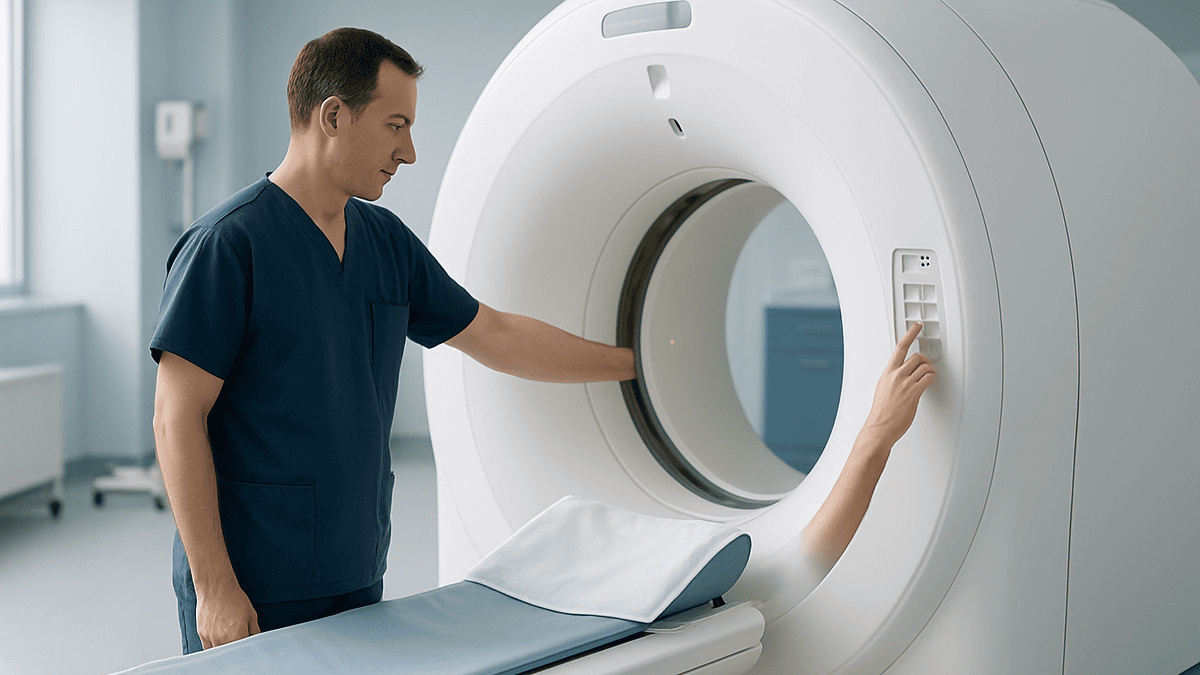
Most ablations are done by an interventional radiologist, a doctor who uses imaging to guide instruments inside the body without a large incision. The person lies on a table beside an ultrasound or CT scanner. After sedation or a general anesthetic, the doctor numbs the skin, makes a puncture a few millimeters wide, and advances a needle-like probe until its tip sits inside the tumor.
Then the energy goes on. In radiofrequency ablation, an electrical current heats the probe tip and cooks the tissue around it. In microwave ablation, a different wavelength of energy does the same job, usually faster and over a slightly larger zone. Cryoablation freezes rather than burns, and is used less often in the liver. Whatever the energy source, the aim is the same: to destroy the tumor plus a margin of normal tissue around it, commonly described as about a centimeter, so that microscopic cancer cells at the edge are caught as well. The doctor watches the treatment zone form on the screen in real time.
Some ablations are performed during a laparoscopic operation, through small keyhole incisions, when the tumor sits somewhere a skin puncture cannot safely reach, for example right against the bowel or the dome of the diaphragm. Occasionally ablation is added during open surgery to deal with a second small tumor the surgeon cannot remove.
The procedure itself typically takes under an hour or two, and Cleveland Clinic and Mayo Clinic describe most people going home the same day or after one night. Afterward the treated area shows up on scans as a scar-like zone that shrinks over months. Follow-up imaging, usually within a few months and then at intervals, checks whether any live tumor remains at the edge.
How liver resection works: what the surgeon is really doing
Resection is a formal operation, performed by a hepatobiliary surgeon, a surgeon who specializes in the liver, bile ducts and pancreas. Under general anesthetic, the surgeon reaches the liver either through a single incision under the ribs or, increasingly, through several small laparoscopic ports with a camera. Robotic assistance is a variant of the keyhole approach.
The liver is divided into eight segments, each with its own blood supply and bile drainage, like a house wired room by room. The surgeon plans the operation around those segments. A small tumor near the surface may need only a wedge of tissue removed. A tumor deep in the right side may require taking out an entire lobe, roughly two thirds of the organ. The amount removed is chosen to secure a clear margin while leaving enough liver behind to keep the person alive and well during recovery.
Bleeding is the main technical challenge, because the liver is one of the most blood-rich organs in the body. Surgeons control it by temporarily clamping the inflow vessels, by using devices that seal small vessels as they cut, and by keeping the patient’s blood pressure carefully managed. Once the specimen is out, a pathologist examines it under the microscope and reports whether the margins are free of cancer. That report is something ablation can never provide, since ablation leaves no tissue to examine.
Hospital stays after resection are longer than after ablation. The NHS describes a stay of several days to around a week for many people, depending on how much liver was removed and whether the operation was open or keyhole. The liver’s remarkable ability to regrow, discussed later, is what makes removing a large portion possible at all.
Who is usually offered ablation, and who is usually asked to wait?
Ablation tends to be the first suggestion in three overlapping situations. The first is a small tumor, and small is defined fairly consistently: guidelines from major liver societies and the NHS describe ablation working best for tumors up to about 3 cm across, with reduced reliability as size grows toward 5 cm. The second is a liver that cannot spare tissue, most often because of cirrhosis, the scarring that follows years of hepatitis, alcohol-related injury or fatty liver disease. The third is a person whose heart, lungs or general fitness make a long anesthetic and a major abdominal operation unwise.
Ablation is also commonly used as a bridge for people waiting for a liver transplant, keeping a small tumor in check so it does not grow past the thresholds that qualify someone for a donor organ.
Who is asked to wait, or steered elsewhere? Someone whose tumor sits tight against a major bile duct, where heat could cause a leak or a stricture. Someone whose tumor hugs the bowel or the gallbladder, where the burn could injure a neighboring organ. Someone with a tumor that cannot be seen clearly on ultrasound or CT, because the doctor cannot treat what the doctor cannot target. And someone with fluid in the abdomen, called ascites, or a very low platelet count, where the bleeding risk from even a needle puncture may need to be corrected first.
None of these are absolute rules. A team may still choose ablation in a difficult location using a laparoscopic approach, or may add a technique that shields nearby structures. The point is that suitability for ablation is decided by geography and liver reserve, not by how “bad” the cancer sounds.
Who is a candidate for liver resection?
Surgeons think about resection through three questions, and a person needs a reassuring answer to all three. Can the tumor be removed with a clear margin? Will enough functioning liver remain? Can this person safely withstand a major operation?
The first question is about anatomy. A single tumor, or a few tumors clustered in one region, that can be taken out while preserving the blood supply and bile drainage of the remaining liver is the classic resection candidate. Tumors that have grown into the main portal vein or spread to both lobes are usually not.
The second question is where liver cancer differs from almost every other cancer surgery. In a healthy liver, surgeons can often remove up to about 70 percent of the organ, according to Johns Hopkins, because the remainder regenerates. In a cirrhotic liver that margin of safety shrinks dramatically. Doctors grade liver function using tools such as the Child-Pugh score, which combines blood tests for bilirubin and albumin with clotting time and the presence of fluid or confusion, and they look for signs of portal hypertension, raised pressure in the veins feeding the liver, which raises the risk of dangerous bleeding and liver failure after surgery. A person with well-compensated cirrhosis, normal bilirubin and no portal hypertension may still be a good surgical candidate; someone with advanced scarring usually is not, regardless of tumor size.
The third question is about the whole person: heart and lung function, kidney health, nutrition, other illnesses and frailty. Anesthetists often assess this formally before a decision is made.
When a tumor is technically removable but the liver reserve is borderline, teams sometimes use imaging to calculate the future liver remnant, or use procedures to encourage the healthy side to grow before the operation. These are specialist judgments, and they sit with the treating team.
Why does tumor size matter so much in this decision?
Size drives the ablation-versus-surgery choice more than any other single measurement, and the reason is physics as much as biology. Heat spreads outward from a probe tip in a roughly spherical zone, and the zone has a practical ceiling. For a tumor about 2 cm across, a single ablation can readily cover the tumor and the desired margin all the way around. At 3 cm the margins become tighter, and beyond that the doctor may need to overlap several heat zones, which increases the chance that a sliver at the edge is missed.
There is also a cooling effect near large blood vessels. Blood flowing past the treatment zone carries heat away, a phenomenon sometimes called heat sink, so tumors abutting big vessels may be incompletely treated even if they are small. Microwave ablation is somewhat less affected by this than radiofrequency, which is one reason it has become more widely used, though neither is immune.
Biology adds a second layer. Larger tumors are more likely to have sent out tiny satellite deposits into the surrounding liver and to have invaded small veins, changes a pathologist sees under the microscope but a scan cannot. Removing a generous margin surgically addresses those satellites; a heat zone with a tight margin may not.
This is why the NHS, Mayo Clinic and international staging systems converge on a rough rule: ablation and resection are both considered for very small tumors, resection or transplant is preferred as tumors grow toward and past 3 cm, and neither local treatment alone is usually offered once tumors are large or multiple across both lobes. The measurement on your scan report is therefore not a detail. It is one of the main reasons your team leans one way or the other.
Why the rest of your liver matters as much as the tumor
Most liver cancers grow in a liver that is already unwell. Worldwide, according to the WHO and the CDC, chronic hepatitis B and C, heavy alcohol use and fatty liver disease linked to diabetes and obesity account for the great majority of hepatocellular carcinoma, and each of these causes years of inflammation and scarring before a tumor ever appears. So the organ the team is trying to preserve is often already working at reduced capacity.
That reality changes the arithmetic. Removing a lobe from a healthy liver is a major but well-tolerated operation, because the remaining tissue regrows over weeks to months. Removing the same lobe from a cirrhotic liver can tip a person into liver failure, because scarred tissue regenerates poorly and what remains may not be enough to clear toxins, make clotting proteins and manage fluid balance. Ablation, by contrast, destroys only a small sphere of tissue and leaves the surrounding liver untouched, which is why it is so attractive when reserve is limited.
Doctors estimate reserve in several ways. Blood tests for bilirubin, albumin and clotting time feed into the Child-Pugh score already mentioned. Platelet counts and imaging of the spleen hint at portal hypertension. Some centers measure liver stiffness with a specialized ultrasound. Increasingly, teams also ask whether the underlying cause is under control: is the hepatitis virus suppressed, has alcohol stopped, is diabetes managed? A liver that is no longer being injured recovers better after either treatment.
The practical message for a person facing this decision is that two people with identical tumors can be given opposite recommendations, and both can be right. The scan shows the tumor; the blood tests and the liver’s history explain why one person is offered a needle and another an operation.
Radiofrequency ablation vs resection: what the evidence honestly shows
People understandably want a headline: which one works better? The honest answer is that for very small tumors the two approaches appear closer than most people expect, and for larger ones surgery has the edge, but the certainty behind those statements is uneven.
Randomized trials directly comparing radiofrequency ablation with resection for small hepatocellular carcinoma have been few, mostly conducted in Asia, and modest in size. Several found no clear difference in how long people lived for tumors up to about 3 cm, while others favored surgery. Systematic reviews pooling these trials, along with large observational studies, have generally reported that resection is associated with fewer local recurrences, meaning the tumor coming back at the treated spot, particularly as tumor size increases, while ablation is associated with fewer complications and shorter hospital stays. Whether that recurrence difference translates into a difference in overall survival for the smallest tumors remains debated, partly because a recurrence after ablation can often be ablated again.
Two caveats matter. First, observational studies suffer from selection bias: people offered surgery tend to have better liver function to begin with, which flatters surgical results. Second, most trials used older radiofrequency equipment, and modern microwave systems may narrow the gap further, though high-quality head-to-head data remain limited.
Mainstream guidance reflects this nuance. The NHS and Mayo Clinic describe both as options for early disease, with the choice guided by tumor size, location and liver function rather than by a blanket verdict. This article deliberately does not quote survival percentages from individual studies, because the numbers vary widely by population and are easily misread. Your team can show you figures relevant to your specific stage and liver status, which is the only version of the statistic that means anything for you.
Ablation vs surgery for liver cancer: a side-by-side summary
The table below gathers the practical differences in one place. Every row is a typical pattern described by mainstream sources such as the NHS, Mayo Clinic and Cleveland Clinic, not a rule, and individual cases vary.
| Feature | Ablation | Surgical resection |
|---|---|---|
| What happens to the tumor | Destroyed in place by heat or cold; scar remains | Removed from the body with a margin of liver |
| Typical tumor size | Best for tumors up to about 3 cm | Small or larger tumors if enough liver remains |
| Liver function required | Tolerated even with significant cirrhosis | Needs good reserve; limited in advanced cirrhosis |
| Anesthesia | Sedation or short general anesthetic | General anesthetic, longer operation |
| Incision | Needle puncture, or small keyhole ports | Keyhole ports or an open incision under the ribs |
| Hospital stay | Often same day or one night | Several days to around a week |
| Return to usual activity | Typically days to a couple of weeks | Typically several weeks to a few months |
| Pathology report | None; no tissue removed | Yes; margins and tumor features examined |
| Local recurrence at treated site | Higher, especially as size increases | Lower when margins are clear |
| Repeatable | Often, if new small tumors appear | Sometimes, depending on remaining liver |
| Main risks | Bleeding, injury to nearby organs, infection, incomplete treatment | Bleeding, bile leak, infection, liver failure, clots |
Read across the rows and a pattern emerges. Ablation trades some thoroughness for safety and speed; resection trades a bigger operation for a cleaner margin and a tissue diagnosis. Neither column is simply better. The question is which set of trade-offs fits the tumor in front of the team and the liver around it.
Is liver ablation surgery? Understanding the risks of each option
People often ask whether ablation counts as surgery. In most cases it does not: it is a minimally invasive procedure done through the skin, without cutting into the abdominal cavity. When it is performed laparoscopically it becomes a small operation, but still a far smaller one than resection. Calling it “not surgery” should not, however, be mistaken for “no risk.”
The risks of percutaneous ablation, according to Mayo Clinic and Cleveland Clinic, include bleeding from the puncture track, especially when clotting is impaired by cirrhosis; injury to nearby structures such as the bowel, gallbladder, diaphragm or bile ducts; infection or an abscess at the treated site; and a flu-like reaction of fever and aching for a few days as the body clears dead tissue. Rarely, tumor cells can be dragged along the needle path, a phenomenon called track seeding. The most common shortcoming is not a complication at all but incomplete treatment, where live tumor persists at the edge and needs a second session.
Resection carries the risks of any major abdominal operation, plus some unique to the liver. Bleeding during or after surgery can be significant. Bile can leak from the cut surface and may need a drain. Infection of the wound or inside the abdomen, blood clots in the legs or lungs, and pneumonia are all possible. The liver-specific danger is post-hepatectomy liver failure, in which the remaining organ cannot cope, which is exactly why reserve is assessed so carefully beforehand. Fluid build-up in the abdomen can occur in people with cirrhosis.
Serious complications are uncommon after both procedures in experienced hands, but they are not rare enough to ignore. A good consultation names them out loud and explains how the team prevents and manages each one, rather than reassuring you that nothing goes wrong.
Liver ablation recovery time, and what the weeks after resection usually look like
Recovery after ablation is usually brisk. Most people are up and walking within hours, according to Cleveland Clinic, and go home the same day or the next morning. Expect soreness at the puncture site and a dull ache under the right ribs or in the right shoulder for a few days, along with possible low-grade fever and fatigue as the body processes the treated tissue, a pattern sometimes called post-ablation syndrome. Many people return to desk work within a few days and to heavier activity within one to two weeks. Blood tests in the following days may show a temporary rise in liver enzymes, which typically settles. The first follow-up scan, often at around one to three months, is the moment that shows whether the treatment zone fully covers the tumor.
Recovery after resection follows a longer arc. The NHS describes a hospital stay of several days to about a week, during which the team watches blood tests for signs that the remaining liver is coping, manages pain, encourages early walking to prevent clots and gets the bowel moving again. Keyhole resections generally mean shorter stays and faster recovery than open ones. Once home, fatigue is the dominant complaint and can last weeks. Most people are advised to avoid heavy lifting for around six weeks, and a return to full energy commonly takes two to three months, with wide variation.
The liver itself is quietly regrowing throughout. Johns Hopkins notes that the organ can regenerate to near its original size within weeks to months, though scarred livers regrow more slowly. Appetite, weight and stamina tend to recover in step with it.
Both pathways end in the same place: a schedule of scans and blood tests, typically every few months at first, because the underlying liver disease that produced the first tumor can produce another.
Where do transplant, embolization and drug therapy fit in?
Ablation and resection are two doors, but the corridor has several others, and understanding them clarifies why one of the two might not be offered.
Liver transplant replaces the whole organ, treating both the cancer and the cirrhosis underneath it. It is generally considered, according to Mayo Clinic and the NHS, for people whose tumors fall within accepted size and number limits, commonly a single tumor up to 5 cm or up to three tumors each no larger than 3 cm, and whose liver disease is advanced enough that resection would be unsafe. The wait for a donor organ can be long, which is where ablation often serves as a holding measure.
Transarterial chemoembolization, usually shortened to TACE, delivers chemotherapy particles directly into the artery feeding the tumor and then blocks that artery, starving the tumor while sparing most of the liver. A related approach uses tiny radioactive beads. These are typically used for tumors too large or too numerous for ablation or resection but still confined to the liver, and sometimes to shrink tumors before another treatment.
External beam radiotherapy, delivered with high precision in a few sessions, is an option at some centers for tumors that cannot be reached by needle or knife.
Systemic therapy, meaning drugs that circulate through the whole body, comes into play when cancer has spread beyond the liver or into major blood vessels, or when local treatments are exhausted. Modern options include immunotherapy, which helps the immune system recognize cancer cells, and targeted drugs that block the signals tumors use to grow blood vessels. Which drugs, in what order and for how long is a decision for the oncologist, and this article deliberately does not go further than naming the classes.
Seeing the whole map helps explain a common experience: being told that neither ablation nor surgery is right for you is not the same as being told nothing can be done.
What people often get wrong about ablation and liver surgery
“Surgery is always the stronger choice, so I should push for it.” Removing a tumor with a clear margin is thorough, but in a cirrhotic liver a big operation can do more harm than the cancer would in the same timeframe. For small tumors in a fragile liver, ablation is not a consolation prize; it is often the treatment guidelines put first.
“Ablation is just a temporary fix.” A completely ablated small tumor is destroyed, not paused. What is true is that the diseased liver around it can produce new tumors, and that tumors near the size limit are more likely to leave live cells at the edge. Recurrence after ablation is usually about the liver’s ongoing disease or the tumor’s size, not the method being inherently short-term.
“If I feel fine, the cancer must be small enough for a needle.” Liver tumors commonly cause no symptoms until they are large, and the liver’s reserve means blood tests can look reasonable even with substantial disease. Suitability comes from imaging and liver-function assessment, not from how you feel.
“Keyhole surgery is minor surgery.” Laparoscopic resection reduces wound pain and shortens the stay, but the same amount of liver is removed, and the same liver-failure and bile-leak risks apply.
“After treatment I am finished with the liver clinic.” Follow-up imaging every few months is standard after either procedure, and managing the cause, whether that is antiviral treatment for hepatitis, stopping alcohol or controlling diabetes, is part of the treatment plan rather than an optional extra.
“Getting a second opinion is disloyal.” For a decision this consequential, many teams welcome it, and reputable centers present cases to a multidisciplinary tumor board precisely so that more than one specialist weighs in.
Questions to ask your care team before you decide
A consultation about ablation versus resection can move quickly, and it helps to arrive with questions written down. These are the ones that tend to unlock the most useful conversation.
- How large is the tumor, exactly, and where does it sit in relation to major vessels, bile ducts and neighboring organs?
- How well is the rest of my liver working, and how did you measure that? Is there any sign of portal hypertension?
- Was my case discussed at a multidisciplinary meeting, and did the surgeons and interventional radiologists agree?
- If you recommend ablation, which type, and why do you think a complete margin is achievable for a tumor this size and location?
- If you recommend resection, how much liver will be removed, and how confident are you that what remains is enough?
- Will the operation be keyhole or open, and what would make you switch from one to the other?
- What are the specific complications you worry about for someone with my liver and my other health conditions?
- How many of these procedures does this team perform, and how are complications handled if they occur?
- What happens if the follow-up scan shows tumor remaining or a new spot? What would the next step be?
- Am I a potential transplant candidate now or in the future, and would the treatment you are recommending affect that?
- What is the plan for treating the underlying liver disease alongside the cancer?
- What should recovery realistically look like for me, and when should I plan to return to work or caring responsibilities?
It is reasonable to ask for the answers in writing or to bring someone to take notes. It is also reasonable to ask for time. Small liver tumors are usually not emergencies measured in days, and a team that has done its assessment carefully will generally support a short pause to think or to seek a second view.
When to call your doctor: red-flag signs after ablation or liver surgery
Some discomfort after either procedure is expected: a sore puncture site or incision, tiredness, a dull ache under the right ribs, and after ablation a day or two of low fever and body aches. Certain signs, however, mean the team needs to hear from you promptly rather than at the next scheduled visit.
Call your care team or seek urgent care if you notice any of the following, as described by Mayo Clinic, the NHS and MedlinePlus: a fever that is high, persistent beyond a couple of days, or accompanied by shaking chills; abdominal pain that is severe, worsening or spreading rather than easing; a swollen, tense abdomen or rapid weight gain that could signal fluid accumulation; yellowing of the skin or eyes, dark urine or pale stools, which can indicate bile flow problems or a struggling liver; vomiting that will not stop or an inability to keep fluids down; redness, warmth, pus or a foul smell at the wound or puncture site; bleeding that does not stop, black or tarry stools, or vomiting blood; shortness of breath, chest pain or a painful swollen calf, which can point to a blood clot; and new confusion, unusual drowsiness or difficulty staying awake, which in someone with liver disease can signal that the liver is not clearing toxins.
Do not wait to see whether something settles overnight if it falls into these categories. Liver teams expect these calls and would rather hear about a false alarm than miss an early complication.
Beyond the recovery period, keep every follow-up appointment even when you feel well. Most recurrences and new tumors are found on scheduled scans before they cause symptoms, and finding them small is what keeps the full range of treatment options, including a repeat ablation or further surgery, on the table. Any decision about what comes next belongs with the treating team.
Frequently asked questions
Is liver ablation surgery?
Usually not. Most liver ablations are performed through a small skin puncture under imaging guidance, without opening the abdomen, so they are classed as minimally invasive procedures rather than surgery. Some are done laparoscopically through keyhole ports when a tumor is hard to reach, which makes them a small operation. Either way, ablation still carries real risks such as bleeding and injury to nearby organs, so it is not a risk-free alternative.
What is the success rate of liver ablation for treating liver cancer?
It depends heavily on tumor size and location. For tumors up to about 3 cm that are well seen on imaging and away from large vessels, complete destruction is achieved in most cases, and residual tumor can often be treated again. Reliability falls as tumors approach 5 cm. Because published percentages vary widely by population and equipment, ask your team for figures that match your specific tumor and liver rather than relying on a general number.
Radiofrequency ablation vs resection: which has fewer recurrences?
Resection is generally associated with fewer recurrences at the treated site, particularly for tumors larger than about 3 cm, because it removes a wider margin of tissue. For very small tumors the difference narrows, and several randomized trials found overall outcomes similar. New tumors elsewhere in a diseased liver occur after both treatments at comparable rates, since they arise from the underlying liver disease rather than the procedure.
Who is a candidate for liver resection?
Someone whose tumor can be removed with a clear margin, whose remaining liver would be large and healthy enough to function, and who is fit for a major operation. Good liver function, meaning normal bilirubin, adequate albumin and clotting, and no portal hypertension, matters as much as tumor size. People with advanced cirrhosis are usually steered toward ablation or transplant instead, even for small tumors.
What is the typical liver ablation recovery time?
Most people go home the same day or after one night and are back to light activity within a few days, with heavier activity resuming within one to two weeks, according to Cleveland Clinic and Mayo Clinic descriptions. A few days of low-grade fever, aching and fatigue are common as the body clears the treated tissue. The first follow-up scan, usually within one to three months, checks that the tumor was fully covered.
What is the best treatment for stage 3 liver cancer?
There is no single best treatment, because stage 3 covers a range of situations, from large or multiple tumors confined to the liver to tumors that have grown into major blood vessels. Resection is sometimes still possible for select cases; more often teams use embolization, radiotherapy or systemic drug therapy, and transplant is generally not offered at this stage. The appropriate plan depends on liver function and is decided by a multidisciplinary team.
What is the average life expectancy for someone with aggressive liver cancer?
It varies so widely that a single average is misleading. Outlook depends on how far the cancer has spread, how well the liver itself is working, the person’s general health and how the cancer responds to treatment. Some people with advanced disease live for years with modern drug therapy, while others decline more quickly. Your oncologist can discuss realistic expectations based on your own scans and blood tests.
Where is pain typically felt when you have liver cancer?
When liver cancer causes pain, it is usually felt in the upper right side of the abdomen, just under the ribs, and sometimes in the right shoulder or back because the liver shares nerve pathways with the diaphragm. Many small liver cancers cause no pain at all and are found on scans. Pain in these areas has many causes, so it needs assessment by a clinician rather than self-diagnosis.
Can ablation be repeated if the cancer comes back?
Often, yes. One advantage of ablation is that it spares surrounding liver, so if a new small tumor appears or a treated spot shows residual disease on follow-up imaging, a further ablation is frequently possible provided the tumor remains small and reachable. Repeat resection is also sometimes feasible but depends on how much liver remains. The decision rests with the treating team after reviewing the new scan.
Why was I offered ablation instead of surgery when my tumor is small?
Most likely because of your liver rather than your tumor. When cirrhosis has reduced the liver’s reserve, removing even a modest wedge can risk liver failure, whereas ablation destroys only the tumor and a small margin. Tumor location, other health conditions and a possible future transplant also influence the choice. Ask your team to explain the specific factors in your case; a clear answer is a reasonable expectation.
References
This article is for general information only and is not a substitute for professional medical advice. Please consult a qualified doctor about your individual situation.

More from the Blog

How Doctors Choose Between HDR and LDR Brachytherapy: Temporary Source or Permanent Seeds
Doctors choose between HDR and LDR brachytherapy based on the cancer type and size, how the tumor sits next to healthy organs, the patient's…

Immunotherapy Cycles Explained: Why Infusions Repeat Every Few Weeks and for How Long
Immunotherapy is usually given in cycles because the drugs are cleared from the body over days to weeks and the immune response they trigger…
How to Support Someone Through Radiation Therapy: Rides, Meals and Watching for Fatigue
To support someone going through radiation, take on the repeatable jobs: a shared ride rota for daily weekday appointments, small frequent meals matched to…

Recovery After Melanoma Surgery: Stitches, Skin Grafts and Getting Back to Activity
Recovery after melanoma surgery usually takes about one to three weeks for a wound closed with stitches, and several weeks longer when a skin…
Who Sits on a Head Cancer Tumor Board and How the Group Reaches a Recommendation
A head and neck cancer tumor board is a scheduled meeting where surgeons, radiation oncologists, medical oncologists, radiologists, pathologists, and supportive specialists review one…

How CyberKnife Tracks a Moving Tumor: Robotic Arm, Real-Time Imaging and Breathing
CyberKnife tracks tumor movement by pairing a small linear accelerator on a robotic arm with two ceiling-mounted X-ray cameras that repeatedly image the patient…