

After Laser Assisted Dental Procedures: Short-Lived Sensitivity vs Swelling That Needs a Call
Key Takeaways
- Soreness and swelling after laser gum treatment typically peak within the first 48–72 hours and then recede; swelling that grows after day three is the signal to call.
- Cold sensitivity that fades within about ten seconds of removing the trigger is ordinary exposed-root dentin sensitivity; pain that lingers for minutes or throbs at rest is not.
- The whitish or grayish film on a healing laser site is fibrin, a natural protein bandage, not pus, and should never be scrubbed off.
- A fever above 100.4°F (38°C), pus, a foul taste, or swelling spreading toward the cheek or neck are abscess signs described by Mayo Clinic that need same-day professional attention.
- Surface gum healing is commonly described in one to two weeks, but the reattachment underneath is measured in months, which is why pocket measurements wait for the follow-up visit.
- Guidelines treat lasers as an adjunct to scaling and root planing whose added benefit is uncertain, so ongoing cleaning and maintenance visits remain the treatment that controls gum disease.
Mild gum tenderness, tooth sensitivity to cold, slight seepage of blood-tinged saliva and a little puffiness are common in the first two or three days after laser dental treatment and usually fade on their own. Swelling that grows after day three, spreads to the face or neck, arrives with fever, pus, bad taste or trouble swallowing is not typical and should prompt a same-day call to the treating dental team.
It is the second evening after the appointment. The numbness wore off hours ago, the gum along the lower left molars feels hot and a little tight, and a sip of iced water sends a bright zing through a tooth that never used to complain. The person in the mirror pulls the lip down, squints, and asks the question that fills dental office voicemail every morning: is this what healing looks like, or is something going wrong?
Most of the time, the honest answer after laser dental treatment is reassuring. A laser is a focused beam of light energy that cuts, seals or disinfects tissue, and it still leaves behind a wound the body has to close. Wounds ache. Nearby teeth get touchy. The gum swells a bit while blood flow increases to bring in repair cells.
Yet a small number of people develop a different kind of swelling: the kind that grows instead of shrinks, hurts more instead of less, and sometimes brings a fever with it. Telling the two apart is the whole point of this article.
What actually happens during laser assisted dental work
The word laser makes people picture something futuristic, but in the dental chair the physics is simple. A laser device produces a single wavelength of light, and different wavelengths are absorbed by different things. Some are absorbed mostly by water and the mineral in teeth, so they can remove decay or reshape enamel. Others are absorbed by pigment and blood, so they cut and seal soft gum tissue at the same time, which is why laser gum work often bleeds less than a scalpel cut.
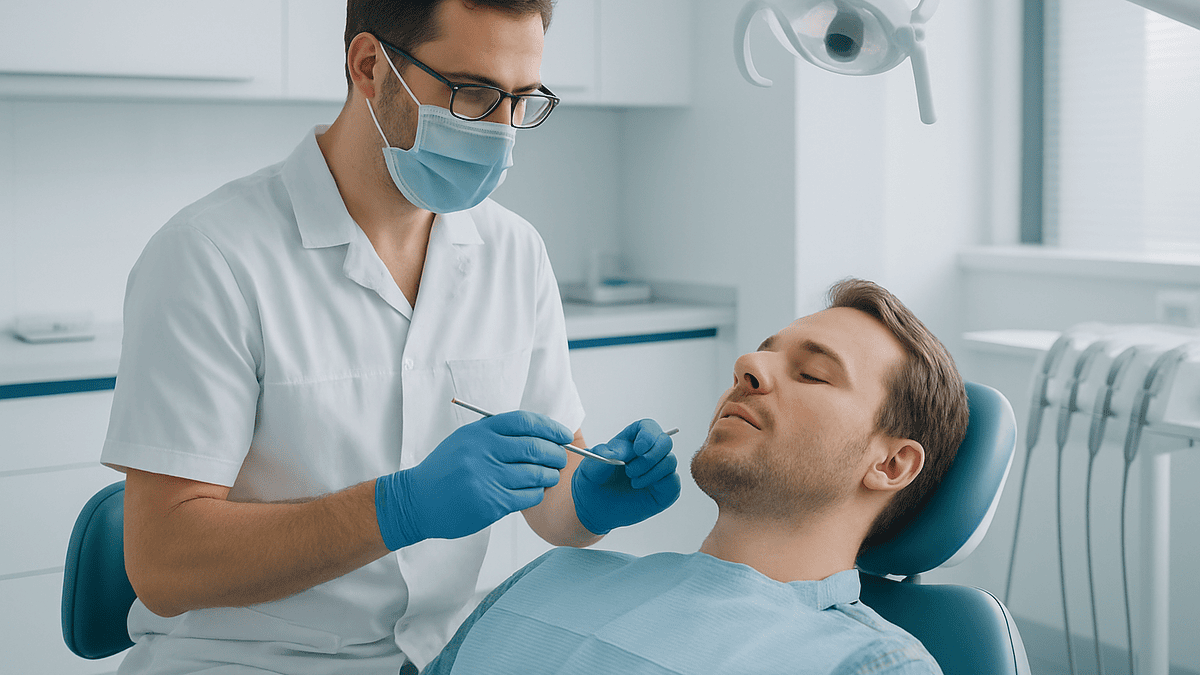
In periodontal therapy, the most common laser use, the dentist or periodontist first cleans the root surface with hand or ultrasonic instruments. Periodontitis is the advanced form of gum disease in which infection destroys the bone and fibers holding teeth in place. Mayo Clinic describes scaling and root planing, the deep cleaning of the root below the gum line, as the foundation of treatment, with lasers sometimes used alongside it to remove infected lining from the gum pocket.
The laser tip is a thin fiber, about the width of a few hairs, threaded between tooth and gum. Its energy vaporizes the diseased inner lining of the pocket and creates a shallow layer of heat-sealed tissue. That seal is useful, but it also means the wound heals from the inside, hidden from view, which is one reason people find the aftermath confusing.
Lasers also show up in other procedures: exposing a tooth for a crown, trimming excess gum, releasing a tight lip or tongue attachment, treating cold sores, and speeding tooth whitening. The tissue response after each is similar in kind and different in degree. A tiny frenectomy (releasing the band of tissue under the tongue) causes less disruption than a full-mouth pocket treatment, and the recovery scales accordingly.
Who laser treatment is usually for, and who is usually asked to wait
Lasers are a tool, not a treatment plan. The NHS and Mayo Clinic both frame periodontitis care around removing bacterial deposits, reducing pocket depth and helping the person keep the area clean afterwards. A laser may be chosen when the clinician wants less bleeding during the procedure, when a person bruises or bleeds easily, or when small amounts of soft tissue need reshaping with fine control.
Typical candidates include adults with moderate periodontitis whose pockets have not responded fully to conventional cleaning, people needing gum contouring before restorative work, and those with localized overgrowth of gum tissue. Children with tongue-tie are sometimes treated with laser release, and the same aftercare principles about swelling apply, though the clinician manages every comfort decision for a child.
Some people are usually asked to wait or to have the plan adjusted. Active uncontrolled infection with pus and fever is generally drained and settled first, because cutting through acutely infected tissue can spread bacteria. People whose diabetes is poorly controlled heal more slowly and get infections more easily, so their medical team is often involved before elective gum surgery. Those taking blood thinners, medicines that reduce clotting, are not told to stop them by the dentist; the prescribing clinician weighs the risk, and the procedure is timed around that advice.
A person who smokes is frequently counseled before treatment, since Mayo Clinic identifies smoking as one of the strongest risk factors for gum disease and for poor healing after gum surgery. Pregnancy does not rule out gum treatment, and untreated gum inflammation carries its own risks, but the timing of elective procedures is usually discussed with the obstetric team.
The one consistent rule: whether a laser is appropriate for a particular mouth is a decision for the treating dentist, based on examination and X-rays, never on marketing.
What is normal after laser dental treatment? The sensitivity story
Sensitivity is the symptom people underestimate before treatment and overestimate afterwards. Understanding why it happens takes the fear out of it.
Each tooth root is covered by a thin layer called cementum, and beneath that lies dentin, a porous material threaded with microscopic tubes that run straight to the nerve. When infected gum tissue is removed and the root is cleaned, more of that root is exposed to air, cold and sweet. The tubes conduct temperature changes to the nerve, which fires. Cleveland Clinic and Mayo Clinic both list exposed roots after gum treatment or gum recession among the common causes of tooth sensitivity.
Three features mark the ordinary version. First, it is triggered: cold water, a breath of winter air, a spoonful of ice cream. Second, it is brief, a sharp zing that fades within seconds once the trigger is gone. Third, it trends downward over days and weeks as the gum tightens back against the root and the dentin tubes gradually mineralize over.
Laser whitening produces a similar but shorter pattern. The peroxide gel used in whitening temporarily dehydrates enamel and irritates the nerve, and most dental sources describe that tingling as settling within a day or two after the session.
What sensitivity is not: a dull, throbbing ache that keeps you awake, pain that starts on its own without a trigger, or pain when you bite down. Those patterns point toward inflammation inside the tooth or a high spot on a filling, and both deserve a call rather than a wait. A helpful mental test is the ten-second rule. If cold pain disappears within about ten seconds of removing the trigger, it is behaving like ordinary dentin sensitivity. If it lingers for minutes, tell the dentist.
Why swelling happens, and when it stops being normal
Swelling is the body’s construction traffic. When tissue is injured, small blood vessels widen and become leaky, allowing fluid, white blood cells and repair proteins to flood the site. The gum looks puffy, feels warm, and may be slightly tender to touch. This is inflammation doing its job, and after laser gum work it usually peaks around the second day and then recedes.
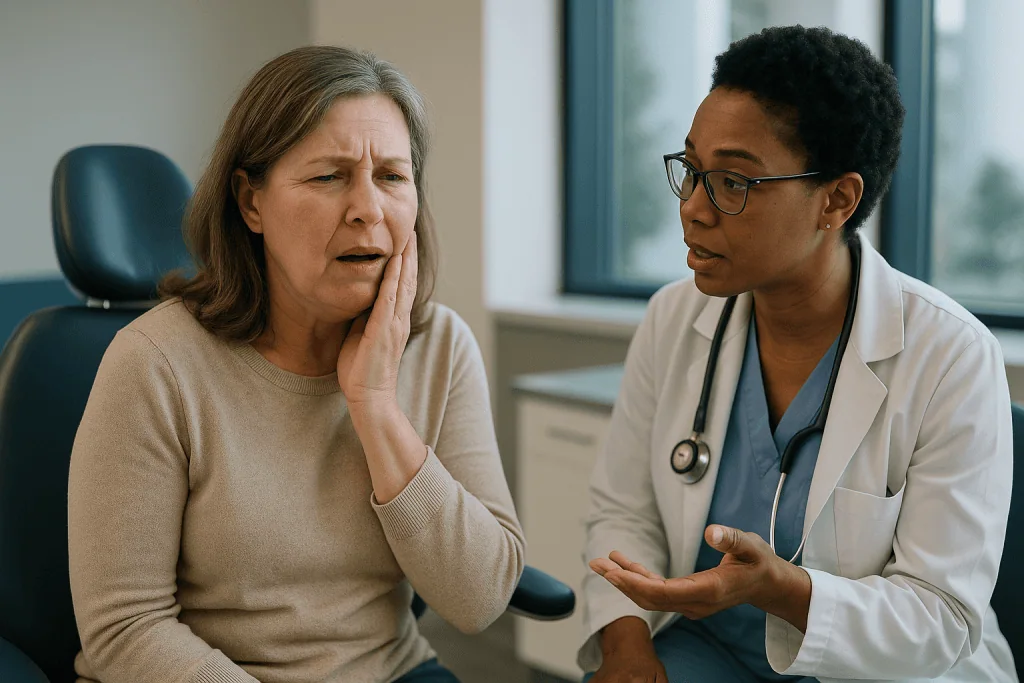
The character of that early swelling matters more than its presence. Normal post-procedure puffiness stays local to the treated gum. It is soft, roughly symmetrical along the treated area, and improves once you are upright and moving in the morning after lying flat overnight. A cool compress on the cheek for short periods in the first day, if your team suggests it, narrows those leaky vessels and can take the edge off.
Problematic swelling behaves differently, and the difference is one of direction and reach. Infection turns fluid into pus, a collection of dead bacteria and white cells that builds pressure. Mayo Clinic describes a dental abscess as a pocket of pus caused by bacterial infection, with swelling in the face, cheek or neck, tender lymph nodes under the jaw, fever, and a sudden foul-tasting rush of fluid if it ruptures.
So the warning pattern is swelling that grows after the third day rather than shrinking, that crosses from gum to cheek or under the jaw, that feels firm or hot, or that arrives with a fever above 100.4°F (38°C), the threshold the CDC uses to define fever. Difficulty opening the mouth wide, trouble swallowing, or any change in breathing are emergencies because swelling in the floor of the mouth and neck can narrow the airway. Those symptoms mean emergency care now, not a message left for the morning.
Short-lived sensitivity vs swelling that needs a call: side by side
People remember comparisons better than paragraphs, and this is the moment for one table. Use it as a conversation starter with your dental team, not as a substitute for their examination. Every mouth heals on its own schedule, and the timelines here are typical ranges drawn from Mayo Clinic, Cleveland Clinic and NHS guidance on gum treatment and dental infection, not promises.
| Feature | Usually part of healing | Reason to call the same day |
|---|---|---|
| Timing | Worst in the first 48–72 hours, then easing | Worsening after day 3, or returning after improvement |
| Location | Limited to the treated gum | Spreads to cheek, jawline, under the chin or neck |
| Texture and warmth | Soft, mildly warm | Firm, hot, shiny skin over it |
| Pain pattern | Triggered by cold or touch, fades in seconds | Throbbing at rest, wakes you at night, pain on biting |
| Discharge | Slight pink tinge in saliva day 1 | Pus, persistent bad taste or smell, bleeding that will not stop with pressure |
| Whole-body signs | None, or tiredness the first evening | Fever above 100.4°F (38°C), chills, feeling unwell |
| Function | Chewing on the other side is comfortable | Trouble opening the mouth, swallowing or breathing (emergency) |
Two nuances are worth adding. Bruising can appear on the cheek a day or two after deeper gum surgery, especially in older adults or those on blood thinners, and a soft yellow-purple bruise without heat or fever is not an infection. And a firm, slightly raised ridge along a laser incision is often a healing scar band rather than an abscess; the tell is that it does not grow, drain or throb. When in doubt, a photo sent to the office or a quick look in the chair settles it faster than worry.
Laser gum treatment recovery: what the first two weeks usually look like
Recovery has a rhythm, and knowing the beats helps you notice when the music changes.
Day of treatment: numbness lingers for a few hours. As it lifts, the gum feels tender and slightly swollen. Saliva may be faintly pink; laser-sealed tissue rarely bleeds freely, but a little seepage is expected. Many clinicians ask people to avoid brushing the treated area that night and to rest.
Days one to three: this is the peak of soreness and puffiness. The gum may look grayish or whitish along the treated edge. That pale film is fibrin, the protein mesh the body lays down as a first bandage, and it can be mistaken for pus. Fibrin is thin, adherent and painless; pus collects, tastes foul and comes with increasing pain. Cold sensitivity is most noticeable in this window as the gum has pulled slightly away from newly cleaned roots.
Days four to seven: swelling should be clearly retreating. Tenderness gives way to an itchy or tight feeling. Cleveland Clinic and Mayo Clinic describe the mouth’s soft tissues as among the fastest-healing in the body, with surface closure of small gum wounds typically within the first one to two weeks.
Week two: most people are eating normally and brushing gently across the area. Sensitivity to cold may persist but is shorter and milder. The gum begins to reattach to the root, and pockets shrink, though the dentist will not measure that for several weeks because reattachment underneath continues long after the surface looks healed.
The exception that proves the rule is any day where the trend reverses. Healing has bad hours, but it should not have bad days that are worse than the day before once you are past day three.
How long do gums take to heal after laser treatment?
The question hides two different questions, and the answers are very different.
The first is about the surface. When will the gum stop hurting and look normal? For small laser procedures such as reshaping a single gum margin, most dental sources describe visible healing within about a week. After pocket treatment across many teeth, the surface commonly settles over one to two weeks, and residual tenderness when flossing can outlast that by another week or so. Mayo Clinic’s periodontitis guidance notes that soreness and sensitivity after deep cleaning procedures are expected and temporary, and that a follow-up visit is typically scheduled within a few weeks to check the response.
The second is about what lies beneath. The goal of periodontal treatment is for the gum to reattach to a clean root and for the pocket between them to shallow. That attachment is built from new connective tissue fibers, and fiber maturation is measured in months, not days. Bone, where it regrows at all, is slower still. This is why the periodontist re-measures pockets weeks to months later rather than the following Tuesday, and why judging success by how the gum looks at day ten misleads people in both directions.
Several factors stretch the timeline, and none of them is a personal failing. Smoking constricts blood vessels in the gum and starves the wound; Mayo Clinic lists it among the strongest predictors of poor healing. Poorly controlled blood sugar slows every stage of repair. Some medicines that suppress the immune system or affect bone turnover do the same, which is why the treating team asks for a full medication list.
The practical translation: expect the mouth to feel normal well before the gum has finished its work, and keep the follow-up appointment even when nothing hurts.
What not to do after laser gum treatment
Aftercare lists tend to be long and vague. Here is the shorter version, organized around why each rule exists, because people follow instructions they understand.
Do not disturb the seal. The laser leaves a delicate layer of coagulated tissue and, over the following day, a fibrin film. Poking it with a tongue, fingernail or toothpick, or scrubbing it with a stiff brush, strips the bandage off and restarts the clock. Gentle is the word for the first week.
Do not rinse hard, spit forcefully or drink through a straw on the first day. Suction and pressure changes in the mouth can dislodge early clots along the treated area. Cleveland Clinic gives the same advice after extractions for the same reason.
Do not smoke or vape. Beyond the long-term damage, the heat and chemicals irritate the wound, and nicotine narrows the blood vessels the healing gum depends on. The NHS notes that smokers are more likely to develop gum disease and respond less well to treatment; the days after surgery are when that gap widens most.
Do not eat foods that fight back. Crunchy chips, crusty bread, seeds, popcorn hulls and very hot or spicy dishes either abrade the gum or lodge in the healing pocket. Alcohol dries and stings tissue and can interact with pain medicines.
Do not skip the cleaning routine elsewhere in the mouth. Bacteria from untreated areas migrate. Keep brushing everything the team has not asked you to avoid.
And do not self-prescribe. Leftover antibiotics from a previous illness, a friend’s mouthwash, or a pain medicine you have not discussed with the team can mask infection or interact with other treatments. The prescribing clinician decides what, if anything, is added.
Eating and brushing after laser dental treatment: can I brush my teeth?
Yes, with a caveat about where and how. Nobody is asked to stop cleaning their mouth for a week; plaque left to accumulate on a healing gum invites the very infection everyone is trying to avoid. What changes is the technique over the treated area.
Most teams advise leaving the treated zone alone on the day of the procedure, then resuming brushing there with an extra-soft brush and a light, sweeping motion once tenderness allows, often from the second or third day. Angle the bristles toward the tooth rather than jabbing into the gum line. Untreated areas can be brushed normally from the start. Flossing the treated teeth is frequently paused for several days to a week so the floss does not slice through fragile new attachment; ask for the specific date rather than guessing.
Rinsing is where the details matter. A gentle rinse with warm salt water, letting it fall out of the mouth instead of spitting, is a common suggestion after the first day. Some clinicians prescribe an antiseptic mouthwash for a limited period. Use it exactly as directed, because the most common of these can stain teeth and alter taste with prolonged use, which is why it is time-limited rather than open-ended.
Food follows the same logic: protect the site, feed the healer. Cool or lukewarm soft foods, such as yogurt, scrambled eggs, smoothies eaten with a spoon, mashed vegetables and soups that have cooled, are kind to the gum. Protein and vitamin C support collagen production, the scaffolding of new gum tissue; the NIH Office of Dietary Supplements describes vitamin C as essential for collagen synthesis and wound healing, and a normal varied diet supplies it without needing a supplement. Chew on the opposite side for the first several days, and advance to firmer textures as comfort allows.
Laser dentistry side effects and the downsides nobody mentions
Marketing often presents lasers as painless and complication-free. The evidence supports a more modest picture, and honesty serves patients better.
The immediate side effects mirror conventional gum treatment: soreness, swelling, sensitivity to cold, minor bleeding, and occasional bruising. Lasers do tend to reduce bleeding during the procedure and may cause less post-operative discomfort in soft tissue work, but a systematic review is not the same as a guarantee for any single person, and Mayo Clinic continues to describe scaling and root planing, not laser use, as the essential component of periodontitis treatment.
Specific laser risks exist. Heat can damage the tooth pulp, the living nerve and blood vessel bundle inside the tooth, if energy is set too high or the tip lingers; this may present as lingering sensitivity or, rarely, a tooth that later needs root canal treatment. Root surfaces can be roughened or charred by wavelengths not designed for hard tissue. Excess energy on the gum can delay healing or leave a thin, retreated gum margin. Everyone in the room wears protective eyewear because the beam can injure eyes.
Then there is the evidence gap. For periodontitis, high-quality trials comparing laser-assisted treatment with conventional treatment show mixed results, with some finding modest short-term benefit and others finding no meaningful difference in pocket depth or attachment gain. Guidelines therefore describe lasers as an adjunct whose added value is uncertain, not a replacement.
Finally, a laser does not change biology. If plaque returns, disease returns. The NHS is blunt that gum disease is controlled by cleaning, not by any single procedure. Anyone told that a laser will make ongoing maintenance unnecessary has been told something the evidence does not support.
Pain relief after laser gum work: what the medicines do and how long they take
Most people need little or nothing beyond what an over-the-counter medicine provides for a day or two. The treating team will say which, if any, is appropriate for you; this section explains only how the common options work so their advice makes sense.
Non-steroidal anti-inflammatory drugs, a class that includes ibuprofen, block enzymes that produce prostaglandins, the chemical messengers that widen blood vessels and sensitize nerve endings. Because they act on the inflammation itself, they tend to reduce both pain and swelling. MedlinePlus notes they can irritate the stomach and affect kidney function and blood pressure, and they interact with blood thinners, which is why some people are steered toward an alternative.
Acetaminophen (paracetamol) works mainly in the brain and spinal cord to raise the pain threshold. It does little for swelling but is gentler on the stomach and does not thin the blood. It is limited by daily maximums because of liver risk, so the prescribing clinician sets the ceiling, particularly if other combination medicines are in the house.
Both typically begin working within about half an hour to an hour of a dose and wear off over several hours, according to MedlinePlus drug information. Taking a first dose before the anesthetic fully wears off, if the team suggests it, can smooth the first evening.
Antibiotics are not routine after laser gum treatment. They are reserved for established infection or for people with specific medical conditions, because unnecessary use drives resistance and causes side effects. If antibiotics are prescribed, the CDC’s message is to complete them as directed and to report rash, severe diarrhea or swelling of the lips or face immediately.
Any decision to start, change or stop a medicine belongs with the prescriber, especially for anyone with heart, kidney, liver or bleeding conditions.
What people often get wrong about healing after laser dental treatment
Myths cluster around this topic, and each one can lead to a wrong decision.
Myth: no pain means the laser did not do anything. Reduced bleeding and a sealed surface often mean less discomfort than expected. Comfort is a feature of the technique, not a sign of failure. The real test is the pocket measurement weeks later.
Myth: the white film on the gum is infection. That whitish or grayish coating in the first few days is fibrin, a protein bandage, and sometimes a thin layer of heat-treated tissue. It is normal and should not be scrubbed off. Pus, by contrast, is thicker, comes from a specific point, tastes foul and accompanies increasing pain.
Myth: swelling on day two means antibiotics are needed. Day-two swelling is inflammation, not infection, in the large majority of cases. Antibiotics do nothing for sterile inflammation, and Mayo Clinic and the CDC both caution against their use without a clinical reason.
Myth: rinse hard and often to keep it clean. Vigorous rinsing early on can dislodge the protective clot and delay healing. Gentle rinsing, if advised, is enough.
Myth: sensitivity means the nerve is damaged. Cold sensitivity from exposed root dentin is expected and usually recedes over weeks. Nerve injury announces itself differently: spontaneous throbbing, pain on biting, or a tooth that stays sore for minutes after a cold drink.
Myth: once lasered, the gum disease is gone for good. Periodontitis is a chronic condition managed by ongoing cleaning and professional maintenance. The NHS describes it as controllable, not eliminable, and the interval between maintenance visits is set by the periodontist based on how the gums respond.
Myth: healing is faster if you rest completely. Gentle activity improves circulation. Only strenuous exercise in the first day or two, which raises blood pressure and can provoke bleeding, is usually discouraged.
Questions to ask your care team before you leave the chair
The best time to ask about swelling is before it happens, while the person who knows your mouth is standing in front of you. A short list, written on your phone, turns a rushed check-out into a useful conversation.
- Which teeth or areas were treated, and which side should I chew on?
- What does normal swelling look like for this procedure, and on which day should it start shrinking?
- What exactly should I do if swelling grows, I develop a fever, or I notice pus or a bad taste? Is there an after-hours number?
- When can I brush the treated area, and when can I floss it again?
- Did you prescribe a mouthwash? For how many days, and should I stop using my usual one?
- Which pain medicine is appropriate for me, given my other prescriptions and medical conditions?
- Were any antibiotics prescribed, and if not, what would change that decision?
- How much cold sensitivity should I expect, and at what point would lingering pain worry you?
- When is my follow-up, and what will you be measuring at it?
- What is my maintenance interval afterwards, and why that length?
- Are there activities, foods or habits I should avoid, and for how long?
- If I smoke, how will that affect this specific area, and where can I get help to stop?
Two further questions matter for anyone with a medical history. If you take blood thinners, ask whether the team has coordinated with your prescribing physician. If you have diabetes, a heart valve condition or a suppressed immune system, ask whether any special precautions apply to you. Write down the answers. The evening of the procedure, when a cheek feels puffy and the office is closed, that note is worth more than any general article, including this one.
When to call your doctor or dentist
Ordinary healing does not require a phone call. The following signs do, and the treating team would much rather hear from you early than see you late.
Call the dental office the same day if swelling increases after the third day or returns after it had improved; if the puffiness spreads beyond the gum into the cheek, jawline or under the chin; if the area becomes firm, hot or shiny; if you notice pus, a persistent foul taste or smell; if pain is throbbing at rest, wakes you at night or gets worse when you bite; if bleeding does not stop after fifteen minutes of firm pressure with clean gauze; or if you develop a fever above 100.4°F (38°C), chills or a general feeling of being unwell. Mayo Clinic lists these same features as signs of a dental abscess, an infection that needs professional drainage and does not resolve on its own.
Go to an emergency department or call emergency services immediately if you have trouble opening your mouth, difficulty swallowing your own saliva, a muffled voice, swelling under the tongue or in the neck, or any difficulty breathing. Infection spreading into the tissue spaces of the neck can compress the airway and is life-threatening. Do not drive yourself.
Also seek prompt advice for a rash, hives, facial or lip swelling, or wheezing after taking any newly prescribed medicine; these can signal an allergic reaction. Severe or bloody diarrhea during or after a course of antibiotics warrants a call to the prescriber.
A final, gentler category: call if you are simply not sure. A two-minute conversation or a photo reviewed by the team costs nothing and resolves most worries. The decision about whether you need to be seen, treated or reassured belongs to the clinicians who know your mouth and your medical history, and they make it best with early information.
Frequently asked questions
What not to do after laser gum treatment?
Avoid anything that disturbs the healing seal: hard rinsing, forceful spitting, straws on the first day, poking the site with tongue or fingers, stiff brushing over the area, and crunchy, very hot or spicy foods. Do not smoke or vape, since nicotine narrows the blood vessels the gum depends on. Do not take leftover antibiotics or unfamiliar medicines without the prescribing clinician’s advice, and do not skip cleaning the untreated parts of your mouth.
How long does it take for your gums to heal after being lasered?
The surface usually settles within one to two weeks for pocket treatment and often within about a week for small reshaping procedures, according to typical timelines in Mayo Clinic and Cleveland Clinic guidance. The deeper reattachment of gum to root continues for months, which is why your periodontist re-measures pockets at a later follow-up. Smoking, poorly controlled diabetes and certain medicines lengthen the process.
What are the downsides of laser dentistry?
The main limitations are an evidence base that shows mixed or modest benefit over conventional treatment for periodontitis, plus laser-specific risks: heat damage to the tooth pulp if settings are wrong, roughening of root surfaces, delayed healing from excess energy, and eye hazard without protection. Side effects such as soreness, swelling and sensitivity are similar to conventional gum work. A laser also does not remove the need for ongoing cleaning and maintenance visits.
Can I brush my teeth after laser gum treatment?
Yes. Brush untreated areas normally from the start, and most teams advise leaving the treated area alone on the day of the procedure, then resuming there with an extra-soft brush and light strokes once tenderness allows, often by day two or three. Flossing the treated teeth is commonly paused for several days to a week. Ask your team for the exact dates that apply to your procedure.
Is swelling on the second day after laser gum treatment normal?
Usually, yes. Swelling that peaks around the second day and is soft, warm and limited to the treated gum is inflammation, the body’s repair response. It should begin shrinking by the third or fourth day. Swelling that instead keeps growing, spreads to the cheek or jaw, feels hard or hot, or comes with fever or pus is a different pattern and warrants a same-day call.
What does laser gum treatment recovery feel like day by day?
Expect numbness lifting into tenderness on the day itself, peak soreness and puffiness on days one to three with cold sensitivity, a whitish fibrin film over the site, then steady improvement from day four with tightness or itchiness replacing pain. By week two most people eat and brush normally, though mild cold sensitivity may persist for a few more weeks as the gum tightens against the root.
Why are my teeth sensitive to cold after laser gum surgery?
Cleaning infected tissue away exposes more of the tooth root, and root dentin contains microscopic tubes that carry temperature changes directly to the nerve. The result is a sharp, brief zing with cold or sweet that fades in seconds. This is expected and typically lessens over weeks as the gum reattaches and the dentin surface mineralizes. Pain that lingers for minutes or occurs on biting should be reported.
Do I need antibiotics after laser dental treatment?
Not routinely. Antibiotics are reserved for established infection or for people with specific medical risks, because they do nothing for ordinary inflammation and unnecessary use drives resistance. Early swelling is almost always inflammation rather than infection. If pus, fever or spreading swelling develops, the treating dentist decides whether antibiotics, drainage or both are needed. Never use leftover antibiotics on your own.
What are the laser dentistry side effects I should watch for at home?
Common and temporary: gum soreness, mild swelling, cold sensitivity, slight pink-tinged saliva on the first day, occasional cheek bruising. Warning signs: swelling growing after day three or spreading to the face or neck, pus or foul taste, throbbing pain at rest, fever above 100.4°F (38°C), or bleeding that persists after fifteen minutes of pressure. Trouble swallowing or breathing is an emergency.
Can I exercise after laser gum treatment?
Light activity such as walking is generally fine and helps circulation. Strenuous exercise, heavy lifting or anything that raises blood pressure sharply is usually discouraged for the first day or two because it can provoke bleeding and increase swelling. Resume gradually as comfort allows, and ask your team for guidance specific to the extent of your procedure and any medical conditions.
References
- NHS: Gum disease
- Cleveland Clinic: Periodontitis
- NIH National Institute of Dental and Craniofacial Research: Periodontal (Gum) Disease
- MedlinePlus: Gum disease
This article is for general information only and is not a substitute for professional medical advice. Please consult a qualified doctor about your individual situation.
Add us as a Preferred Source to see more of our trusted health content across Google Search, AI Overviews and Discover.

More from the Blog

When a Night Guard Is Not Helping Bruxism: Adjustment, Replacement and Next Steps
A night guard that is not working usually means one of three things: it fits poorly or has worn out, it is the wrong…
What an Oral Health Therapy Visit Involves: Cleaning, Gum Checks and a Personal Plan
An oral health therapy appointment is a preventive dental visit led by a hygienist or oral health therapist. It usually includes a review of…
Root Canal vs Extraction and Implant: What Keeping the Natural Tooth Changes Long Term
A root canal removes infected pulp and keeps your natural tooth, root and surrounding ligament in place; extraction and implant replace the whole tooth…
What Periodontal Measurements Reveal About Gum Recession: Pocket Depths and Bone Support
Periodontal measurements translate gum recession into numbers a dental team can track. A probe measures pocket depth, the gap between gum and tooth, and…

When Do Children Get Removable Appliances? How Jaw Growth Shapes the Timing
Removable appliances for children are usually fitted during the mixed dentition years, when baby and adult teeth share the mouth and the jaws are…
Why a Cleaning Comes Before Teeth Whitening: Checking Enamel, Gums and Old Fillings
A professional cleaning usually comes before teeth whitening because whitening gel works on clean enamel, not on plaque and tartar, and because the dentist…